In panel furniture production, material waste is rarely caused by one dramatic mistake. More often, it builds up through small losses repeated all day: oversized trim allowances, recuts from size variation, chipped finished surfaces, poorly planned sheet breakdown, and batches that get mixed before they reach the next operation.
That is why waste reduction is not only a purchasing problem or a cutting-speed problem. It is a workflow-control problem. A modern panel saw machine can help reduce waste, but its real value comes from turning sheet processing into a more repeatable and organized operation rather than simply cutting faster.
Where Material Waste Usually Starts
Many factories look at the scrap bin and assume the main problem is leftover offcuts. In practice, panel waste usually comes from a wider set of process losses:
- Poor Sheet Breakdown That Leaves Large Amounts Of Unusable Remnant Material
- Recuts Caused By Dimensional Inconsistency Or Out-Of-Square Parts
- Surface Damage Or Edge Chipping That Makes Finished Panels Unusable
- Wrong-Part Cutting Or Batch Confusion During Fast Production Runs
- Extra Safety Trimming Added Because Operators Do Not Fully Trust First-Pass Accuracy
When these losses add up, the factory pays for waste twice. First, it loses raw material. Then it loses labor time, machine time, and downstream stability trying to recover from the mistake.
What A Modern Panel Saw Machine Changes
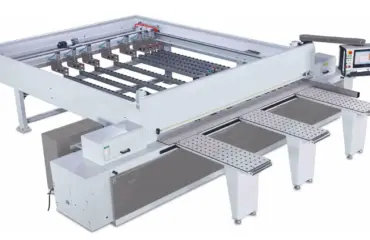
A modern panel saw machine is commonly used where sheet goods must be broken down into repeated rectangular parts with consistent size and squareness. In that context, its biggest contribution is not a marketing claim about automation. It is process discipline.
Compared with a less structured cutting workflow, modern panel saws typically help production teams work with more predictable sheet positioning, more repeatable cut execution, and cleaner batch organization. That matters because better control at the first cutting stage often reduces avoidable waste later in the line.
Instead of treating every sheet as a separate manual decision, the cut cell becomes more standardized. That usually makes it easier to:
- Hold Part Dimensions More Consistently
- Reduce Re-Cuts Caused By Operator Variation
- Keep Batch Parts Grouped In A More Logical Flow
- Produce More Usable Remnants Instead Of Random Leftovers
- Limit The Need For Excessive Correction In Downstream Operations
How A Panel Saw Helps Reduce Waste In Practice
The table below shows where waste typically appears and how a more controlled panel-saw workflow helps address it.
| Waste Source | How A Modern Panel Saw Helps | Workflow Outcome |
|---|---|---|
| Inefficient Sheet Breakdown | Supports a more structured approach to cutting repeated rectangular parts | Better material yield and fewer awkward remnants |
| Dimensional Variation | Improves cut consistency and squareness from part to part | Fewer recuts and better assembly fit |
| Oversized Safety Trimming | Gives the production team more confidence in first-pass accuracy | Less unnecessary trim loss across batches |
| Edge Damage On Faced Boards | Helps maintain cleaner, more controlled cutting conditions | More parts move forward instead of being downgraded or scrapped |
| Batch Mix-Ups | Makes repeated production easier to organize around cut sequences and part groups | Less wrong-part waste and fewer interrupted runs |
| Downstream Correction | Delivers more stable input to later operations | Lower rework pressure after cutting |
The key idea is simple: material waste falls when the front end of production becomes more repeatable.
Why Repeatability Often Saves More Material Than Raw Speed
Factories sometimes evaluate cutting equipment mainly by output rate. Throughput matters, but waste reduction usually depends more on repeatability than on headline speed.
If cut parts arrive at downstream operations with size variation, the factory starts compensating everywhere else. Operators may leave larger trim margins. Edge processing may slow down because parts need checking. Assembly teams may reject components that technically looked close enough at the saw.
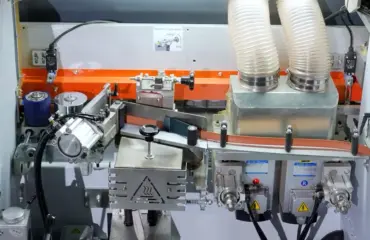
When parts move from cutting into edgebanders, stable sizing becomes especially important. If the cut stage is unreliable, waste does not stay in the cutting area. It spreads into glue-line quality, panel matching, sorting errors, and assembly delays.
That is why a modern panel saw machine often reduces waste indirectly as much as directly. It may not only save more usable area from each sheet. It may also reduce the number of parts that are lost later because the first cut was inconsistent.
What Kind Of Factory Benefits Most
A panel saw is not the best waste-reduction tool for every shop. It is strongest when the production model is already centered on repeated rectangular panel processing.
It is usually well suited when:
- Most Daily Output Comes From Sheet Goods Such As MDF, Particleboard, Plywood, Or Melamine-Faced Panels
- A Large Share Of Parts Are Rectangular Rather Than Highly Shaped
- The Factory Runs Batch Production For Cabinets, Wardrobes, Office Furniture, Or Similar Products
- Downstream Processes Depend On Stable Part Size And Reliable Squareness
- Management Wants To Reduce Recuts And Handling Confusion At The Front Of The Line
In those conditions, waste reduction comes from better cut planning, fewer mistakes, and cleaner handoffs between departments.
When Another Machine Type May Reduce Waste More Effectively
A panel saw should not be presented as the universal answer. The right choice depends on what kind of waste the factory is actually trying to eliminate.
| Production Situation | Machine Type That May Fit Best | Why |
|---|---|---|
| Repeated rectangular cabinet or furniture parts | Panel saw | Best aligned with structured sheet breakdown and batch sizing |
| Flexible one-off work and operator-led mixed cutting | Sliding table saws | Better fit when flexibility matters more than repeated high-volume flow |
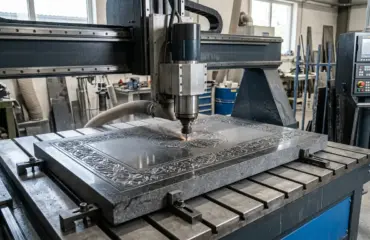
| Irregular shapes, nested layouts, and combined cutting with routing or drilling | CNC nesting machines | Better fit when waste reduction depends on nested-part optimization rather than straight panel breakdown |
For example, if the factory mainly cuts repeated cabinet sides, shelves, tops, and bottoms, a panel saw is often the more natural fit. But if waste is driven by irregular shapes or highly customized layouts, a nesting workflow may create better material utilization.
The practical lesson is that waste reduction should be tied to the geometry of the parts and the structure of the workflow, not to the appearance of the machine.
Operational Habits That Make The Machine More Effective
Even a well-chosen panel saw will not reduce waste on its own. The factory still needs process discipline around it. The strongest results usually come when management treats the saw as part of a controlled production cell rather than as a standalone cutting asset.
Useful habits include:
- Standardizing How Cut Lists Are Released And Checked Before Production Starts
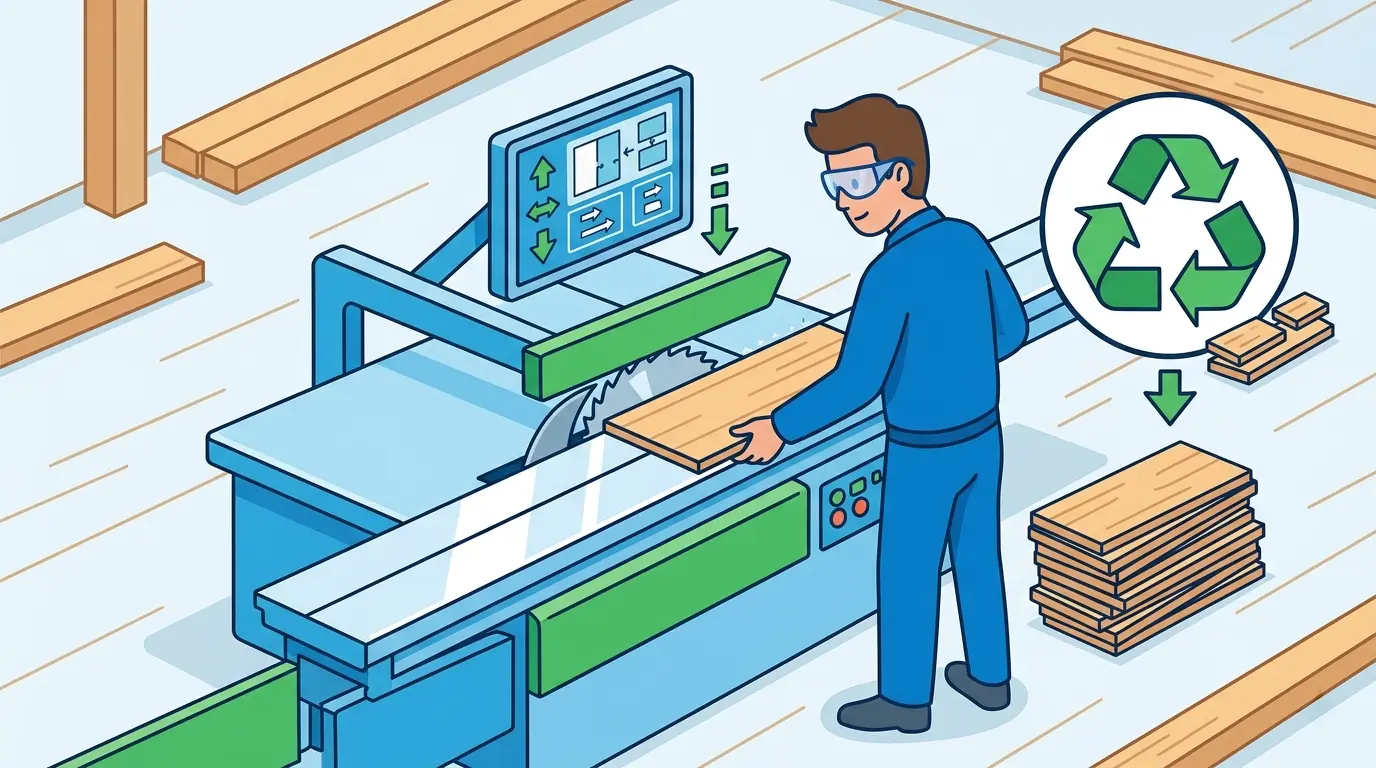
- Separating Reusable Offcuts From True Scrap So Remnant Material Can Be Recovered Intelligently
- Organizing Parts By Batch Or Order Immediately After Cutting
- Tracking Recut Rates Instead Of Looking Only At Visible Scrap Volume
- Monitoring Blade Condition And Cut Quality To Prevent Avoidable Surface Damage
- Coordinating The Saw Cell With Downstream Capacity So Cut Parts Do Not Sit, Get Mixed, Or Get Damaged
These are operational details, but they strongly affect material yield. A modern machine works best when the production system around it is equally disciplined.
What Buyers Should Measure Before Making A Decision
If waste reduction is the goal, buyers should evaluate the machine against production metrics rather than broad claims.
The most useful questions are often:
- How Much Material Is Lost To Recuts Rather Than To Planned Offcuts?
- How Often Do Parts Need Secondary Correction Before Edge Processing Or Assembly?
- Are Operators Adding Extra Trim Allowances Because First-Pass Accuracy Is Not Trusted?
- Is Batch Confusion Creating Wrong-Part Scrap?
- Does The Factory Primarily Run Repeated Rectangular Parts Or More Variable Nested Components?
Those questions usually lead to a more honest buying decision than simply comparing machine categories by speed alone.
Practical Summary
Material waste in panel processing is usually a symptom of unstable workflow rather than a single cutting defect. A modern panel saw machine helps reduce waste when it brings more structure to sheet breakdown, more repeatability to part sizing, and better control to batch production.
That makes it especially valuable in factories producing repeated rectangular components for cabinet and furniture lines. But if the waste problem is driven by irregular shapes, highly customized work, or operator-led flexible cutting, another machine type may be the better fit.
The most useful way to evaluate a panel saw is not to ask whether it cuts fast. It is to ask whether it helps the factory turn more purchased sheet material into usable parts with fewer recuts, fewer avoidable trim losses, and smoother downstream flow.