When parts stop fitting cleanly at assembly, the problem often starts earlier than the glue station or the hardware line. In many woodworking shops, small cutting errors show up later as visible gaps, edge-band alignment issues, inconsistent joinery, and avoidable rework. Choosing a sliding table saw is therefore not just about adding another cutting machine. It is about deciding how the shop will hold accuracy across daily production.
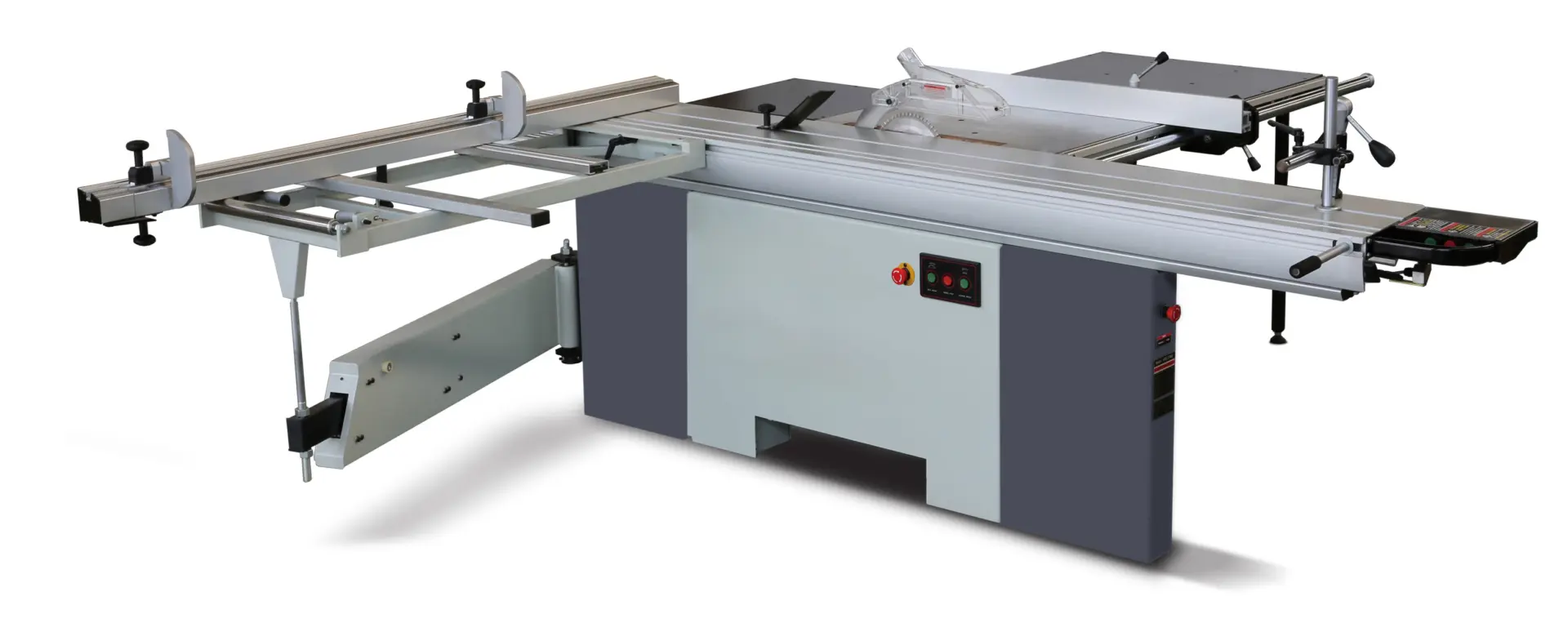
A sliding table saw is commonly a strong choice when precision depends on controlled straight cuts, reliable fence settings, and smooth handling of panels and solid wood in the same workflow. But it is not automatically the best answer for every factory. The right decision comes from understanding what kind of precision the work requires, how varied the job mix is, and whether the shop needs flexibility or a more dedicated high-throughput cutting model.
Start With the Accuracy Problem You Actually Need to Solve
The strongest machine decisions usually begin with a production symptom, not a machine category.
In precision woodworking, the cutting station is often under pressure when the shop is dealing with problems such as:
- Parts That Need Re-Cutting Before Assembly
- Miters Or Crosscuts That Drift Enough To Affect Fit
- Visible Surface Materials That Chip Or Break Out Too Easily
- Repeated Fence Adjustments That Do Not Return To The Same Position Reliably
- Large Panels That Are Difficult To Control Smoothly Through The Cut
If those issues are routine, the question is not simply whether the saw can cut straight. The real question is whether the saw can help the operator repeat accurate cuts across changing materials, dimensions, and job types without introducing extra setup friction.
That is where sliding table saws often fit well. They are commonly chosen for shops that need operator-guided precision, flexible cutting, and cleaner handling of both sheet goods and solid-wood components.
Where a Sliding Table Saw Fits Best
A sliding table saw usually creates the most value in workshops and factories where precision has to coexist with variation. That includes custom furniture shops, architectural millwork operations, cabinet makers handling mixed orders, and production environments where the cut list changes often enough that a fully standardized batch system would create as many problems as it solves.
It is commonly well suited to workflows that involve:
- Straight Sizing Of Panels For Cabinets And Furniture Parts
- Crosscutting And Trimming Of Solid-Wood Components
- Bevel Or Angle Cuts That Need Direct Operator Control
- Small To Mid-Volume Runs Where Changeovers Matter
- Finish-Sensitive Parts Where Edge Cleanliness Affects Downstream Quality
The main advantage is not only accuracy in one ideal setup. It is the ability to keep accuracy stable while the day moves from one part family to another. In practical terms, that can mean fewer fit issues at assembly, less manual correction before edge processing, and smoother handoff into sanding, drilling, or final finishing.
Buying Criteria That Matter Most for Precision Work
Many sliding table saw comparisons become too feature-led. For precision woodworking, it is usually better to judge the machine by the parts of the system that influence repeatability in daily use.
| Buying Criterion | Why It Matters for Precision | What to Clarify Before Buying |
|---|---|---|
| Sliding Table Movement | Smooth, stable travel helps the operator guide panels without introducing lateral movement or hesitation | Does the table movement feel consistent and controlled across the full travel range? |
| Rip Fence Repeatability | The fence setting affects whether identical parts stay identical across multiple cuts | Can settings be returned confidently without trial-and-error rechecking? |
| Crosscut Fence Stability | Crosscut accuracy matters immediately in cabinet squareness, frame fit, and miter quality | Does the fence remain dependable when handling longer or heavier workpieces? |
| Saw Unit Rigidity | A stable cutting unit supports straighter cuts and cleaner edges under daily workload | Does the machine feel built for sustained production rather than occasional light-duty use? |
| Support for Laminated Materials | Surface-sensitive boards punish weak setup discipline with chips and rework | Will the machine setup support clean processing of melamine, veneer, or other finish-sensitive panels? |
| Table and Workpiece Support | Precision drops quickly when large sheets are awkward to control | Can one operator guide common panel sizes with good balance and visibility? |
| Dust Control Around the Cut Zone | Better visibility helps the operator hold the line and verify the cut path | Does the cut area stay clear enough for confident, consistent operation? |
| Ease of Adjustment | Precision is harder to protect when every change takes too long or invites improvisation | Can the operator move between cut types without losing too much time to setup? |
This kind of evaluation usually says more than a generic comparison of motor power or brochure language. Precision in woodworking is rarely only about one specification. It is about whether the whole cutting setup helps the operator make the same good cut repeatedly.
Match the Saw to Your Material Mix
Not every precision requirement looks the same. A shop cutting veneered panels is managing a different risk than one cutting hardwood components for tables or frames.
For panel-based work, precision often means consistent dimensions, clean visible edges, and dependable squareness before edge banding or assembly. For solid wood, it often means smoother handling, controlled crosscuts, and enough operator feedback to respond to grain behavior or part variation. In mixed-production shops, the best saw is often the one that can do both competently without turning each material change into a reset.
That is why material mix should be a front-end buying factor. Ask whether the saw will spend most of its time on:
- Laminated Panels For Cabinet And Wardrobe Parts
- Veneered Boards Where Edge Breakout Is Costly
- Solid Wood Requiring Controlled Crosscuts And Trimming
- A Combination Of Panels And Solid-Wood Components In The Same Shift
The more varied the answer is, the more valuable a flexible, operator-guided cutting platform becomes.
Sliding Table Saw vs. Beam Saw for Precision Decision-Making
Precision and throughput are related, but they are not the same thing. Shops often compare a sliding table saw with panel saws or beam-saw-style workflows as if one machine is simply more advanced than the other. In practice, they solve different problems.
| Machine Type | Strongest Precision Context | Main Advantage | Main Tradeoff |
|---|---|---|---|
| Sliding Table Saw | Mixed woodworking, custom jobs, operator-guided cutting, precision on varied parts | High flexibility with direct control over the cut | Less efficient for sustained rectangular batch cutting at higher volumes |
| Beam Saw / Panel Saw | Repeated panel sizing in more standardized production | Strong repeatability and throughput for batch panel workflows | Less adaptable when the work mix changes often or when cut types vary more widely |
A sliding table saw is often the stronger precision tool when the shop’s challenge is not merely cutting a lot of panels, but cutting different kinds of parts accurately throughout the day. A beam saw usually becomes stronger when the factory has already standardized around repeated rectangular panel processing and wants higher front-end throughput with strong dimensional consistency.
The honest tradeoff is this: if your shop wins on flexibility, a sliding table saw often protects accuracy better within that flexible workflow. If your shop wins on repeated volume, a more dedicated panel-cutting system may protect consistency better at scale.
Do Not Separate Machine Precision From Shop Conditions
Even a well-chosen saw will not deliver stable results if the surrounding workflow works against it. Precision woodworking depends on the machine, but also on how the cutting cell is used.
Before buying, pressure-test the broader setup:
- Is There Enough Infeed And Outfeed Space To Support Full Panels Cleanly?
- Can Operators Read Dimensions And Set Stops Without Constant Improvisation?
- Are Blades Maintained Well Enough To Support the Expected Cut Finish?
- Does the Shop Need One Precision Saw Station, Or Several Specialized Stations?
- Will the Saw Feed Downstream Operations Smoothly, Or Create a New Bottleneck?
These questions matter because precision losses often come from awkward handling, rushed setup, or inconsistent support rather than from the machine alone. The best buying decision matches the saw to the way material actually moves through the shop.
Questions to Ask Before You Buy
Before choosing a sliding table saw, it helps to ask a few direct questions that connect the purchase to real workflow outcomes:
- Are We Primarily Trying to Improve Fit and Finish, or Simply Increase Cutting Output?
- How Often Do We Switch Between Panels, Solid Wood, and Different Cut Types?
- Which Errors Cost Us More Today: Dimensional Drift, Chipping, Poor Squareness, or Slow Setup?
- Do We Need One Saw to Cover Varied Precision Tasks, or a More Specialized System for Repeated Panel Work?
- Will the Machine Reduce Rework at Assembly, Edgebanding, or Finishing?
- Does Our Production Model Reward Flexibility, or Is It Moving Toward Heavier Standardization?
If the answers point toward varied work, operator-led control, and accuracy across changing tasks, a sliding table saw usually deserves serious consideration. If the answers point toward repetitive panel sizing at higher volumes, another cutting solution may create more value.
Practical Summary
Choose a sliding table saw for precision woodworking when the shop needs reliable cut control across a varied workflow, not just theoretical capacity on one type of part. It is commonly the right fit when accuracy affects visible quality, fit-up, and downstream assembly, and when operators need to move between panel cutting, trimming, crosscutting, and angle work without losing control of the process.
It is not universally better than every other cutting system. If your production is centered on repeated rectangular panels in longer runs, a beam saw or panel saw workflow may be the stronger investment. But if the daily challenge is keeping different parts accurate, clean, and assembly-ready across a changing schedule, a sliding table saw is often the more practical precision tool.