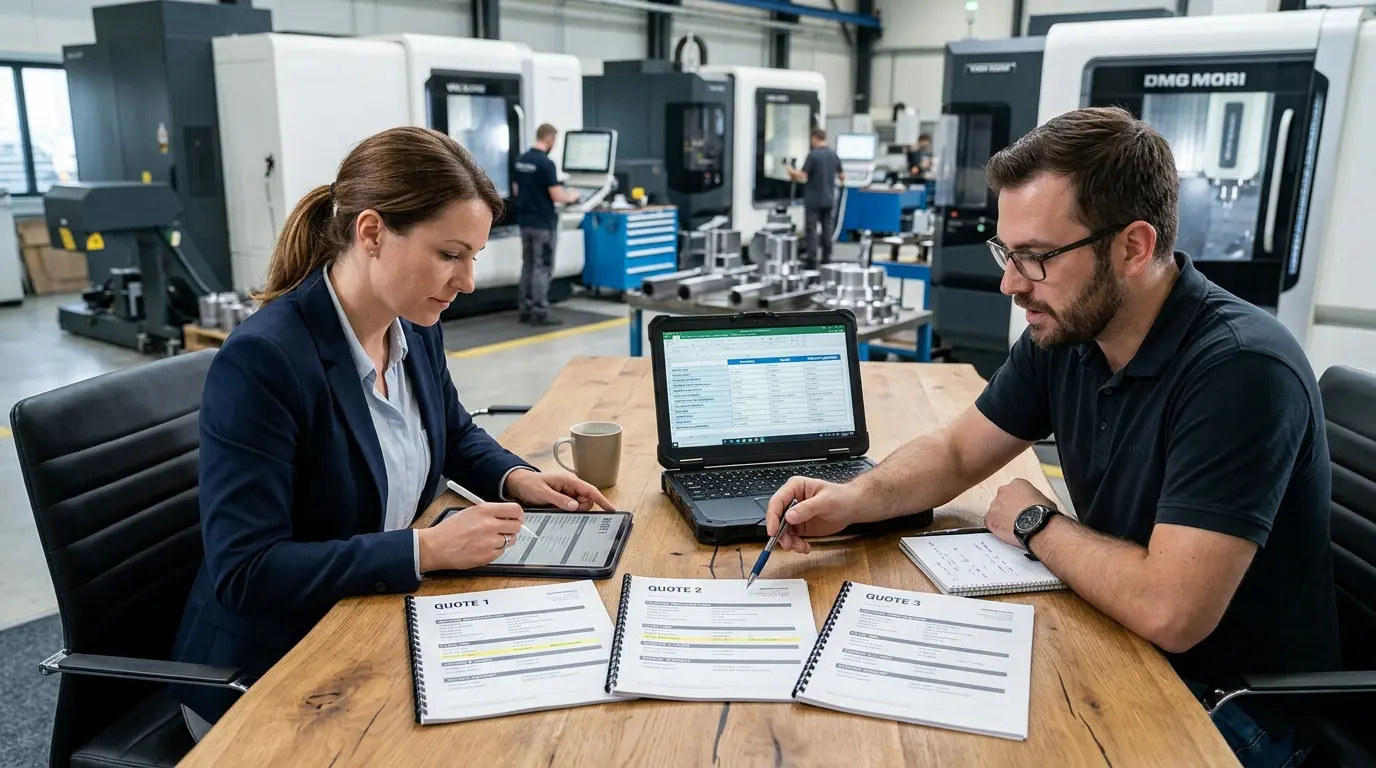
When a factory collects several CNC machinery quotes, the biggest risk is not paying too much. It is assuming the quotes are directly comparable when they are not. One supplier may be pricing only the machine. Another may include software, tooling, commissioning, and training. A third may bundle automation that changes labor needs, floor flow, and downstream stability. If you compare only the top-line number, the cheapest quote can become the most expensive decision.
If you are reviewing options across the Pandaxis product catalog, the right method is to normalize every quote around the production problem you are trying to solve. The goal is not to find the lowest price on paper. The goal is to identify which quote gives you the right process with the least hidden cost and the lowest implementation risk.
Start With The Production Problem, Not The Lowest Price
A CNC quote only makes sense when it is tied to a defined bottleneck. Before comparing suppliers, clarify what the investment is supposed to improve.
In practical terms, buyers are usually trying to solve one or more of these problems:
- Slow Front-End Processing That Delays The Rest Of The Line
- Too Many Manual Handoffs Between Cutting, Routing, Drilling, Or Finishing Steps
- Part Variation That Creates Rework In Downstream Operations
- Heavy Dependence On Operator Technique For Daily Consistency
- Poor Material Utilization Or Weak Batch Control
Without this step, buyers often compare quotes from suppliers that are solving different production problems. That is not a real price comparison. It is a comparison of different manufacturing strategies.
Confirm The Quoted Machine Role Is Actually The Same
This is the first major filter. Two suppliers can both offer CNC equipment while describing very different process roles.
A quote for CNC nesting machines may cover integrated cutting, routing, and drilling logic in one production cell. Another quote may assume that some hardware-hole work or follow-up processing still happens on separate boring and drilling machines. Those are not equal proposals, even if both suppliers describe the offer as a CNC solution.
Buyers should verify:
- Which Operations The Machine Completes In One Cycle
- Which Operations Stay Offline Or Move To Another Department
- Whether Loading, Unloading, Labeling, Sorting, Or Stacking Are Part Of The Quoted Workflow
- Whether The Machine Is Intended For Batch Production, Mixed Custom Work, Or A Combination
- Whether The Supplier Is Quoting A Standalone Machine Or A Wider Process Concept
If the quoted machine role is different, the price gap may reflect scope rather than overpricing.
Normalize The Quote Scope Line By Line
Many quote problems come from scope gaps, not from bad pricing. One supplier includes an item as standard. Another lists it as optional. A third leaves it out until the buyer asks.
The safest method is to force every quote into the same structure.
| Quote Area | What To Confirm | Why It Changes Real Cost |
|---|---|---|
| Machine Process Scope | Which operations are completed by the machine itself | Changes labor, handoffs, and floor-space needs |
| Automation Boundary | Whether material handling or part-flow support is included | Affects staffing and throughput stability |
| Software Scope | Programming, optimization, file transfer, or interface assumptions | Impacts setup time and operator workload |
| Tooling And Startup Items | What is needed to begin real production, not only test runs | Changes readiness and first-stage project cost |
| Installation And Commissioning | Who handles startup, tuning, and on-site handover | Affects ramp-up speed and technical risk |
| Training | What is covered for operators and maintenance staff | Influences time to stable output |
| Site Requirements | Power, air, extraction, vacuum, layout, or foundation assumptions | Creates hidden preparation cost when vague |
| Acceptance Criteria | How successful machine handover will be judged | Prevents disputes over expected performance |
| Warranty And Service | Coverage scope, response expectations, and exclusions | Changes downtime exposure after startup |
This kind of comparison sheet is more useful than a stack of brochures because it converts commercial language into operational questions.
Separate Machine Price From Project Price
A quote can look attractive because the machine price is low while the real project cost is still scattered across options, exclusions, and customer-side responsibilities. That does not always mean the supplier is being misleading. It often means the buyer has not yet separated machine price from total project price.
At minimum, compare these items across every offer:
- Machine Base Price
- Required Options Needed For Your Actual Workflow
- Software Or Programming Modules
- Tooling Needed To Begin Production
- Freight And Packaging
- Installation And Commissioning
- Training
- Spare Parts Or Wear Parts Needed For Early Operation
- Site Preparation Costs That Fall On Your Side
Management should not evaluate only the number attached to the machine. The more useful figure is the cost of getting the process into stable daily production.
Check How Each Quote Defines Productivity
Suppliers can describe output in ways that sound similar while referring to very different production realities. Buyers should push past generic productivity language and ask how the quoted machine improves the full workflow.
The useful questions are:
- What kind of part mix is this quoted configuration best suited to?
- How much setup discipline is required to keep output stable?
- Which downstream bottlenecks disappear, and which remain?
- How much operator intervention is still expected during a normal shift?
- What happens when job variety increases or batch sizes shrink?
A strong quote should explain the workflow outcome, not just the machine features. If the proposal does not make the production impact clearer, it is incomplete from a buyer’s point of view.
Look Carefully At Integration And Ramp-Up Risk
The technical fit of the machine is only part of the decision. The other part is implementation risk. A quote that looks competitive can still create delays if the project boundary is vague.
Review these areas carefully:
- How Programs Reach The Machine In Daily Operation
- Whether Data Preparation Depends On One Experienced Operator
- Whether Startup Requires Additional Outside Software Or Manual Workarounds
- Who Tunes The Machine For Your Actual Materials And Production Pattern
- What Support Is Available During The First Weeks After Handover
Many machinery purchases struggle in the gap between installation and stable output. Buyers often discover that the quoted system was affordable, but the ramp-up was slower, more manual, or more fragile than expected.
Compare Supplier Clarity, Not Just Supplier Price
A detailed quote is often worth more than a vague low quote, even before negotiation begins. Clarity reduces decision risk.
The better proposal usually makes these points easy to understand:
- What Is Included
- What Is Optional
- What The Machine Is Designed To Do
- What The Machine Is Not Designed To Do
- What The Customer Must Prepare Before Installation
- How Acceptance Will Be Judged
- What Support Looks Like After Startup
When a quote leaves too much unsaid, buyers tend to fill in the gaps with their own assumptions. That is where expensive mistakes begin.
Use A Practical Scorecard Before Final Negotiation
Once the quotes are normalized, do not return immediately to headline price. Score them against business priorities.
| Decision Factor | What Buyers Should Ask |
|---|---|
| Workflow Fit | Does the quote solve the actual bottleneck or only part of it? |
| Scope Completeness | Are key items included, optional, or still undefined? |
| Ramp-Up Risk | How much work remains between delivery and stable output? |
| Labor Impact | Does the quoted process reduce manual handling or simply move it elsewhere? |
| Downstream Effect | Will the machine improve part consistency and reduce rework in later operations? |
| Cost Transparency | Is the project cost visible, or is too much still outside the quote? |
| Service Confidence | Is support clear enough to reduce downtime risk after startup? |
This type of scorecard helps management teams compare proposals in operational terms rather than emotional terms.
Questions To Send Back Before You Decide
Before negotiating the final price, send a clarification list to every supplier. Ask the same questions in the same order so the replies are genuinely comparable.
- Which operations are included in the quoted machine workflow, and which remain separate?
- Which options are required for the production scenario we described, rather than merely recommended?
- What tooling, consumables, or software must be added before stable production can begin?
- What site conditions or utility requirements are assumed but not included?
- What exactly is covered during installation, commissioning, and training?
- How is machine acceptance defined at handover?
- What support is available during the early production period after startup?
- Under which production conditions would this quoted configuration become less efficient than expected?
The quality of the answers often tells you as much as the quoted number.
Practical Summary
Comparing CNC machinery quotes correctly is not about placing supplier prices side by side and choosing the lowest one. It is about verifying that every quote covers the same machine role, the same workflow boundary, and the same path to stable production. Once those factors are normalized, price becomes meaningful. Before that, it is often misleading.
The safer buying process starts with the bottleneck you need to remove, then checks process scope, project scope, implementation risk, and supplier clarity before negotiating. That approach helps buyers avoid one of the most common machinery-procurement mistakes: choosing the cheapest quote first and discovering later that the critical details were never included.