In panel furniture production, edge quality is judged most harshly where people can see and touch it. A cabinet carcass part with a clean straight edge may be fully acceptable on one line, while a retail fixture, wardrobe door, or exposed shelf can still look unfinished if the corners feel sharp or need manual cleanup after banding.
That is why the choice between a standard edgebander and a corner rounding edgebander is not really about buying the more advanced machine. It is about deciding what finish standard your product mix has to hold every day, and whether your current workflow can reach that standard without pushing cost into hand correction, slower inspection, or inconsistent results.
Start With The Finish Standard, Not The Feature List
Many buyers compare edge banding lines by process stations alone. In practice, the more useful question is simpler: what does a finished part need to look and feel like when it leaves the line?
For some factories, the answer is straightforward. If most output consists of straight cabinet panels, hidden structural components, or commercial-grade furniture where the edge only needs to be clean and durable, a standard automatic edge banding process may already be enough.
For other factories, the edge has a higher job to do. It may need to support a more refined visual finish, softer corner transitions, or a more complete feel on exposed parts. In those workflows, corner rounding is less of a cosmetic extra and more of a finish-control decision.
What A Standard Edgebander Usually Delivers Well
Standard automatic edgebanders are commonly well suited to straight-panel workflows where the main goals are repeatable adhesion, clean trimming, dependable throughput, and lower manual cleanup than manual banding can provide.
They usually fit best when:
- Most Parts Are Straight Rectangular Panels.
- The Required Finish Standard Is Commercially Clean Rather Than Premium-Tactile.
- Exposed Corners Are Limited Or Not A Main Buying Factor.
- The Factory Needs Stable Daily Output More Than A Higher-End Finish Effect.
- Operators Can Release Finished Parts Without Repeated Manual Corner Touch-Up.
In those environments, the strongest value of a standard edgebander is not that it does less. It is that it does the right amount reliably. If the line can already meet its appearance target without extra corner work, adding more finishing capability may increase cost and process complexity without changing the product outcome enough to matter.
What A Corner Rounding Edgebander Changes In Real Production
A corner rounding edgebander changes the result at the points where straight-edge quality no longer tells the whole story.
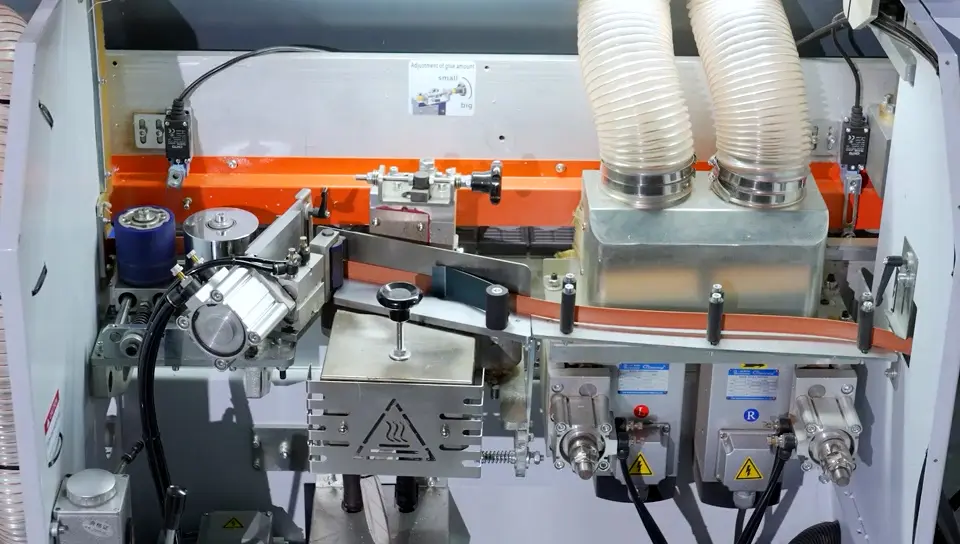
Its main value usually appears when the factory wants finished parts to leave the line with smoother corner transitions and less reliance on manual post-processing around exposed edges. That becomes more important when thicker edge materials are used, when the product is handled closely by end users, or when the visible finish standard is high enough that a sharp or slightly rough corner undermines the overall impression of quality.
In practical terms, corner rounding can help when the factory is trying to:
- Reduce Manual Corner Scraping Or Sanding.
- Make Exposed Components Feel More Complete In Hand.
- Improve Consistency Across Repeated Visible Parts.
- Lower Finish Variation Between Operators Or Shifts.
- Protect Higher-Value Furniture Or Fixture Work From Last-Minute Cosmetic Rework.
That does not mean it is automatically necessary. It means the extra process makes more sense when the corners themselves are part of the finish standard being sold.
Finish Quality Comparison Table
| Finish Requirement | Standard Edgebander Fit | Corner Rounding Edgebander Fit | What Usually Happens On The Floor |
|---|---|---|---|
| Hidden Or Utility-Oriented Cabinet Parts | Usually Strong | Usually Unnecessary | Clean edges can be acceptable without paying for additional corner finishing |
| Straight Panels With Moderate Visual Standards | Often Sufficient | Sometimes Helpful But Not Essential | The decision depends on how much manual corner cleanup still remains |
| Exposed Furniture Parts With Thicker Edge Material | Can Be Limiting | Commonly More Suitable | Corner rounding helps produce a more complete-looking finished part |
| Retail, Office, Or Residential Components Handled At Close Range | May Require More Touch-Up | Often Better Matched | Softer, more consistent corner transitions can reduce visible finishing variation |
| Premium Finish Work Where Inspection Standards Are Tight | Sometimes Not Enough On Its Own | More Defensible | Built-in corner finishing can remove labor from the last stage of the workflow |
The key point is that finish quality is not one threshold. A line can be fully successful at one finish level and still be the wrong fit for a more visible product category.
Corner Rounding Does Not Fix A Weak Base Process
This is where buyers can misread the upgrade.
If the real problem is poor panel-edge preparation, unstable glue application, inconsistent trimming, or frequent feed interruptions, corner rounding will not solve the root cause. It may improve the appearance of a specific detail, but it cannot compensate for a generally unstable edge banding process.
That is why factories should diagnose the defects carefully before upgrading. If the biggest problems are:
- Visible Glue-Line Inconsistency
- Chipped Or Irregular Incoming Panel Edges
- Poor Trimming Stability
- Excess Manual Cleanup Along The Whole Edge
- Variation Caused By Upstream Cutting Quality
then the first priority may be panel preparation, trimming stability, or broader edge process control rather than corner rounding alone.
Corner rounding pays best when the straight-edge process is already fundamentally sound and the remaining gap is finish refinement at the corners.
When Corner Rounding Usually Pays Off
The extra capability is commonly easier to justify when one or more of these conditions apply:
- The Product Includes Highly Visible Exterior Components.
- Thicker PVC Or ABS Edges Are Common In Daily Output.
- Customers Notice And Evaluate The Tactile Feel Of Exposed Edges.
- Operators Still Spend Too Much Time Correcting Corners By Hand.
- The Factory Wants A More Complete Finish Without Building More Manual Labor Into The Line.
In those situations, corner rounding is not just a nicer feature. It helps convert a finish requirement into a more repeatable machine-controlled result.
When A Standard Edgebander Is Still The Better Fit
A standard edgebander often remains the better decision when the factory’s real bottleneck is not corner appearance.
That is commonly true when:
- Most Output Consists Of Internal Cabinet Components Or Lower-Visibility Parts.
- The Existing Finish Standard Is Already Accepted By The Market.
- Corner Defects Are Rare Compared With Broader Process Issues.
- Product Mix Does Not Consistently Benefit From Softer Corner Transitions.
- The Stronger return on investment comes from improving throughput, part flow, or basic edge consistency first.
This tradeoff matters because more finishing capability is not automatically more productive. If the added process does not remove a real quality or labor problem, it can become an upgrade that looks impressive on paper but changes little in actual daily output.
Questions To Ask Before You Choose
Before comparing configurations, it helps to pressure-test the workflow with a few practical questions:
- Are Customers Buying The Product Mainly For Utility, Or For Visible Finish Quality?
- How Often Do Operators Need To Correct Corners Manually After The Machine Cycle?
- Are Corner Complaints More Common Than Glue-Line Or Trimming Complaints?
- Do Thicker Edge Materials Make Sharp Transitions More Obvious In Your Product Mix?
- Would A Higher Finish Standard Increase Sales Value Enough To Defend The Extra Process?
These questions usually reveal the better direction faster than comparing process stations in isolation.
Practical Summary
The difference between a corner rounding edgebander and a standard edgebander is really a difference in finish expectation. A standard edgebander is often the right answer when the line needs clean, repeatable straight-edge results and the product does not depend heavily on refined corner presentation. A corner rounding edgebander becomes easier to justify when exposed parts, thicker edges, closer customer scrutiny, and manual corner correction make the finish standard harder to hold consistently.
In other words, the better machine is the one that matches the level of finish quality your factory actually has to deliver. If the real problem is general process instability, solve that first. If the straight-edge result is already strong and the remaining gap is corner refinement on visible parts, corner rounding can be the upgrade that makes the finished product look and feel more complete.