A buyer may ask for “an engraving machine” when the real decision is much narrower: does the product line need fast surface graphics, or does it need controlled material removal with visible depth? Decorative wood panels, acrylic display parts, branded gift items, serialized components, and recessed legends can all sit under the same purchasing conversation, but they do not create value in the same way.
One workflow rewards rapid artwork changes, fine detail, and non-contact processing. The other rewards tactile depth, stronger physical definition, and a more machining-led result. For manufacturers working with wood, acrylic, laminated boards, and similar substrates, laser cutters and engravers are commonly evaluated when marking and shaped cutting may need to stay in the same production cell. But if the product itself is sold on recess depth, grooves, or carved feel, a tool-based engraving machine often fits better.
Why The Terms Often Get Confused
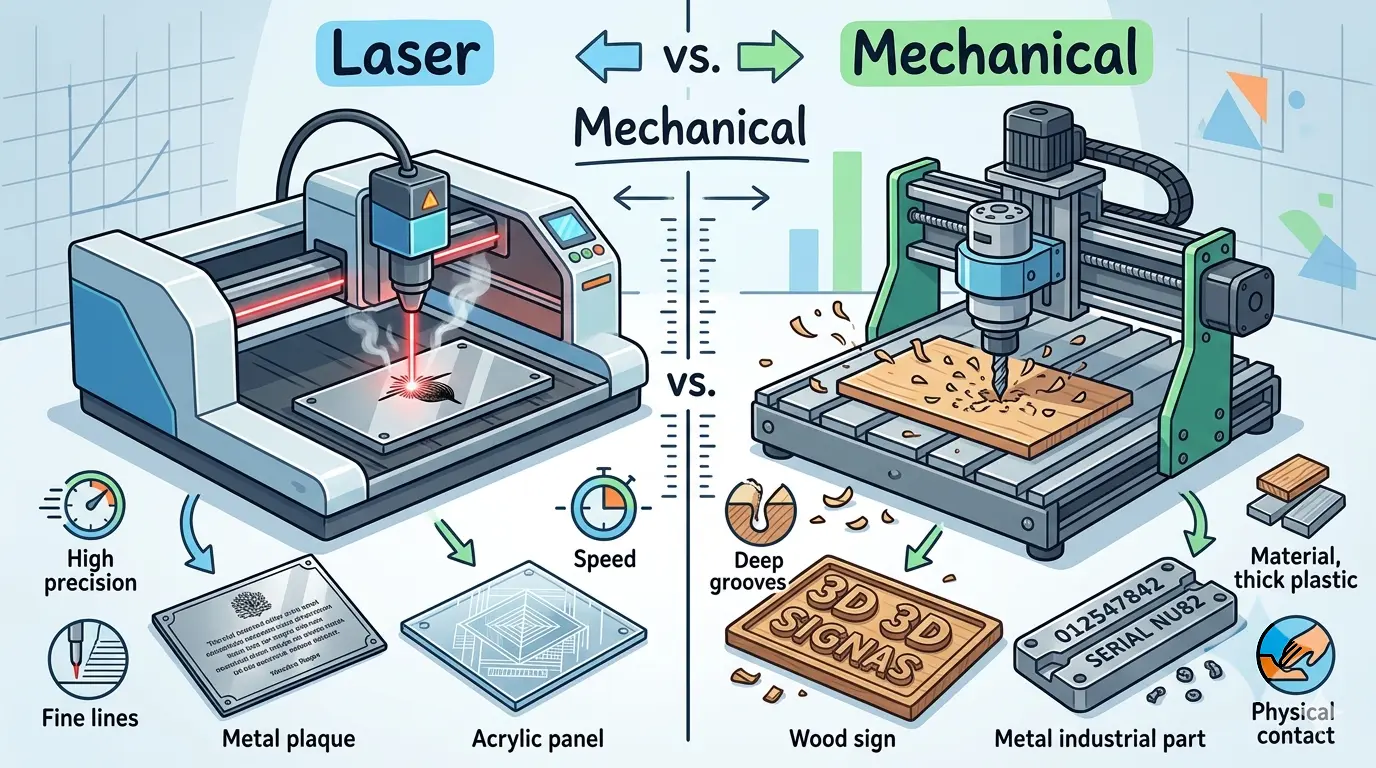
In many industrial conversations, “laser etcher” usually refers to a laser system used for shallow marking, graphics, logos, text, and light engraving. “Engraving machine” can be used as a broad label, but in practical buying decisions it often points to a mechanical or CNC tool-based machine that removes material with a cutter.
That is why the market language gets blurred. Both machines can produce letters, logos, and decorative details. The real difference is what the finished product is asking the process to do.
- A Laser Etcher Creates Value Through Surface Detail, Contrast, And Fast Artwork Changes
- A Mechanical Engraving Machine Creates Value Through Depth, Tactile Feel, And More Controlled Physical Removal
If the part only needs a crisp visible mark, a deeper-cutting machine may add setup work the product line does not need. If the part is sold on recessed text, grooves, or a carved finish, a laser-only workflow may stay too close to the surface.
What Changes In Real Production
| Selection Factor | Laser Etcher | Tool-Based Engraving Machine | Why It Matters To The Product Line |
|---|---|---|---|
| Primary Output | Surface marking, fine detail, shallow engraving | Recessed text, grooves, deeper cuts | Determines whether the customer sees contrast or feels depth |
| Artwork Turnover | File-to-file changes are usually fast | Toolpath and cutter choice matter more | Affects how easily the line handles SKU variation |
| Process Contact | Non-contact | Physical cutting contact | Changes fixturing, maintenance, and process behavior |
| Best-Fit Value Driver | Personalization, branding, decorative graphics | Depth, tactile readability, machined character | Keeps the machine aligned with what the product is selling |
| Workflow Role | Often fits cut-and-mark sequences on non-metallic parts | Often fits a broader machining sequence | Influences how many handoffs the line needs |
| Main Production Risk | Residue, heat effect, and slower deep removal | Tool management, cutter wear, chips, and dust | Predicts where daily operating friction will appear |
The selection should therefore start with the product outcome, not the label in a quotation. A product line built around visible customization behaves very differently from one built around machined depth.
Product-Line Profiles And Their Best Fit
| Product Line Profile | Usually Better Fit | Why | Main Caution |
|---|---|---|---|
| Personalized Wood Gifts Or Acrylic Display Parts | Laser Etcher | Frequent artwork changes and visual detail matter more than depth | Relief-style jobs can slow down quickly if the design asks for too much removal |
| Decorative Signage And Branded Panels With Outline Shapes | Laser Etcher | Marking and contour cutting can stay in one workflow | Finish quality still depends on material response and extraction discipline |
| Control Panels, Nameplates, Or Components With Recessed Legends | Tool-Based Engraving Machine | Physical depth and tactile readability matter more than surface contrast | Setup and cutter management become part of the real operating cost |
| Decorative Products Sold On A Carved Look | Tool-Based Engraving Machine | The product value comes from measurable removal, not only a visible mark | Throughput and finishing must be planned carefully |
| Mixed SKU Lines With Both Surface Graphics And Deeper Features | Depends On The Revenue Mix | The dominant margin driver should decide the primary process | One machine should not be forced to solve two very different jobs equally well |
This is usually where selection mistakes happen. A team buys a laser because the samples look clean, then discovers that their best-selling parts need more depth than surface marking can deliver efficiently. Or they buy a mechanical engraver, then realize most daily orders only need light graphics and fast design changes.
When A Laser Etcher Usually Fits Better
A laser etcher is typically the better fit when the product line is driven by visual detail, variation, and non-contact processing rather than deeper material removal.
That is commonly true when:
- Top-Selling SKUs Change Names, Logos, Artwork, Or Layouts Frequently
- The Buyer Cares More About Fine Detail And Surface Appearance Than About Depth
- Main Materials Include Wood, Acrylic, Laminated Boards, Or Similar Non-Metallic Substrates
- The Same Job May Need Both Decorative Marking And Contour Cutting
- Short Runs, Private-Label Orders, Or Seasonal Variants Are A Meaningful Part Of Revenue
In these cases, the laser earns its place by reducing changeover friction. The line can move from one file to the next without introducing new cutters or turning every design change into a tooling event. That matters more than raw removal depth when the business model depends on customization, branding variation, or visually clean detail.
The tradeoff is straightforward: once the design asks for noticeably deeper recesses or a more carved feel, cycle time and finish management become harder to ignore.
When A Mechanical Engraving Machine Usually Fits Better
A tool-based engraving machine usually makes more sense when the product is supposed to look or feel machined rather than simply marked.
That is often true when:
- The Finished Part Needs Recessed Text, Grooves, Channels, Or Stronger Physical Definition
- Product Value Depends On Tactile Readability Rather Than Only Visual Contrast
- Depth Consistency Matters More Than Rapid Artwork Swapping
- The Engraving Step Sits Inside A Larger Routing Or Machining Workflow
- The Business Can Justify More Setup Discipline In Exchange For A Deeper Result
This kind of machine is not automatically better. It is simply better aligned when the product line is selling depth, cut feel, or more pronounced feature geometry. If the customer expects a legend to be physically recessed, or if the part needs a routed decorative effect rather than a surface graphic, a tool-based process is often the more natural fit.
The tradeoff here is different. The line gives up some of the easy artwork flexibility that laser systems handle well, and in return gains a process better suited to parts where deeper removal is part of the specification or the visual standard.
Questions That Usually Expose The Right Choice
Before buying, it helps to review the actual order mix rather than the most impressive demo sample.
Ask these questions:
- Are Customers Paying For Fine Visible Detail, Or For Depth They Can See And Feel?
- How Often Does Artwork Change Across The Top Revenue-Producing SKUs?
- Does The Product Need Only Marking, Or Does It Also Need Routing-Like Feature Geometry?
- Is The Line More Limited By Changeover Friction Or By Inadequate Depth Capability?
- Would Combining Cutting And Marking In One Cell Remove A Meaningful Handoff?
- Is The Daily workload dominated by short-run customization or by repeat parts with fixed geometry?
Those answers usually make the machine choice much clearer. The more the line behaves like branding, personalization, decorative graphics, or fast SKU variation, the more a laser etcher tends to fit. The more the line behaves like machining with depth-driven output requirements, the more a tool-based engraving machine usually makes sense.
Practical Summary
Laser etcher versus engraving machine is not really a contest between a newer option and an older one. It is a choice between two different ways of creating value in production.
A laser etcher is usually the stronger fit when the product line depends on fine detail, rapid artwork changes, and efficient handling of non-metallic decorative or branded parts. A mechanical engraving machine is usually the stronger fit when the part needs recessed geometry, tactile readability, or a result that behaves more like machining than marking.
If the selection starts with the top-selling products instead of the machine label, the decision becomes much easier. The right question is not which machine sounds more capable. It is which process better matches what the product line is actually being paid to deliver.