Looking for Shapeoko alternatives usually means one of three things. Either the buyer wants a different balance of cost, rigidity, and upgrade freedom within the same general hobby-to-small-shop market, the buyer is tired of the ownership model around light routers and wants something calmer, or the buyer has outgrown that market entirely and needs a different class of machine. Those are very different searches, and many disappointing purchases happen because the buyer never clarifies which search is actually underway.
A good alternative is not simply a machine with similar travel or a similar online reputation. It is a machine whose ownership model fits the shop. Some alternatives reduce upfront price while asking for more assembly and tuning. Some improve enclosure, support, or machine confidence while staying in the same broad operating lane. Others leave the hobby-router segment altogether and start solving production problems rather than maker problems.
This guide organizes the alternative paths small shops and makers usually consider and explains what each path really trades off.
Start By Naming What You Dislike About The Shapeoko Path
“I want a Shapeoko alternative” is too vague to guide a purchase. A better starting point is to name the exact frustration.
Is the problem budget? Assembly freedom? Limited rigidity? Too much setup babysitting? Weak support for the next stage of your business? Uncertainty about whether a router is even the right process anymore? Until that is clear, the shortlist will stay messy.
This matters because the best alternative depends on the problem being solved. If you dislike the purchase price, you are shopping one way. If you dislike the ownership burden, you are shopping another way. If you dislike what the machine class fundamentally cannot do, you are not really shopping router alternatives at all. You are shopping for a different production answer.
Alternative Path One: Another Turnkey Hobby-Oriented Router
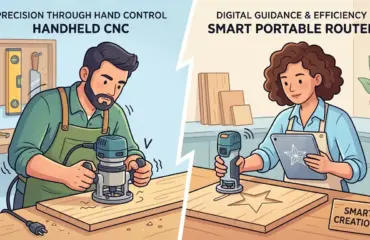
The first alternative path is to stay in the turnkey hobby-router segment but choose a different ecosystem. Buyers on this path usually care about familiar CAM workflows, manageable startup, and a balance between capability and convenience. The appeal is straightforward: there is less tuning than a DIY build and less capital exposure than a heavy industrial router.
The tradeoff is that most machines in this lane share similar realities. They reward attentive operation, they depend heavily on setup discipline, and they are best when the work is custom, moderate in volume, and not brutally demanding in rigidity. If the buyer wants a different user experience but still lives in the same process lane, this path can work well.
This is often the right answer for shops that still fundamentally want a flexible custom-work router, but want a different feel around support, mechanics, or daily use. It is not usually the right answer for shops that are actually asking for industrial stability on a hobby-router budget.
When Another Turnkey Brand Makes More Sense
Some buyers do not want to leave the small-shop router category at all. They simply want a different emphasis inside it. That may mean a different approach to rigidity, electronics, assembly experience, accessories, or support culture.
In that case, the comparison should stay honest and narrow. You are not comparing “best routers on the internet.” You are comparing ownership styles. For example, if the real question is whether you want another familiar prosumer path with a different operating feel, it is more useful to look at how Onefinity and Shapeoko fit different hobby CNC users than to get trapped in generic “top 10 alternatives” content.
This path works when the buyer still values approachable CNC ownership and mixed custom work. It fails when the business has already left that operating lane.
Alternative Path Two: Open Or DIY Platforms
Some buyers leave Shapeoko-style ecosystems because they want more control over components, electronics, upgrades, or repairability. Open and DIY router platforms can offer strong value when the owner is comfortable solving motion, alignment, and controls problems independently. They may also offer a more direct path to custom machine features or larger-format builds.
The tradeoff is clear: freedom replaces convenience. The buyer becomes more responsible for diagnosing issues, sourcing compatible parts, and creating stable repeatability. For technically confident builders, that can be an advantage. For production-minded small shops, it can become a distraction from billable work.
This is where many buyers confuse theoretical value with operating value. A DIY platform may look cheaper or more upgradeable on paper, but if the shop needs stable output faster than it needs engineering freedom, the bargain may be less real than it seems.
Which Buyers Usually Fit The DIY Route Best
The best DIY or open-build buyer is not just “someone technical.” It is someone who actively wants the machine itself to be part of the project. That could be a builder who enjoys tuning, a shop owner with strong controls confidence, or a technically inclined user who wants deep component choice and long-term repair independence.
If that sounds like you, comparing platforms such as QueenBee versus Ultimate Bee for DIY router buyers or broader community-build paths like Root CNC, RS-CNC, and PrintNC-style open builds is far more useful than browsing turnkey-router marketing.
If that does not sound like you, the DIY path usually becomes a labor sink disguised as flexibility.
Alternative Path Three: Used Industrial Or Semi-Industrial Routers
A more meaningful alternative sometimes comes from the used industrial market rather than from another hobby platform. A heavier used router may offer more rigidity, better extraction integration, more mature controls, vacuum support, or a clearer path into sustained work. This is attractive when the buyer is not actually seeking a hobby alternative at all, but rather a lower-cost entry into real production routing.
The risk is support burden. Used industrial equipment can be excellent value, but only when the shop knows how to inspect motion systems, controls, vacuum performance, and serviceability. A bargain machine with control issues or worn mechanics can consume more time than the hobby platform it replaced.
This path often appeals to small businesses that have already proven demand and want a heavier machine without paying new-machine capital. It is much weaker for buyers who lack inspection discipline or maintenance depth.
Used Industrial Alternatives Are Really Installed-Cost Decisions
The mistake with used industrial alternatives is treating the listing price as the comparison. That is almost never the real number. The real number includes transport, rigging, electrical adaptation, vacuum or extraction support, tooling, recommissioning, and the labor needed to make the machine dependable.
So the honest comparison is not “used industrial router versus Shapeoko purchase price.” It is “stable installed used production machine versus stable installed small-shop router.” Once framed that way, some used industrial deals still look excellent, and some collapse immediately.
If your business is already confronting those questions, it is often smarter to compare the move directly against industrial wood CNC workflows instead of DIY router expectations.
Alternative Path Four: A Different Process Entirely
Many buyers search for router alternatives when the real issue is that a router may not be the best process. If the work is detailed non-metallic signage, intricate engraving, or acrylic-heavy production, laser cutters and engravers can sometimes be the more logical comparison. If the work is rectangular panel sizing at scale, saw-based processing may enter the conversation before routing does.
This is why good buyers compare production outcomes rather than machine categories alone. The right alternative may not look like a Shapeoko at all.
This is also where many shops waste money. They keep searching for a “better router” when the process problem is not routing quality. It is that the workload would be better served by engraving, panel sizing, or a more specialized production step.
Sign Shops And Acrylic Work Often Need This Reality Check
For sign shops in particular, alternative shopping can become confused fast. If the business mainly routes substrates, dimensional letters, custom plaques, and carved work, a router-centered shortlist still makes sense. If the business increasingly depends on engraving detail, thin acrylic handling, or precision decorative cutting, the process comparison may shift.
That does not mean routers stop mattering. It means the buyer should stop assuming every sign-making improvement must come from a new router purchase. Often, a process split is the stronger answer.
Alternative Path Five: Production Routing Systems For Growing Shops
When the job mix begins to include repeated cabinet parts, full-sheet processing, higher volume, or a need to reduce manual handoffs, the relevant alternative path is often a more production-oriented routing system. In that case, the buyer is no longer comparing consumer-oriented router brands. The buyer is evaluating whether the business now needs CNC nesting machines and a more formal panel-processing workflow.
This is the point where many “alternative” searches become more productive. Instead of asking which small router feels strongest, the buyer starts asking which machine class improves throughput, sheet utilization, drilling integration, and downstream consistency.
This is not a small difference. It changes the whole buying conversation from hobby-or-small-shop ownership to production system planning.
Compare Alternatives By Ownership Model, Not By Internet Popularity
A useful comparison framework for alternatives looks like this:
| Alternative path | Main benefit | Main tradeoff | Best for |
|---|---|---|---|
| Another turnkey hobby router | Accessible ownership and familiar setup | Still limited by hobby-class workflow realities | Custom small-shop work |
| Open or DIY router | Upgrade freedom and component choice | More tuning, troubleshooting, and integration effort | Technically confident builders |
| Used industrial router | Heavier capability for the money | Inspection and support risk | Shops growing into production routing |
| Different process | Better process fit for certain materials or geometry | Requires rethinking the workflow | Buyers solving the wrong problem with a router |
| Production nesting system | Higher throughput and process integration | Higher capital and more formal production planning | Expanding cabinet and panel factories |
This framework helps the buyer compare based on business reality instead of brand familiarity.
Service, Support, And Learning Burden Matter More Than Most Lists Admit
Online “best alternatives” lists often focus on specs, accessories, and community enthusiasm. That is not enough. Small shops need to understand the support path behind the machine. Who answers when the control faults? How easy is it to source wear parts? Will the machine still be productive when the original enthusiast who installed it moves on?
Alternatives should therefore be screened by how much technical burden the business can absorb. A machine that looks flexible on day one may become costly if every change depends on owner troubleshooting.
This is why the best alternative is often less exciting than expected. It is the one the shop can support without drama.
Do Not Compare Alternatives By Frame Size Alone
Small-router comparisons often collapse into bed size, spindle choices, or internet reputation. Those are incomplete filters. The stronger comparison is how each alternative handles setup repetition, support burden, material fit, and the kind of operator your business actually has. Two machines with similar travel may create completely different ownership experiences once maintenance and troubleshooting begin.
That is why buyers should avoid ranking alternatives as if they were all solving the same problem. Some are better learning tools. Some are better customization platforms. Some are better stepping stones into real production. The correct alternative depends on which of those goals matters most.
The machine with the strongest online following is not automatically the one that produces the strongest operating result.
A Shortlisting Process That Usually Removes Bad Options Fast
A practical shortlisting process starts with five questions.
- What products or part families generate the best margin now?
- How much downtime can the shop actually absorb?
- How much self-support does the owner want to take on?
- Is the business staying in flexible custom work, or moving toward repeatable production?
- Is the real frustration machine-related, or process-related?
Once those questions are answered, most weak alternatives drop off the list quickly. The exercise becomes less about brand excitement and more about the operating model the machine will live inside. That is the right way to compare any router alternative, especially when the shop is making a purchase that could shape its next several years.
The Best Alternative Usually Looks Boring On Paper
In practice, the best alternative is often the option that matches support, staffing, and workload with the fewest surprises. That choice may be less exciting than the most talked-about machine online, but it is usually more profitable. Small shops win when they choose the machine they can operate well, not the machine that creates the biggest first impression.
That may mean staying in the Shapeoko lane. It may mean leaving it for a different turnkey ecosystem. It may mean buying a used production router. Or it may mean admitting that the real comparison is no longer about routers at all. The boring answer often becomes the right commercial answer because it reflects how the shop actually works.
Step Back When The Search Starts To Mix Too Many Machine Families
If the conversation is expanding across routers, saws, engraving equipment, panel systems, and broader production planning, it usually helps to step back and review the wider Pandaxis machinery lineup instead of forcing every option into one “router alternatives” bucket. That change in perspective often produces better decisions because the buyer starts solving the real workflow problem rather than searching for a better-known substitute.
The Right Alternative Is The One That Solves Your Next Constraint
Before choosing an alternative, ask whether the machine helps the shop make money in the way it already works or in the way it realistically plans to work next. That question is usually enough to expose whether the shortlist is practical or just aspirational.
Shapeoko alternatives fall into several different paths: another turnkey hobby router, an open or DIY platform, a used industrial router, a different process such as non-metallic laser work, or a production-oriented nesting system. Each path solves a different problem and introduces a different ownership burden.
Small shops and makers should therefore choose an alternative based on workflow fit, technical support tolerance, and growth direction rather than on travel numbers or brand debates alone. The right alternative is not the one that looks most impressive online. It is the one that remains useful after the excitement of installation wears off and the daily work begins.