When a factory is cutting large volumes of MDF, particleboard, plywood, or melamine-faced panels, the cutting department stops being just one workstation. It becomes the point that sets the pace for edge banding, drilling, sorting, and final assembly. If panel sizing is inconsistent or too dependent on manual handling, the entire line feels it.
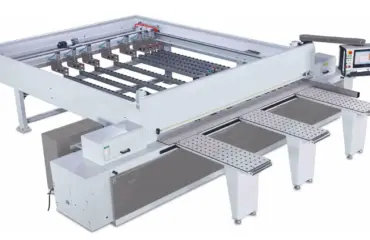
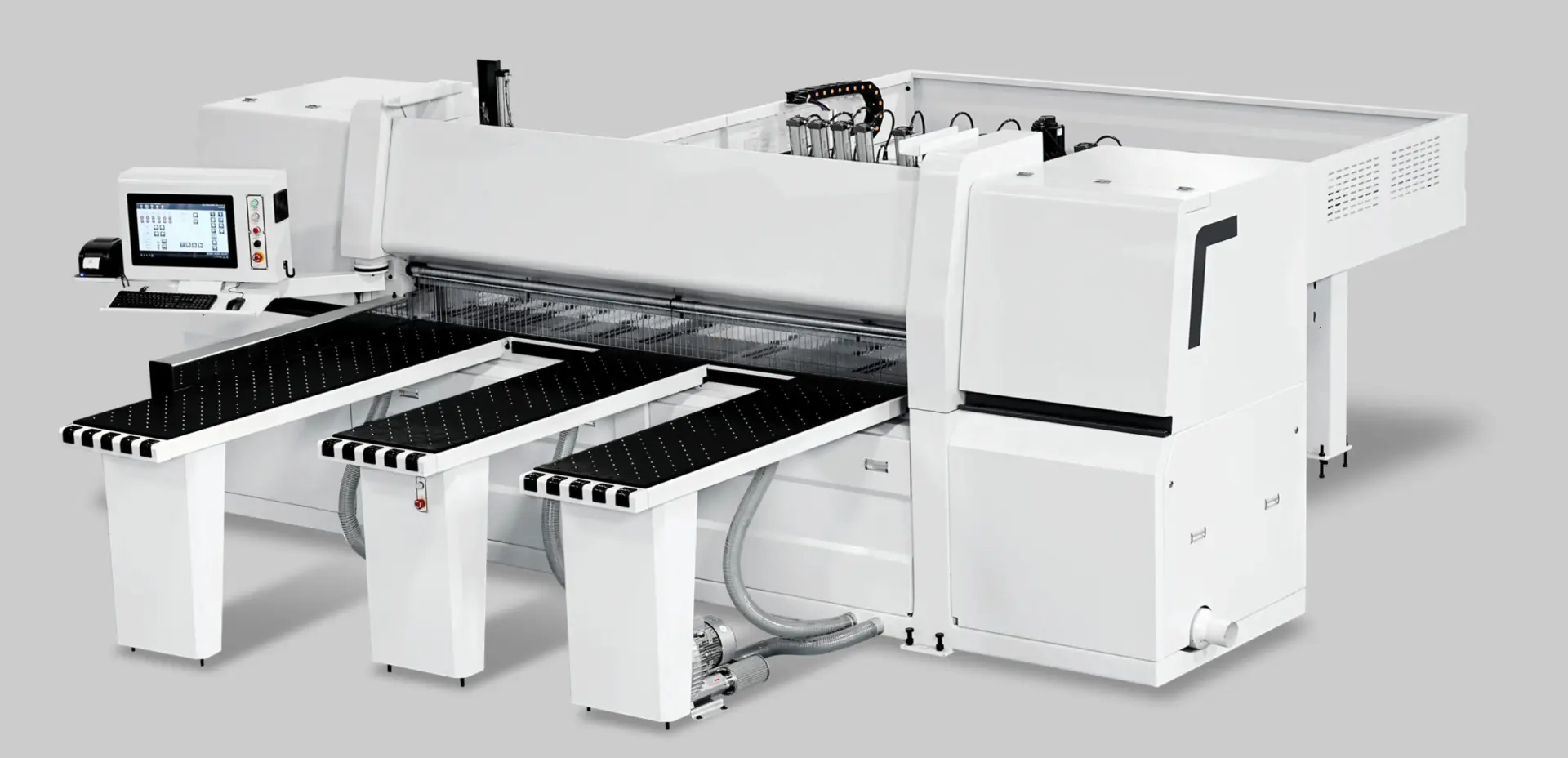
That is where a beam saw usually earns its place. Within the industrial panel saws category, beam-saw-style equipment is commonly chosen for repeated rectangular panel processing where throughput, repeatability, and batch control matter more than maximum cutting flexibility. The real value is not just that it cuts panels. It is that it helps the cut cell behave like a stable production stage.
Why Beam Saws Are Common In High-Volume Panel Work
High-volume panel processing has different priorities from custom cutting. The goal is not simply to make one accurate cut. The goal is to move repeated parts through the saw in a way that supports the rest of the production flow.
That usually means the factory needs some combination of the following:
- Repeated Rectangular Parts For Cabinets, Wardrobes, Or Furniture
- Faster Full-Sheet Breakdown Without Constant Manual Repositioning
- More Consistent Part Size From Batch To Batch
- Fewer Re-Cuts Before Edge Processing And Assembly
- Better Control Of Output As Production Volume Increases
In that context, a beam saw is well suited to front-end panel sizing because it is commonly used where the workload is structured, repeated, and strongly tied to downstream production stability.
The Main Benefits At A Glance
| Benefit | What It Improves | Why It Matters In Production |
|---|---|---|
| Throughput Stability | More regular panel output across shifts and batches | Downstream machines receive parts more predictably |
| Dimensional Repeatability | More consistent panel size and squareness | Edge banding, drilling, and assembly need fewer corrections |
| Lower Operator Dependence | Less variation tied to repeated measuring and repositioning | Output becomes easier to standardize across operators |
| Better Batch Flow | Easier sequencing and grouping of repeated parts | Reduces sorting confusion and part mix-ups |
| Cleaner Line Balance | A steadier front-end cutting stage | Other departments spend less time waiting or rechecking |
| Scalable Output | More production capacity without adding manual cutting complexity at the same rate | Supports growth in cabinet and furniture volume |
| Reduced Rework Pressure | Fewer downstream issues caused by inconsistent sizing | Helps protect material, labor, and schedule reliability |
More Stable Throughput Than A Manual-Led Cutting Workflow
The first benefit most factories notice is not always peak speed. It is steadier output.
In high-volume environments, the real cost of a slow cutting department is not only the number of sheets processed per hour. The bigger issue is stop-and-go flow. Operators pause to measure again, reposition panels, confirm dimensions, or correct small errors before the next batch can move forward. That interrupts the rhythm of the entire line.
A beam saw is commonly selected because it helps make repeated panel sizing more structured. When the cutting stage becomes more regular, several practical improvements usually follow:
- Fewer Interruptions Between Similar Batches
- Less Time Lost To Repeated Manual Alignment
- Better Coordination Between Cutting And The Next Operation
- More Predictable Output During Long Production Runs
For factories processing large volumes of cabinet sides, shelves, doors, bottoms, and tops, that stability is often more valuable than isolated claims about cutting speed.
Better Repeatability Protects Downstream Quality
High-volume panel processing is rarely judged at the saw alone. A panel that is slightly off in size or squareness may still look usable at the cutting station, but the problem usually appears later. Edge banding can become less consistent. Drilling alignment may need to be checked again. Assembly teams may start compensating for parts that should already fit.
That is why repeatability is one of the strongest beam saw benefits. The machine is commonly used where the factory needs panel dimensions to stay more consistent across repeated production. The workflow outcome is straightforward: downstream operations spend less time correcting variation that should have been controlled earlier.
This matters most when the production line depends on:
- Repeated Panel Dimensions Across Many Similar Orders
- Reliable Edge Preparation Before Finishing Or Assembly
- Consistent Hardware And Joinery Positioning
- Faster Assembly With Fewer Fit-Up Surprises
The saw does not create downstream quality by itself, but it helps provide a more consistent starting point for the rest of the process.
Lower Operator Dependence Supports Standardization
One reason manual-led cutting cells become hard to scale is that too much performance depends on individual technique. A strong operator may keep quality high, while a rushed or less experienced operator introduces variation through measuring habits, handling style, or cut sequencing.
Beam saw workflows are often preferred in volume production because they reduce how much the result depends on constant manual judgment during every cut. That supports standardization in several ways:
- Output Becomes Easier To Repeat Across Shifts
- Training Pressure On Repetitive Cutting Tasks Is Reduced
- Supervisors Spend Less Time Managing Avoidable Variation
- The Cutting Department Becomes Easier To Integrate Into Broader Production Planning
This does not mean the operator stops mattering. Tooling condition, machine setup, material quality, and daily discipline still matter. But the process becomes less fragile when repeated panel sizing relies less on manual correction.
Better Batch Control Helps The Whole Line Move Cleaner
In a high-volume furniture or cabinet plant, cutting is only the start of part flow. Panels must move into edge banding, boring, drilling, sorting, staging, and final assembly without confusion. When the cut cell produces parts in a more orderly way, the benefit spreads beyond the saw.
Factories often value beam saws because they fit batch-oriented production logic. That makes them well suited to environments where the shop needs cleaner sequencing of repeated parts rather than improvised cutting decisions throughout the day.
The practical result can include:
- Easier Part Grouping By Order Or Batch
- Fewer Mix-Ups Between Similar Components
- Cleaner Handoffs To Edge Processing And Assembly Teams
- Less Need For Manual Rechecking Before The Next Stage
That kind of batch control is not only about efficiency. It also reduces the hidden cost of confusion, especially when many similar panels are moving through the same line.
A Beam Saw Makes It Easier To Scale Panel Output
As order volume rises, many shops find that manual or semi-manual cutting workflows become increasingly difficult to stretch. The problem is not just labor cost. It is that every increase in volume adds more opportunities for repeated handling, checking, and correction.
A beam saw is often considered when the factory wants to expand output without scaling manual cutting complexity at the same rate. In practical terms, that helps when the business is moving from moderate production into more sustained batch work.
The key advantage is not that one machine solves growth on its own. It is that the cutting stage becomes easier to plan as a production system. That can support:
- More Predictable Daily Panel Output
- Better Capacity Planning For Downstream Departments
- Reduced Pressure To Add Manual Workarounds As Volume Increases
- A More Reliable Front End For Larger Furniture Programs
For buyers planning future production rather than only current workload, this scaling effect is often one of the strongest reasons to evaluate a beam saw seriously.
Reduced Rework Pressure Can Improve Material Use
Factories sometimes expect a beam saw to reduce waste automatically. That expectation is too simple. Material utilization still depends on cut planning, batch discipline, tooling condition, and how parts are handled after cutting.
Even so, beam saws are commonly valued because they can help reduce waste indirectly in high-volume environments. When panel sizes are more repeatable and batches are easier to control, factories often see less avoidable loss from:
- Re-Cuts Caused By Dimensional Variation
- Part Mix-Ups That Force Panels To Be Remade
- Downstream Rejection Of Parts That Should Have Matched The Cut List
- Extra Manual Handling That Increases Error Risk
So the benefit is best described as better control over rework pressure, not a guarantee of perfect material optimization.
Where A Beam Saw Usually Fits Better Than A Sliding Table Saw
The most useful comparison is often not beam saw versus beam saw. It is beam saw versus a more flexible cutting approach.
For example, shops comparing beam-saw-style panel production with sliding table saws should focus on workflow fit, not generic claims about one machine being better.
| Production Need | Beam Saw | Sliding Table Saw |
|---|---|---|
| High-Volume Repeated Rectangular Panels | Usually Stronger Fit | Usually Less Efficient For Sustained Batch Volume |
| Flexible Mixed Jobs And Frequent One-Off Cuts | Less Flexible | Usually Stronger Fit |
| Lower Dependence On Repeated Manual Measuring | Usually Stronger Fit | More Operator-Dependent |
| Custom Shop Versatility | More Limited Outside Repeated Panel Logic | Usually Stronger Fit |
| Front-End Support For A Structured Production Line | Usually Stronger Fit | Often Better For Smaller Or Mixed Workflows |
That comparison keeps the decision honest. A beam saw is not the universal answer for every shop. It is strongest when rectangular panel throughput and repeatability dominate the workflow.
What A Beam Saw Will Not Fix By Itself
Even a well-matched beam saw cannot compensate for broader workflow problems if the rest of the factory is not prepared.
Common limits include:
- Poor Sheet Staging Before Cutting
- Weak Cut-List Discipline Or Batch Planning
- Dull Or Incorrect Tooling
- Inadequate Part Sorting After Cutting
- Layout Bottlenecks Around Infeed And Outfeed
- Highly Customized Or Shape-Driven Production That Requires A Different Process Strategy
This is an important buying reality. A beam saw can improve a well-structured production workflow, but it cannot turn a poorly organized cutting department into a smooth line by itself.
Practical Summary
The main beam saw machine benefits in high-volume panel processing are not limited to faster cutting. The bigger gains usually come from steadier throughput, better repeatability, lower operator dependence, cleaner batch flow, and stronger support for downstream operations. In cabinet, wardrobe, and furniture production built around repeated rectangular panels, those benefits can make the cutting stage far easier to manage as a true production function.
The tradeoff is just as important to understand. A beam saw is most effective when the workflow is structured, volume-oriented, and centered on repeatable panel sizing. If the shop is dominated by flexible one-off work, irregular part geometry, or weak material handling discipline, the value will be more limited. But when the real need is to make front-end panel processing more stable at production scale, a beam saw is often one of the clearest machine choices to evaluate.