In high-throughput manufacturing, sanding problems rarely appear as a sanding discussion at first. They show up as panels waiting before coating, operators blending surfaces by hand to correct visible variation, or finished parts coming back because the surface was not consistent enough for the next stage.
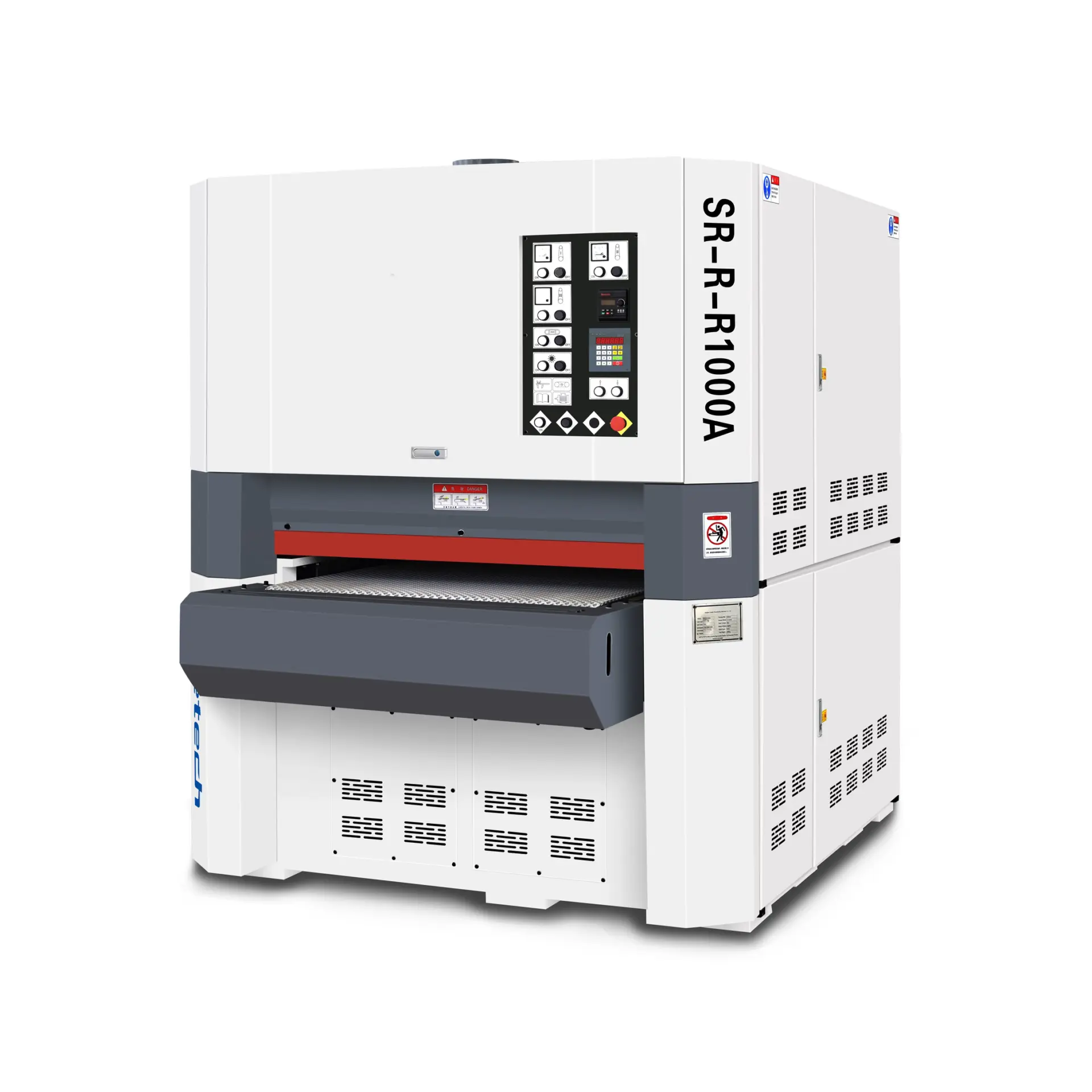
That is why a wide belt sander should not be evaluated as a stand-alone finishing machine. For manufacturers reviewing wide belt sanders for faster production, the real question is not whether the machine can remove material quickly. It is whether the sanding workflow helps the factory keep surface preparation stable enough for coating, laminating, inspection, and assembly to move without repeated correction.
Why Sanding Becomes A Throughput Problem
In many factories, cutting, drilling, and edge processing get most of the attention because they look like obvious production stages. Sanding is often treated as a finishing step near the end of the line. In practice, it can become one of the main points where throughput slows down.
That happens when the factory needs more than material removal. It needs parts leaving the sanding stage with a predictable surface condition from one batch to the next.
When that does not happen, the cost is usually seen in:
- Panels Held Back Before Coating Or Lamination
- More Manual Blending On Large Flat Surfaces
- Extra Inspection Because Surface Quality Is Unstable
- Rework Caused By Scratch Pattern Inconsistency
- Downstream Delays While Other Departments Wait For Acceptable Parts
For high-throughput lines, the value of wide belt sanding is usually tied to removing those interruptions, not just to sanding faster in isolation.
Where Throughput Gains Actually Come From
Factories often talk about sanding throughput as if it is mostly about how aggressively the machine removes stock. In real production, output depends just as much on consistency, batch continuity, and how much manual correction is still needed after the machine pass.
| Throughput Driver | What A Wide Belt Workflow Changes | Why It Matters In High-Throughput Production |
|---|---|---|
| Surface Calibration | Large flat parts can be processed with more consistent preparation from batch to batch | Reduces the need to stop for repeated flatness or surface checks |
| Scratch Pattern Stability | The sanding result becomes more repeatable than a heavily manual process on repeated work | Helps downstream finishing stages receive more predictable parts |
| Batch Continuity | Repeated panels can move through sanding in a steadier rhythm | Makes it easier to balance sanding with coating, inspection, and handling |
| Labor Allocation | Less labor stays tied to repeated face sanding on routine parts | Operators can shift toward staging, inspection, and detail work that still requires judgment |
| Rework Control | Fewer panels should need secondary correction when the process is stable | Protects actual output instead of creating hidden work after the machine |
That is the important distinction. A wide belt sander does not create high throughput simply because it is a larger machine. It creates throughput when it helps the factory reduce hand correction, keep panels moving, and deliver a more uniform starting point for the next department.
Finish Consistency Matters As Much As Material Removal
In high-volume production, finish consistency usually matters more than buyers expect.
If the sanding stage removes material quickly but still leaves visible variation across the panel face, the factory has not actually solved its throughput problem. The defect may only become obvious later, especially when a surface is prepared for coating, finishing, or close inspection.
This is one reason wide belt sanding is commonly used as part of a broader calibration-and-finishing workflow rather than as a simple stock-removal step. On solid wood parts, veneered panels, and other flat workpieces, the goal is often to create a surface that is more stable and more predictable before the next value-adding operation begins.
That does not mean every factory needs the same sanding standard. A utility-grade panel and a higher-visibility finished component do not place the same demands on the sanding stage. But in both cases, unstable finish quality creates hidden delays because parts either move forward with risk or stop for correction.
Material Mix Usually Decides Whether The Gain Holds Up
Wide belt sanders are often strongest where the work is repetitive enough for process stability to matter every hour of the shift.
If the factory runs a high share of large flat parts with similar preparation requirements, the value is easier to justify because the sanding stage can be organized around a repeatable workflow. If the factory changes constantly between different surface standards, part formats, or material conditions, the machine may still help, but the gains may depend much more on setup discipline and production planning.
That is why buyers should evaluate material mix honestly.
The real questions are usually:
- How Repetitive Are The Parts Moving Through The Sanding Cell?
- How Much Manual Face Sanding Is Still Required Today?
- Are Surface Defects Coming From Sanding, Or From An Earlier Upstream Problem?
- Does The Next Department Need More Speed, Or More Consistency?
- Is The Product Standard Stable Enough For A Repeatable Sanding Process To Pay Off?
If the answer points to repeated flat-part production and visible downstream friction, wide belt sanding is often easier to justify. If the answer points to highly irregular work, frequent one-off changes, or quality variation that originates upstream, the machine alone may not deliver the hoped-for improvement.
Wide Belt Sanders Do Not Replace Every Sanding Task
This is an important buying discipline. A wide belt sander can be a strong answer to high-throughput surface preparation, but it is not a universal replacement for every sanding need.
It is commonly well suited to:
- Repeated Flat Panels And Similar Large-Face Components
- Calibration And Surface Preparation Before Finishing
- Production Environments Where Manual Face Sanding Has Become A Bottleneck
- Workflows That Need More Predictable Surface Quality From Batch To Batch
It is usually less suited to:
- Irregular Profiles And Shaped Parts
- Narrow Edge-Only Correction Work
- Highly Varied One-Off Tasks That Change Constantly
- Final Touch-Up That Depends On Visual Judgment Or Localized Correction
That tradeoff matters because some factories overestimate what sanding automation can absorb. If the workload still contains a meaningful share of detail work, shaped components, or visual touch-up, the machine should be treated as a capacity tool for the right parts of the workflow, not as a total replacement for all sanding labor.
The Best Results Usually Come From Line Balance, Not The Machine Alone
Factories sometimes expect a wide belt sander to solve a finishing bottleneck by itself. In practice, the strongest results usually appear when the sanding stage is supported by the rest of the production system.
That includes factors such as:
- Stable Incoming Part Quality
- Good Material Staging Before The Sanding Cell
- Clear Separation Between Calibration Work And Final Surface Preparation
- Downstream Capacity That Can Absorb More Consistent Output
- Inspection Standards That Match The Product Quality Level
If those conditions are weak, the machine may still improve surface preparation, but the gain in true throughput can be diluted by waiting, sorting, repeated inspection, or correction after sanding.
This is especially important in high-throughput manufacturing, where one department only creates value if the next department can use the output cleanly. A faster sanding stage is not a real gain if finishing, coating, or assembly still has to stop and recover the process.
What Buyers Should Review Before Treating Sanding As A Capacity Upgrade
The most useful buying questions are usually workflow questions rather than feature questions.
| What To Review | Why It Matters | What To Ask Internally |
|---|---|---|
| Current Bottleneck | The factory may need more consistency rather than more raw sanding speed | Is sanding slow, or is rework after sanding the real problem? |
| Part Type | Wide belt sanding delivers the strongest value on repeated flat work | Are most parts suitable for structured face sanding, or does the mix stay irregular? |
| Finish Standard | Higher surface expectations make process stability more important | Is the goal basic preparation, or a surface that must hold up under visible finishing? |
| Labor Pattern | Repeated hand sanding often hides large amounts of non-value-added effort | How much time is still spent correcting routine parts by hand? |
| Upstream Stability | Sanding cannot fully compensate for every earlier process defect | Are surface issues being created before the parts even reach the sanding stage? |
| Downstream Readiness | Throughput only matters when the next stage can absorb the output | Will coating, inspection, or assembly benefit immediately from more stable sanding output? |
Factories that answer these questions clearly usually make better sanding-equipment decisions than factories that focus too heavily on the machine in isolation.
When A Wide Belt Sander Makes The Most Sense In High-Throughput Manufacturing
Wide belt sanders are commonly a strong fit when the factory processes enough repeated flat parts that surface preparation has to behave like a controlled production stage instead of a manual cleanup area.
They are often well suited to operations dealing with some combination of the following:
- Growing Output Pressure On Panel Or Component Production
- Too Much Labor Devoted To Repeated Face Sanding
- Surface Variation That Slows Coating Or Final Finishing
- Rework Loops Caused By Inconsistent Preparation Across The Batch
- A Need To Create More Predictable Flow Between Machining, Sanding, And Finishing
If the real production problem is stable high-volume surface preparation, wide belt sanding is often easier to justify. If the problem is mostly shaped-part detail work, irregular product mix, or upstream quality instability, the machine may help only part of the process.
Practical Summary
Wide belt sanders matter in high-throughput manufacturing because they can turn sanding from a labor-heavy correction stage into a more stable part of the production flow. The real value usually comes from better batch consistency, less repeated hand sanding on large faces, and cleaner handoff into downstream finishing or assembly.
The key tradeoff is fit. A wide belt sander creates the most value when the workload is repetitive enough, the surface standard is clear enough, and the rest of the line is organized well enough for stable sanding output to compound. In that environment, the gain is not just faster sanding. It is a more predictable production rhythm across the factory.