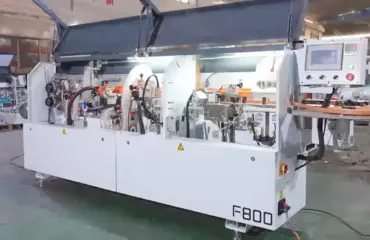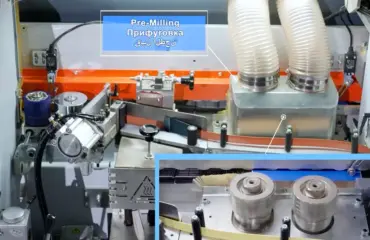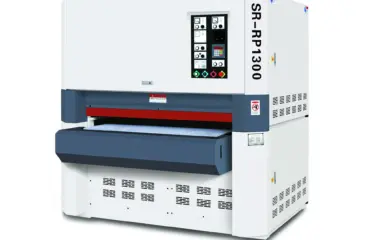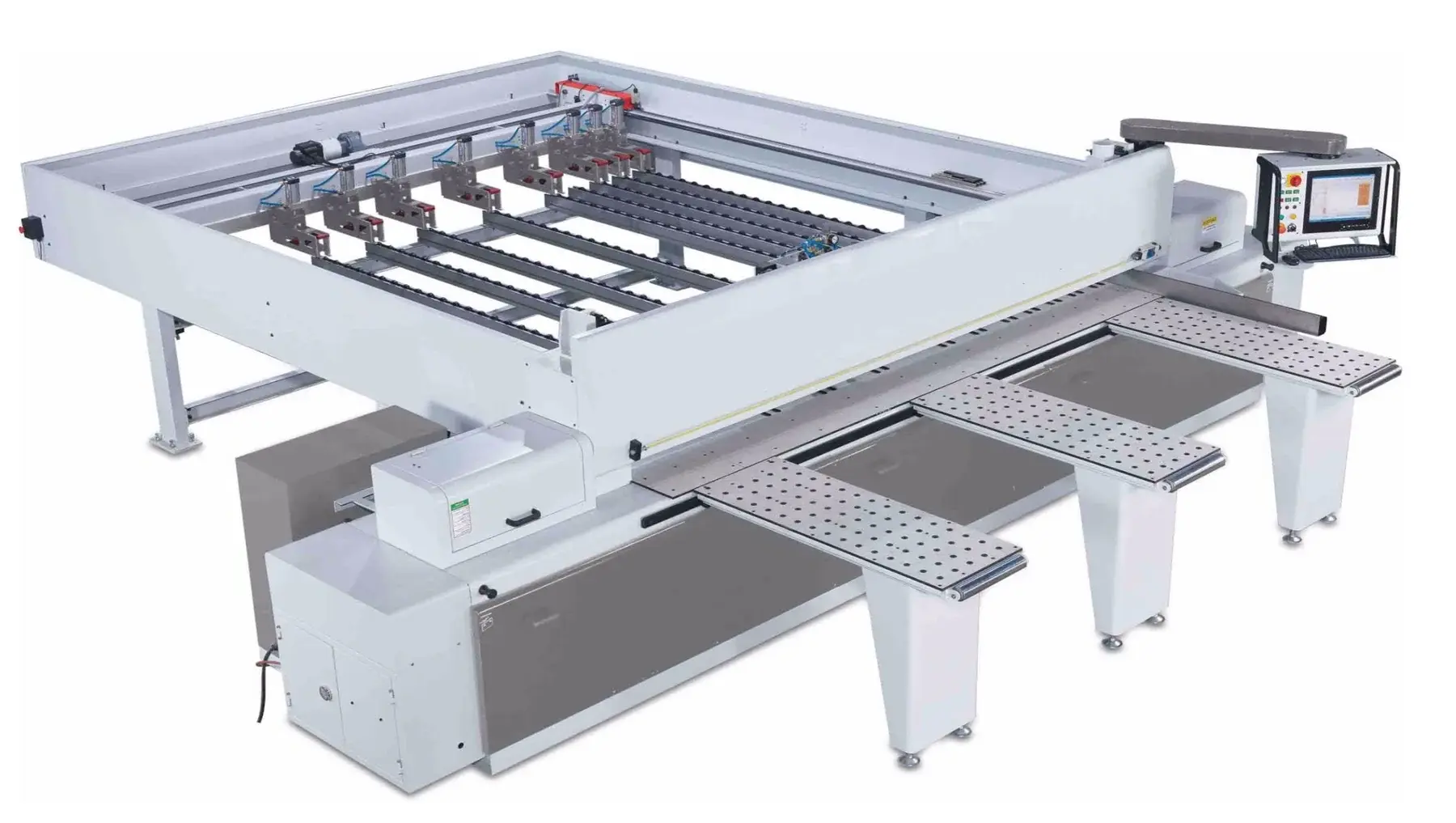
In a modern cabinet, closet, or panel-furniture factory, the saw is not just a cutting station. It is often the point where production rhythm is either stabilized or disrupted. If the front end cannot release correctly sized parts in the right order, edge banding, drilling, sorting, and assembly all inherit the same instability.
That is why CNC panel saw integration should be evaluated as a line-design decision rather than a stand-alone machine purchase. The real question is not only how fast the saw cuts, but how well it connects material staging, batch control, downstream accuracy, and daily production flow.
Why Integration Matters More Than Stand-Alone Cutting Speed
Many factories first look at a CNC panel saw through the lens of output. That is understandable, but incomplete. In a production line, speed only creates value when downstream stations can absorb the parts without confusion, waiting time, or repeated checking.
This is why a dedicated panel saw usually makes the most sense in operations where rectangular sheet parts move through a defined sequence and where production managers need more predictable front-end control. When the saw is integrated well, it does more than size panels. It helps standardize how work enters the line.
In practical terms, strong integration usually improves:
- Batch Release Discipline
- Part-Size Repeatability
- Material Flow Between Stations
- Line Balance Across Cutting, Edge Processing, And Drilling
- Visibility Into Where Delays Actually Begin
Without that integration, even a capable saw can become an isolated fast machine feeding a slow and disorganized process.
Where a CNC Panel Saw Usually Sits in the Workflow
In many woodworking lines, the CNC panel saw sits close to the front of production, just after sheet storage and before downstream part-processing stations. Its role is to convert full sheets into controlled batches of accurately sized components that can move forward with minimal rehandling.
The basic production logic often looks like this:
- Raw Panels Are Staged By Material, Thickness, And Job Priority.
- Cutting Programs Or Cut Lists Are Released In A Controlled Batch Sequence.
- The Saw Sizes Panels Into Production-Ready Parts.
- Parts Are Sorted, Labeled, Stacked, Or Buffered For The Next Operation.
- Downstream Stations Process Edges, Holes, Hardware Locations, And Assembly Steps.
That sequence sounds straightforward, but its success depends on how well the saw is connected to everything around it. If incoming sheets are not staged correctly, the saw waits. If parts are not sorted clearly after cutting, downstream teams waste time searching and rechecking. If batch order changes constantly, the line loses its rhythm before the first edge is processed.
The Upstream Conditions That Make Integration Work
Good panel saw integration starts before the blade moves. The saw performs best when the factory treats upstream preparation as part of the cutting process rather than as separate admin work.
The most important upstream conditions are usually:
- Material Staging: Sheets should arrive in a sequence that matches the release plan rather than forcing operators to hunt for the next board.
- Batch Logic: Jobs should be grouped in a way that supports downstream flow, not just theoretical cutting efficiency.
- Clear Part Identification: Labels, stack marks, or other part-tracking methods should make it obvious where each batch goes next.
- Cut-List Discipline: Last-minute manual changes can create confusion that spreads into every later station.
- Offcut Handling: Useful remnants should be managed without blocking fresh material movement.
Factories often underestimate this stage because the saw itself is seen as the main investment. In reality, the line gets its payback when preparation reduces stoppages and preserves sequence control.
The Downstream Processes a Panel Saw Must Protect
Once panels leave the saw, the next operations depend on consistent size, squareness, and part order. That makes panel saw integration a quality issue as much as a throughput issue.
For example, when parts move into edgebanders, variation at the cutting stage can show up as glue-line inconsistency, extra manual adjustment, or avoidable rework. The saw does not finish the part, but it strongly influences whether the next station can finish it efficiently.
The same logic applies when components move into boring and drilling machines. Hole-position accuracy later in the line depends on having correctly sized reference parts at the start. If panel dimensions drift, drilling consistency and assembly fit usually suffer.
This is why production managers often care less about the idea of “faster cutting” and more about whether the saw helps protect downstream stability. A well-integrated panel saw can support:
- Fewer Re-Cuts Before Edge Processing
- Less Manual Part Verification
- More Reliable Hardware Preparation
- Cleaner Assembly Handoffs
- Better Use Of Labor At Later Stations
In other words, the saw adds value when it reduces variation before that variation becomes expensive.
Panel Saw Front End vs. CNC Nesting Front End
One of the most important integration questions is whether the line should be built around a panel-saw-led front end or around CNC nesting machines. Neither approach is universally better. The right choice depends on part geometry, production mix, and how many processes the factory wants to combine at the front of the line.
| Front-End Approach | Best Fit | Main Strength | Main Tradeoff |
|---|---|---|---|
| CNC Panel Saw | Repeated rectangular sheet parts, cabinet batches, stable volume production | High-efficiency panel sizing and strong batch control at the start of the line | Less suitable when many parts are irregular, nested, or process-integrated |
| CNC Nesting | Customized furniture, mixed geometries, routing and drilling integration | Combines multiple operations and handles shaped parts more naturally | May add complexity when the main requirement is fast, repeatable rectangular sizing |
This distinction matters because line integration is really about choosing the right logic for the front end. If most output is standardized panel work, a panel saw often creates a cleaner foundation. If production is heavily customized and shape-driven, nesting may align better with the rest of the workflow.
The Integration Points That Usually Determine Payback
When factories say a CNC panel saw “worked” or “did not work,” they are often really talking about these supporting integration points:
| Integration Point | Why It Matters | What Happens If It Is Weak |
|---|---|---|
| Material Infeed Planning | Keeps the saw producing instead of waiting for the next sheet | Operators lose time between batches |
| Part Labeling And Sorting | Preserves sequence into downstream processes | Parts get mixed, delayed, or rechecked unnecessarily |
| Buffer Space After Cutting | Prevents the saw from overwhelming the next station | Output speed creates congestion instead of flow |
| Production Scheduling | Aligns cut release with actual downstream capacity | The saw creates inventory piles rather than line balance |
| Maintenance Routine | Protects repeatability over time | Accuracy drift appears as downstream quality problems |
These are the issues that usually decide whether a panel saw becomes a true production asset or just a faster front-end bottleneck.
Common Integration Mistakes in Modern Woodworking Lines
The most common mistakes are usually operational, not mechanical. Factories often invest in cutting capacity but leave the surrounding process unchanged.
Typical problems include:
- Installing the saw without enough room for clean infeed, outfeed, and temporary batch buffering.
- Releasing jobs based only on urgency instead of matching the pace of edge processing and drilling.
- Treating part sorting as an afterthought once output volume increases.
- Expecting the saw to fix poor cut-list discipline or weak production planning.
- Measuring success only by cuts per hour instead of by line stability and reduced rework.
These mistakes matter because modern woodworking lines are interconnected systems. If one station becomes faster without improving coordination, the result is often more confusion, not more output.
What Good Integration Looks Like on the Factory Floor
When integration is working, the change is usually visible in the rhythm of the factory. Operators spend less time waiting for the next sheet, less time rechecking part identity, and less time correcting issues that started at the front of the line. Supervisors gain a clearer view of where production is flowing and where it is actually constrained.
Good integration often looks like this in daily production:
- Sheets Arrive At The Saw In A Planned Sequence.
- Part Batches Leave The Saw In The Same Logic The Next Station Needs.
- Edge Processing And Drilling Receive More Consistent Workloads.
- Re-Cuts And Manual Corrections Decline.
- Assembly Receives Parts That Fit The Planned Process More Reliably.
That is the real objective. A CNC panel saw should not just increase cutting capacity. It should make the whole line easier to run.
Practical Summary
CNC panel saw integration in a modern woodworking line is strongest when the machine is treated as the controlled entry point for rectangular panel production rather than as an isolated cutting upgrade. The saw delivers the most value when material staging, batch release, part identification, downstream buffering, and maintenance discipline all support the same production logic.
For factories running repeated cabinet, wardrobe, and panel-furniture work, that kind of integration can improve throughput, repeatability, and downstream stability at the same time. For operations built around more irregular geometries or highly mixed production, a different front-end strategy may be the better fit. The right decision is the one that improves the line as a system, not just the speed of one station.