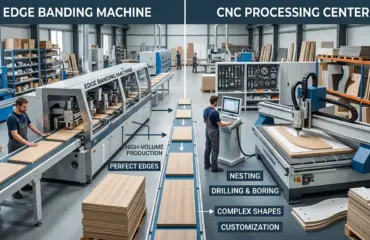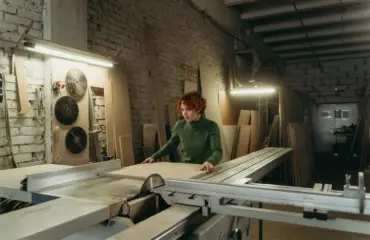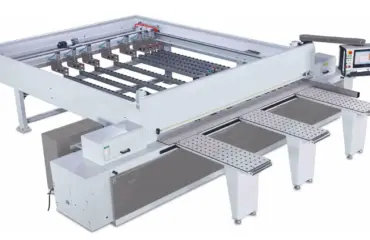
In batch furniture and cabinet production, panel cutting is rarely just a cutting task. It is the front end of a larger flow that has to feed edge banding, drilling, sorting, and assembly without constant rechecking. When that first stage is unstable, the rest of the factory spends time compensating for it.
That is why beam saws are commonly evaluated less as stand-alone machines and more as production tools for repeated panel sizing. For manufacturers reviewing panel saws for batch work, the real question is not whether a beam saw can cut quickly. It is whether the machine helps the line move faster, stay more consistent, and rely less on repeated manual correction.
Why Batch Processing Favors Beam Saw Workflows
Batch processing puts a different standard on a saw than custom or mixed-job production. The goal is not only to finish one cut accurately. The goal is to size repeated parts in an organized sequence so downstream operations receive panels in a predictable rhythm.
That is where beam saw workflows are commonly favored. In rectangular panel production, they are well suited to factories that need:
- Repeated Breakdown Of Sheet Goods Into Standardized Parts
- More Predictable Output From One Batch To The Next
- Better Coordination Between Cutting And Downstream Operations
- Less Dependence On Constant Manual Measuring And Repositioning
- A More Scalable Front-End Process As Order Volume Grows
The practical advantage is not that a beam saw makes every shop more advanced by default. It is that beam-saw-style production is usually a better fit when the work is repetitive enough for structured cutting logic to pay off.
Where Throughput Gains Actually Come From
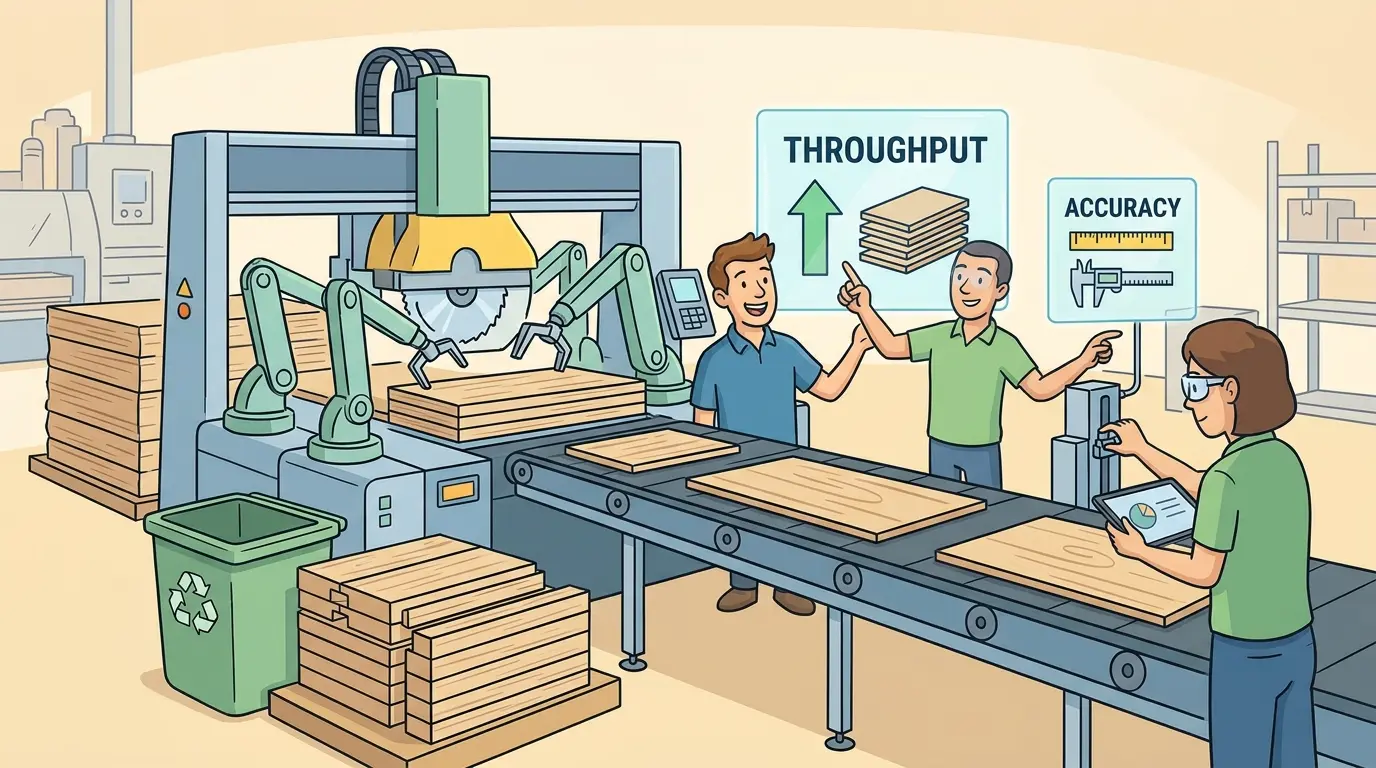
Throughput is often discussed as if it means blade speed alone. In real production, throughput depends just as much on how steadily parts move through the cutting cell as on how fast material is physically cut.
Beam saw gains usually come from reducing the small interruptions that slow batch work down: repeated measuring, manual repositioning, inconsistent cut sequencing, and operator-dependent variation from sheet to sheet.
| Throughput Driver | What The Beam Saw Changes | Why It Matters In Batch Production |
|---|---|---|
| Cut Sequencing | Repeated programs can be run in a more structured order | Reduces stop-start decision-making during large batches |
| Panel Handling | Material movement is more production-oriented than fully manual cutting workflows | Helps maintain flow when processing many similar parts |
| Operator Workload | Less time is spent on repeated layout checks and repositioning | More time can go to staging, sorting, and flow control |
| Batch Continuity | One batch can move into the next with fewer interruptions | Supports steadier output across the shift |
| Downstream Readiness | Parts arrive in a more repeatable pattern | Edge banding, drilling, and assembly can plan around cleaner front-end output |
That does not mean every factory sees the same gain. If sheet staging is poor, labels are inconsistent, or finished parts are not sorted correctly after cutting, the machine will not create strong throughput on its own. The savings show up when the saw is part of a disciplined production system.
Accuracy Protects More Than The Cut Itself
In batch processing, accuracy matters because sizing errors do not stay at the cutting station. They move downstream into edging, boring, hardware preparation, and final assembly. A small variation that looks manageable at the saw can become visible rework later when panels no longer align cleanly with the rest of the batch.
Beam saws are commonly selected for repeatability as much as for speed. More consistent panel sizing helps stabilize:
- Edge Banding Fit And Edge Quality
- Drilling And Boring Alignment
- Hardware Placement Consistency
- Squareness In Cabinet Assembly
- Re-Cut Rates And Manual Verification
It is still important to stay realistic. Accuracy does not come from machine architecture alone. Blade condition, material flatness, maintenance discipline, and setup consistency still shape the final result. The practical benefit is a more repeatable starting point, not automatic perfection under every condition.
How Labor Savings Usually Show Up
Labor savings in beam-saw environments are often misunderstood. The value usually does not come from removing people from the process entirely. It comes from changing what those people spend their time doing.
In many manual-heavy cutting cells, labor is absorbed by repeated measuring, material repositioning, checking part sizes, and dealing with preventable variation. In a better-organized beam saw workflow, more of that labor shifts toward higher-value tasks such as:
- Material Staging For The Next Batch
- Sorting And Organizing Finished Parts
- Verifying Batch Flow Rather Than Re-Measuring Every Piece
- Supporting Downstream Handoffs More Cleanly
- Managing Output Consistency Across The Shift
That distinction matters. A beam saw does not automatically reduce headcount in every shop. What it often does is help the same team handle more work with less repetitive manual effort and fewer interruptions caused by cutting inconsistency.
Beam Saw vs. Sliding Table Saw In Batch Work
For many buyers, the real decision is not whether a beam saw is a capable machine. It is whether the production model is repetitive enough to justify it over a more flexible cutting format. Compared with sliding table saws, beam saws are usually stronger where sustained batch logic matters more than operator-led adaptability.
| Workflow Factor | Beam Saw | Sliding Table Saw |
|---|---|---|
| Best Production Fit | Repeated rectangular panels in structured batch workflows | Mixed jobs, custom work, and more operator-led cutting |
| Main Strength | Throughput stability and repeatable sizing | Flexibility and hands-on control across varied tasks |
| Labor Pattern | More labor can shift toward staging and flow management | More labor often stays tied to measuring and cut execution |
| Downstream Impact | Better suited to feeding stable high-volume panel processes | Better suited to shops where flexibility matters more than line pace |
| Main Tradeoff | Less attractive when the work is highly varied or irregular | Usually less efficient for sustained batch volume |
This is why beam saws are not universally better. They are better aligned with a specific kind of production problem: repeated panel sizing at a pace and consistency level that supports the rest of the line.
The Savings Depend On The Whole Cell, Not Only The Machine
Factories sometimes expect a beam saw to solve cutting inefficiency by itself. In practice, the result depends heavily on the conditions around the machine.
The strongest outcomes usually appear when the factory also has:
- Clear Batch Planning Before Sheets Reach The Saw
- Reliable Material Staging And Infeed Organization
- Good Part Labeling And Sorting After Cutting
- Downstream Capacity That Can Absorb Faster Front-End Output
- Maintenance And Tooling Discipline That Protects Repeatability Over Time
If those conditions are weak, the machine may still cut well, but the full gain in labor efficiency and throughput will be diluted by congestion, mis-sorting, or repeated downstream correction.
When A Beam Saw Makes The Most Sense
Beam saws are commonly a strong fit when a factory processes a high share of sheet goods into repeated rectangular parts and wants cutting to behave like a controlled production stage rather than a skilled manual bottleneck.
They are often well suited to operations that are dealing with some combination of the following:
- Growing Batch Volume In Cabinet Or Furniture Production
- Pressure To Increase Output Without Expanding Cutting Labor At The Same Rate
- Frequent Re-Cuts Or Downstream Corrections Caused By Size Variation
- A Need For Better Coordination Between Cutting, Edging, Drilling, And Assembly
- A Shift From Flexible Small-Batch Work Toward More Standardized Production Runs
If the shop is dominated by one-off customization, irregular parts, or highly varied cutting tasks, a different workflow may fit better. But when the problem is sustained rectangular panel throughput, beam saw logic is often the more efficient answer.
Practical Summary
Beam saws matter in batch processing because they help convert panel cutting from a labor-intensive, interruption-prone activity into a more stable production function. The main benefits are usually not limited to faster cutting. They show up in steadier throughput, more repeatable part sizing, cleaner downstream flow, and labor that can be used more productively.
The important tradeoff is fit. A beam saw delivers the most value when the factory has enough repeated panel work, enough downstream structure, and enough production discipline for those gains to compound. In the right environment, the result is not just more output at the saw, but a calmer and more reliable line overall.