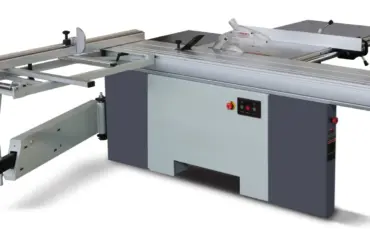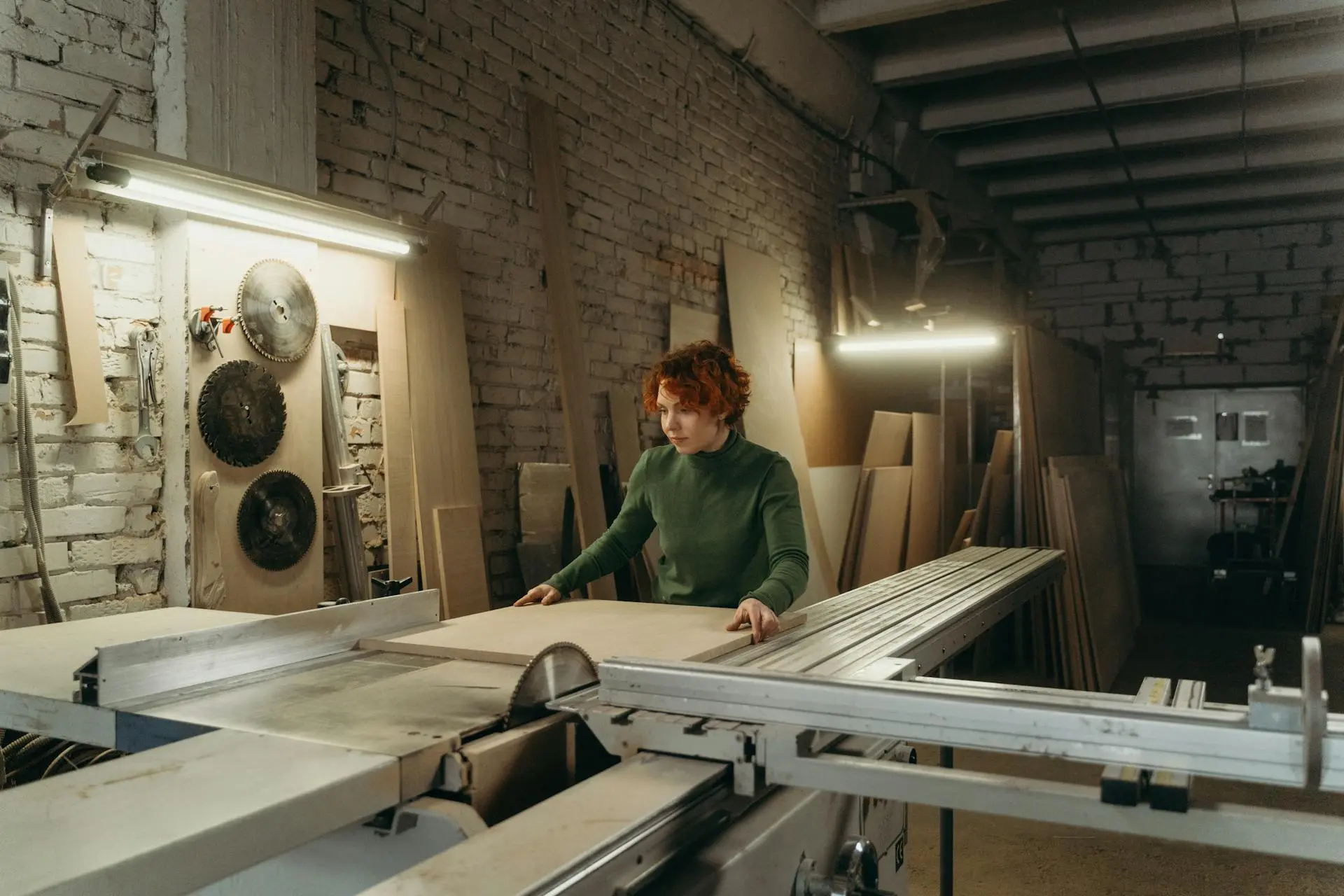
For many furniture and cabinet makers, the cutting station becomes a daily balancing act. One job may require fast, accurate panel sizing for cabinet boxes, while the next needs angled cuts, solid-wood trimming, or short-run custom parts that do not fit a rigid batch process. In that environment, buying a sliding table saw is less about buying another saw and more about deciding how much flexibility, operator control, and cut quality the shop needs at the front end of production.
A sliding table saw is not automatically the best choice for every factory. But it is commonly a strong fit when the work mix changes often, when cut quality still depends on hands-on judgment, and when the saw has to support both panel processing and more varied furniture-making tasks. This guide explains where a sliding table saw fits, what to compare before buying, and when another machine type may be the better investment.
What Problem Should a Sliding Table Saw Solve?
The wrong way to buy a sliding table saw is to start with the machine category alone. The better approach is to identify which production problems the saw is expected to remove.
In furniture and cabinet shops, a sliding table saw is often chosen to address issues such as:
- Inconsistent Cut Quality Across Mixed Jobs
- Too Much Time Lost On Constant Setup Changes
- Difficulty Handling Both Sheet Goods And Solid Wood On One Main Saw
- Rework Caused By Poor Control On Visible Or Finish-Sensitive Cuts
- A Need For More Versatility Than A Dedicated Batch-Cutting Machine Usually Provides
That makes the buying decision highly workflow-dependent. If the goal is simply to push large volumes of repeated rectangular panels through the line every day, a different machine may fit better. If the goal is to keep a varied production schedule moving without sacrificing operator control, a sliding table saw often deserves serious consideration.
Where a Sliding Table Saw Fits Best in Furniture and Cabinet Work
In practical terms, a sliding table saw is usually strongest in shops that are not fully standardized around one narrow cutting pattern. That includes custom cabinet makers, mixed-production furniture shops, joinery businesses, and manufacturers that move between short runs, one-off pieces, and recurring orders.
It is commonly well suited to work that includes:
- Custom Cabinet Components
- Small To Mid-Volume Furniture Production
- Solid-Wood And Panel-Based Work In The Same Shop
- Angled, Beveled, Or Operator-Guided Cutting Tasks
- Jobs Where Material Appearance And Edge Cleanliness Matter
The main advantage is not only that the saw can cut accurately. It is that the operator can stay close to the work, make controlled adjustments, and handle a wider range of part types without forcing the shop into a fully standardized batch-cutting model.
That flexibility often translates into practical outcomes such as cleaner visible cuts, fewer awkward workarounds on mixed jobs, easier changeovers between part types, and less friction when the production schedule shifts during the day.
Sliding Table Saw vs. Panel Saw vs. CNC Nesting
Many furniture and cabinet makers are not really deciding between one saw and another. They are deciding between different production philosophies.
| Machine Type | Best Fit | Main Advantage | Main Tradeoff |
|---|---|---|---|
| Sliding Table Saw | Custom furniture, mixed cabinet work, and varied operator-led cutting | High flexibility and direct control across different job types | Lower throughput in repeated batch cutting than a dedicated production system |
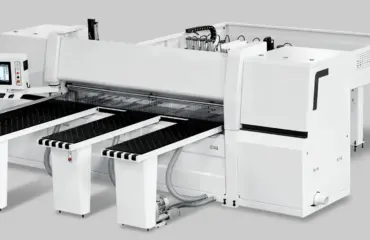
| Panel saws | Repeated rectangular panel cutting in higher-volume cabinet and furniture production | Faster, more standardized panel sizing for batch workflows | Less adaptable when jobs change often or cuts are more varied |
| CNC nesting machines | Customized panel work combining cutting with routing or drilling | Multi-process integration and efficient handling of shaped or nested parts | May be more machine than needed if the main requirement is versatile saw-based cutting |
This comparison matters because shops often overbuy for one problem while ignoring another. A panel saw can be the better answer when the business runs repeated cabinet parts all day and cutting speed is the main bottleneck. A nesting machine can be the better answer when customization, routing, and drilling integration drive the workflow. A sliding table saw is often the smarter choice when the shop needs a capable, accurate cutting center that can adapt from job to job without losing too much control to automation or fixed process structure.
Buying Criteria That Actually Matter
Before comparing individual machines, pressure-test the decision against the way the shop really works.
| Buying Criterion | Why It Matters | What To Clarify Before Buying |
|---|---|---|
| Product Mix | Determines whether flexibility or dedicated throughput matters more | Are most jobs custom, short-run, or mixed, or are they highly repetitive? |
| Material Range | Affects how valuable one versatile saw station will be | Will the saw handle sheet goods only, or also solid wood and more varied components? |
| Cut Variety | Shows whether operator-guided control is a real advantage | How often do you need angled cuts, trimming, sizing, and varied part handling in one day? |
| Throughput Requirement | Prevents choosing flexibility when production really needs speed | Is the current bottleneck job variation, or simply not enough output capacity? |
| Visible-Finish Sensitivity | Connects the saw choice to downstream quality expectations | How costly are chips, rough cuts, or inconsistent edges before assembly or finishing? |
| Operator Skill Model | Influences how much value the shop can get from a manual-guided machine | Will skilled operators run the saw consistently, or does the business need stronger process standardization? |
| Changeover Frequency | Helps measure the real cost of moving between jobs | Does the shop spend much of the day shifting between different part types and setups? |
| Future Production Direction | Stops the purchase from solving only today’s problems | Is the business staying custom-focused, or moving toward heavier batch production? |
These factors usually reveal more than a feature checklist. A shop that wins work through flexibility, mixed materials, and quick response times often gains more from a well-chosen sliding table saw than from a more rigid high-throughput cutting solution. A shop trying to industrialize repeated cabinet output may find the opposite.
What Furniture and Cabinet Makers Should Prioritize
For this type of buyer, the strongest evaluation points are usually tied to workflow rather than brochure language.
Prioritize the machine that helps you:
- Keep Cut Quality Stable Across Different Materials And Job Types.
- Move Between Cabinet Parts, Furniture Components, And Special Cuts Without Excessive Downtime.
- Reduce Rework On Parts That Need Good Fit Before Edge Processing, Drilling, Or Assembly.
- Support Skilled Operators Without Making Results Too Dependent On Improvised Workarounds.
- Match The Actual Production Style Of The Shop Instead Of An Idealized Future Layout That Does Not Yet Exist.
That last point matters. Many cabinet and furniture businesses are neither purely custom nor purely high-volume. They live somewhere in between. In those cases, a sliding table saw often works because it protects production flexibility while still improving accuracy and daily control.
When a Sliding Table Saw May Not Be the Best Choice
A sliding table saw is a strong tool for many shops, but it is not universally better than other cutting solutions.
It may be a weaker fit when:
- Most Output Comes From Repeated Rectangular Panels In Long Batches
- The Main Problem Is Front-End Throughput Rather Than Flexibility
- The Business Wants To Reduce Operator Dependence As Much As Possible
- Production Is Already Organized Around Standardized Cabinet Modules
- Cutting Needs To Feed A Faster, More automated downstream line with minimal variation
In those cases, a dedicated panel-cutting workflow may create more value. The issue is not that a sliding table saw cannot do the work. The issue is that it may solve the wrong problem. Flexible cutting is useful, but if the factory mainly suffers from slow batch sizing, operator-led versatility will not remove the core bottleneck.
Questions to Ask Before You Buy
Before making the purchase, ask these questions plainly:
- Are We Buying For Flexibility, Or Are We Actually Trying To Increase Batch Throughput?
- How Often Does The Shop Change Between Materials, Part Types, And Cut Styles?
- How Much Of Our Current Cut Quality Depends On Individual Operator Technique?
- Do We Need One Saw To Cover A Broad Range Of Work, Or A More Specialized Machine To Stabilize A Repetitive Process?
- Will This Saw Improve The Flow Into Downstream Operations, Or Only Improve The Cutting Station In Isolation?
- Does Our Future Business Model Still Reward Versatility, Or Is It Moving Toward Standardized High-Volume Panel Processing?
These questions usually make the decision clearer than comparing isolated machine features without context.
Practical Summary
Choose a sliding table saw when your furniture or cabinet shop needs a cutting solution that stays accurate across varied work, supports operator control, and handles frequent job changes without forcing the business into a narrow batch-production model. It is commonly the right fit for custom work, mixed materials, short runs, and shops that value flexibility as much as output.
If the real need is faster, more repeatable sizing of large volumes of rectangular panels, another machine type may fit better. The strongest buying decision comes from matching the saw to the factory constraint you actually feel every day. For many furniture and cabinet makers, that constraint is not simply speed. It is the need to cut cleanly, adapt quickly, and keep a varied workflow moving with less rework and less friction.