In high-volume woodworking, drilling is only fast enough if every hole lands where the next operation expects it. When cabinet sides, shelves, drawer components, and case parts reach hardware preparation with small positioning errors, unstable batch order, or too much manual checking, the cost does not stay in the drilling area. It shows up later as fitting delays, inconsistent assembly, and avoidable rework.
That is why drilling equipment should not be judged by cycle speed alone. Real value appears when hole patterns stay repeatable across shifts, part flow remains organized, and the drilling cell keeps pace with the rest of the factory. For buyers comparing dedicated boring and drilling machines for cabinet and furniture production, these are the factors that usually matter most.
Product Mix Comes Before Machine Complexity
The first question is not how advanced the machine looks. It is whether the work itself is repetitive enough to benefit from a dedicated drilling process.
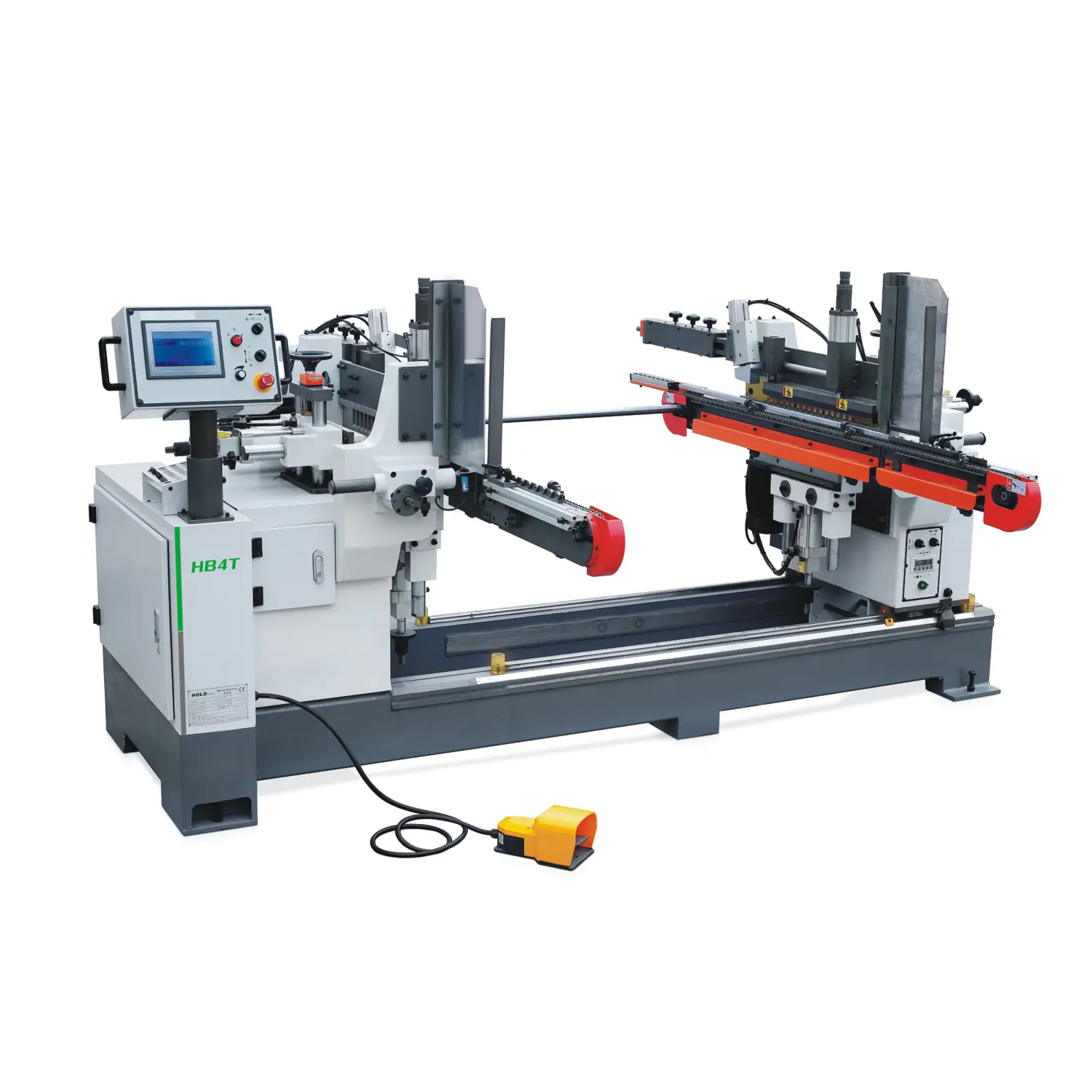
Boring and drilling machines are commonly a strong fit when the factory runs repeated cabinet parts, wardrobe panels, shelves, drawer components, and other panel-based products with predictable hardware and joinery logic. In that environment, a dedicated drilling cell can help turn hole preparation into a more stable, less operator-dependent process.
If the product mix changes constantly, includes many irregular shapes, or combines routing and drilling in the same job structure, the selection logic changes. A highly repetitive drilling workload usually rewards specialization. A highly variable workload often rewards flexibility, even if the dedicated machine looks stronger on paper.
Factories often make poor drilling investments when they compare machine types before they first confirm what percentage of daily output actually follows repeated hole-pattern logic.
Throughput Only Matters If Hole Positioning Stays Repeatable
In high-volume woodworking, drilling speed matters only after repeatability is under control.
If the machine releases parts quickly but operators still need to re-check alignment, separate doubtful parts, or compensate during fitting, the line has not really gained capacity. The better measure is whether the drilling process helps deliver:
- More reliable hardware fit
- Cleaner joinery preparation across the batch
- Less re-measuring before assembly
- Fewer left-right or front-back mix-ups
- More predictable flow into insertion, fitting, and final assembly
This is especially important in cabinet and wardrobe production, where small drilling inconsistencies can create visible problems later. A slightly unstable hole pattern may not seem serious at the machine, but it can slow installation of hardware, throw off part matching, or force assembly teams to correct problems that should have been prevented earlier.
Machine Type Should Match The Part Family
Not every drilling workload needs the same machine layout. The right choice usually depends on the part family, the batch structure, and how much drilling needs to be completed before the part moves on.
| Machine Type | Best Fit In Production | Main Advantage | Main Tradeoff |
|---|---|---|---|
| Single-Row Boring Machines | Repeated panel components where the workflow can handle sequential drilling steps | Straightforward dedicated drilling for stable part families | More handling if multiple hole groups or faces must be processed separately |
| Double-Row Boring Machines | Higher-output cabinet lines that need more hole groups completed with fewer stops | Better fit when repeated panels move in steady batches | Less attractive when the product mix changes too often or setups become frequent |
| Multi-Spindle Boring Machines | High-volume panel furniture production with recurring hardware and joinery patterns | Stronger repeatability and faster release of repeated parts | Higher capacity only pays off if the line can feed it with organized batches |
| Specialized Drawer-Panel Boring Machines | Drawer components with recurring joinery preparation | Better consistency for drawer production and assembly fit | Too specialized if drawer work is only a small share of total output |
The practical point is simple: buyers should match the machine to the recurring workload, not to a peak-volume scenario that happens only occasionally.
The 32 Mm System Only Helps When The Whole Process Is Controlled
In panel furniture production, drilling accuracy is closely tied to system discipline. The 32 mm approach is valuable because it supports repeatable cabinet construction and hardware preparation, but that value depends on the factory maintaining control over the entire process around the drilling cell.
If panel size varies too much upstream, if edge quality changes part dimensions in an inconsistent way, or if part identification becomes messy between stations, even a capable boring machine will struggle to protect assembly fit. The machine may still drill correctly relative to the reference it receives, but the finished part can still create problems later.
This is why drilling equipment should be evaluated as part of a larger process chain. Stable boring results usually depend on:
- Consistent incoming part geometry
- Clear part orientation and batch control
- Reliable referencing from panel to panel
- Predictable part flow between cutting, edge processing, drilling, and assembly
A drilling upgrade often creates the best result when the factory is ready to standardize the workflow around it rather than expecting the machine alone to solve every accuracy problem.
Upstream And Downstream Coordination Decide Real Productivity
In a high-volume woodworking line, the drilling cell does not work alone. It depends on what happens before it and determines how smoothly the next department can operate.
If parts arrive in mixed order, if left and right components are not clearly managed, or if the drilling area becomes a holding point for material that was not properly staged, nominal machine output can look acceptable while real line output stays weak. The same problem appears downstream when assembly or hardware fitting slows because drilled parts still need checking.
That is why a drilling investment is often justified less by drilling speed itself and more by whether it improves the total movement of parts through the factory. In practical terms, the best upgrades usually help reduce:
- Waiting time between panel processing and assembly preparation
- Sorting errors between similar part families
- Manual inspection before hardware insertion
- Rework caused by repeated positioning mistakes
- Operator dependency during busy shifts
When these issues stay high, the real constraint may be process coordination rather than machine capability.
The Best Buying Criteria Are Workflow Criteria
For drilling equipment, the most useful evaluation is usually not a feature list. It is a workflow check.
| What To Evaluate | Why It Matters In High-Volume Woodworking | What To Ask Internally |
|---|---|---|
| Part Repetition | Determines whether a dedicated boring process will be used often enough to matter | Are most daily parts built around repeated hole logic, or does the pattern change constantly? |
| Hole-Pattern Stability | Shows whether better drilling repeatability will reduce fitting problems | Do operators regularly re-check hole locations before hardware fitting or assembly? |
| Batch Discipline | Affects how well the machine can sustain output without confusion | Can the factory keep left-right parts, panel families, and orders organized through the drilling area? |
| Upstream Accuracy | Clarifies whether incoming parts are stable enough for repeatable boring | Are sizing and edge quality already controlled well enough to support reliable referencing? |
| Changeover Frequency | Helps reveal whether specialization or flexibility is the better fit | How often do products, hardware requirements, or drilling patterns change during the day? |
| Downstream Sensitivity | Shows how much drilling variation affects the rest of the line | Does assembly, fitting, or inspection regularly absorb drilling-related errors? |
| Specialization Need | Prevents overbuying for occasional tasks | Is drawer drilling or another special operation common enough to justify a dedicated solution? |
| Growth Direction | Keeps the decision aligned with the factory’s next production stage | Is the business moving toward more repeated cabinet work, higher customization, or more integrated machining? |
Factories that answer these questions clearly usually make better drilling decisions than factories that start with abstract capacity comparisons.
When A Dedicated Boring Machine Is Usually The Better Fit
A dedicated boring and drilling solution is often the better answer when the factory is built around repeated rectangular panel parts and assembly depends on predictable hardware preparation.
That usually includes operations where:
- Cabinet and wardrobe components follow recurring hole patterns
- Assembly teams benefit from more consistent hardware fit
- Throughput depends on releasing repeated part families without delay
- Management wants less operator-dependent drilling quality
- The current bottleneck appears in fitting, checking, or rework rather than in cutting alone
In those environments, a dedicated drilling cell can help stabilize one of the most sensitive parts of the workflow. The gain is not just faster boring. It is cleaner release of ready-to-assemble parts.
When Integrated CNC Processing May Be The Better Fit
Not every factory should solve drilling needs with a stand-alone boring machine.
If the production model combines cutting, routing, shaped parts, and drilling in one digital workflow, then CNC nesting machines may be the better fit. That is often true when the work includes nested layouts, more customized part geometry, or a stronger need to combine several machining steps before the part moves downstream.
The tradeoff is straightforward. A dedicated boring machine is often stronger when the real problem is repeated hole preparation at scale. An integrated CNC workflow is often stronger when the real problem is coordinating several machining steps around variable part designs. One is not universally better than the other. The correct choice depends on what the factory is actually trying to stabilize.
Practical Summary
In high-volume woodworking, boring and drilling machines create value when they make part preparation more repeatable, reduce checking between departments, and help assembly receive parts that fit the first time.
The most important buying questions are usually not about maximum theoretical speed. They are about product repetition, hole-pattern stability, batch discipline, upstream accuracy, and how strongly drilling quality affects the rest of the line. If the factory is built around repeated cabinet and furniture components, a dedicated boring solution is often a practical way to improve workflow control. If the work is more variable and machining steps need to stay combined, an integrated CNC approach may make more sense.
The practical test is simple: judge the machine by the quality and consistency of the parts it sends forward, not just by how quickly it drills in isolation.