When a factory moves into real batch production, panel cutting stops being a simple sawing task and becomes the pacing function for the rest of the line. If the front end cannot size panels quickly and consistently, edge banding, drilling, sorting, and assembly either wait for parts or receive parts that need to be checked again.
That is why buyers looking at panel saws for high-volume work should expect more than faster cutting alone. The real question is what changes in throughput, repeatability, labor flow, and downstream stability once a dedicated panel-sizing machine becomes part of the production system.
High-Volume Batch Processing Changes the Buying Standard
In lower-volume or highly mixed production, a saw is often judged by flexibility. In batch processing, the standard changes. The machine has to support repeated output, predictable flow, and easier coordination with the next operations.
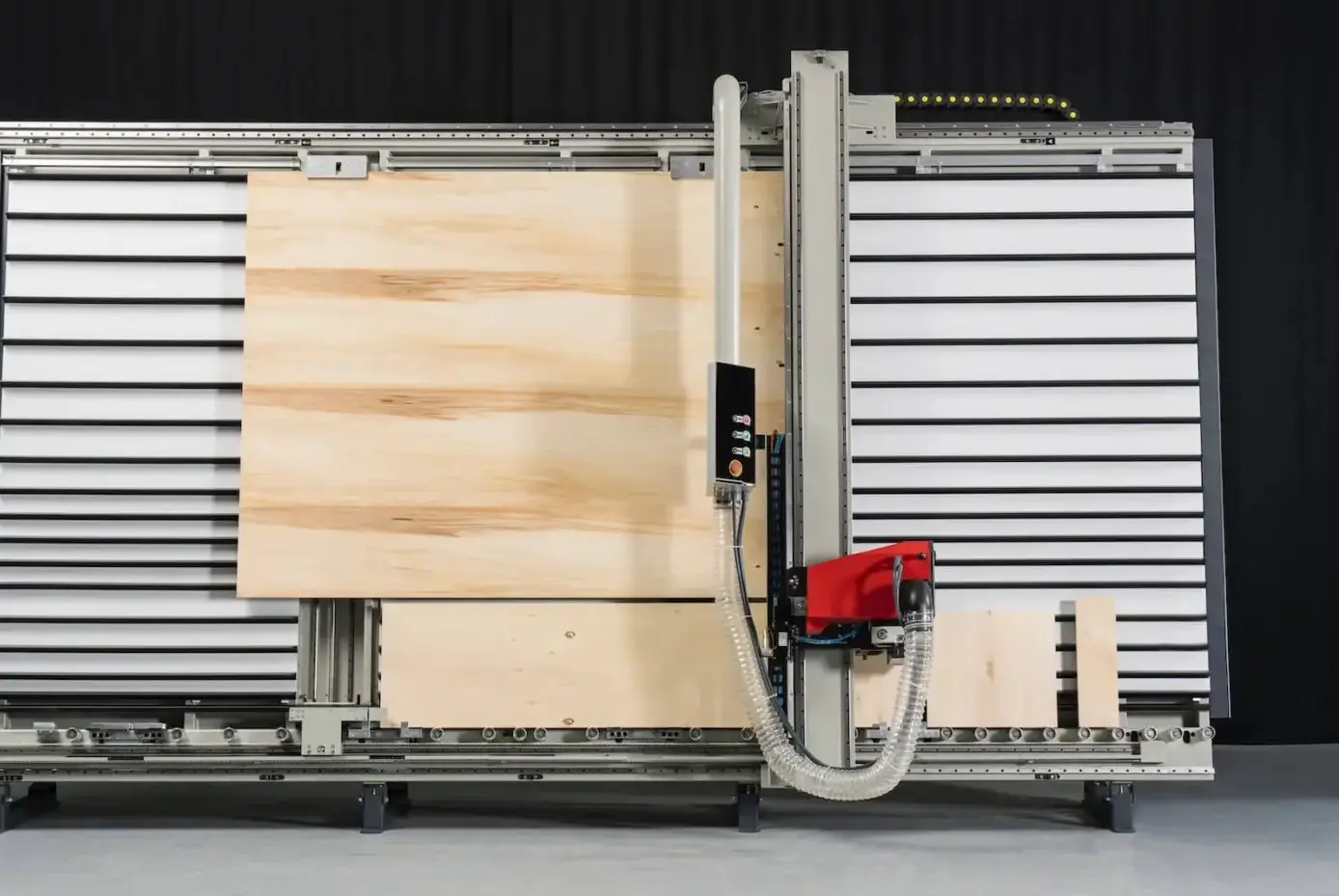
For that reason, a panel saw is usually evaluated less as a stand-alone machine and more as a front-end production tool for rectangular panel processing. In many furniture and cabinet environments, it is discussed in the same buying space as beam saw solutions because the goal is similar: stable, repeatable panel sizing at production scale.
The shops that usually benefit most have some combination of the following conditions:
- A High Share Of Sheet-Good Processing
- Repeated Cabinet, Wardrobe, Or Furniture Parts
- Downstream Operations That Depend On Consistent Part Size
- Pressure To Increase Output Without Expanding Manual Cutting Labor
- A Need For Better Batch Organization And Fewer Re-Cuts
If that describes the workflow, the main expectation should not be “more machine.” It should be a more controlled cutting stage.
What Usually Improves First
The first gains from a panel saw are usually operational rather than cosmetic. Factories often notice that the cut cell becomes easier to plan, easier to staff, and easier to connect to downstream processes.
| Expectation Area | What Typically Improves | Why It Matters In Batch Production |
|---|---|---|
| Throughput Stability | Repeated panel sizing becomes more consistent from batch to batch | Downstream stations receive parts more predictably |
| Dimensional Repeatability | Less variation in panel size and squareness | Edge banding, drilling, and assembly require fewer corrections |
| Labor Flow | Less dependence on repeated manual measuring and repositioning | Operators can focus more on flow control than constant rechecking |
| Batch Organization | Parts are easier to process in ordered groups | Reduces sorting mistakes and part mix-ups |
| Line Balance | The cutting stage becomes easier to coordinate with the rest of the shop | Fewer stop-and-go interruptions across production |
These are realistic expectations. The unrealistic expectation is that a panel saw automatically fixes every problem in the department. If material staging is poor, cut lists are inconsistent, or parts are not sorted correctly after cutting, even a capable machine will not create an efficient line by itself.
Throughput Means More Than Cutting Faster
High-volume buyers often focus first on cutting speed, but production throughput is broader than how quickly a blade travels through material. What matters more is whether the cut cell can keep producing usable parts without repeated slowdowns.
A panel saw is commonly chosen because it helps make output more regular when the work is dominated by repeated rectangular parts. That can reduce the stop-start rhythm that many manual or semi-manual cutting stations develop under volume pressure.
In practical terms, stronger throughput usually comes from a combination of factors:
- More Structured Panel Sizing For Repeated Parts
- Less Operator-Dependent Positioning On Every Cut
- Better Continuity Between One Batch And The Next
- Fewer Interruptions Caused By Measurement Variability
- Cleaner Handoffs To Sorting, Stacking, Or The Next Process
That said, buyers should keep one tradeoff in mind: a high-volume saw cell only performs like a high-volume system when material handling supports it. If full sheets arrive late, offloaded parts are not organized, or batches are mixed before edge processing, the expected capacity gain gets diluted quickly.
Accuracy Matters Because It Protects The Rest Of The Workflow
In batch furniture production, cut accuracy matters most when it prevents errors from moving downstream. A panel that is slightly off in size or squareness may not seem like a major problem at the saw, but it can create visible trouble later in edging, boring, hardware fitting, or final assembly.
This is why many factories invest in a panel saw for repeatability as much as for output. When part sizing becomes more consistent, the rest of the workflow becomes easier to standardize. Operators spend less time re-measuring parts, checking diagonal variation, or compensating during assembly.
Buyers should still keep expectations grounded. A panel saw does not make accuracy automatic under every condition. Real cut quality still depends on factors such as:
- Tooling Condition
- Material Quality And Flatness
- Machine Setup And Maintenance Discipline
- Cut Program Consistency
- How Parts Are Handled Before And After Cutting
The practical expectation is not perfection without effort. It is a more repeatable starting point that reduces variation before problems spread into the next operations.
Where Panel Saws Fit Better Than Other Cutting Options
One of the most important buying questions is not whether a panel saw is good. It is whether it fits the production model better than another machine category.
| Machine Type | Best Fit | Main Strength | Main Tradeoff |
|---|---|---|---|
| Panel Saw | Repeated rectangular parts in medium- to high-volume batch workflows | Strong throughput and repeatable sizing for panel-based production | Less flexible for irregular shapes or highly customized part geometry |
| Sliding table saws | Mixed jobs, custom work, and shops that need more operator-led flexibility | Practical control for varied cutting tasks | More operator-dependent and usually less efficient for sustained batch volume |
| CNC nesting machines | Customized furniture production with shaped parts, routing, and drilling integration | Combines multiple processes in one workflow | May be more complex than necessary when the main requirement is fast, repeated panel sizing |
This comparison matters because a panel saw is not universally the best first investment. It becomes the stronger choice when a factory processes a large number of rectangular panels and needs the cut stage to feed the line reliably. If the factory is dominated by one-off customization, nested shapes, or process integration beyond cutting, another machine may align better.
What Buyers Often Underestimate Before Installation
Many purchase decisions focus on the saw itself and not enough on the supporting workflow around it. In high-volume batch processing, that is usually where disappointment starts.
The most commonly underestimated issues are:
- Sheet Staging: Full panels have to arrive at the machine in an orderly way, or the cut cell spends time waiting instead of producing.
- Part Sorting: Faster cutting creates more downstream pressure if finished parts are not grouped and labeled clearly.
- Changeover Discipline: Batch efficiency depends on how well production sequencing is managed, not only on machine capability.
- Layout Planning: The cut cell needs room for infeed, outfeed, and part movement that does not create congestion.
- Maintenance Culture: Repeatability over time depends on routine upkeep, not only on initial setup.
Factories that plan these points early usually get much closer to the performance they expected. Factories that ignore them often conclude that the saw underperformed when the real issue was line design.
What A Good Result Looks Like On The Factory Floor
When a panel saw is well matched to the job, the improvement is usually visible in the rhythm of production. Material moves through the front end with fewer interruptions. Downstream stations receive more consistent parts. Supervisors spend less time reacting to recurring size problems. Operators spend less time correcting avoidable variation.
In practical terms, a good result often looks like this:
- Batch Cutting Becomes Easier To Schedule
- Part Quality Becomes More Predictable Before Edge Processing
- Re-Cuts And Manual Verification Drop
- The Cutting Department Becomes Less Dependent On Individual Technique
- Production Planning Gains More Confidence In Front-End Output
Those outcomes matter more than impressive standalone machine language because they show whether the saw is helping the line function better as a system.
Questions To Ask Before You Buy
Before committing to a panel saw for high-volume batch work, ask these questions in operational terms rather than only commercial terms:
- Is Panel Sizing Truly The Bottleneck, Or Is Another Process Causing Most Delays?
- Are Most Of Our Parts Repeated And Rectangular Enough To Justify A Dedicated High-Throughput Saw?
- Do We Need More Flexibility, Or Do We Need More Repeatability?
- Can Our Layout Support Better Infeed, Outfeed, And Part Sorting?
- Will The Saw Improve The Flow Into Edge Banding, Drilling, And Assembly?
- Are We Preparing For The Production Model We Have Today, Or The One We Plan To Build Over The Next Few Years?
The better those answers align with structured batch processing, the more likely a panel saw is to deliver its value.
Practical Summary
For high-volume batch production, a panel saw is usually worth considering when the factory depends on fast, repeatable sizing of rectangular panels and needs the cut stage to support the rest of the line with fewer interruptions. What buyers should expect is not just higher output, but a more stable production rhythm, more predictable part quality, and cleaner coordination with downstream operations.
It is still important to be honest about fit. A panel saw is strongest where batch logic, rectangular parts, and throughput discipline dominate the workflow. If production is highly customized or shape-driven, other cutting options may be the better match. But when the goal is to make front-end panel processing faster, steadier, and easier to manage at scale, a panel saw is often the right kind of investment to evaluate seriously.