In panel furniture, doors, veneered parts, and solid-wood components, sanding defects usually show up one station too late. The panel looks acceptable coming out of the sanding cell, but once it reaches coating, edge banding, lamination touch-up, or final inspection, the real cost becomes obvious: scratch lines telegraph through finish, thickness variation affects fit, corners look washed out, or a veneered surface is already too thin to recover. At that point, the factory is no longer just sanding. It is sorting, reworking, and protecting yield.
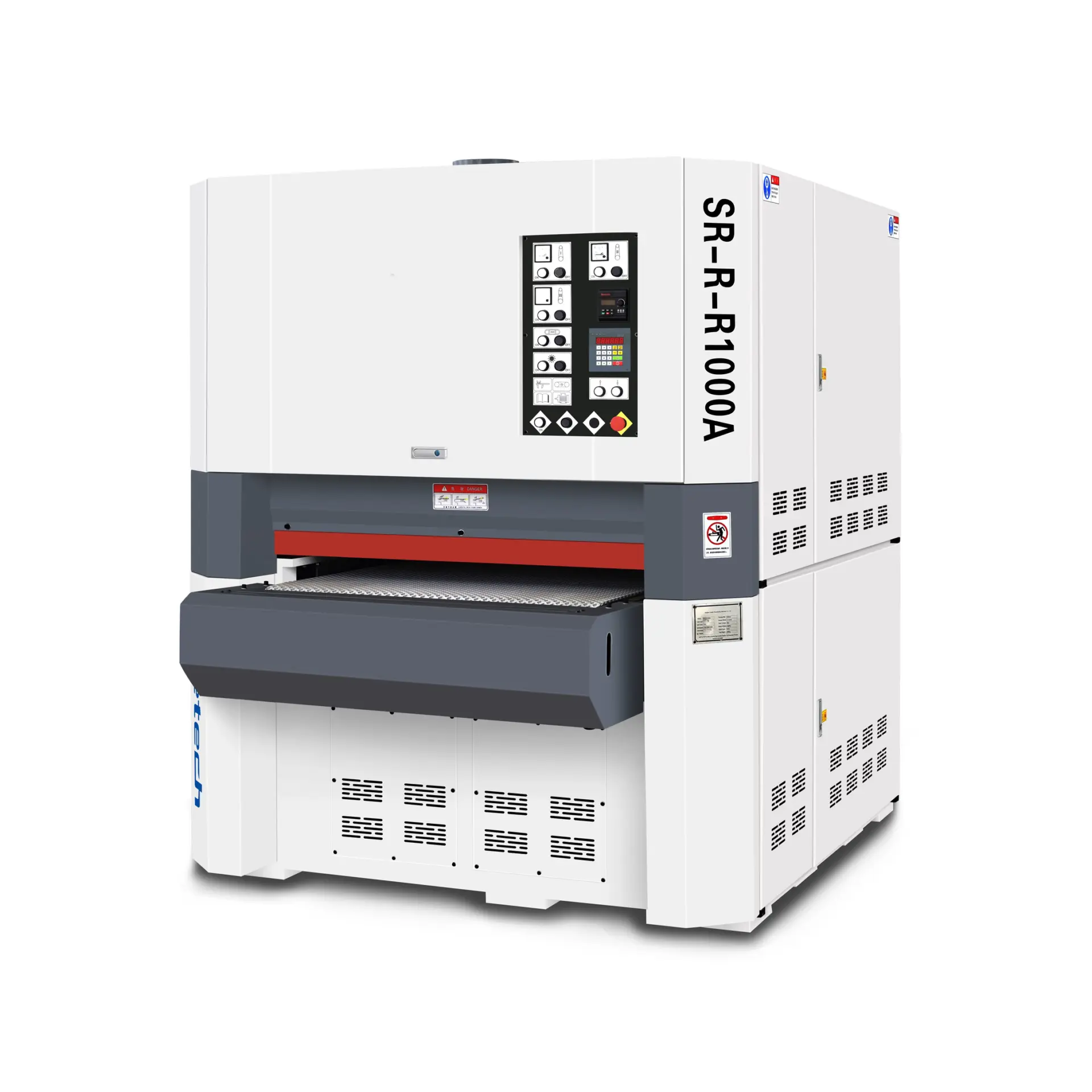
That is why sanding quality should be treated as a process-control issue rather than a last-step cosmetic task. Abrasive sequence, stock removal per pass, part support, dust extraction, feed consistency, and material condition all affect the result. In the right workflow, a wide belt sander helps by making calibration and finishing more repeatable, reducing the amount of manual correction required before downstream finishing and assembly.
Quick Diagnostic Table For Common Sanding Defects
| Defect Seen On The Floor | Common Cause | How A Wide Belt Sander Helps Prevent It |
|---|---|---|
| Deep Scratch Lines Or Random Cross-Scratches | Worn Or Contaminated Abrasive, Skipped Grit Steps, Poor Dust Control | Supports a more stable abrasive sequence and a more consistent scratch pattern from part to part |
| Chatter Marks Or Washboarding | Feed Instability, Uneven Contact, Vibration, Poor Part Support | Provides continuous feed and more repeatable contact across the panel surface |
| Uneven Thickness After Sanding | Inconsistent Stock Removal, Variable Incoming Material, Weak Calibration Discipline | Improves calibration control so parts enter coating or assembly with more predictable thickness |
| Burn Marks Or Glazed Surfaces | Dull Belts, Belt Loading, Too Much Stock Removal Per Pass, Slow Feed | Helps distribute stock removal more evenly and maintain steadier sanding conditions |
| Edge Rounding Or End Over-Sanding | Unstable Support, Excessive Pressure, Too Much Manual Correction | Keeps parts on a controlled conveyor path and reduces reliance on operator pressure by hand |
| Veneer Sand-Through | Aggressive First Pass, Wrong Grit Sequence, Inconsistent Panel Thickness | Allows lighter, more controlled finishing passes when veneer protection matters |
Most Sanding Defects Start Before The Final Finish
It is easy to blame the sanding cell because that is where the surface changes visibly. In practice, many recurring defects begin earlier. Moisture variation in solid wood, glue-line irregularities in laminated assemblies, panel thickness variation, dust contamination, or poor upstream calibration all make the sanding process less stable before the first abrasive touches the part.
That matters because sanding is often the bridge between machining and finishing. If the process is unstable here, the next steps become harder to control. Coating absorption becomes less even. Veneer panels become riskier. Assembly fit can drift when parts lose too much material in one area and not enough in another.
Factories trying to reduce rework at this stage often review whether a dedicated sanding workflow built around industrial wide belt sanders is better suited to their production mix than relying on scattered manual correction after cutting, bonding, or assembly prep.
Defect 1: Deep Scratch Lines And Random Surface Scratches
Scratch defects are among the most common sanding complaints because they can remain hidden until stain, sealer, or topcoat makes them obvious. The actual problem is not usually one dramatic gouge. More often, it is an inconsistent scratch pattern caused by worn belts, contamination trapped in the sanding zone, or an abrasive sequence that leaves one grit step doing too much work.
Common causes include:
- A Belt That Is Dull, Loaded, Or Carrying Contaminants.
- Skipping Too Far Between Grit Steps.
- Dust Or Loose Abrasive Debris Remaining In The Contact Area.
- Trying To Remove Excess Stock In A Finishing Pass Instead Of In A Calibration Pass.
A wide belt sander helps here because it supports a more controlled sanding sequence. Instead of relying on operators to correct isolated defects by hand, the process can be organized so stock removal and surface refinement happen in a consistent order. That improves scratch uniformity across a batch and makes downstream finishing less dependent on who inspected the panel last.
Still, the machine is not a substitute for belt discipline. If the wrong grit is installed, if dust extraction is weak, or if abrasive change intervals are ignored, scratch defects will remain no matter how stable the feed path is.
Defect 2: Chatter Marks, Washboarding, And Rippled Surfaces
A surface can look sanded yet still be visually unstable. Chatter marks, wave patterns, or slight ripples often appear when feed conditions and sanding contact are not balanced. On painted or high-gloss surfaces, that problem becomes much more visible.
This type of defect is commonly linked to:
- Inconsistent Feed Rate Or Poor Conveyor Stability.
- A Contact Setup That Is Too Aggressive For The Material And Pass.
- Machine Vibration Or Unstable Part Support.
- Narrow, Short, Or Slightly Warped Parts Moving Through The Cell Without Enough Control.
A wide belt sander helps by keeping the part moving through a controlled sanding path rather than depending on variable hand pressure or intermittent bench correction. Continuous feed and a consistent reference surface usually make it easier to hold a flatter, more uniform scratch pattern across the full part.
The tradeoff is that configuration still matters. A setup intended for heavier calibration is not automatically ideal for final finishing. If the process asks one pass to flatten, clean, and finish everything at once, ripple defects can still appear. Shops usually get better results when they separate stock removal from finish refinement instead of forcing both outcomes into one aggressive pass.
Defect 3: Uneven Thickness And Poor Flatness After Sanding
Thickness variation is not always obvious until panels move into assembly, edge banding, or hardware fit-up. A part may look acceptable on the face but still have lost too much material on one side, through the middle, or at the ends. That creates downstream problems that sanding operators may never see directly.
Common causes include:
- Incoming Parts That Vary More Than The Sanding Process Can Absorb Cleanly.
- Uneven Stock Removal Across The Width Or Length Of The Part.
- A Sanding Routine That Mixes Calibration And Finishing Without Clear Control.
- Too Much Reliance On Hand Correction For Parts That Need Dimensional Consistency.
One of the strongest advantages of a wide belt sander is calibration control. When the sanding process is built to remove material evenly, parts move forward with more predictable thickness and flatter surfaces. That matters not just for appearance, but for fit, repeatability, and material yield. Panels that are dimensionally more stable are easier to edge band, easier to coat evenly, and less likely to create surprises during assembly.
This is also where honest process thinking matters. If incoming panels are heavily warped, poorly glued, or dimensionally inconsistent, the sanding cell can only correct so much. The best result usually comes from improving both upstream material consistency and the calibration stage, not from expecting sanding alone to repair every defect.
Defect 4: Burn Marks, Belt Loading, And Dull Surface Appearance
When a surface comes out looking darkened, smeared, or less clean than expected, the problem is often related to heat and belt condition rather than pure abrasion. Resinous species, certain coatings, and adhesive residue can load the abrasive quickly. Once the belt stops cutting cleanly, friction increases and the surface quality drops.
Typical causes include:
- Belts That Are Worn Or Loading Faster Than Expected.
- Too Much Stock Removal Being Forced Into One Pass.
- Feed Conditions That Keep The Abrasive In Contact Too Long.
- A Grit Choice That Is Too Fine For The Amount Of Work Being Asked From It.
A wide belt sander helps prevent this by making the sanding load easier to distribute. Instead of depending on repeated manual passes that vary from operator to operator, the process can be structured around more controlled removal and more consistent surface contact. That usually lowers the risk of localized overheating and helps keep the finish more even across the whole part.
But again, the machine does not erase abrasive management. If belts stay in service too long or if material-specific sanding demands are ignored, burning and loading can still become routine. Process stability helps, but only when it is supported by proper abrasive selection and maintenance discipline.
Defect 5: Edge Rounding, End Over-Sanding, And Geometry Drift
Some sanding defects are subtle at first. A panel edge softens slightly. The end of a rail loses more material than the center. A square-looking part no longer feels crisp enough for a tight assembly or a clean laminated edge. These issues often build slowly because they are dismissed as minor finish variation rather than geometry drift.
This usually comes from:
- Excessive Local Pressure At Edges Or Ends.
- Poor Support For Short, Narrow, Or Lightweight Parts.
- Manual Touch-Up That Removes More Material Than Intended.
- A Sanding Sequence That Is Not Matched To The Part Shape And Support Conditions.
A wide belt sander helps by giving flat parts a controlled path across the sanding zone. That reduces the amount of unpredictable hand pressure that often rounds edges or softens corners during correction work. For factories processing large volumes of flat panels or similar parts, that consistency is valuable because it keeps part geometry more repeatable from shift to shift.
The honest limitation is that not every part belongs in the same sanding workflow. Very narrow components, shaped profiles, or heavily contoured parts may still need dedicated handling or secondary finishing methods. A wide belt sander is strongest where flatness, repeatable thickness, and broad-face consistency matter most.
Defect 6: Veneer Sand-Through And Finish-Line Rejection
Veneer work makes sanding discipline much more critical because the process window is smaller. The panel may need cleanup and refinement, but there is far less margin for error than with a thicker solid-wood face. Once the veneer is sanded through, the problem is usually not recoverable without part replacement or significant rework.
Common causes include:
- An Opening Pass That Removes Too Much Material.
- Inconsistent Panel Thickness Or Glue-Line Build Beneath The Veneer.
- A Grit Sequence That Is Too Aggressive Too Late In The Process.
- Operators Using Hand Correction To Chase Isolated Surface Defects.
A wide belt sander helps here by making light, controlled passes more repeatable. When the sanding cell is set up to refine rather than over-correct, veneered panels usually move forward with a more consistent scratch pattern and lower risk of local over-sanding. That is especially important before stain or clear finishing, where even small thickness differences can become visible.
Still, no machine can protect veneer if the process is fundamentally too aggressive. Veneer sanding requires conservative stock removal, close inspection, and realistic expectations about what sanding should correct versus what should be rejected earlier in the line.
Why Process Control Matters More Than Last-Minute Touch-Up
Many factories do not notice how much sanding variation they are absorbing manually until rework starts stacking up. One operator corrects scratch lines. Another softens edges to hide an uneven pass. Another spends time blending visible zones before coating. The line keeps moving, but the process becomes dependent on experience instead of repeatability.
That is where a wide belt sander changes the economics of defect prevention. It does not eliminate every sanding risk, but it makes the core process more standardized. Calibration becomes easier to control. Scratch patterns become more consistent. Manual correction can be reduced to exceptions instead of becoming normal practice.
That matters because the biggest gain is often not just a better-looking panel. It is a more predictable workflow with fewer surprises before coating, assembly, and final inspection.
What To Review If Sanding Defects Keep Returning
If the same defects continue appearing, the best response is usually a process review rather than another isolated adjustment. The team should look at:
- Abrasive Sequence And Whether Each Grit Is Doing The Right Amount Of Work.
- Stock Removal Per Pass Rather Than Only Final Surface Appearance.
- Feed Consistency And Part Support Across Different Part Sizes.
- Belt Condition, Loading Behavior, And Replacement Discipline.
- Dust Extraction And Cleanliness In The Sanding Zone.
- Incoming Material Flatness, Moisture Condition, And Veneer Or Glue-Line Stability.
When these variables are checked together, the cause of sanding defects usually becomes easier to identify. If they are checked one at a time only after rework appears, the process tends to drift back into reactive correction.
Practical Summary
Common sanding defects rarely come from one dramatic failure. They usually come from an unstable combination of abrasive choice, stock removal, part support, feed consistency, material variation, and inspection discipline. Deep scratches, chatter marks, uneven thickness, burn marks, edge rounding, and veneer sand-through all point to the same broader issue: the sanding process is being asked to do more than it can control consistently.
A wide belt sander helps prevent these problems when the goal is repeatable calibration and finishing on flat parts, panels, and similar components. It brings more control to stock removal, scratch uniformity, and material handling, which in turn reduces rework before coating and assembly. But the best results still depend on the full process being matched to the material, the finish standard, and the production workflow.