In panel furniture production, edge finishing often reveals whether a factory is truly running a controlled process or simply correcting one avoidable defect after another. Panels may be cut accurately, but if exposed edges still show chipping, uneven glue lines, or labor-heavy corner cleanup, the cost continues into inspection, rework, and final assembly.
That is why edgebanders should be evaluated as workflow machines, not just edge-applying machines. Different edgebander types solve different production problems, from routine straight-edge throughput to better substrate preparation and cleaner finished corners. The right fit depends on product mix, visible finish standards, upstream cut quality, labor structure, and how much manual touch-up the line still carries.
What an Edgebander Is Really Meant to Do
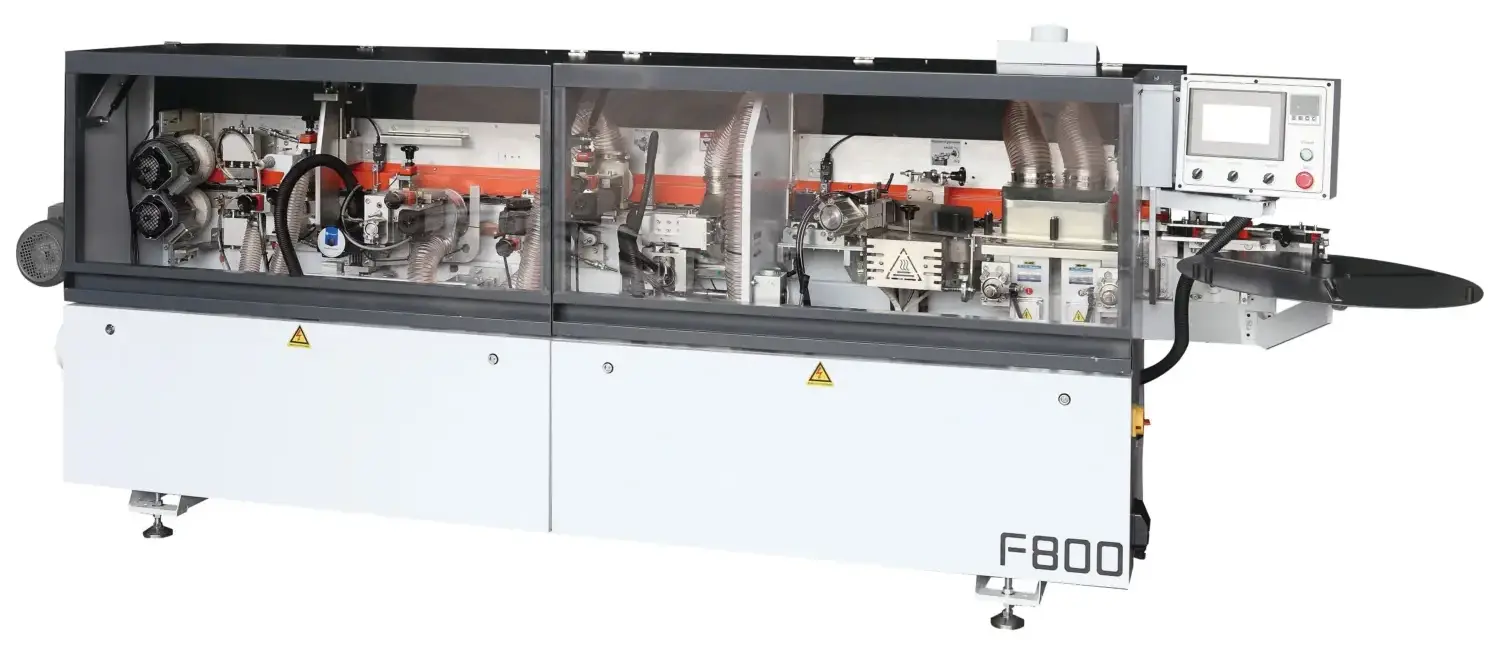
An edgebander is used to apply edge material to exposed panel sides so that parts leave the line with a cleaner, more finished edge condition. In cabinet, wardrobe, and panel furniture production, that usually means improving the appearance and consistency of MDF, particleboard, plywood, melamine-faced board, and similar materials after cutting.
In practice, factories evaluating edgebanders are usually trying to solve a broader production issue. The goal is not only to cover a raw edge. It is to reduce manual finishing, stabilize visible quality, and make downstream handling and assembly more predictable.
That distinction matters because different edgebander configurations create value in different ways. Some are mainly about throughput. Others are about better edge preparation, more consistent finish quality, or reducing labor at the last visual stage of the part.
Main Types of Edgebanders
The most useful way to compare edgebanders is by the production problem they solve.
| Type | Common Production Fit | Main Strength | Main Tradeoff |
|---|---|---|---|
| Standard Automatic Edgebander | Routine cabinet panels, shelves, carcass parts, and straight-edge batch work | Improves throughput and consistency over manual edge finishing | Best results still depend heavily on upstream edge condition |
| Pre-Milling Edgebander | Lines that need cleaner glue-line appearance or receive panels with slight edge variation after cutting | Prepares the edge before banding, helping reduce visible imperfections and manual correction | Adds more process complexity than a basic automatic setup |
| Corner-Rounding Edgebander | Visible parts, higher-finish furniture components, and lines where manual corner touch-up slows output | Produces a more finished edge condition on exposed corners and reduces handwork | Delivers the most value when corner finishing is a recurring bottleneck |
For many buyers, the decision is not about choosing the most advanced edgebander available. It is about choosing the level of edge preparation and finishing that matches the product standard the factory is actually expected to deliver.
Standard Automatic Edgebanders
A standard automatic edgebander is usually the starting point for shops moving beyond labor-heavy manual edge finishing. Its value comes from making straight-edge work more repeatable. When the product mix includes a steady flow of cabinet sides, shelves, partitions, and similar panels, an automatic edgebander can help create a more even daily rhythm.
The practical outcome is less variation between operators, faster completion of repeated parts, and fewer interruptions caused by inconsistent edge appearance. This is often the right fit when the main goal is to make common edge work more stable rather than to raise finish standards on highly visible components.
Pre-Milling Edgebanders
Pre-milling matters most when the panel edge arriving at the machine is not clean enough to support the finish standard the factory wants. Even when upstream cutting is generally controlled, slight saw marks, small chips, or minor edge irregularities can still show through once the part reaches inspection.
That is where pre-milling changes the workflow. Instead of relying on the incoming edge to be good enough, the machine helps prepare the substrate before edge application. In practical terms, this often means a cleaner base for banding, more consistent visual results, and less time spent correcting avoidable finish issues later.
Factories usually feel the value of pre-milling when edge rework is already consuming time, when visible panel quality matters more, or when upstream cutting variation is good but not perfectly controlled.
Corner-Rounding Edgebanders
Corner-rounding configurations are most useful when the final part will be seen, handled, or judged closely by the end customer. Straight edges may already look acceptable, but exposed corners still create labor if operators must finish them manually to achieve a more complete result.
A corner-rounding edgebander helps move that work into the machine process rather than leaving it as a manual finishing task. The workflow benefit is not abstract. It shows up as fewer hand-finishing steps, more consistent corners from part to part, and a more reliable finish standard on doors, shelves, visible cabinet components, and other presentation-critical parts.
This type of configuration is usually not necessary for every factory. It becomes more relevant when visible-finish expectations rise and manual corner correction starts slowing the line.
Where Different Edgebander Types Fit Best
Different production environments place different demands on the edge station.
| Application | Best-Fit Edgebander Type | Why It Fits |
|---|---|---|
| Standard Cabinet Carcass Panels | Standard Automatic Edgebander | Repeated straight edges benefit from steady throughput and more consistent daily output |
| Wardrobe and Modular Furniture Components | Standard Automatic or Pre-Milling Edgebander | Fit depends on whether the priority is basic throughput or a cleaner finished edge standard |
| Panels With Higher Visible Finish Expectations | Pre-Milling Edgebander | Better edge preparation helps support cleaner appearance on exposed parts |
| Shelves, Doors, and Customer-Facing Components | Corner-Rounding Edgebander | Reduces manual corner finishing and improves consistency where appearance matters most |
| Lines Struggling With Edge Rework After Cutting | Pre-Milling Edgebander | Helps absorb small substrate inconsistencies before they become visible defects |
| Factories Trying to Remove Final Hand Touch-Up | Corner-Rounding Edgebander | Moves more finishing work into the process instead of leaving it to operators |
The better choice depends on the production standard the line must hit every day, not only on the machine category itself.
Why Edgebander Selection Is Really a Finish-Standards Decision
Many buying mistakes happen because edgebanders are compared only by feature level rather than by the finish standard they are expected to support. A factory producing mostly internal cabinet parts has a different edge-quality requirement from one producing highly visible wardrobe panels or retail fixtures.
Before choosing a machine, it helps to evaluate the points below.
| Buying Factor | What to Assess | Why It Matters |
|---|---|---|
| Product Visibility | Whether the edged parts are mostly hidden or regularly seen by end customers | Visible parts usually justify more process control at the edge stage |
| Upstream Edge Condition | How clean and consistent panels arrive after cutting | Determines whether basic banding is enough or pre-milling adds real value |
| Rework Burden | How much labor is currently spent correcting glue-line issues, chips, or corners | Shows whether the edge station is already creating hidden cost |
| Batch Pattern | Whether the line runs repeated cabinet parts or mixed, presentation-sensitive components | Helps match automation level to actual production rhythm |
| Labor Dependence | How much finish quality depends on operator correction after the machine | Strong dependence usually signals room for process improvement |
| Delivery Standard | Whether customers accept functional edges or expect a more refined finished appearance | Defines how far the edge process needs to go beyond basic application |
| Growth Direction | Whether the factory is moving toward more volume, higher finish standards, or both | Prevents buying only for current output instead of the next stage of demand |
These factors usually clarify the decision faster than a long feature list. A factory does not benefit from a more advanced edge process unless that process removes a real production constraint.
Signs It Is Time to Upgrade the Edge Process
The need for a different edgebander type usually becomes obvious before management formally decides to change machines.
Common signs include:
- Manual Corner Cleanup Is Still Routine After Machine Processing.
- Glue-Line Appearance Is Acceptable on Some Shifts but Not Others.
- Small Edge Defects Keep Reappearing on Visible Panels.
- Operators Spend Too Much Time Correcting Issues Created Upstream.
- The Edge Station Has Become a Quality Bottleneck Rather Than a Flow Step.
- Customers or Internal QC Are Paying More Attention to Finish Detail Than Before.
When those signs are present, the decision is no longer just about adding automation. It is about bringing the finish standard under better process control.
When a Basic Automatic Edgebander Is Enough
Not every factory needs pre-milling or corner rounding. A standard automatic edgebander can still be the right production fit when the product mix is stable, visible finish expectations are moderate, and upstream cutting is already well controlled.
That is often true in cabinet and carcass-focused production where the business value comes from reliable straight-edge throughput rather than from higher-end edge presentation. In those cases, a simpler automatic setup may deliver the best return because it solves the main workflow problem without adding process layers the factory does not need.
The important point is to avoid buying either too little machine or too much machine. The right edgebander is the one that removes the actual bottleneck in the line.
Practical Summary
Edgebanders are best understood as finish-control machines for panel production. Their role is not only to apply edge material, but to help move parts out of the line with a cleaner, more consistent, and less labor-dependent edge condition. Standard automatic machines usually fit routine straight-edge throughput. Pre-milling configurations become more valuable when edge preparation is limiting visible quality. Corner-rounding configurations make the most sense when manual finishing of exposed corners is slowing production or weakening consistency.
The right production fit depends on what the factory is trying to improve. If the main issue is repeated straight-edge throughput, a standard automatic edgebander may be enough. If the line is losing time to edge defects or finish complaints, pre-milling may create the better result. If visible components still need too much handwork after the machine, corner rounding often becomes easier to justify. The stronger decision always comes from matching the machine to the workflow problem, not from assuming every edgebander creates the same value.