Many buyers compare fiber and diode too late in the purchasing cycle. By the time quotes are on the table, they are often comparing wattage, enclosure style, and price without first defining whether the real job is direct metal marking, sheet metal cutting, decorative engraving, or light non-metal fabrication.
That creates expensive confusion because fiber and diode are not simply two levels of the same machine. They are usually chosen for different materials, different duty cycles, and different workflow goals. If you are reviewing a broader Pandaxis product catalog alongside other process equipment, the better question is not which source sounds more advanced. The better question is which source removes the bottleneck that actually slows production.
Start With The Output You Need To Ship
Before comparing laser sources, define the output standard your customers are paying for.
In practical terms, that usually means answering these questions first:
- Are You Marking Bare Metal Parts For Traceability, Branding, Or Part Identification?
- Are You Cutting Metal Parts As A Core Production Activity?
- Are You Engraving Wood, Leather, Coated Surfaces, Or Decorative Products?
- Are You Expecting The Same Machine To Handle Both Light Cutting And Everyday Engraving?
- Is Your Priority Throughput, Surface Appearance, Flexibility, Or Lower Entry Cost?
Those questions matter because the right source depends far more on material family and workflow intensity than on headline technology.
In general industrial use:
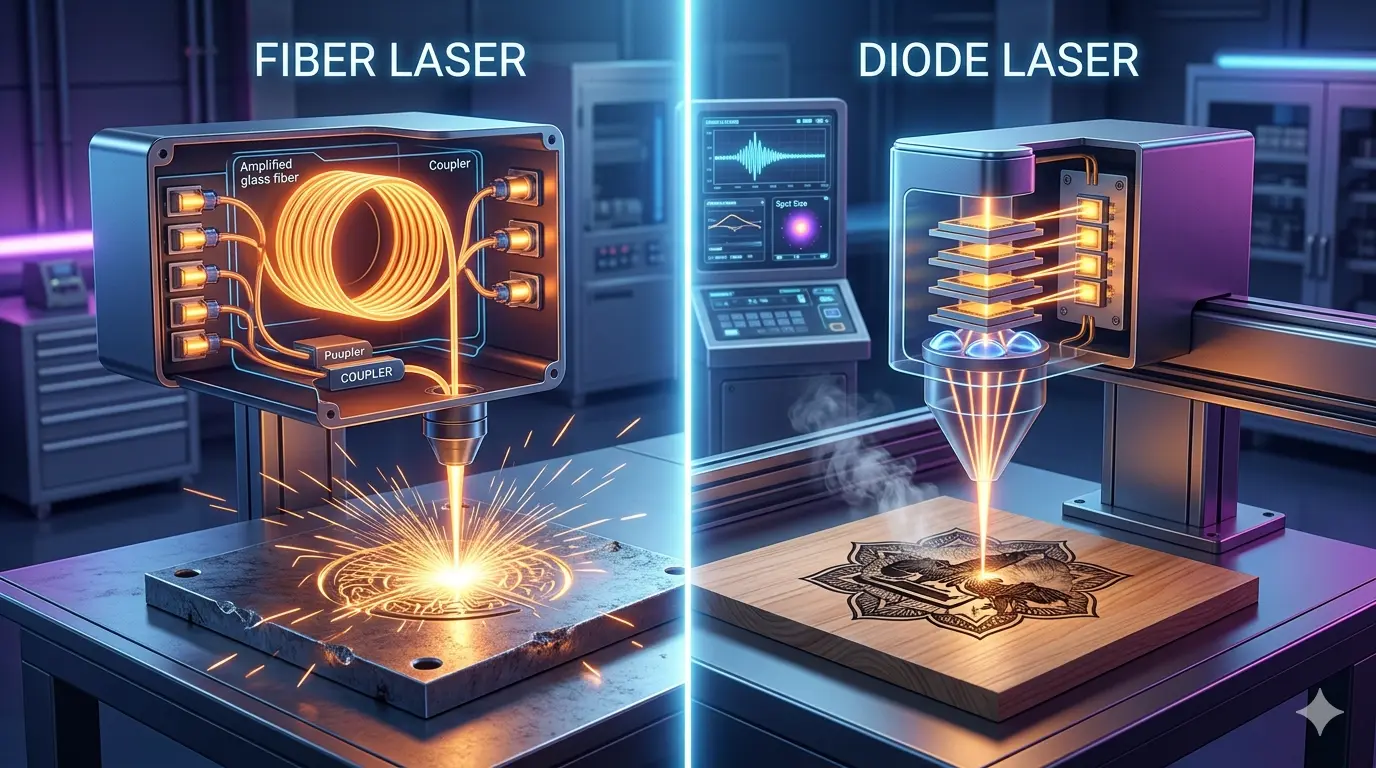
- Fiber Lasers Are Commonly Chosen For Direct Metal Marking And For Metal-Cutting Workflows When Configured At Production Scale
- Diode Lasers Are Commonly Chosen For Lower-Cost Engraving And Light Cutting On Selected Non-Metal Materials
- Neither Source Is Universally Better Outside Its Intended Use Case
Why The Word “Fiber” Often Causes Confusion
One reason this comparison goes wrong is that buyers use the phrase “fiber laser” to describe two very different investment levels.
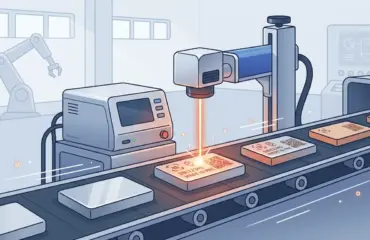
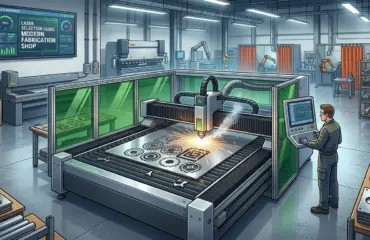
The first is a fiber marking or engraving system, which is commonly used for serial numbers, logos, QR codes, and other permanent marks on metal parts. The second is a production-grade fiber cutting system, which is used in metal fabrication workflows where cut throughput, edge consistency, and downstream part flow matter.
Those are not the same purchase. They do not solve the same problem, and they should not be compared to a compact diode engraver as though all three sit in the same operating class.
That distinction matters because some buyers are really deciding between a diode engraver and a fiber marking system, while others are mistakenly comparing a diode setup to a sheet-metal cutting platform. The first comparison can be useful. The second usually is not.
Where Fiber Lasers Usually Fit Best
Fiber lasers are commonly the better fit when the workflow is metal-first rather than decoration-first.
That usually includes situations where a shop needs:
- Direct Marking On Metal Parts
- High-Contrast Traceability Marks
- Repetitive Industrial Part Identification
- Faster Metal-Cutting Throughput With The Right Production Configuration
- Better Alignment With Metal Fabrication Cells
In marking applications, the practical benefit is usually permanence, repeatability, and cleaner integration with part-identification workflows. In cutting applications, the practical benefit is usually better fit for metal-heavy production rather than general versatility across wood, leather, and other organic materials.
Fiber is often the stronger choice when the business depends on metal part flow, compliance marking, industrial branding, or fabrication output. It is usually a weaker fit when the daily workload is decorative wood engraving, leather personalization, or light mixed-material craft-style work.
Where Diode Lasers Usually Fit Best
Diode lasers are commonly well suited to shops that need accessible engraving capability and lighter-duty cutting on selected non-metal materials.
That often includes workflows such as:
- Wood Engraving
- Leather Marking And Personalization
- Paper, Card, And Similar Thin Materials
- Coated, Painted, Or Treated Surfaces
- Short-Run Customized Products
- Prototype And Sample Work
Diode systems often appeal to smaller workshops and mixed low-volume production cells because the entry barrier is lower and the setup can be more compact. For buyers whose real workload is centered on wood, acrylic, and similar non-metal processing, the broader Pandaxis category for laser cutters and engravers is usually a more relevant reference point than a metal-first fiber discussion.
That does not mean a diode laser is automatically the right answer for every non-metal workflow. Material response varies more than many buyers expect. Thin wood and some other non-metals may fit well, but thicker stock, heavier-duty cutting schedules, clear acrylic, or higher finish expectations often expose the limits of a diode-based setup much faster than sales language suggests.
Diode is also usually not the natural first choice when a factory needs direct, repeatable industrial marking on bare metal parts.
Fiber vs Diode At A Glance
| Decision Factor | Fiber Laser Is Commonly The Better Fit When | Diode Laser Is Commonly The Better Fit When | What Buyers Often Miss |
|---|---|---|---|
| Direct Metal Marking | The job requires permanent codes, logos, or traceability on metal parts | The job is mostly non-metal engraving or coated-surface work | Diode and fiber do not create the same result on bare metal workflows |
| Metal Cutting | The workflow is built around production metal cutting with the right machine class | Metal cutting is not the core business need | A compact diode engraver should not be compared to a fiber cutting cell as if they are interchangeable |
| Wood And Decorative Engraving | Metal output still dominates and decorative work is secondary | Wood, leather, and low-volume decorative output are part of daily work | Fiber can be poorly matched if the real value is decorative non-metal production |
| Thin Non-Metal Cutting | Cutting non-metals is occasional and not the main buying reason | Thin-material cutting and engraving happen in lighter-duty production | Diode cutting capability varies sharply by material and thickness |
| Duty Cycle | The machine will run inside an industrial metal workflow with repeated production loads | The work is lighter-duty, shorter-run, or more customization-driven | Lower machine price does not always mean lower cost per finished part |
| Entry Cost And Footprint | Higher upfront cost is justified by metal output or traceability needs | Lower entry cost and smaller footprint are important | Cheap entry can become expensive if throughput and rework become bottlenecks |
| Part Permanence | Marks must stay readable through handling, logistics, or downstream operations | Surface aesthetics matter more than industrial permanence | Mark appearance and mark durability are not the same requirement |
| One-Machine Expectations | The workflow is clearly metal-centered and the specification matches that workload | The goal is light engraving and light cutting, not full industrial coverage | One machine rarely covers metal fabrication and decorative non-metal work equally well |
What Changes In A Real Cutting Workflow
If the comparison is mainly about cutting, the biggest difference is not just whether a beam can cut a material. The bigger issue is whether it can do so at a speed, edge quality, and duty cycle that still make sense once the machine becomes a daily production asset.
For metal cutting, fiber is commonly the more relevant path because the workflow is built around that material family. For light non-metal cutting, diode can be a workable option when the parts are thin, the run size is modest, and the shop accepts a more limited operating window.
Where buyers get into trouble is assuming that a machine capable of making a sample part is automatically suitable for daily production. A diode system may cut selected thin materials acceptably in short runs, yet become a bottleneck when order volume rises or when edge consistency starts affecting finishing and assembly.
That is why a cutting decision should always be tied to:
- Daily Material Mix
- Expected Part Volume
- Acceptable Edge Quality
- Tolerance For Slow Passes Or Repeat Passes
- Downstream Labor Needed To Clean Or Rework Parts
If those conditions are demanding, the cheaper source on day one can become the more expensive workflow by month six.
What Changes In A Real Engraving Or Marking Workflow
If the comparison is mainly about engraving, the decision usually comes down to substrate, permanence, and the role the mark plays in the product.
Fiber is commonly preferred when the mark must function as industrial information, such as a serial number, batch code, QR code, or durable part identifier on metal. In that environment, the mark is part of the process control system, not just part decoration.
Diode is commonly more attractive when engraving is decorative, customized, or tied to lower-volume product variation. Names on wood, patterns on leather, branding on coated surfaces, and prototype artwork are usually much closer to the kind of workload where diode makes sense.
The practical rule is simple:
- If The Mark Must Be Durable On Metal, Fiber Is Usually The Safer Starting Point
- If The Mark Is Mainly Decorative And The Material Is Non-Metal, Diode May Be Enough
Buyers should also be careful not to confuse “a visible mark” with “the right mark.” A mark that looks acceptable in a sample may still be too slow, too inconsistent, or too limited for sustained production.
The Most Common Buying Mistakes
Most bad purchases come from a small set of repeatable mistakes.
First, buyers compare machine labels instead of workflow class. A diode engraver, a fiber marker, and a fiber cutter do not belong in the same decision bucket unless the actual application makes that comparison legitimate.
Second, buyers assume a lower entry price means lower production cost. That only holds if throughput, scrap risk, and rework remain acceptable.
Third, buyers expect one machine to cover direct metal marking, decorative engraving, and routine cutting across very different materials. In practice, that is usually where compromise starts eating into quality and output.
Fourth, some factories buy a laser to solve a bottleneck that is not really a laser problem. If the real issue is panel breakdown, routing, drilling, or furniture-part flow, a laser comparison may be answering the wrong question entirely.
When Neither Option Is The Best Investment
This is the part many comparison articles skip.
If your main job is commercial-scale cutting and engraving of wood, acrylic, and similar non-metal materials, a diode-versus-fiber comparison may still be too narrow. The better comparison may be between a lighter-duty entry platform and a more production-oriented non-metal laser workflow.
If your main job is furniture panel processing, cabinetry parts, or drilling-and-routing integration, laser technology may not be the highest-value first investment at all. In those shops, the real bottleneck may sit in nesting, panel sizing, or downstream machining rather than in beam-based engraving or cutting.
There is also a third scenario: a factory genuinely needs durable metal marking and separate non-metal decorative work. In that case, two specialized systems can be more rational than one compromised purchase that performs both jobs only adequately.
Practical Summary
Choose fiber when the workflow is fundamentally metal-centered, especially if you need direct metal marking, durable part identification, or production-grade metal cutting with the right system class.
Choose diode when the workflow is centered on lower-cost engraving, customization, and light cutting on selected non-metal materials where compact setup and lower entry cost matter.
Do not let the comparison stop there, though. A sample result is not the same thing as a sustainable workflow. The right machine is the one that matches your actual material mix, daily volume, finish expectations, and downstream process demands. When those factors are defined clearly, the fiber-versus-diode decision becomes much easier, and the risk of buying the wrong type of laser drops sharply.