In custom furniture shops, mixed-production workshops, and smaller panel-processing lines, many cutting problems start before the blade enters the material. A poorly supported panel, an out-of-square fence, a dirty sliding carriage, or rushed operator movement can lead to chipped edges, inconsistent dimensions, lost time, or a serious safety event.
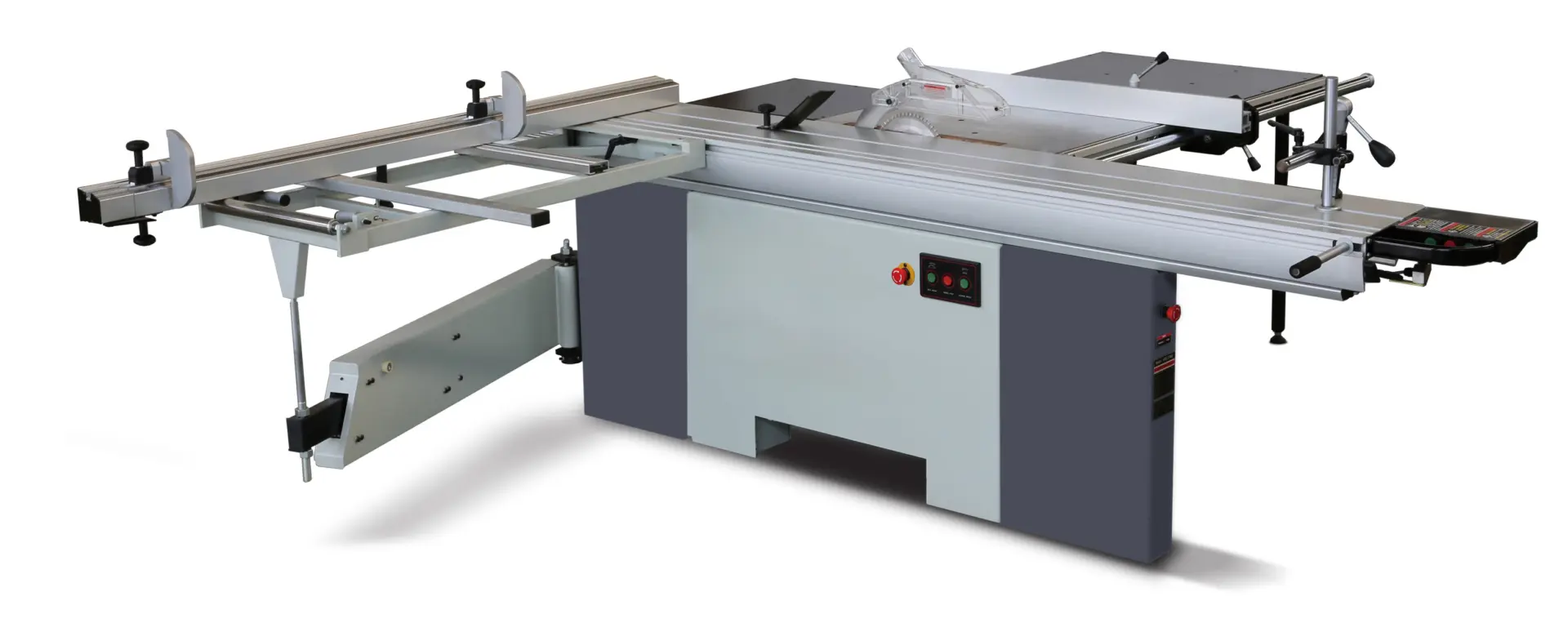
That is why sliding table saw safety and setup should be treated as one production routine. For shops that rely on sliding table saws for flexible cutting, the same discipline that protects the operator also improves squareness, cut quality, material control, and downstream fit.
Why Safety and Setup Must Be One Routine
A sliding table saw is different from a more automated cutting cell because the operator remains part of the process through positioning, support, feed control, and cut execution. When the setup is unstable, the operator usually tries to compensate. That is where both quality loss and safety risk increase.
In practice, the same root causes often drive both problems:
- Unclear Material Support
- Dirty Or Misaligned Reference Surfaces
- Fence Settings That Are Not Verified
- Worn Or Incorrect Blades
- Rushed Handling Of Large Panels Or Narrow Parts
- Informal Workarounds During Busy Production Periods
When those issues are controlled early, the saw becomes easier to run safely and easier to trust for accurate daily work.
Start With the Area Around the Saw
The safest cut normally begins with material flow, not with the motor start button. Before the first job of the shift, the team should confirm that the work zone supports predictable movement from loading to cut completion.
Practical pre-start checks usually include:
- Clear Infeed, Side-Feed, and Outfeed Space
- Stable Staging For Full Sheets, Cut Parts, and Offcuts
- Good Lighting Around The Carriage, Fence, and Blade Area
- Dust Extraction Ready For Normal Operation
- Emergency Stop Access Kept Clear
- No Loose Tools, Measuring Devices, or Scrap On The Table Or Floor Near The Operator Path
This matters because a sliding table saw often handles full sheets, smaller custom parts, and angled or irregular cutting tasks in the same shift. If the work area is cluttered, operators are more likely to overreach, twist awkwardly, or move material in unstable ways just to finish the cut.
Check the Saw, Sliding Carriage, and Reference Points Before Production
A sliding table saw can only cut safely when the machine moves smoothly and references cleanly. Daily checks do not need to be complicated, but they do need to be consistent.
Key setup points usually include:
- Blade Condition, Cleanliness, and Secure Installation
- Correct Blade Selection For The Material And Finish Expectations
- Proper Positioning Of The Guarding And Riving Knife
- Smooth Travel Of The Sliding Carriage Without Drag Or Unusual Play
- Clean Table Surfaces, Extension Supports, and Contact Areas
- Fence Locks Holding Firmly Without Drift During Positioning
- Crosscut And Rip References Verified For Squareness And Repeatability
If the machine is equipped with additional support or scoring functions, those should also be checked against the job before production begins. A small setup fault at this stage often becomes a much larger problem once operators begin correcting part movement by hand.
Match the Setup to the Actual Job, Not to the Previous Cut
One common mistake is assuming the saw is ready because it was running correctly on the last order. On a sliding table saw, the next job may require a different blade, a different support position, a different fence setup, or a different cut sequence.
Before the first part is processed, confirm:
- The Material Type Matches The Work Order
- Face Orientation And Finished Surface Direction Are Understood
- Fence Position And Stop Settings Match The Required Dimensions
- The Cut Sequence Reduces Part Movement And Operator Repositioning
- Narrow, Long, Or Heavy Parts Have A Safe Feed Strategy
- The Planned Cut Does Not Force The Operator Into An Unstable Stance
This is especially important in shops switching between laminated board, plywood, MDF, solid wood parts, or mixed project work. A setup that works acceptably for one job may increase tear-out, binding, or handling risk on the next.
Support the Workpiece Before the Cut Starts
With a sliding table saw, support quality is not a minor detail. It affects operator control, dimensional accuracy, edge quality, and the likelihood of kickback or part shift.
Good practice usually means:
- Keeping The Workpiece Fully Supported On The Carriage Or Table Through The Cut
- Using Extension Or Side Support Where Large Panels Need It
- Confirming The Panel Is Seated Against The Intended Reference Before Feeding
- Avoiding Forced Control Of Warped, Unstable, or Poorly Balanced Material
- Planning How Offcuts Will Be Controlled Instead Of Letting Them Drop Unpredictably
If a panel sags, rotates, or vibrates during the cut, the issue is usually not operator speed alone. It often means the support condition, fence setup, or part strategy was wrong before the blade entered the work.
Keep Body Position and Hand Movement Predictable
Sliding table saw safety depends heavily on predictable operator movement. Because the cut is guided manually, body position matters just as much as blade condition.
Safe operating habits usually include:
- Standing In A Balanced Position That Keeps The Operator Out Of The Blade Line
- Keeping Hands Clear Of The Direct Cut Path And Pinch Zones
- Using Push Aids Or Other Appropriate Handling Methods For Small Or Narrow Work
- Feeding The Carriage Smoothly Instead Of Forcing The Cut
- Avoiding Reach-Back Corrections While The Blade Is Still Engaged
- Stopping The Process If The Material Starts To Shift, Lift, or Bind
Inconsistent body movement does more than raise injury risk. It also affects cut quality. A rushed or unstable feed can leave burn marks, rough edges, size drift, or poor repeatability across otherwise similar parts.
Use a First-Cut Verification Routine Every Time Setup Changes
On flexible production floors, setup changes happen often. That makes first-cut approval one of the most valuable habits in the shop.
After a blade change, fence adjustment, new material introduction, or job changeover, the first cut should be treated as verification, not as full production.
The team should check:
- Final Dimensions
- Squareness And Reference Accuracy
- Surface And Edge Condition
- Part Stability During The Cut
- Ease Of Handling From Start To Finish
This short verification step protects both safety and throughput. It is much better to stop after one questionable part than to run an unstable setup into a full stack of rework.
Build a Shift Routine Instead of Relying on Memory
Experienced operators can spot trouble quickly, but strong shops do not rely only on experience. They create repeatable routines so the saw runs safely even under schedule pressure.
| Shift Stage | Primary Focus | Problem It Helps Prevent |
|---|---|---|
| Pre-Start | Work area order, machine cleanliness, guard status, carriage movement | Rushed startup and unsafe operator movement |
| First Job Setup | Blade choice, fence position, material match, support condition | Wrong-job setup and unstable first cuts |
| First-Cut Approval | Size, squareness, edge quality, handling control | Batch-level dimensional error and repeated re-cuts |
| During Production | Feed consistency, offcut control, fence stability, unusual noise | Drift, binding, and unsafe operator correction |
| Changeover | New material review, new reference checks, new cut sequence | Carryover mistakes from the previous job |
| Maintenance Or Adjustment | Isolation, controlled access, safe restart | Injury risk during cleaning, blade work, or internal adjustment |
This kind of structure turns safety into a production system rather than a reminder posted on the wall.
Know When the Saw Is Being Asked to Do the Wrong Job
Sometimes repeated setup trouble is not really a discipline problem. It is a workflow-fit problem. If the saw is being used all day for repeated rectangular panel sizing at growing volume, the pressure on operators usually rises with it.
That is where management should step back and ask whether the cutting cell still matches the factory’s real production pattern. If the business has shifted toward sustained batch panel processing, a dedicated panel saw may create a safer and more repeatable front-end process. A sliding table saw remains highly valuable when flexibility, mixed materials, custom work, and operator-led cutting control are still central to the workflow.
That tradeoff matters because the safest setup is not only about machine condition. It is also about whether the machine category matches the job mix it handles every day.
Watch for Signs That the Setup Is No Longer Stable
Production teams should stop and reassess when the saw begins showing early warning signs of instability.
Common warning signs include:
- Repeated Small Dimensional Deviations
- Chipped Edges Or Burn Marks On Otherwise Routine Cuts
- More Frequent Manual Corrections During Feed Or Support
- Material Binding, Lifting, or Unpredictable Offcut Movement
- Fence Settings That Need Constant Re-Checking
- Unusual Noise, Vibration, or Rough Carriage Travel
These symptoms should not be treated as normal production friction. They usually mean the process is asking people to compensate for a problem that should be corrected at the setup level.
Practical Summary
Good sliding table saw safety is not built on caution labels alone. It comes from clean references, stable material support, disciplined body position, verified first cuts, and a clear routine that ties setup quality directly to operator protection.
For most shops, the best practices are straightforward: organize the work area, check the saw and carriage before production, match the setup to the real job, control the workpiece before the cut begins, and stop early when the process starts to drift. When those habits become routine, the result is safer cutting, more dependable part accuracy, and less downstream rework in the rest of the production flow.