In many smaller workshops, the cutting problem is not just about accuracy. It is about how to break down full sheets without letting one machine consume the layout, block material flow, or create constant handling friction around the rest of the shop.
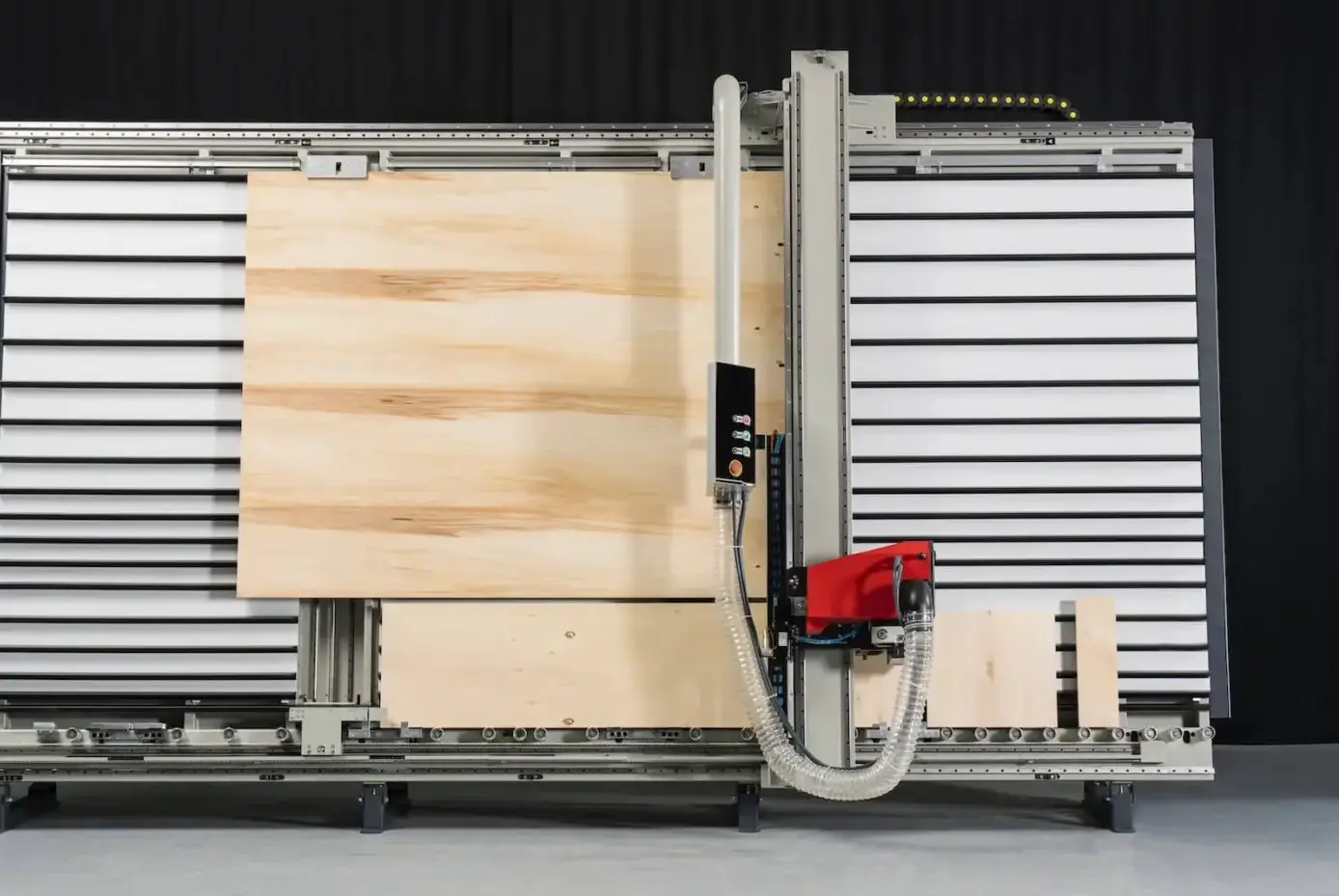
A vertical panel saw is commonly considered when floor space is tight and full-sheet processing still needs to stay practical. The better buying decision, however, comes from looking beyond the machine’s upright format. Material mix, daily sheet volume, operator workflow, downstream processes, and future growth all matter just as much as footprint.
Why Floor Space Pressure Changes The Buying Decision
In a space-constrained workshop, the machine footprint is only part of the story. Full sheets still need to be staged, loaded, cut, offloaded, and moved to the next operation. If those movements are awkward, the compact machine can still create a slow and frustrating cutting area.
That is why a vertical panel saw is usually chosen for one main reason: it keeps sheet breakdown workable when the shop cannot justify a larger horizontal cutting cell. For many cabinet shops, interior fit-out workshops, and custom furniture operations, that can be a practical advantage.
The key is to evaluate the whole cutting zone, not only the saw itself:
- Wall Placement And Operator Clearance
- Sheet Loading And Unloading Space
- Cart, Trolley, Or Forklift Movement Around The Machine
- Offcut Handling And Temporary Staging
- Access To Downstream Edge Banding, Drilling, Or Assembly Areas
If those surrounding movements remain inefficient, the space-saving benefit can disappear quickly.
Where A Vertical Panel Saw Usually Fits Best
A vertical panel saw is commonly a strong fit for shops that need accurate straight cutting of sheet materials but do not run a large, dedicated batch-processing line. It is often well suited to:
- Smaller Cabinet And Wardrobe Workshops
- Custom Furniture Shops With Regular Sheet Processing
- Interior Fit-Out Operations With Varied Daily Cut Lists
- Mixed-Use Workshops Where Floor Area Must Stay Flexible
- Shops That Still Value Direct Operator Control During Cutting
In these environments, the machine is usually solving a layout problem and a handling problem at the same time. It helps keep full-sheet cutting manageable without demanding the same horizontal footprint as a larger beam-saw-style setup.
That does not automatically make it the best option for every small shop. If the workshop is already moving toward repeated, high-volume rectangular panel output, the cutting department may soon need a more structured process than a compact upright machine can provide.
The Buying Factors That Matter Most
Buying a vertical panel saw for a tight workshop should start with the real production conditions, not the brochure headline. The table below shows the factors that usually matter most.
| Buying Factor | Why It Matters In A Tight Workshop | What To Watch Carefully |
|---|---|---|
| Effective Working Envelope | Upright layout saves floor area, but sheets still need room to move safely | Do not measure only the machine body; measure the loading, unloading, and walking zone too |
| Material Mix | MDF, plywood, particle board, melamine-faced board, and similar panels behave differently in daily handling | Confirm the machine fits the panel sizes and sheet types you cut most often |
| Daily Sheet Volume | Compact cutting works well at moderate output, but volume pressure changes the equation | If repeated batch cutting is growing fast, compact layout alone may not solve the bottleneck |
| Cut Pattern Complexity | Vertical panel saws are strongest on straight sheet breakdown, not integrated machining | If the work includes frequent shaped parts, routing, or drilling, another process may fit better |
| Operator Dependence | Upright cutting keeps control close to the operator | Evaluate staffing, operator consistency, and how much repeatability must be protected from technique variation |
| Downstream Workflow | Cutting quality affects edge banding, drilling, assembly, and material flow | Check whether the saw supports the pace and order of the next operations |
| Growth Path | A compact solution can be right today and still become limiting later | Buy with the next stage of production in mind, not just current floor space pressure |
This is the core tradeoff. A vertical panel saw can solve a real layout constraint, but it should still match the shop’s output pattern and production direction.
Layout Questions To Ask Before You Buy
In space-constrained workshops, layout mistakes are expensive because there is less room to absorb them. Before comparing specific machine options, it helps to answer a few practical questions:
- Where Will Full Sheets Be Stored Before Cutting?
- Can One Operator Load And Cut Comfortably Without Blocking Aisles?
- Where Will Finished Parts And Offcuts Go Immediately After The Cut?
- Does The Cutting Area Interfere With Assembly, Edge Processing, Or Packing?
- Is There Enough Space To Keep Material Moving Without Rehandling The Same Sheet Several Times?
These questions often reveal whether the machine is solving the workshop problem or simply fitting into an empty wall.
When A Vertical Panel Saw Is The Right First Step
A vertical panel saw is often the right first step when the workshop needs a practical, space-conscious way to process sheet goods without overbuilding the cutting department.
It usually makes the most sense when:
- Floor Space Is Too Limited For A Larger Horizontal Cutting Cell
- Most Parts Are Straight Cuts From Full Sheets
- Daily Volume Is Moderate Rather Than High-Throughput Batch Production
- Job Mix Changes Often Enough That Manual Flexibility Still Matters
- The Shop Needs Better Sheet Handling Discipline Without Moving Straight To A More automated line layout
In other words, it is often the right answer when the workshop needs better use of space and cleaner full-sheet processing more than it needs maximum cutting output.
When Another Machine Type May Fit Better
Not every tight workshop should buy a vertical panel saw. Sometimes the compact layout looks attractive, but the real production issue points elsewhere.
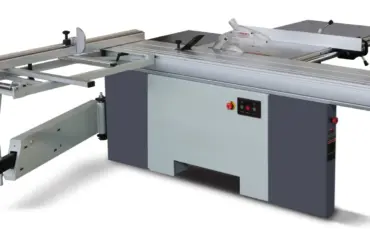
If the shop still needs one cutting station to handle both panels and broader general woodworking tasks, sliding table saws may deserve closer comparison.
If repeated rectangular parts are feeding a more standardized cabinet or furniture line, dedicated panel saws are often the better long-term direction because they support more structured front-end throughput.
If the workshop is moving toward shaped parts, integrated routing, or cut-and-drill workflows, CNC nesting machines may be a better fit than any manually guided panel-cutting format.
This is why the buying decision should start with workflow pressure, not just machine shape. A vertical panel saw helps when space is the real bottleneck. It is less convincing when throughput, geometry, or process integration is the real issue.
Common Buying Mistakes In Space-Constrained Shops
Several mistakes appear repeatedly when smaller shops buy around footprint alone.
- Measuring Only The Machine, Not The Working Zone
- Assuming Compact Layout Automatically Means Faster Workflow
- Ignoring Sheet Staging, Offcut Handling, And Internal Transport
- Buying For Today’s Empty Corner Instead Of Next Year’s Production Load
- Treating Straight-Cut Panel Breakdown And Integrated Machining As The Same Need
The most common mistake is confusing fit with performance. A machine can physically fit the workshop and still be the wrong choice for the shop’s real output pattern.
A Simple Decision Filter
| If Your Main Need Is… | The Better First Direction Is Usually… |
|---|---|
| Accurate full-sheet breakdown in a tight layout | Vertical panel saw |
| One versatile saw for mixed woodworking and panel cutting | Sliding table saw |
| Higher-volume repeated panel sizing with stronger process structure | Horizontal or CNC panel saw |
| Shaped cutting plus routing or drilling in one workflow | CNC nesting machine |
This kind of filter is usually more useful than feature-by-feature comparison because it ties the machine directly to the workshop’s operating model.
Practical Summary
Choose a vertical panel saw when the real workshop constraint is limited floor space and the cutting task is still mostly straight, full-sheet panel breakdown. It is commonly a practical fit for shops that need better layout efficiency, manageable sheet handling, and direct operator control without stepping immediately into a larger production cell.
Look beyond the upright footprint before buying. The right decision depends on how sheets move through the workshop, how often jobs change, how much output the cutting area must support, and whether the business is staying flexible or moving toward a more standardized production line. In a tight workshop, the best machine is the one that removes layout friction without creating the next bottleneck.