The upgrade question usually appears before the sliding table saw actually fails. The machine may still cut cleanly, but the factory starts feeling pressure elsewhere: downstream stations wait for parts, repeated jobs pile up at the cut cell, and production consistency depends too heavily on operator pace and judgment. That is the point where the decision shifts from cut quality alone to production structure.
Upgrading to a beam saw is rarely about replacing a bad machine with a better one in the abstract. It is about deciding when a flexible, operator-led cutting workflow no longer matches a more standardized batch-production environment.
Start With the Production Pattern, Not the Upgrade Budget
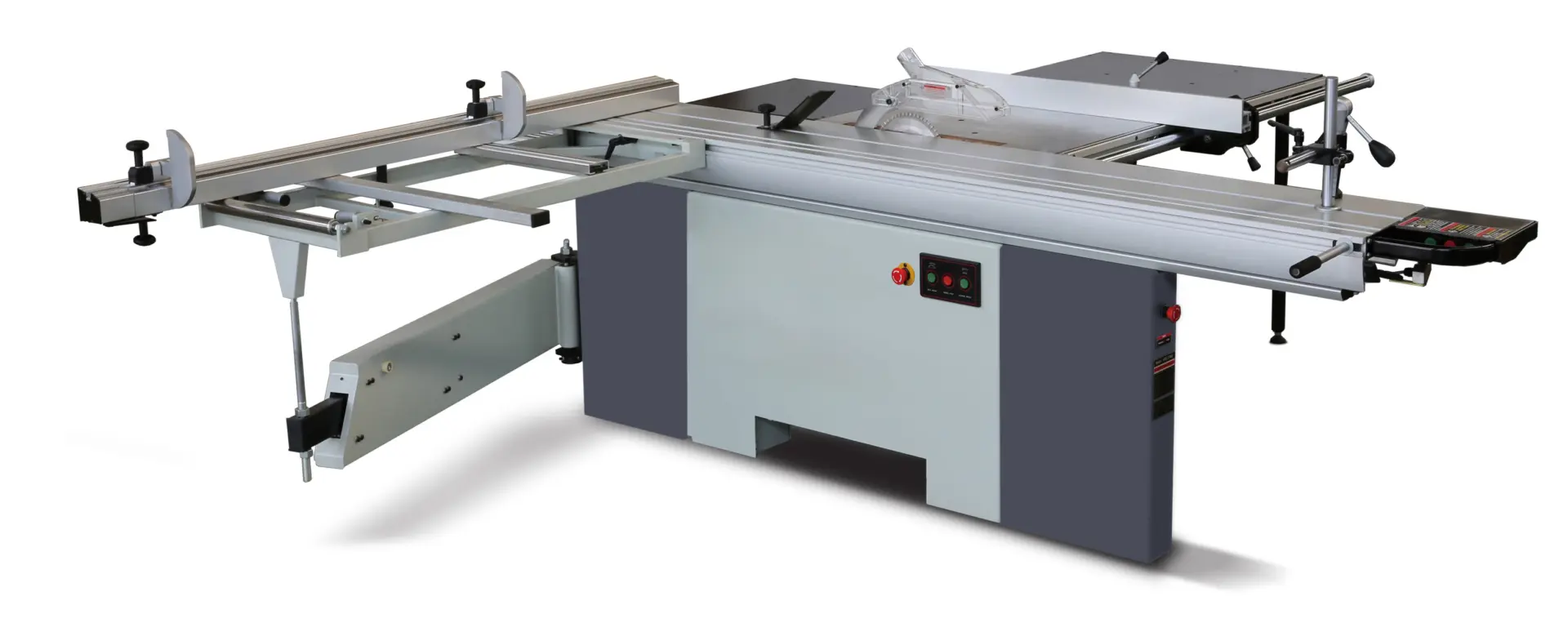
Many workshops begin with sliding table saws because they offer practical control across mixed work. They are well suited to custom furniture, short runs, material changes, angled cuts, and jobs where the operator needs to adapt continuously.
The upgrade conversation usually starts when that same flexibility becomes less valuable than output stability. If most daily work has shifted toward repeated rectangular cabinet, wardrobe, or modular furniture parts, the cut station is no longer serving a highly variable workflow. It is feeding a production line.
That is when factories typically begin evaluating panel saws, including beam-saw-style equipment, because the goal changes from flexible cutting to more repeatable front-end panel processing.
The Clearest Signs the Upgrade Window Has Opened
The strongest reason to move to a beam saw is not that it sounds more advanced. It is that the factory has outgrown what a sliding table saw does best.
| What You Are Seeing on the Floor | What It Usually Means | Why a Beam Saw Starts Making Sense |
|---|---|---|
| The same cabinet or furniture parts are being cut repeatedly every day | The workflow is becoming batch-oriented rather than project-oriented | A beam saw is better aligned with stable, repeated panel sizing |
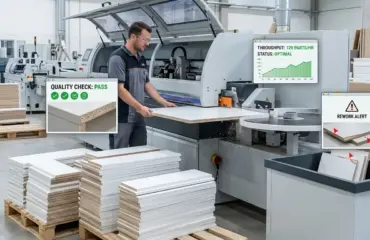
| Edge banding, drilling, or assembly teams regularly wait on cut parts | The cut cell has become the line constraint | Higher front-end throughput becomes strategically important |
| Re-cuts, size corrections, or squareness issues keep showing up downstream | Output quality depends too much on operator variation | A more structured cutting process helps reduce avoidable rework |
| Batch organization becomes difficult as volume rises | Manual part flow is getting harder to control | A beam saw supports a more disciplined production rhythm |
| Growth requires adding pressure to the operator instead of stabilizing the process | Capacity is being created through effort rather than system design | A beam saw is often evaluated when management wants more predictable scaling |
| Scheduling becomes harder whenever cut demand spikes | The saw cell lacks buffer against volume swings | More repeatable, production-focused cutting helps planning |
If several of these signals are happening at the same time, the issue is usually not the skill of the operator or the condition of the current saw. It is that the factory is now asking a flexible machine to behave like a production platform.
What a Beam Saw Changes Beyond Faster Cutting
The obvious expectation is more output, but the more important change is often how the front end of production behaves.
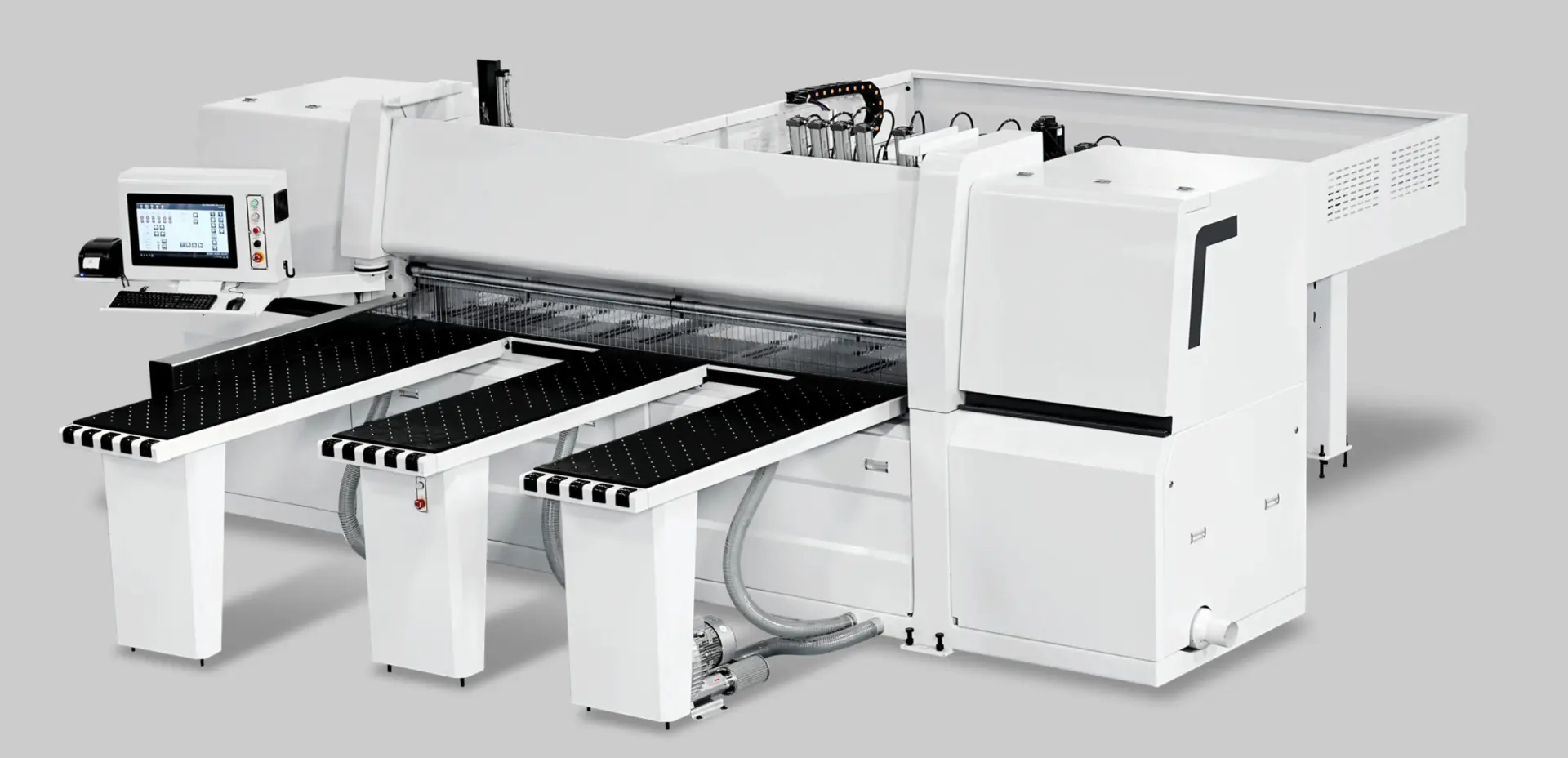
A beam saw commonly changes the workflow in these ways:
- Better Repeatability Across Repeated Panel Jobs
- Lower Dependence on Individual Cutting Technique
- Smoother Handoffs Into Edge Banding, Drilling, and Assembly
- Cleaner Batch Logic for Rectangular Panel Processing
- More Predictable Daily Planning at the Cut Stage
That matters because downstream departments rarely feel only the speed of cutting. They feel the stability of cutting. When incoming parts are more consistent, operators downstream spend less time checking, adjusting, re-sorting, or compensating during assembly.
This is also why a beam saw should be evaluated as a workflow decision rather than a stand-alone machine upgrade. In many furniture factories, its value comes from making the cut cell easier to schedule, easier to standardize, and easier to connect to the rest of the line.
When You Should Not Upgrade Yet
Not every shop that wants more output should move immediately from a sliding table saw to a beam saw. The upgrade is easier to justify when the workload is already dominated by repeated rectangular parts and the business is moving toward a more standardized production model.
Staying with the current format often remains the smarter choice if:
- The Shop Still Runs Mostly Custom, Mixed, or Short-Run Work
- Angled Cuts, Manual Judgment, and Frequent Setup Changes Are Still Central to Daily Output
- Solid-Wood Processing and Varied Part Geometry Matter as Much as Sheet-Based Batch Cutting
- The Real Bottleneck Is Elsewhere, Such as Edge Banding, Drilling, Material Staging, or Assembly
- Cut Lists, Labeling, and Part-Sorting Discipline Are Not Yet Strong Enough to Support a More Structured Cutting System
A beam saw will not fix weak staging, disorganized cut planning, or poor batch handling by itself. If those problems are the real source of delay, the factory can spend more money and still keep the same production friction.
How to Test Whether the Upgrade Is Operationally Justified
Before making the move, it helps to frame the decision in production terms rather than machine terms.
- Is Most Daily Output Now Repeated Rectangular Panel Work?
- Is The Cut Cell The Actual Constraint, Or Is Another Process Really Slowing The Line?
- Would More Consistent Part Flow Create Visible Gains In Downstream Operations?
- Is Management Trying To Scale Standardized Production Rather Than Protect High Flexibility?
- Are Material Staging, Cut Lists, and Batch Sorting Disciplined Enough To Support A More Production-Oriented System?
If the answers point toward repeatable panel flow, downstream dependence on cut consistency, and a need for steadier capacity, the upgrade case becomes much stronger.
Practical Summary
Upgrade from a sliding table saw to a beam saw when the shop is no longer winning through flexibility alone. The clearest moment is when repeated panel work, higher volume, and downstream process stability matter more than operator-led versatility.
A sliding table saw is still a strong fit for custom, mixed, and change-heavy production. A beam saw becomes the stronger fit when the factory needs the cut stage to behave like a reliable front-end production system for batch panel processing. The right time to upgrade is when the cost of staying flexible has become higher than the value of becoming repeatable.