When a woodworking plant starts pushing more volume, edge banding stops being a finishing detail and becomes a line-balance decision. If the edge banding cell cannot keep pace with panel output, hold finish quality across batches, or reduce manual touch-up, the whole line starts to absorb the problem. Parts wait between operations, visible panels need rework, and assembly teams end up correcting issues that should have been controlled earlier.
That is why edge banding equipment should be judged as part of a scalable production system, not as a stand-alone machine purchase. For buyers comparing edgebanders for growing cabinet, wardrobe, or panel-furniture lines, the most important question is whether the equipment improves throughput, finish consistency, and workflow stability at the same time.
Scaling Changes What the Machine Needs to Deliver
In a smaller shop, an edge bander may be evaluated mainly on whether it can apply edging cleanly enough for the current job mix. In a scalable line, the standard becomes higher. The machine has to support a more predictable production rhythm, a more repeatable finish, and fewer operator-dependent corrections.
As output grows, edge banding equipment is usually expected to help with:
- More Consistent Glue-Line Appearance
- Cleaner Handoffs Into Drilling And Assembly
- Lower Dependence On Manual Edge Touch-Up
- Better Control Across Repeated Batches
- Reduced Disruption When Production Pressure Increases
That shift matters because a line can look fast on paper while still losing time in rework, waiting, and visual-quality correction. Scalable edge banding is not only about more parts per shift. It is about releasing more finished parts that can move forward without extra intervention.
Start With the Product Mix, Not the Brochure
The right edge banding configuration depends first on what the factory is actually processing. Straight, repeated cabinet parts create a different requirement than mixed custom components, visible furniture panels, or product families with frequent finish changes.
Before comparing equipment types, buyers should clarify:
- How much of daily output is repeated panel work versus mixed or custom work
- Which parts are customer-visible and therefore more sensitive to glue-line and edge-finish variation
- Whether panels move in stable batches or arrive in a constantly changing sequence
- How much manual edge correction is happening after the machine
- Whether the current bottleneck is the edge banding process itself or the disorder around it
This is where many buying decisions go off track. A factory may assume it needs a “bigger” edge bander when the real issue is inconsistent incoming parts, weak batch discipline, or unrealistic changeover expectations. The machine still matters, but scalable results usually come from matching the equipment to the real production pattern.
Which Type of Edge Banding Equipment Fits the Workflow
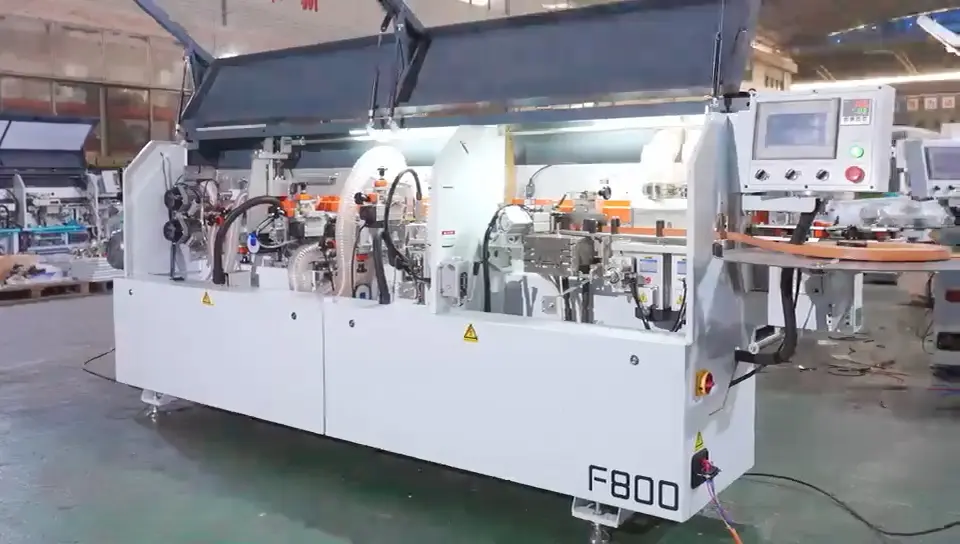
Pandaxis positions several edge banding directions within this category, including automatic, pre-milling, and corner-rounding configurations. None of them is automatically the best choice in every plant. The better fit depends on the finish standard, the stability of incoming edges, and how much manual correction the factory is trying to remove.
| Workflow Condition | Equipment Direction | Why It Commonly Fits | Tradeoff to Watch |
|---|---|---|---|
| Repeated cabinet and furniture parts moving in steady batches | Automatic Edgebander | Supports more stable throughput and reduces reliance on manual edge application | Gains are limited if parts arrive out of sequence or poorly prepared |
| Panels with saw marks, minor edge irregularity, or demanding finish standards | Pre-Milling Edgebander | Improves the starting edge condition before banding, which can support cleaner visual results | Requires disciplined setup and maintenance to keep the benefit stable |
| Visible furniture components where finished corners matter | Corner-Rounding Edgebander | Helps reduce manual corner finishing and improves consistency on finished parts | Only creates strong value when the product mix justifies that added process focus |
The practical point is simple: equipment type should follow the line’s quality and flow requirements. Buyers get better results when they ask what kind of correction the machine is supposed to eliminate, not just what functions it includes.
Edge Quality Depends on What Happens Before Banding
An edgebander can improve consistency, but it cannot fully compensate for weak upstream control. If panels arrive with unstable dimensions, chipped edges, inconsistent edge condition, or poor batch identification, edge banding performance becomes harder to stabilize.
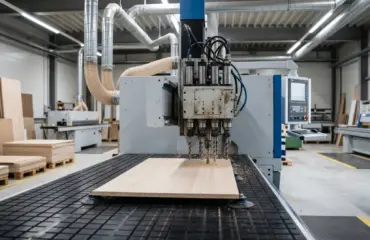
In panel-furniture factories, the edge banding cell usually performs best when the upstream process is already releasing parts in a controlled way. For example, production lines that rely on CNC nesting machines often get more value from edge banding investments when cut parts arrive clearly organized, correctly identified, and ready for predictable flow rather than ad hoc sorting.
This is why scalable edge quality is not only a machine question. It is also a preparation question. If the incoming edge condition changes too much from batch to batch, buyers may interpret the problem as an edge bander limitation when the real issue starts earlier in the line.
Glue-Line Appearance Is Really a Rework-Control Issue
Many buyers talk about glue-line quality as though it were only a cosmetic concern. In scalable production, it is also a workflow concern. Once visible edge defects appear consistently enough, operators start checking more parts, manually touching up more panels, and holding more components back from the next operation.
That creates cost in several ways:
- More Inspection Time Around The Edge Banding Cell
- More Hand Finishing Before Parts Can Move Forward
- More Sorting Between Acceptable And Questionable Panels
- More Variation In What Reaches Final Assembly
- More Pressure On Supervisors To Protect Delivery Schedules With Extra Labor
For growing factories, this is one of the clearest reasons to choose edge banding equipment carefully. The value is not only a cleaner-looking edge. It is a more reliable release of finished parts into the rest of production.
Scalable Lines Need Better Handoffs, Not Just Faster Feed
When factories talk about scaling, they often focus first on speed. But in edge banding, production flow is usually just as important as raw pace. A machine that can process parts quickly still underperforms if operators spend too much time waiting for the next correct panel, correcting labeling mistakes, or separating mixed batches.
In practical terms, scalable edge banding depends on questions like these:
- Do Panels Reach the Machine in the Right Sequence?
- Are Similar Parts Grouped Well Enough to Reduce Disruption?
- Does the Machine Release Panels Cleanly Into the Next Process?
- Are Operators Managing Flow, or Constantly Recovering From Disorder?
- Does the Current Setup Reduce Labor Pressure, or Only Shift It Downstream?
Those questions matter because a line rarely breaks at one dramatic point. More often, it loses efficiency through repeated small interruptions. In edge banding, these interruptions can come from batch confusion, stop-start flow, edge-quality checking, or too much manual handling between one station and the next.
Downtime Risk Usually Grows Before Buyers Notice It
As lines scale, short interruptions become more expensive. A brief stop in a low-volume workshop may be manageable. The same stop in a production line feeding multiple downstream stations can ripple quickly into waiting labor, uneven batching, and schedule pressure.
That is why scalable edge banding equipment should be evaluated partly through downtime exposure. Buyers should think beyond nominal capacity and ask how stable the process remains when the line is under normal production stress.
Common warning signs include:
- Frequent Manual Cleanup After Edge Banding
- Operators Needing To Recheck Panel Condition Before Release
- Too Many Product Changes Moving Through the Cell Without Strong Grouping Logic
- Downstream Stations Receiving Parts in Uneven Waves Instead of Steady Flow
- Visible Finish Complaints Reappearing Even After Routine Adjustments
A machine does not need to fail completely to become a constraint. It only needs to create enough small delays that the rest of the line starts compensating for it.
The Best Selection Logic Connects the Machine to Downstream Work
Edge banding equipment creates the most value when it makes the rest of production easier to standardize. A cleaner, more repeatable edge is important because it reduces uncertainty later, especially when parts continue into hole processing, fitting, and final assembly.
In many panel-processing environments, more stable edging improves the handoff into boring and drilling machines because parts are less likely to need visual correction, manual holding, or secondary checks before they move on. That is a much stronger reason to invest than a vague promise of “higher automation.”
The most useful buying logic often looks like this:
| If the Factory Is Seeing This Problem | The Selection Priority Usually Becomes |
|---|---|
| Too Much Manual Edge Cleanup | Better Edge Preparation And More Stable Process Control |
| Inconsistent Finish on Visible Panels | Equipment Fit Based on Finish Standard, Not Just Output Ambition |
| Assembly Delays Caused by Variable Part Readiness | Better Flow Discipline and More Reliable Edge Release |
| Production Growth Without Matching Labor Growth | Lower Operator Dependency and More Repeatable Batch Processing |
| Frequent Product Changes Creating Disruption | More Realistic Evaluation of Changeover Discipline and Workflow Organization |
This kind of decision framework keeps buyers focused on the real constraint instead of buying by category image alone.
When a More Advanced Configuration Pays Off
More advanced edge banding configurations usually pay off when the factory has already reached a level of throughput or finish sensitivity where manual correction is no longer acceptable as a normal part of production.
That often includes plants where:
- Visible panel quality directly affects customer acceptance
- Order volume is high enough that small finish defects create large cumulative rework costs
- Operators are spending too much time compensating for incoming edge inconsistency
- The line needs more stable output across shifts, not just under ideal staffing conditions
- Management wants edging quality to be process-driven rather than person-dependent
If those pressures are not present, a buyer should stay disciplined. The goal is not to choose the most complex machine available. The goal is to choose the equipment that solves the real production problem with the least avoidable friction.
Practical Summary
Choosing edge banding equipment for a scalable woodworking line is really a decision about finish stability, labor efficiency, and downstream flow. The strongest machine fit usually comes from understanding the product mix, the finish standard, the condition of incoming parts, and the cost of repeated manual correction.
For repeated panel production, automatic edge banding often makes the most sense when the factory needs steadier throughput and less operator dependence. Pre-milling becomes more relevant when edge preparation is limiting finish quality. Corner rounding matters most when the product mix makes finished-corner consistency commercially important.
The practical rule is to judge the edge banding investment by what happens after the machine, not only at the machine. If it helps release more parts with cleaner edges, less rework, and smoother movement into the next operation, it is supporting real scale. If it does not, the line is still paying for instability somewhere else.