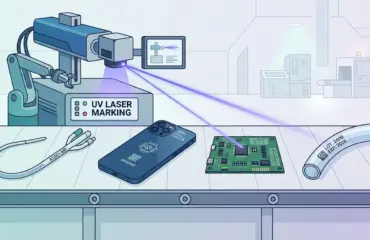
If a buyer asks for a “laser marking machine,” they may actually need deep branding on wood panels, shallow contrast on coated parts, or durable identification that stays readable after handling. That language gap causes expensive mistakes because engraving, marking, and etching do not solve the same production problem.
Within the broader Pandaxis product catalog, laser processing is one step in a larger manufacturing workflow, so the right choice starts with the required result on the material, not with the most familiar term in the RFQ. In practical terms, the decision comes down to depth, contrast, cycle time, material response, and how the finished part will be used downstream.
Why These Terms Create Buying Mistakes
In real industrial conversations, the three terms often overlap.
- Some buyers use “marking” as a catch-all for any laser-made logo, code, or graphic.
- Some suppliers use “etching” and “engraving” almost interchangeably.
- Some operators focus on the visual result, while engineers care more about surface depth, part integrity, and repeatability.
That is why selection should start with a simpler question: what exactly must change on the part surface?
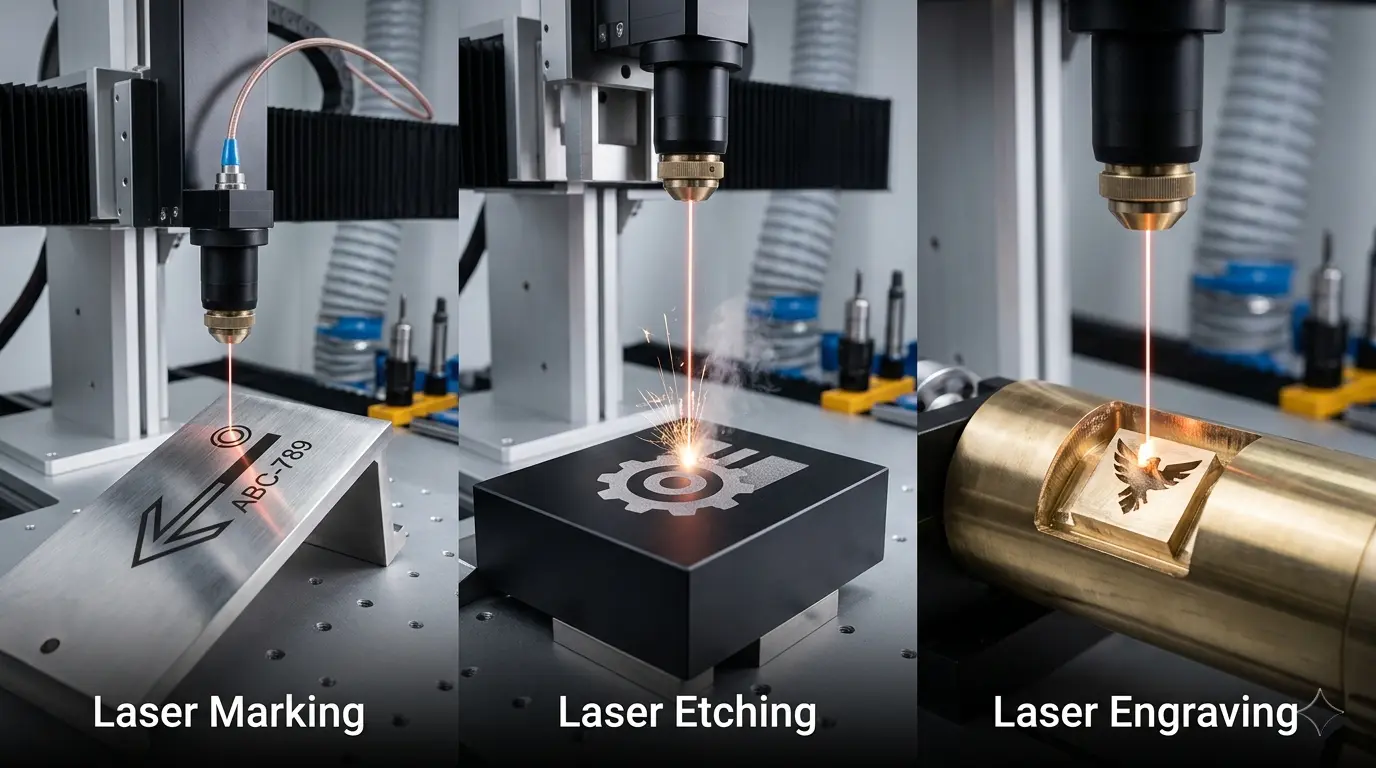
If the answer is “remove material and create visible depth,” you are usually discussing engraving. If the answer is “create readable identification with little or no depth,” you are usually discussing marking. If the answer is “make a shallow surface change without the deeper cut of engraving,” you are usually in etching territory.
A Quick Comparison Table
| Process | What Happens To The Surface | Typical Result | Best Fit | Main Tradeoff |
|---|---|---|---|---|
| Laser Engraving | Material is removed to create depth | Tactile, visible recessed graphic or text | Decorative work, branding, labels, patterns, and applications where depth matters | More energy input and longer cycle times than shallow surface processes |
| Laser Marking | The surface is changed for contrast, discoloration, or coating removal, often with minimal depth | Readable text, codes, logos, and traceability marks | Identification, serialization, branding, and high-throughput part tracking | Terminology is broad, so the required material response must be defined clearly |
| Laser Etching | A shallow surface effect is created, often lighter than full engraving | Fine visible contrast with limited depth | Applications needing a surface change without a deeper recessed profile | The term is used inconsistently, so buyers should define the physical outcome, not rely on the label alone |
Laser Engraving: When You Need Depth And Texture
Laser engraving removes material. That makes it the most suitable of the three when the job calls for a visible recess, a tactile finish, or a decorative effect that needs more presence than a simple surface mark.
In production, engraving is commonly chosen when shops need:
- Logos Or Branding That Should Look Substantial
- Decorative Patterns On Wood Or Acrylic
- Panel Labels That Need More Visual Character
- Surface Detail That Remains Clear Even When Viewed At An Angle
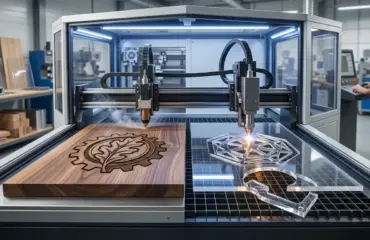
For woodworking and acrylic applications, engraving is often the most direct match for laser cutters and engravers, especially when the goal is detailed visual work rather than pure cutting speed.
The workflow advantage is straightforward: engraving adds detail without a secondary mechanical operation. A shop can cut, personalize, and finish parts in a more consolidated process. That can reduce handling, improve visual consistency, and shorten the path from design file to finished component.
The tradeoff is equally straightforward. Because engraving removes material, it generally asks more from the process in terms of time, energy, and heat management than a shallow surface mark. If throughput is the priority and the part only needs machine-readable or visually simple identification, engraving can be more process than the application actually requires.
Laser Marking: When Contrast Matters More Than Depth
Laser marking is the broadest and most easily misunderstood term. In many factories, it refers to any process where the laser creates a readable symbol, logo, serial number, or code without the deeper profile associated with engraving.
That makes marking less about texture and more about communication. The mark may be used for:
- Part Identification
- Batch Tracking
- Serial Numbers
- QR Codes Or Barcodes
- Brand Recognition
From a workflow perspective, marking is usually attractive when manufacturers want fast cycle times, clear readability, and minimal disruption to part geometry. If a component must still fit tightly into an assembly, a shallow or near-surface-only result can be more appropriate than a deeper engraved feature.
This is also where buyers often make the biggest selection mistake: they ask for “marking” without defining whether they need color change, coating removal, shallow material effect, or true recessed depth. The word sounds specific, but it is really an application category. The material, laser source, and durability requirement determine what “marking” should mean in practice.
In other words, marking is usually the right language for traceability and identification goals, but it is not enough detail to specify the correct process on its own.
Laser Etching: When You Want A Shallow Surface Effect
Laser etching usually describes a shallower surface effect than engraving. In many applications, it sits between broad “marking” language and deeper engraving. The visual result can be clear and professional, but the process does not usually aim for the same recessed profile or tactile presence as engraving.
That makes etching relevant when a shop wants:
- A Visible Surface Change Without Strong Depth
- Cleaner Fine Detail Than A Deeper Cut Would Require
- A Controlled Finish Effect With Less Material Removal
- Better Balance Between Appearance And Speed
The practical value of etching is that it can deliver a refined visual result while limiting how much the process changes the part surface. That matters when aesthetics count, but excessive depth would slow production, complicate finishing, or create an unwanted texture.
The difficulty is terminology. Some suppliers describe shallow engraving as etching. Others treat etching as a subset of marking. That is why buyers should define the required outcome in plain manufacturing language, such as “shallow visible surface change” or “recessed graphic with measurable depth,” instead of assuming that everyone uses the same definition.
Which Process Fits Which Production Goal
The easiest way to separate the three is to match them to the job the part must perform after processing.
| Production Goal | Most Likely Fit | Why It Fits | What To Watch |
|---|---|---|---|
| Create A Tactile, Premium-Looking Logo Or Graphic | Engraving | Material removal creates visible depth and stronger presence | Slower cycle time and more heat input than shallow processes |
| Add Serial Numbers Or Codes Without Meaningfully Changing Part Geometry | Marking | Prioritizes readability and identification over depth | The material response must still be specified clearly |
| Produce A Shallow Decorative Surface Effect | Etching | Gives visible change with limited depth | Terminology varies across suppliers and machine types |
| Keep The Process Fast For High-Volume Identification | Marking | Often best aligned with throughput and repeatability goals | Contrast durability must be checked against the use environment |
| Make Branding Survive Light Surface Wear And Stay Visually Obvious | Engraving Or Deep Etching, Depending On Requirement | More surface change usually improves long-term visibility | The added process time must justify the visual benefit |
This is why no process is universally better. The correct choice depends on whether the factory values speed, permanence, decorative depth, traceability, finish quality, or part integrity most.
The Machine-Selection Questions That Matter More Than The Label
Before comparing quotes or machine categories, buyers should define the job in production terms.
Ask these questions first:
- What Material Family Is Being Processed?
- Does The Mark Need Real Depth Or Only Visual Contrast?
- Is The Result Decorative, Functional, Or Traceability-Driven?
- How Important Are Cycle Time And Throughput?
- Will The Part Be Sanded, Coated, Handled Heavily, Or Exposed To Wear?
- Does The Feature Need To Remain Machine-Readable Or Just Human-Visible?
- Could Excessive Depth Affect Assembly, Surface Finish, Or Downstream Processing?
Those answers do more to clarify the right process than the words engraving, marking, or etching by themselves.
For example, a furniture or decor producer working with wood and acrylic may discover that “marking” is too vague and that engraving is the more accurate requirement because the job really calls for decorative depth and visual character. A manufacturer focused on identification and tracking may reach the opposite conclusion and realize that a shallow, fast, repeatable mark is the real priority.
Where Shops Commonly Over-Specify The Process
One common mistake is choosing engraving because it sounds more permanent or more premium. That can be the right move for decorative applications, but it can also add unnecessary cycle time when the job only requires clear surface identification.
Another common mistake is choosing marking because it sounds faster, then discovering that the finished graphic lacks the visual depth needed for branding or product presentation.
Etching often gets caught in the middle. It can be a strong answer when a shallow, refined effect is enough, but it becomes a poor answer when the buyer has not clearly decided whether the job is decorative or functional.
The safest approach is to define the finished surface, the durability requirement, and the workflow priority first. Then choose the process that creates that outcome with the least unnecessary complexity.
Practical Summary
Laser engraving, laser marking, and laser etching are not just different names for the same job. Engraving is the better fit when you need depth and a more substantial visual effect. Marking is usually the better fit when identification, contrast, and throughput matter more than surface depth. Etching is commonly used for shallower surface effects when the application needs visible change without the fuller cut of engraving.
For technical buyers, the most reliable selection method is to stop thinking in labels and start thinking in outcomes: how deep should the feature be, how readable must it remain, how fast must the process run, and what happens to the part after laser processing. Once those answers are clear, the right process usually becomes much easier to specify.