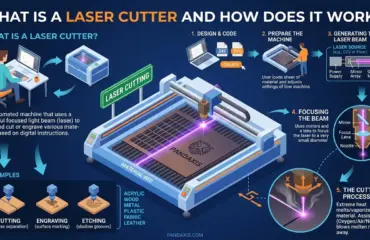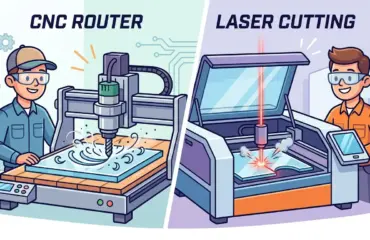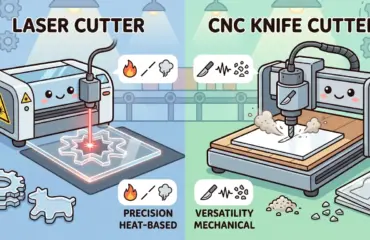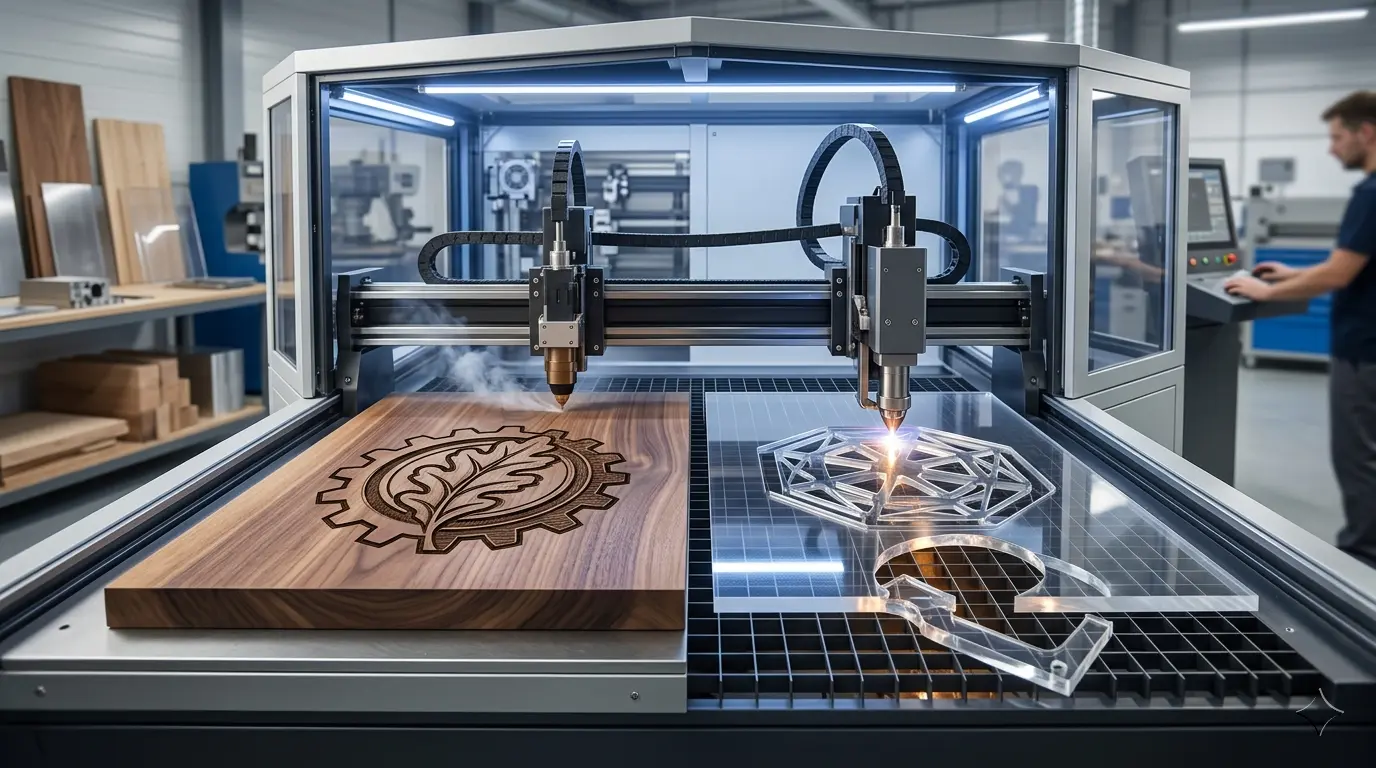
Many buyers start with a simple assumption: a CO2 laser engraver marks surfaces, a CO2 laser cutter cuts through sheets, and the difference is mostly in the label. In actual production, the distinction runs deeper than that. Once jobs move from demos into daily output, the machine is judged by different priorities, different bottlenecks, and different quality failures depending on whether the workflow is engraving-led or cutting-led.
For buyers comparing laser cutters and engravers for wood, acrylic, and similar non-metallic materials, the more useful question is not only what the beam can do. It is what the machine must do repeatedly, at an acceptable quality level, across a full shift.
Why the Difference Shows Up in Workflow
In many cases, a CO2 platform can handle both engraving and cutting. But real-use performance depends on which task drives the schedule most of the time.
When engraving dominates, the workflow usually revolves around:
- Surface Detail Quality
- Marking Consistency Across Repeated Jobs
- Artwork Alignment and Positioning
- Fast Changeovers Between Small or Customized Orders
- Minimal Surface Damage Outside the Engraved Area
When cutting dominates, the workflow usually revolves around:
- Full Separation of the Part From the Sheet
- Edge Cleanliness and Reduced Burning
- Stable Cutting Across Material Batches
- Efficient Sheet Layout and Material Utilization
- Predictable Unloading With Less Manual Rework
That difference matters because the same machine can feel very efficient in one workflow and frustrating in the other if the production priorities are mismatched.
What Changes When the Work Is Mostly Engraving
An engraving-oriented CO2 workflow is usually evaluated by visual quality before it is evaluated by raw output. The operator is often trying to hold fine detail, readable text, smooth fill areas, or consistent decorative results on wood, acrylic, coated surfaces, and other non-metallic materials.
In that environment, the practical concerns shift toward control and repeatability at the surface level:
- Consistent Mark Appearance Across the Batch
- Clean Registration on Repeated Layouts
- Reliable Handling of Small, Varied Orders
- Limited Heat Effect Outside the Target Area
- Faster Artwork Changes Without Long Setup Loops
This also changes how downtime appears. In an engraving-heavy shop, the main productivity loss is not always failed cutting. It is often time lost to re-alignment, test marking, artwork changes, inconsistent contrast, or cosmetic rejects that are still technically usable but no longer saleable at the required finish standard.
Engraving-heavy work is commonly a good fit when the value of the part comes from detail, branding, customization, or decorative surface treatment rather than simple part separation.
What Changes When the Work Is Mostly Cutting
A cutting-oriented CO2 workflow is usually judged less by how the surface looks and more by whether parts come out cleanly, on time, and with limited secondary handling. The machine is expected to separate contours reliably, keep edge quality within an acceptable standard, and support a steady flow of usable parts.
That changes the operating focus:
- Cut-Through Reliability Matters More Than Fine Surface Texture
- Edge Quality Matters Because It Affects Finishing and Assembly
- Smoke Removal and Process Stability Matter More Over Long Runs
- Sheet Nesting and Layout Efficiency Have a Direct Effect on Throughput
- Material Variation Becomes More Expensive Because Incomplete Cuts Slow the Whole Job
In real use, cutting-heavy operations usually discover that visible cutting speed is only part of the productivity story. Net throughput depends on how often parts release cleanly, how much edge cleanup is required, and whether the next downstream step can accept the part without extra intervention.
That is why a CO2 laser cutter in daily production is often managed more like a part-making station than a graphics tool. The value comes from stable output, cleaner edges, and less rework, not just from the ability to trace a contour.
CO2 Laser Engraver vs CO2 Laser Cutter in Real Use
| Real-Use Factor | CO2 Laser Engraver Priority | CO2 Laser Cutter Priority | Why It Changes the Buying Decision |
|---|---|---|---|
| Main Production Goal | Clear surface marking, decorative detail, readable text, consistent graphics | Reliable part separation, acceptable edge quality, repeatable contour cutting | The quality standard is different even when the beam source is similar |
| Typical Bottleneck | Alignment, artwork setup, frequent job changes, cosmetic consistency | Sheet handling, incomplete cuts, edge cleanup, part release | Throughput is lost in different places |
| Material Concern | Surface reaction and appearance | Thickness consistency, cut stability, edge condition | One workflow protects appearance, the other protects usable output |
| Quality Failure That Hurts Most | Uneven marking, poor contrast, blurred detail, off-position graphics | Unfinished cuts, excessive burning, rough edges, fused corners | Rejects show up differently and require different corrections |
| Best Fit for Order Mix | Customized, branded, decorative, or short-run detail work | Repeated shape cutting, blanks, inserts, signage parts, and production contour work | The machine earns value in different business models |
| Daily Operator Focus | Positioning, design changes, mark appearance, repeat jobs | Recipe stability, extraction, sheet yield, unloading, downstream readiness | The skill set and attention points are not identical |
| Maintenance Pressure | Quality drift that affects appearance | Smoke, residue, and process drift that affect cut reliability over time | A cutting-led machine is often punished faster by unstable process conditions |
The key takeaway is straightforward: the label should follow the production role. If surface quality and customization drive the workload, buyers usually care more about engraving behavior. If parts must come off the sheet cleanly and repeatedly, cutting behavior should lead the evaluation.
When a Combo Machine Makes Sense
Many buyers do not actually need a strict either-or answer. A combined CO2 system can make sense when the product mix includes both decorative engraving and light-to-moderate contour cutting on the same general family of non-metallic materials.
That is often practical when:
- One Shop Handles Small Batches With Mixed Job Types
- The Same Product Needs Surface Marking and Contour Cutting
- Flexibility Matters More Than Peak Output in One Single Task
- The Business Is Still Defining Its Dominant Product Mix
But combo ownership is not the same as optimization. In real use, one machine doing both jobs usually means the operator is managing more tradeoffs between marking quality, cutting stability, changeover rhythm, and material scheduling.
If engraving dominates strongly, a cutter-capable machine may still be underused in the cutting role. If cutting dominates strongly, the engraving function may remain useful but no longer defines the machine’s economic value. That is why buyers should separate capability from daily production priority.
How To Choose for Your Product Mix
The most reliable way to choose is to start with the finished product and work backward through the workflow.
An engraving-led choice usually makes more sense when:
- Most jobs are logos, text, patterns, decorative panels, branded items, or customized short runs
- Surface presentation drives the value of the part
- Changeover frequency is high and batch sizes are small
- Cosmetic consistency matters more than cut-through output
A cutting-led choice usually makes more sense when:
- Most jobs involve repeated contours, blanks, inserts, acrylic shapes, or production parts cut from sheet stock
- Downstream assembly or finishing depends on consistent edge quality
- Material utilization and predictable job timing matter every day
- The line loses money when parts do not separate cleanly on the first pass
If the answer is still unclear, review the queue from the last several weeks instead of the most memorable sample job. The right machine role is usually revealed by repeated workflow pressure, not by occasional special orders.
What Buyers Often Miss During Evaluation
The most common buying mistake is comparing engraving samples and cutting samples as if they represent the same production reality. They do not.
Before making the decision, buyers should ask:
- Which Job Type Actually Occupies Most Machine Hours?
- Where Does Rework Happen Today: Cosmetic Correction or Edge Cleanup?
- Does the business win more work through customization or through stable part output?
- Is the operation more constrained by artwork changes or by sheet processing efficiency?
- Will the machine mostly support short-run variety or repeated production batches?
Those questions usually clarify whether the machine should be evaluated first as an engraver that can cut, as a cutter that can engrave, or as a balanced mixed-use system.
Practical Summary
In real production use, the difference between a CO2 laser engraver and a CO2 laser cutter is not just whether the beam marks a surface or cuts through material. The real difference is what the machine is expected to deliver all day without creating bottlenecks elsewhere in the workflow.
An engraving-led workflow prioritizes surface detail, visual consistency, alignment, and fast job changes. A cutting-led workflow prioritizes clean part separation, edge quality, repeatable output, and less downstream rework. Many CO2 systems can do both, but buyers get better results when they choose based on the dominant production role rather than the broadest feature list.
If most of your value comes from customization and decorative detail, engraver behavior should lead the evaluation. If most of your value comes from stable sheet processing and usable part output, cutter behavior should lead it. That distinction is what changes machine fit in real use.