Laser machinery covers a wide range of production tasks, from cutting acrylic display parts to engraving wood panels to processing sheet metal at industrial speed. For buyers, the challenge is not simply choosing a laser machine. It is understanding which laser type fits the material, which workflow it improves, and which buying criteria actually matter once the machine is on the factory floor.
If you are comparing laser equipment for a workshop, fabrication plant, sign business, furniture manufacturer, or industrial job shop, the right decision starts with process fit rather than headline power alone.
What Counts as Laser Machinery?
Laser machinery refers to industrial or commercial equipment that uses a focused laser beam to cut, engrave, mark, or otherwise process material. In practical terms, these machines combine:
- A Laser Source
- A Beam Delivery and Focusing System
- A Motion Platform or CNC Axis System
- A Controller That Executes the Program
- Supporting Systems Such as Cooling, Exhaust, and Assist Gas
The reason laser equipment is so widely used is that it offers non-contact processing. That means the beam does the work without a blade, bit, or punch physically pressing into the material. In the right application, that can mean cleaner detail, less tool wear, faster changeovers, and more repeatable output.
The Main Types of Laser Machinery
Not all laser machines solve the same production problem. The most useful way to classify them is by source type and by process function.
CO2 Laser Machines
CO2 laser systems are commonly used for non-metal materials and are widely applied in:
- Acrylic Cutting
- Wood Cutting and Engraving
- MDF Processing
- Leather and Fabric Cutting
- Signage and Display Production
- Decorative Surface Engraving
They are often a strong fit when the production goal is shape flexibility, fine engraving detail, or cleaner edge quality on non-metal substrates. For buyers focused on wood, acrylic, and similar materials, this is the laser category most directly aligned with current laser cutters and engravers positioning on the Pandaxis site.
Fiber Laser Machines
Fiber laser systems are widely used in industrial metal processing, especially for:
- Carbon Steel
- Stainless Steel
- Aluminum
- Brass
- Copper
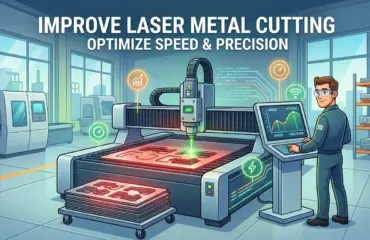
They are valued for speed, electrical efficiency, and strong performance in metal fabrication workflows. However, buyers should treat fiber laser selection as a separate industrial decision path from non-metal CO2 processing. The machine structure, material response, assist gas strategy, and production economics are different.
Laser Engraving Machines
Some laser machines are purchased primarily for surface marking, engraving, or decorative detailing rather than through-cutting. In those cases, buyers usually care most about:
- Fine Detail Resolution
- Surface Finish Quality
- Repeatability Across Batches
- Material Compatibility
- Ease of Setup for Different Jobs
These machines are common in branding, signage, furniture detail work, personalized products, and decorative panel production.
Hybrid Cutting-and-Engraving Systems
Many shops prefer a machine that can both cut and engrave because it reduces floor-space duplication and simplifies job switching. That can work well when the material mix is stable and the production scale does not require separate dedicated lines.
Laser Tube or Specialty Systems
Some industrial laser machines are designed for highly specific workflows such as tube processing, precision marking, or specialized materials. These systems should be evaluated based on the exact production bottleneck they solve, not just on whether they use a laser.
What Applications Is Laser Machinery Used For?
Laser equipment is used across multiple industries because it can handle both precision work and production flexibility.
Signage and Display Fabrication
Laser cutting is widely used for acrylic letters, retail displays, branded fixtures, decorative panels, and point-of-sale components. In this workflow, clean edge quality and shape flexibility often matter more than maximum material thickness.
Furniture and Interior Components
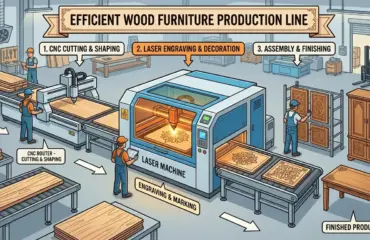
For furniture-related applications, laser machinery can support decorative cutting, wood engraving, acrylic inserts, templates, and custom panel elements. It is especially useful when the design requires repeatable detail without mechanical tool contact.
Industrial Fabrication
In broader industrial settings, laser systems are used for everything from metal part cutting to surface identification to shape processing on non-metal materials. The actual machine choice depends on whether the job is driven by speed, cut quality, material range, traceability, or part complexity.
Textile, Leather, and Flexible Materials
Laser systems can also support pattern cutting, decorative work, and repeatable shape processing on soft materials where precise outlines and reduced manual trimming are valuable.
Custom and Mixed-Job Production
Laser machinery is often attractive to shops that switch between designs frequently. Since the process is digitally controlled, changing from one part to another does not require the same tooling changes as many traditional cutting methods.
How Laser Machinery Works in Production
Even though laser systems vary by source and application, the process logic is consistent.
1. The Laser Beam Is Generated
The laser source creates a focused beam of energy. The source type determines which materials the machine is best suited to process.
2. The Beam Is Focused Onto the Material
Optics concentrate the energy into a very small focal spot. That concentrated energy is what allows the machine to cut, engrave, or alter the surface of the material.
3. The CNC System Controls the Path
The machine follows a digital file, moving the cutting head or work surface according to programmed coordinates. This is what allows repeatable shapes and detailed geometry.
4. Supporting Systems Stabilize the Process
Depending on the machine type, the system may use assist gas, water cooling, smoke extraction, and automatic focus functions. These supporting systems strongly affect stability, cut quality, and operating reliability.
Laser Machinery Types by Buying Intent
Buyers often get better results when they classify the machine by purchase objective rather than by technology label alone.
| Buying Goal | Best-Fit Laser Machinery Direction | Why It Fits |
|---|---|---|
| Cut Acrylic, Wood, or Similar Non-Metal Materials | CO2 Laser Cutting or Cutting-and-Engraving System | Strong fit for non-metal processing, detail work, and decorative cutting |
| Add Surface Graphics, Branding, or Fine Detail | Laser Engraving System | Better aligned with marking quality and repeatable surface detail |
| Process Sheet Metal at Industrial Scale | Fiber Laser System | Better suited to metal cutting speed and metal-focused fabrication workflows |
| Handle Both Decorative Work and Through-Cutting in One Cell | Hybrid Cutting-and-Engraving Setup | Helps reduce equipment duplication in mixed but moderate-volume work |
| Support Frequent Design Changes | CNC-Controlled Laser Platform With Stable Software Workflow | Faster job changeovers and more flexible production planning |
Key Buying Criteria for Laser Machinery
The wrong laser machine is usually not wrong because it lacks one feature. It is wrong because the selection process ignored the production context.
Material Fit
This is the first filter. A machine that performs well on acrylic and wood may not be the right answer for metal fabrication, and a machine optimized for metal may be poorly matched to decorative non-metal work.
Start with:
- Primary Materials
- Typical Material Thickness
- Required Edge Quality
- Whether the Work Is Cutting, Engraving, or Both
Production Volume
Low-volume custom work and high-volume production lines do not need the same machine priorities.
- Custom or Short-Run Shops Usually Value Flexibility
- High-Volume Manufacturers Usually Prioritize Throughput and Repeatability
- Mixed-Job Environments Need Faster Changeovers and Easier Programming
Cut or Mark Quality
Some buyers focus too much on whether the machine can process a material and not enough on how well it does so. In practice, quality questions should include:
- How Clean Is the Edge?
- How Much Secondary Finishing Is Needed?
- How Consistent Is the Result Across a Batch?
- Does the Process Create Burn Marks, Burrs, or Surface Damage?
Machine Structure and Motion Stability
Stable mechanics matter. Axis accuracy, frame rigidity, guide quality, and head control all affect dimensional consistency and real-world output quality.
Software and Workflow Integration
A good laser machine should support the way production actually runs. That includes:
- File Preparation Efficiency
- Nesting or Layout Logic
- Job Switching Speed
- Operator Usability
- Integration With Upstream Design and Downstream Finishing
Operating Cost and Maintenance
The purchase price is only one part of the decision. Buyers should also evaluate:
- Consumables
- Optics Maintenance
- Cooling Requirements
- Energy Use
- Downtime Risk
- Access to Service and Spare Parts
In many facilities, long-term reliability and support have more impact on ROI than a small difference in initial machine price.
Automation Level
Automation matters most when labor efficiency, throughput, and repeatability are major priorities. Some operations benefit from a simpler machine with strong manual control. Others need more automated loading, focus adjustment, or production consistency.
Laser Machinery vs Traditional Processing Methods
Laser equipment is not always a total replacement for conventional machinery. The right question is where it fits better.
Compared With Mechanical Cutting
Laser processing is often stronger when the job involves intricate contours, frequent design changes, or surface-sensitive materials where non-contact processing is an advantage.
Compared With Punching or Routing
Punching, routing, and sawing may still be the right choice in some high-volume or material-specific workflows. Laser machinery becomes more attractive when flexibility, digital shape control, or reduced tooling dependency matters more.
Compared With Manual Craft Processing
Laser systems can improve repeatability and reduce variation in workflows that otherwise depend heavily on operator skill for every part.
When Laser Machinery Makes the Most Sense
Laser machinery usually delivers the most value when a shop faces one or more of these issues:
- Too Much Manual Rework
- Frequent Design Changes
- Poor Repeatability Across Batches
- Slow Changeovers Between Jobs
- Need for More Detailed Shapes or Engraving Quality
- Material Waste Caused by Inefficient Layout Planning
In those cases, laser processing can improve consistency and workflow control even before the operation reaches large-scale automation.
Where Pandaxis Fits in the Conversation
Pandaxis covers a broad machinery lineup across woodworking, laser systems, and industrial production equipment. In laser-related content, the most defensible category fit is non-metal processing centered on wood, acrylic, engraving, and related applications. Buyers who are comparing broader equipment options across cutting, finishing, and fabrication workflows can also use the wider Pandaxis product catalog as a starting point for category-level discovery.
That matters because laser machinery is often not a standalone decision. It needs to fit the rest of the workflow, whether that means decorative panel production, signage work, or a larger processing line where cutting, drilling, sanding, or finishing all need to connect cleanly.
Final Thoughts
Laser machinery is best understood as a group of process tools, not a single machine category with one universal answer. CO2 machines, fiber systems, engraving platforms, and hybrid setups each serve different production needs.
The best buying decision comes from matching the machine to the material, the required finish quality, the job mix, and the real bottleneck in production. If the application centers on wood, acrylic, and non-metal decorative processing, laser cutting and engraving systems can be a highly practical fit. If the requirement is broader or more specialized, the evaluation should stay grounded in workflow logic, operating cost, and production goals rather than marketing shorthand.
FAQ
What Is the Difference Between CO2 and Fiber Laser Machinery?
CO2 laser machinery is commonly used for non-metal materials such as wood and acrylic, while fiber laser machinery is widely used for metal processing. They should be evaluated as different production solutions rather than interchangeable options.
Is Laser Machinery Only for Cutting?
No. Laser machinery can also be used for engraving, marking, and decorative processing depending on the machine type and application.
What Is the Most Important Buying Criterion?
Material fit is usually the first and most important filter. After that, buyers should evaluate output quality, production volume, software workflow, maintenance needs, and support.
Is a Higher-Power Machine Always Better?
Not necessarily. A higher-power machine may be unnecessary or poorly matched if the materials, finish expectations, and workload do not require it.
When Does Laser Machinery Offer the Best ROI?
It usually offers the best ROI when it reduces manual rework, improves repeatability, supports faster job changes, or solves a precision and flexibility problem that conventional methods handle less efficiently.