Shops often talk about CAM software as if the decision were mainly about brand preference. In practice, the better question is much more operational: what level of programming complexity, reuse, machine diversity, post-control discipline, and staffing resilience does the shop actually need? Mastercam is a recognized name because it often appears where machining becomes more varied, more demanding, and more dependent on stable programming systems rather than on one-off toolpaths.
That does not mean every shop needs it. Many do not. Simpler CAM tools can be the more rational choice when geometry is straightforward, machine counts are low, and the cost of training or software overhead would outweigh the benefit of deeper functionality. The correct decision comes from the work mix and the programming burden, not from software reputation alone.
The Real Purchase Is Not “More CAM.” It Is More Programming Infrastructure
At its best, a platform like Mastercam buys more than toolpath generation. It buys a way to manage complexity across different machines, control types, programmers, and part families. That includes reusable templates, stronger post discipline, deeper strategy options, more structured setup logic, and a programming environment that can support demanding geometry without forcing every job to be reinvented.
This becomes valuable when the shop handles multiple types of work or multiple classes of CNC equipment. If the business needs stable programming output across several machines, several programmers, or multiple shifts, then the software decision starts to affect operational consistency rather than only individual programmer comfort.
That is when the seat cost begins to look less like software overhead and more like production infrastructure.
When Mastercam Makes Clear Sense
Mastercam usually makes the most sense when the shop is dealing with one or more of the following conditions: more complex geometry, heavier use of multi-axis or mixed machine types, a meaningful need for reusable programming standards, or a business model where programmer throughput directly affects delivery capacity.
In those situations, the value is not that the software is “advanced” in an abstract sense. The value is that programming decisions become easier to standardize and harder to lose when work becomes more varied or more demanding. The software starts protecting the business from inconsistency in how parts are programmed, posted, and proven out.
This is especially relevant when the programming department is no longer a single expert carrying tribal knowledge alone. Deeper CAM can support more durable workflows when the shop is ready to use it that way.
When Simpler CAM Is Still The Better Business Decision
Not every machining operation benefits from extra depth. If most parts are routine 2.5D pockets, contours, drilling cycles, or limited turning operations, and if the machine fleet is small, then simpler CAM may be entirely adequate. In those cases, low software friction and faster operator adoption may matter more than broad feature depth.
This is particularly true in smaller environments where training time is scarce and programming complexity is not the main business bottleneck. A shop can create expensive software overhead by buying beyond its real use case. The license may look impressive while the actual workflow remains simple enough that the extra capability sits mostly unused.
The mistake is assuming that more capability automatically means more productivity. Capability only pays back when the work actually uses it and the team can turn that capability into repeatable process advantage.
The Better Comparison Is Standardization Burden Versus Simplicity
The useful comparison is not “Which software is stronger?” It is “Which software best fits the complexity and standardization burden we actually carry?” If the shop programs many machines and many part families, a richer CAM platform often reduces long-term friction. If the shop runs a small number of machines on consistent work, simpler tools may keep the process leaner.
This is why CAM selection should be tied to machine diversity, post complexity, staffing structure, and business direction, not only to the most difficult part anyone can imagine running someday.
The better decision usually looks conservative in hindsight because it matched the real process rather than the aspiration.
Posts And Machine Output Matter At Least As Much As Toolpaths
One of the least glamorous and most important parts of CAM value is post stability. Shops sometimes compare software based on toolpath demonstrations while underestimating how much daily productivity depends on reliable posted code for their actual controls and machines. If post behavior is unstable or poorly supported, software sophistication elsewhere matters much less.
That is why buyers should ask what machine-control combinations they truly need to support and whether the CAM choice makes that easier or harder over time. A simpler system with stable output may outperform a more powerful one that creates recurring uncertainty at the machine. Conversely, if the shop keeps adding machines, controls, and strategy complexity, a stronger post framework can become one of the main reasons to step up in CAM depth.
In production, dependable code often matters more than impressive menus.
Training Burden Is Not A Side Issue. It Is Part Of The ROI
Full-featured CAM platforms do not only cost money. They also cost learning time, internal standards work, documentation effort, and onboarding discipline. If the shop lacks the staffing or patience to build those habits, then the software may underperform no matter how capable it is. This is one reason smaller or less complex shops often do better with simpler tools that fit existing skill levels more comfortably.
Buyers should therefore price the human side of the decision. How long until the software is used well? How much internal mentoring is required? How fragile is the workflow if one advanced programmer leaves? Can the shop document methods well enough that software depth becomes a team asset rather than a personal asset?
Those questions are more useful than raw feature comparison because they determine whether the software will stabilize the operation or simply elevate the skill threshold without changing output reliability.
Mastercam Starts Paying Back Faster When The Shop Already Thinks In Templates And Standards
The deeper value of a Mastercam-class platform often appears when the shop stops programming every job from scratch. Reusable templates, internal naming standards, common setup logic, and more consistent post behavior let the software support team scale rather than only individual output. That matters when several programmers need to create similar quality code across different jobs and machines.
In that environment, software depth becomes a standardization tool rather than a personal preference. Shops that already think this way usually see Mastercam as part of their programming system. Shops that do not often experience the software as a heavier interface with too many options.
The difference is not only the software. It is the maturity of the programming organization.
Software Will Not Repair A Weak Process Brief
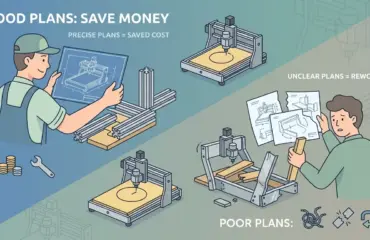
No CAM tier can compensate for poor input quality. If drawings are unclear, stock definitions drift, setup intent changes informally, or tolerance priorities are not understood, then advanced software simply produces expensive mistakes with confidence. The program may be technically polished while the manufacturing intent remains wrong.
That is why CAM choice should follow process clarity, not precede it. Better software amplifies a strong programming process. It does not rescue a weak one. If setup planning, inspection handoff, and shop-floor communication are already unstable, then a more powerful CAM package may only make bad inputs travel faster.
This matters because many software disappointments are really process disappointments wearing a software label.
A Practical Decision Matrix Helps Tie Software To Real Shop Conditions
| Condition | Full-Featured CAM Like Mastercam Often Makes More Sense | Simpler CAM Often Makes More Sense |
|---|---|---|
| Mixed machines and controls | Yes | Less often |
| Mostly basic 2.5D work | Sometimes | Yes |
| Strong need for reusable templates | Yes | Sometimes |
| Small shop with limited training bandwidth | Sometimes | Often |
| Multi-axis or advanced strategies | Yes | Less often |
| Few programmers and simple recurring work | Sometimes | Often |
| Growth toward more machine diversity | Often | Sometimes |
This is not a strict rule. It is a way to tie software choice to the programming environment rather than to marketing position.
Simpler CAM Can Become False Economy When Workarounds Turn Into Daily Routine
There is a point where lower software complexity stops saving money and starts creating repetitive work. If programmers keep rebuilding similar strategies, manually correcting output, exporting through awkward steps, or working around post limitations, the apparent simplicity becomes expensive in a quieter way. The cost does not always show up on a license line. It shows up in repeated programming time, uneven code quality, and machine-side hesitation.
Shops should therefore watch where time is really going. If programming friction is recurring and structural, a stronger CAM platform may be cheaper than it first appears. The decision becomes clearer when the cost of repeated workaround effort is made visible rather than absorbed as “just how we do it.”
The Economics Change Again When More Than One Programmer Must Produce The Same Quality
Many CAM choices look fine when one skilled programmer owns most of the work. The economics change when a second or third programmer must produce similar output quality under delivery pressure. At that point, software is no longer just a personal tool. It becomes part of the shop’s consistency system.
This is where a deeper platform can justify itself. If the shop needs repeatable naming, reusable methods, stable templates, and predictable post behavior across people, then the value of stronger CAM is not only in feature depth. It is in reducing the variation that comes from each programmer solving familiar problems in a slightly different way. That matters for setup sheets, prove-out time, handoff between shifts, and long-term maintainability of programs that may return months later.
Shops that underestimate this transition often think they have a training issue when they actually have an infrastructure issue. The software decision starts affecting whether tribal knowledge can be turned into a reusable programming system.
Migration Risk Should Be Considered Alongside Feature Benefit
Even when Mastercam looks justified, the transition still needs to be planned well. Post migration, template creation, programmer training, library cleanup, and internal standards all create temporary drag. Shops should therefore ask not only whether a deeper platform is beneficial, but whether they are prepared to convert that benefit into a stable rollout.
This is especially important when the business is already under delivery pressure. A rushed migration can make a good software decision look bad because the organization tried to change tools without making time for process stabilization. The better pattern is phased adoption: prove the machine posts, build a small standards library, train around real work, and only then widen usage.
That way the software earns trust through operational improvement instead of being judged only by the disruption of the switch.
Buy For The Next Few Years Of Work, Not Only Today’s Parts
CAM decisions age differently from cutter purchases. Shops should ask what kind of work they expect to take on over the next few years and whether the software path supports that growth without forcing a disruptive change too soon. If complexity, machine diversity, programmer count, or programming standardization are likely to increase, deeper CAM may be justified earlier than current jobs alone suggest.
That does not mean buying the biggest system by default. It means matching the software horizon to the business horizon. A shop that expects to remain small and simple should not buy complexity as a status symbol. A shop that is clearly moving toward broader programming demands should not pretend a lighter tool will scale indefinitely just because it is comfortable today.
This Same Logic Matters When Software And Machine Decisions Start Interacting
Pandaxis is not a CAM reseller, but the same reasoning applies when software choices meet machine investment. In furniture and panel production, the real bottleneck may not be general CAM depth at all. It may be nesting logic, workflow integration, or line throughput. That is why the Pandaxis article on nesting machines versus routers in furniture production is a useful reminder that software should be judged by the production system it serves, not as an isolated purchase.
When software and machine proposals are being compared together, quote comparison discipline matters just as much, because software scope is often buried inside broader machine claims. And when the business is moving from experimental work toward recurring factory output, prototype versus production thinking helps frame the real decision: are you buying convenience for a few jobs, or infrastructure for a programming system?
A Good Final Check Is Whether The Software Reduces Risk That You Already Feel
If the software choice reduces programming risk, post inconsistency, handoff friction, and repetitive workaround effort that the shop is already experiencing, then it is earning its place. If it mainly adds overhead without changing output quality, programming reliability, or team capacity, the simpler path is still the smarter one.
Mastercam makes the most sense when the shop faces enough geometric complexity, machine diversity, post-control burden, or programming standardization pressure to justify a deeper CAM environment. Simpler CAM makes more sense when the work is straightforward and the cost of additional software depth would exceed the practical benefit.
The right choice is the one that improves programming reliability and throughput for the work you actually run and the operation you are actually becoming, not the work that sounds most impressive in a demo.