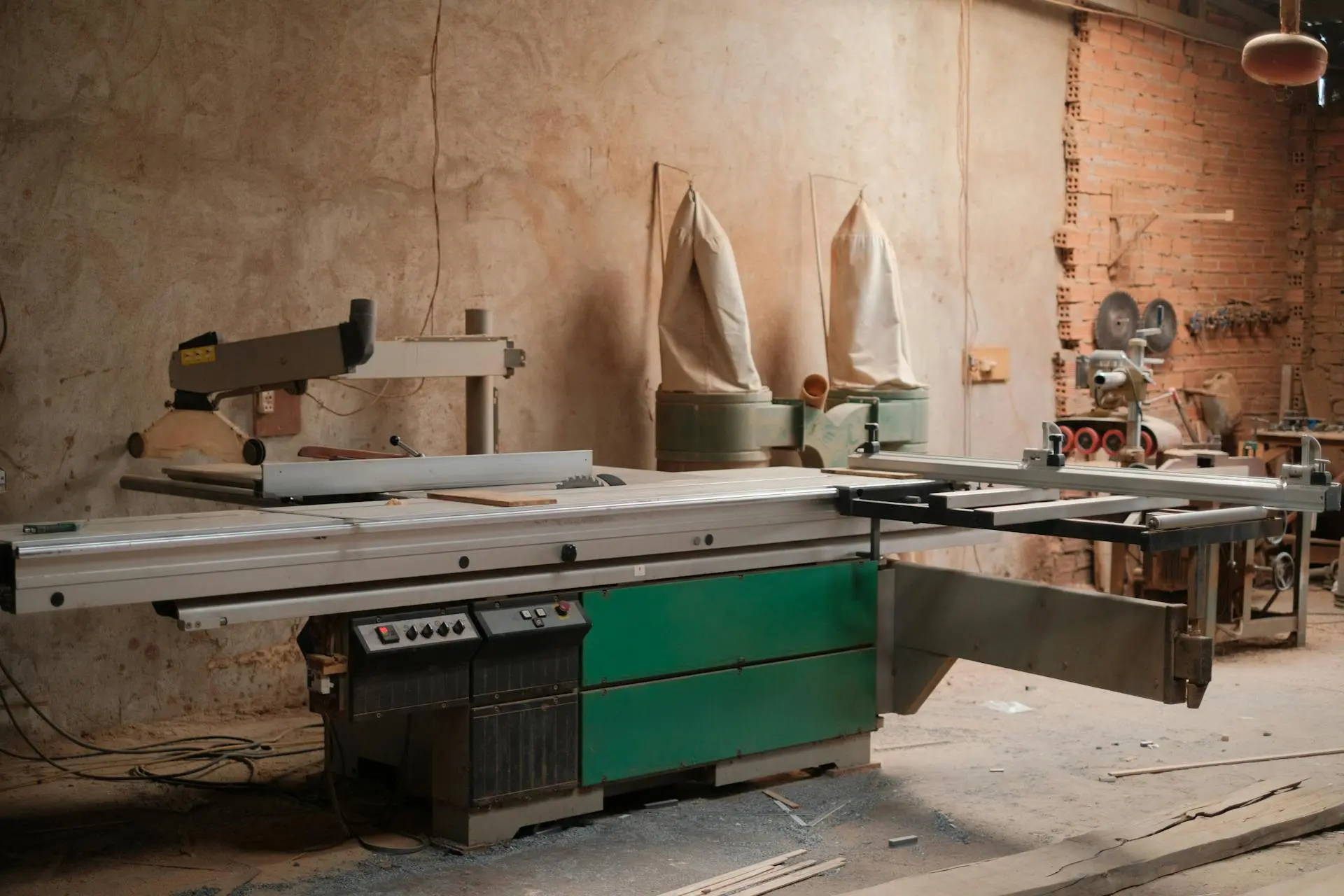
In flexible furniture production, custom joinery, and mixed-material cutting, a sliding table saw rarely loses performance all at once. More often, the change shows up as rougher carriage travel, fence settings that need more rechecking, more chip-out on finished panels, or cut results that feel less predictable at the end of the shift than they did at the start.
That is why sliding table saw maintenance should be treated as a performance-control routine, not only a repair routine. For shops that rely on sliding table saws for daily cutting flexibility, consistent output depends on smooth carriage movement, stable references, clean support surfaces, disciplined blade care, and regular verification before small drift turns into lost time and rework.
What Consistent Performance Actually Means
On a sliding table saw, consistent performance is not just whether the motor starts and the blade cuts material. It means the saw behaves predictably through the whole working day.
In practical terms, that usually means:
- The Carriage Moves Smoothly And Predictably From The First Cut To The Last.
- Fence Settings Hold Their Position Without Constant Rechecking.
- Panels Sit Cleanly On Reference Surfaces Without Dust Or Damage Affecting Support.
- Cut Quality Stays Stable Across Repeated Parts And Different Materials.
- Operators Do Not Need To Compensate For Drift With Extra Measuring, Slower Feeding, Or Informal Corrections.
When those conditions weaken, the loss is usually felt in throughput, finish quality, and downstream fit long before the saw reaches the point of obvious failure.
The Main Areas That Affect Sliding Table Saw Performance
Sliding table saw maintenance works best when the machine is viewed as a group of performance-critical systems rather than a single cutting unit.
| System Area | What To Watch | Why It Affects Daily Performance |
|---|---|---|
| Cutting System | Blade wear, resin buildup, damage, unusual noise | Reduces cut quality and increases load during routine cutting |
| Sliding Carriage And Guide Path | Rough travel, debris, play, hesitation | Affects feed smoothness, operator control, and repeatable results |
| Fence And Stop Systems | Loose locks, damaged faces, drift in settings | Reduces dimensional consistency and slows setup confidence |
| Table And Support Surfaces | Dust, chips, residue, surface damage | Changes how material seats and moves during the cut |
| Extraction And Cleanliness | Fine dust accumulation around moving or contact areas | Increases contamination, reduces visibility, and affects cut stability |
| Verification Routine | Missed control cuts, inconsistent checking method | Lets small drift spread into full batches of parts |
This system-based view matters because a sliding table saw often remains usable even while already losing the consistency that production depends on.
Daily Checks Before Production Starts
Daily maintenance should focus on preventing contamination, visible wear, and unstable setup conditions from entering the shift.
- Clean The Main Table, Sliding Carriage, Support Extensions, Fence Faces, And Crosscut Contact Areas.
- Inspect The Blade For Visible Wear, Damage, Or Buildup That Could Affect Edge Quality.
- Confirm That The Sliding Carriage Travels Smoothly Through Its Full Working Stroke Without Drag Or Irregular Resistance.
- Check That Fence Locks And Stops Hold Firmly And Do Not Shift During Positioning.
- Verify That Dust Extraction Is Working Properly And Not Allowing Debris To Build Up Around Cutting Or Support Zones.
- Run A Control Cut To Check Size, Squareness, And Edge Finish Before Normal Production Begins.
The control cut is especially important on a sliding table saw because performance drift often appears gradually. A quick reference part at the start of the shift is one of the simplest ways to catch a problem before operators start compensating for it by hand.
Weekly Checks That Protect Repeatability
Weekly checks should move beyond surface cleaning and look at how the machine is behaving over repeated use.
- Inspect Accessible Carriage Movement Areas, Rollers, Guides, And Related Surfaces For Debris, Wear, Or Unusual Play.
- Review Fence Mechanisms, Locking Points, And Stops For Looseness, Impact Damage, Or Unstable Holding.
- Check Blade Mounting Areas And Accessible Fastening Points For Residue, Improper Seating, Or Signs Of Movement.
- Inspect Extension Tables, Outrigger Support, And Crosscut References For Damage Or Misalignment That Could Affect Material Control.
- Look Over Exposed Guards, Cables, Handles, And Extraction Connections For Wear, Interference, Or Dust Accumulation.
- Compare Multiple Test Cuts Instead Of Relying On A Single Acceptable Part.
That last point matters because repeatability is the real issue. A sliding table saw may produce one correct part after adjustment while still showing variation once a series of similar cuts begins.
Monthly Maintenance for Alignment and Smooth Travel
Monthly maintenance should focus on the conditions that affect long-run consistency rather than only the visible quality of today’s cuts.
- Verify Cut Squareness And Dimensional Repeatability Using The Same Internal Reference Method Each Time.
- Review Lubrication And Service Points According To The Machine Manufacturer’s Guidance.
- Inspect Wear-Prone Areas In Carriage Assemblies, Fence Mechanisms, Support Arms, And Other Frequently Moved Components.
- Check Table And Support Surfaces For Damage Or Contact Issues That Change How Material Seats During Cutting.
- If The Saw Uses A Scoring Unit, Confirm That Its Relationship To The Main Blade Still Supports Clean Results On Laminated Materials.
- Compare Maintenance Findings With Shop Symptoms Such As More Chip-Out, More Fence Rechecking, Or More Assembly Correction Later In The Workflow.
Monthly checks become much more useful when the production team and maintenance team compare notes. If operators are reporting slower setup confidence or more inconsistent results on routine jobs, those symptoms should be traced back to machine condition instead of treated as normal variation.
Warning Signs Operators Should Report Early
Operators often notice a change in performance before scheduled maintenance catches it. Those early signals should be treated as inputs to the checklist, not as informal complaints.
| Warning Sign | Likely First Check Area | Production Risk If Ignored |
|---|---|---|
| Carriage No Longer Feels Smooth Through The Cut | Carriage Guide Path, Rollers, Debris Buildup | Reduced control and less repeatable cut execution |
| Fence Settings Need Frequent Rechecking | Fence Locks, Stops, Reference Faces | Slower setup and more dimensional drift |
| More Chip-Out On Routine Panel Work | Blade Condition, Cleanliness, Scoring Relationship If Equipped | Lower finish quality and more rework |
| Burn Marks Or Rougher Cut Edges | Blade Condition, Contamination, Feed Resistance | Poorer edge quality and reduced confidence in visible parts |
| Similar Parts Drift Slightly During The Shift | Reference Surfaces, Support Cleanliness, Alignment Verification | Hidden variation that shows up later in fitting and assembly |
| Operators Rely More On Manual Correction Than Usual | Combined Check Of Carriage, Fence Stability, And Table Condition | Slower throughput and less stable daily output |
The key is to act while the problem is still small. A sliding table saw can keep working while already forcing the operator to carry the burden of declining machine condition.
Maintenance Habits That Make the Checklist Work
Even a good checklist loses value if the shop treats maintenance as memory-based rather than routine-based. The strongest results usually come from a few simple habits.
- Assign Clear Ownership For Daily, Weekly, And Scheduled Checks.
- Use The Same Control-Cut Method So Drift Can Be Compared Over Time.
- Record Symptoms Such As Rough Carriage Travel, Fence Drift, Or Recurring Chip-Out Instead Of Treating Them As Isolated Events.
- Separate Basic Cleaning From Performance Verification So A Clean Machine Is Not Mistaken For A Verified Machine.
- Escalate Recurring Performance Changes Before Operators Normalize Them And Work Around Them.
This matters most in shops where the sliding table saw supports mixed work. Because the machine is valued for flexibility, it is easy for teams to overlook slow performance decline and keep adapting around it instead of restoring the original cutting condition.
When Preventive Maintenance Should Turn Into Deeper Service
Routine maintenance can prevent many problems, but it cannot solve every source of instability. If the saw continues to show repeatability loss, recurring fence drift, rough carriage behavior, or quality decline after normal cleaning and inspection, the issue should move into deeper service and alignment review.
That is usually the point where the goal is no longer simply to maintain cleanliness. It is to restore stable machine behavior so the saw produces the same predictable result through repeated daily work rather than only after repeated operator correction.
Waiting until the machine becomes obviously unusable is usually too late. If the saw still runs but no longer holds steady, confidence-based production is already being replaced by compensation-based production.
Practical Summary
A sliding table saw maintenance checklist should protect the conditions that make daily cutting reliable: smooth carriage travel, stable fence references, clean support surfaces, controlled blade condition, and consistent verification of squareness and cut quality.
The best maintenance routines do not wait for breakdowns. They catch drift early, turn operator observations into maintenance actions, and keep the saw performing the same way at the end of the shift as it does at the beginning. That is what consistent daily performance really looks like in a flexible production environment.