In an industrial sanding line, poor surface quality is often blamed on the machine, feed settings, or operator technique. Just as often, the real problem is a mismatch between the abrasive belt, the material being processed, and the finish standard the factory is trying to achieve. A belt that removes stock efficiently from solid hardwood can be too aggressive for veneer. A belt that leaves a clean scratch pattern before coating can load too quickly on raw MDF or resinous softwood.
That is why abrasive-belt selection should not start with a generic question about grit alone. It should start with a more practical one: what does this sanding stage need to accomplish, and what material behavior is making that job harder? Once those two points are clear, belt selection becomes far more consistent and rework usually becomes easier to control.
Start With The Sanding Objective, Not The Belt Name
The most useful way to choose an abrasive belt is to define the sanding stage first. Factories often run into trouble when they expect one belt type to handle heavy stock removal, scratch refinement, and finish preparation equally well.
| Sanding Objective | Belt Tendency | What It Helps Control | Common Mistake |
|---|---|---|---|
| Heavy Calibration Or Stock Removal | Coarser grit, stronger backing, more aggressive abrasive grain | Thickness correction, panel leveling, and removal rate | Carrying the same belt too far into finish-sensitive stages |
| Intermediate Scratch Refinement | Medium grit with balanced cut and belt life | More uniform surface before finer sanding | Skipping too many grit steps after coarse sanding |
| Veneer Or Thin Decorative Face Preparation | Finer, less aggressive cut | Surface protection and lower sand-through risk | Using heavy stock-removal belts because they last longer |
| Primer Or Sealer Sanding | Fine, sharp-cutting abrasive behavior | Scratch uniformity before coating | Expecting long belt life under heavy pressure |
| Final Prep For Visible Parts | Fine, stable scratch pattern | Better finish appearance and less hand touch-up | Moving to a fine grit before earlier scratches are fully removed |
This matters because the right belt is rarely the one with the most aggressive cut. It is the one that fits the actual job of the station without creating deeper scratches, heat, loading, or unnecessary risk to the surface.
Match Belt Aggressiveness To Material Behavior
Different materials do not just wear belts differently. They also change heat build-up, loading behavior, scratch visibility, and how much margin the factory has before damaging the part.
| Material | Belt-Matching Priority | Practical Guidance | Main Risk |
|---|---|---|---|
| Solid Hardwood | Stable cut, heat control, and scratch consistency | Durable abrasive types usually make more sense in heavier removal stages, followed by a disciplined grit progression | Burn marks, deep scratches, or inconsistent finish on dense grain |
| Softwood Or Resinous Wood | Loading resistance and even surface cutting | Open-coat or anti-loading belt structures are commonly a better fit where resin or softer fibers clog belts quickly | Glazing, heat, and poor belt life |
| Raw MDF | Dust evacuation, controlled cut, and consistent scratch pattern | Belt structure matters as much as grit because MDF can load belts quickly while still requiring a clean, uniform face | Loading, fuzzy surface texture, and unstable finish prep |
| Plywood Or Veneer-Faced Panels | Surface protection and low-aggression sanding | Finer starting points and gentler progression are usually safer because the goal is surface control, not aggressive removal | Sand-through, veneer damage, and visible scratch lines |
| Primer, Sealer, Or Coated Surfaces | Fine scratch pattern and low heat | Sharp, finish-oriented abrasives are commonly used where coating appearance matters more than raw removal rate | Telegraphed scratches under the final finish |
It is also worth being precise about what is actually being sanded. Decorative-faced melamine panels, for example, are often not face-sanded in normal production. In those workflows, abrasive-belt decisions matter far more on raw substrates, veneered surfaces, coated panels, edges, or solid-wood components than on finished laminate faces.
Grit Progression Usually Matters More Than One Perfect Belt
Many sanding problems are not caused by choosing the wrong final grit. They come from asking one stage to remove the scratch pattern left by a belt that was too coarse, or from skipping too many steps in the progression.
In practical terms:
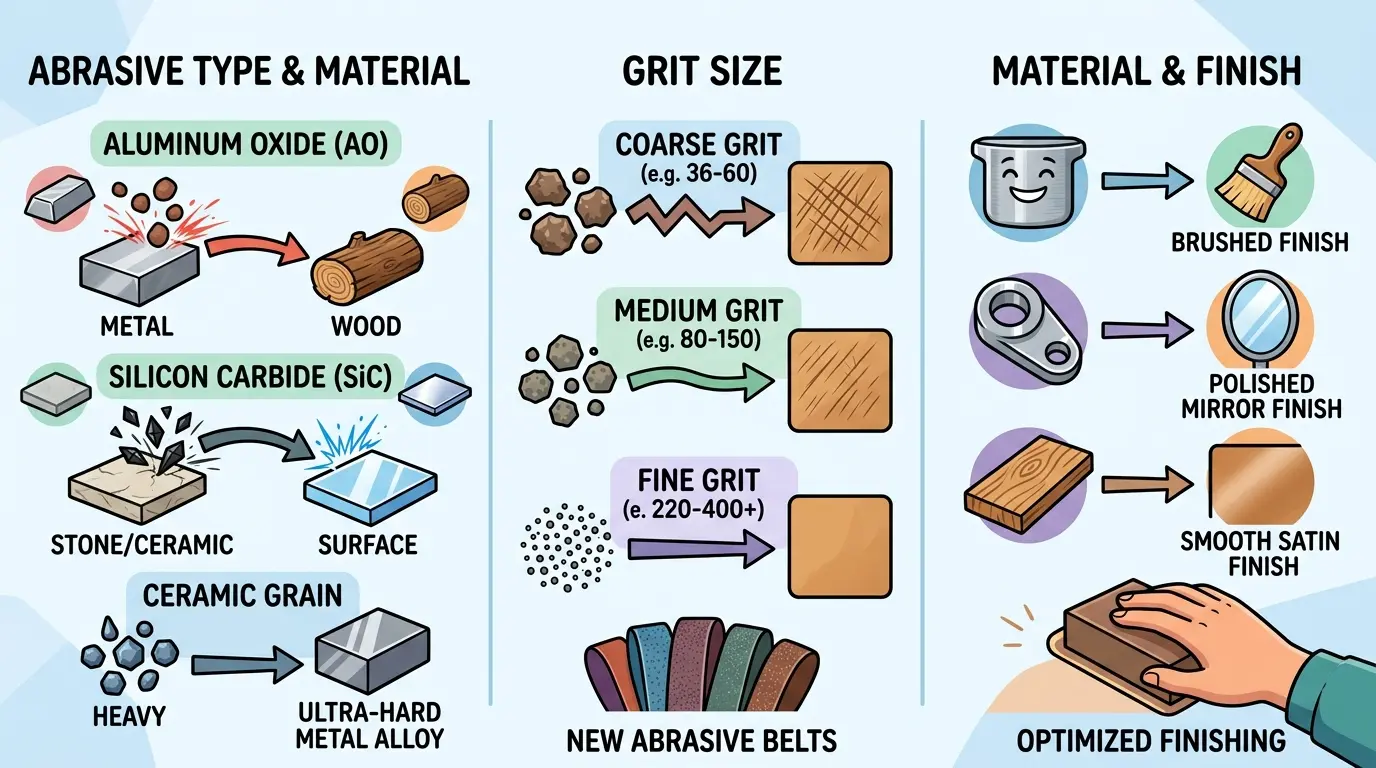
- Heavy stock removal on rough solid wood or uneven parts may start around 40 to 60 grit before moving through intermediate stages.
- General surface preparation on many wood parts often centers around 80 to 150 grit, depending on machining marks and the finish target.
- Veneer preparation usually begins finer because scratch control matters more than aggressive removal.
- Finish preparation before coating often moves into finer ranges such as 180 grit and above, but the correct endpoint depends on the coating system and the appearance standard.
These are starting points, not fixed rules. The main principle is simpler: each belt stage should remove the scratch pattern from the previous stage without creating a new problem that downstream sanding or finishing has to fight.
Abrasive Type Changes How The Belt Behaves
A grit number does not tell the whole story. Two belts with the same grit can behave very differently if the abrasive mineral, coat structure, or backing changes.
| Abrasive Type | Common Fit | Why It Is Chosen | Main Caution |
|---|---|---|---|
| Aluminum Oxide | General-purpose wood sanding and many intermediate stages | Versatile and widely used across mixed woodworking jobs | May not hold cutting aggression as long in demanding stock-removal work |
| Zirconia Alumina | Heavier stock removal and harder woods | Better durability under pressure and longer useful cut in tougher applications | Can be too aggressive if carried into finish-sensitive stages |
| Ceramic | High-demand industrial removal work where throughput pressure is high | Aggressive cut and strong performance in demanding sanding stages | Often unnecessary or too harsh for thin faces and fine finish prep |
| Silicon Carbide | Fine finishing, sealer sanding, and some hard or brittle surfaces | Sharp cutting action and a finer scratch character in finish-oriented stages | Usually not the best value for heavy stock removal on wood |
This is where buyers and production teams often go wrong. They compare grit numbers and assume the rest of the belt behaves the same. In reality, abrasive type often changes cut speed, heat generation, belt life, and scratch character enough to affect finish quality and labor cost.
Belt Structure And Backing Also Affect The Result
The belt surface and backing are not minor details. They influence how the belt loads, how evenly it tracks, and how well it handles pressure during production.
- Open-Coat Structures Commonly Help On Softer Woods, MDF, And Resinous Materials Where Dust Or Resin Can Pack the Belt Surface Quickly.
- Closed-Coat Structures Can Deliver A More Uniform Cutting Surface When Loading Is Less Severe And Finish Consistency Matters.
- Heavier Cloth Backings Are Usually Better Suited To Higher Loads, Longer Runs, And More Demanding Removal Stages.
- Finish-Oriented Stages Usually Depend More On Belt Stability And Scratch Consistency Than On Maximum Aggression.
In other words, a belt should be matched to how the line runs, not just to what the label says. A stable production line running long shifts under higher pressure asks more from the backing and structure than a lighter-duty sanding pass intended only to refine a surface.
The Belt Cannot Fix A Poorly Controlled Sanding Line
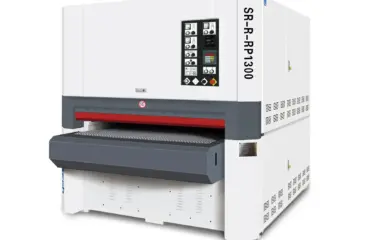
For factories evaluating wide belt sanders, belt selection only solves part of the problem. If dust extraction is weak, feed speed is unstable, platen or contact settings are wrong, or the workpiece is not being presented consistently, even a well-matched belt can produce disappointing results.
Common signs that the problem is not only the belt include:
- Random streaking instead of a repeatable scratch pattern
- Rapid loading on only part of the belt width
- Heat build-up or burning that appears inconsistent from part to part
- Edge rounding, chatter, or uneven surface leveling
- Belt life that changes sharply with no corresponding material change
When those issues appear, it is usually worth checking machine setup, dust control, pressure settings, and part consistency before assuming a different abrasive alone will solve the problem.
Practical Questions That Clarify The Right Belt Faster
Before changing suppliers or experimenting with random grit changes, production teams usually get to a better answer by asking a more structured set of questions.
- What Is The Real Job Of This Sanding Stage: Calibration, Scratch Refinement, Or Finish Preparation?
- Which Material Creates The Most Trouble Today: Hardwood, Softwood, MDF, Veneer, Or Coated Surfaces?
- How Visible Is The Finished Surface In The Final Product?
- Is The Main Problem Slow Removal, Short Belt Life, Loading, Heat, Or Visible Scratch Defects?
- How Aggressive Can The Process Be Before The Surface Becomes Too Risky To Sand?
- Are Earlier Machining Marks Or Previous Grit Scratches Being Removed Consistently?
- Is The Factory Really Facing A Belt Problem, Or A Machine-Control Problem That The Belt Is Only Exposing?
These questions keep the decision grounded in workflow reality. They also make it easier to separate two very different goals: maximizing removal rate and protecting finish quality. Those goals often require different belt choices, even on the same line.
Practical Summary
Matching abrasive belts to material and finish requirements is really about matching the belt to the job pressure created by the production process. Dense hardwoods, soft resinous woods, raw MDF, veneer-faced panels, and coated surfaces do not respond to sanding in the same way. They change how much aggression the process can tolerate, how quickly the belt loads, and how visible the scratch pattern becomes in the final product.
That is why grit alone is never enough. The sanding stage, abrasive type, coat structure, backing strength, and finish target all matter. A belt that performs well in heavy calibration may be the wrong choice for veneer preparation or final coating work. A belt that gives an excellent finish may be too slow or too short-lived in heavy stock removal. When factories frame belt selection around throughput, scratch control, loading behavior, and finish risk instead of treating all abrasives as interchangeable, the sanding process usually becomes more predictable and rework becomes easier to reduce.