In low-volume production, cutting is often constrained less by maximum cycle speed than by how often the job changes. A shop may move from cabinet panels to custom fillers, then to solid-wood parts, then back to a short rerun of previously cut components. In that environment, the most useful saw is not always the one built for the fastest repeated panel sizing. It is the one that lets operators switch tasks quickly, keep cuts accurate, and limit rework when schedules stay mixed.
That is where sliding table saws are commonly a strong fit. They support a flexible cutting cell where operator control, clean setup changes, and broader task coverage matter more than building the front end of production around a narrow high-throughput pattern.
Why Low-Volume Production Rewards Adaptability
Low-volume work does not mean low standards. If anything, it often puts more pressure on the cutting station because there is less repetition to absorb mistakes. One bad cut in a long batch is a nuisance. One bad cut in a five-part job can stop the entire order.
In custom and short-run workflows, the saw typically needs to support:
- Frequent Job Changes
- Mixed Part Sizes And Materials
- Short Cut Lists With Limited Setup Tolerance
- Operator Judgment Around Grain, Face Quality, And Final Fit
- Fast Responses To Design Revisions Or Replacement-Part Requests
A dedicated high-throughput cutting system can be excellent when part geometry and daily output are highly standardized. But when the schedule changes constantly, flexibility usually creates more value than maximum panel output per hour.
How Sliding Table Saws Keep Short Runs Moving
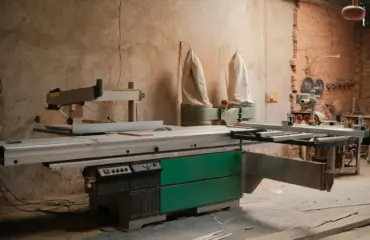
A sliding table saw gives the operator direct control over the workpiece as it moves through the cut. That matters in low-volume production because many jobs do not justify a heavily structured cutting routine. The operator often needs to confirm references, adjust fence settings, handle smaller batches, and move between different cut types without turning each change into a major reset.
In practice, that makes the machine well suited to shops that need one cutting station to cover several kinds of work, such as:
- Cabinet And Furniture Parts In Short Batches
- One-Off Custom Components
- Solid-Wood And Sheet-Good Processing In The Same Shift
- Angled, Trimming, And Fit-Correction Cuts
- Prototype Or Sample Production Before Full Release
The workflow advantage is not only versatility. It is the ability to start useful work quickly without waiting for repeated volume to justify the setup.
What Flexible Cutting Means for Quality and Downstream Flow
Low-volume shops often feel quality problems more sharply because each job carries more variation. A sliding table saw can help stabilize this kind of production when the operator needs to respond to the actual part, not just a repeated cut list.
That support shows up in several ways:
- Cleaner Part Preparation For Edge Banding And Assembly
- Easier Adjustment When Drawings Or Field Measurements Change
- Better Control Over Visible Edges, Grain Direction, And Final Orientation
- Reduced Need To Move Work Between Multiple Specialized Cutting Stations
- Faster Recovery When A Small Batch Needs A Cut Sequence Correction
This does not mean a sliding table saw automatically eliminates variation. Operator skill, blade condition, setup discipline, and material handling still matter. The honest advantage is that the machine makes flexible decisions easier to execute without forcing the shop into a rigid production pattern that may not match the order mix.
Decision Factors for Low-Volume Shops
| Low-Volume Production Need | How a Sliding Table Saw Helps | Where the Tradeoff Appears |
|---|---|---|
| Frequent job changes | Supports fast shifts between cut types and part sizes with less workflow disruption | Repeated long runs will still be slower than a dedicated high-throughput panel-sizing setup |
| Mixed materials in one day | Handles sheet goods and solid wood in a single cutting cell more naturally | Efficiency drops if most work becomes uniform sheet processing all day |
| Small batch sizes | Makes it practical to cut short runs without building the process around volume | Labor content per part stays higher than in more automated cutting systems |
| One-off adjustments and fit corrections | Gives the operator direct control for trim cuts, angle cuts, and final-size corrections | Results depend more on operator consistency and measurement discipline |
| Limited floor space or capital budget | Lets one versatile machine support broader daily work | A single machine can become a bottleneck if order volume rises sharply |
| Custom production with frequent design changes | Adapts more easily when part dimensions or sequences change late | Less efficient once the product mix becomes standardized and repetitive |
The key point is that the value comes from usable flexibility. A sliding table saw helps the shop stay productive when the job mix is varied and the cutting station needs to adapt continuously.
When a Dedicated Panel Saw Starts to Make More Sense
There is a clear point where flexibility stops being the primary buying factor. If a shop begins processing repeated rectangular panels all day, every day, the front end of production usually benefits from more structure and more repeatable high-volume panel sizing. In that case, dedicated panel saws often become the stronger answer.
That shift usually happens when:
- The Daily Schedule Is Dominated By Repeated Sheet Parts
- Downstream Operations Depend On Faster, More Standardized Part Flow
- Cutting Throughput Becomes The Main Bottleneck
- The Business Is Moving Toward Larger Batch Furniture Or Cabinet Production
- Operator-Led Flexibility Matters Less Than Repeated Output
This is the main tradeoff to keep in view. A sliding table saw helps a shop adapt. A panel saw helps a shop standardize. Low-volume operations usually need the first benefit more. Higher-volume batch lines usually gain more from the second.
Questions to Ask Before Choosing
Before committing to a saw for low-volume production, it helps to pressure-test the real workflow rather than the machine label.
- How often does the cut list change during a normal week?
- Does one saw need to process both sheet goods and solid wood?
- How often do operators need to make one-off adjustments or fit corrections?
- Is the current bottleneck a lack of flexibility or a lack of raw throughput?
- Would a more specialized saw actually be used enough to justify reduced versatility?
If the answers point toward mixed jobs, short runs, frequent changeovers, and operator-led decision making, a sliding table saw is often aligned with the way the shop already works.
Practical Summary
Sliding table saws support flexible, low-volume production by helping shops move between varied jobs without turning every schedule change into downtime. Their strength is not maximum repeated output. It is the ability to handle short runs, mixed materials, manual adjustments, and cut-quality decisions in a controlled way.
For custom furniture shops, project-based manufacturers, and workshops that need one saw to do more than one kind of work, that flexibility can reduce rework, simplify changeovers, and keep production moving. When the business eventually shifts toward steady, repeated panel sizing at larger scale, a more dedicated cutting system may become the stronger fit. Until then, the best support often comes from a machine that matches the real variability of the work.