When a project requires a straight, deep cut through an existing wall, the real challenge is rarely just “can it be cut.” The harder question is whether the crew can hold the line accurately, manage reinforcement or brittle material behavior, control breakout, and remove the section safely without creating downstream delays.
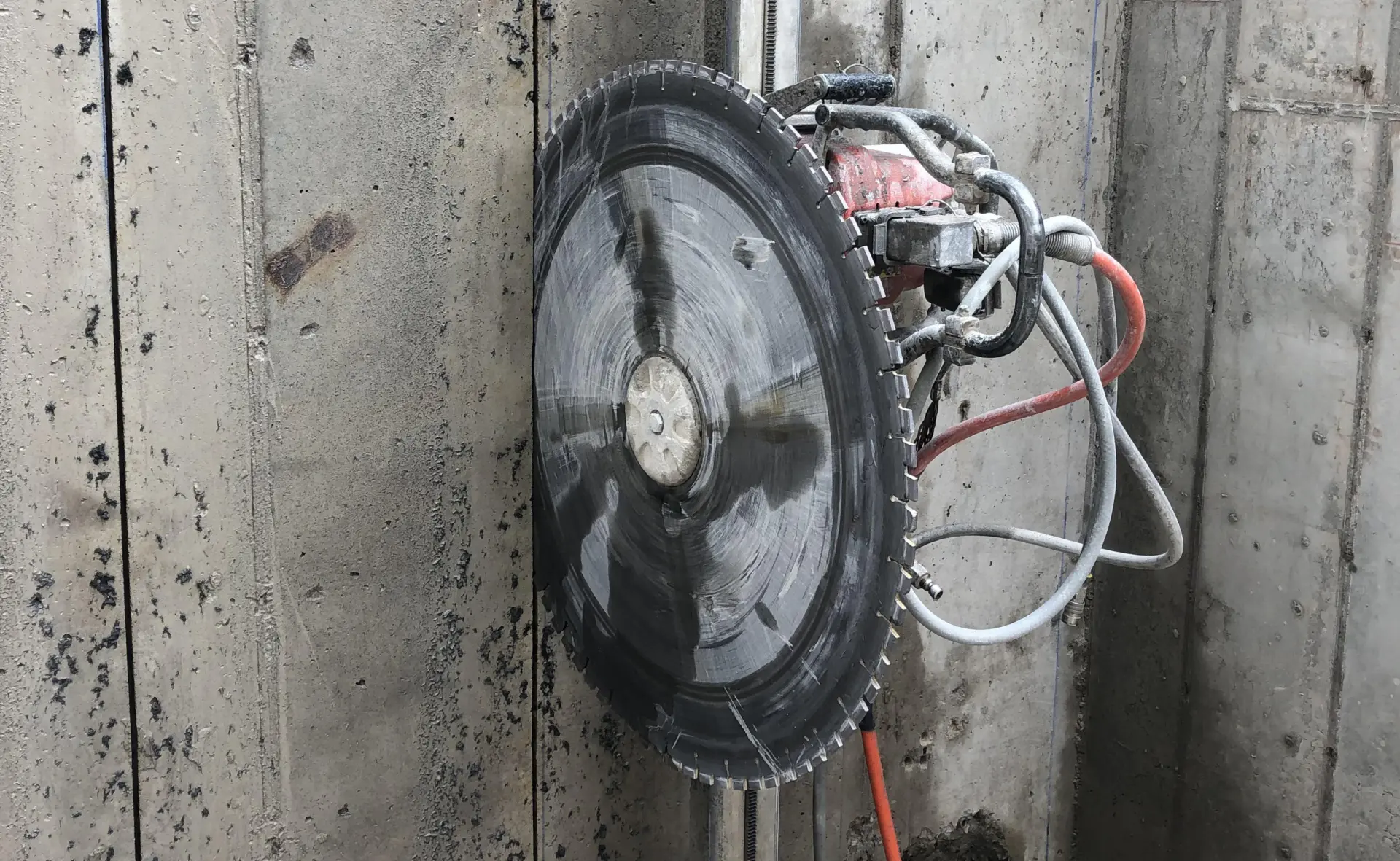
That is where wall saws are commonly used. In both concrete and stone work, they are well suited to guided, predictable cuts on vertical or inclined surfaces. But they are not the right answer for every cutting task. Material structure, access conditions, finish expectations, section thickness, and the next operation in the workflow all affect whether a wall saw should lead the job or support another method.
What a Wall Saw Actually Solves
A wall saw is most valuable when the cut path must stay controlled over a significant depth and length. Because the blade travels on a guided track, the method helps teams produce straighter cuts than handheld tools typically allow on large structural sections.
In practical terms, wall saws are commonly chosen when a project needs:
- Straight, repeatable cuts in reinforced concrete or masonry walls.
- Better control of cut boundaries before section removal.
- Lower breakout risk around openings, edges, or adjacent finished areas.
- A cleaner interface between cutting, lifting, demolition, and reconstruction.
They are less effective when the geometry becomes irregular, the section is too thick for efficient blade cutting, or the job calls for decorative shaping rather than structural separation.
Common Concrete Applications
Concrete work is where wall saws are most often associated with structural modification and controlled demolition. The method is widely used when a contractor needs accuracy and predictable removal instead of fast but rough break-out.
| Application | Why a Wall Saw Fits | Main Watchpoint |
|---|---|---|
| Door and window openings in existing walls | Helps create straight boundaries in structural concrete before breakout or lifting | Corner treatment, temporary support, and load transfer planning |
| Elevator, stair, and shaft modifications | Supports long, controlled cuts in thick vertical sections | Section weight and safe removal sequencing |
| Bridge, tunnel, and retaining wall alterations | Suits heavy civil cuts where line control matters | Access, slurry management, and site safety constraints |
| Industrial plant retrofits | Helps modify walls with less collateral damage around active equipment areas | Embedded steel, downtime pressure, and restricted access |
| Segmented wall removal for demolition | Creates predictable separation lines before lifting or mechanical removal | Rigging plan and piece sizing |
In reinforced concrete, the main technical burden usually comes from embedded steel, variable aggregate hardness, and the need to keep the cut stable over long passes. That is why workflow planning matters as much as the saw itself. If removal, lifting, or debris handling is poorly sequenced, a precise cut does not automatically translate into a clean project outcome.
Where Wall Saws Fit in Stone Cutting
In stone work, wall saws are typically selected for straight separation cuts rather than detailed shaping. Typical applications include creating openings in stone walls, trimming facade sections, removing damaged architectural stone, and modifying heavy masonry where handheld cutting would be too slow or too inconsistent.
The decision logic changes, however, because stone behaves differently from reinforced concrete. Concrete tends to challenge the process with steel reinforcement and dense structural mass. Stone more often challenges the workflow through brittleness, natural veining, hidden fractures, and visible-edge quality requirements.
That means a cut that is structurally acceptable in concrete may still be visually unacceptable in exposed stone. For this reason, stone projects often demand tighter coordination between the cutting stage and the finishing stage. When the job moves from straight separation into profile work, sink cutouts, edging, or polishing, dedicated stone CNC machines are usually a better fit than a wall saw.
Concrete vs. Stone: What Changes in the Job Plan
The same cutting method can behave very differently depending on the substrate and the quality target.
| Decision Factor | Concrete Projects | Stone Projects |
|---|---|---|
| Main Cutting Challenge | Reinforcement, aggregate variation, structural mass | Veins, brittleness, hidden cracks, edge chipping |
| Typical Goal | Structural opening, retrofit, or controlled removal | Straight modification with better visible-edge control |
| Finish Expectation | Usually secondary to structural accuracy | Often more visible and more quality-sensitive |
| Most Common Risk | Delays from reinforcement or section handling | Surface damage or breakage near the visible edge |
| Typical Follow-Up | Demolition, framing, utility installation, reconstruction | Secondary shaping, edging, polishing, or panel replacement |
This difference matters for buyers. If most of the value comes from structural separation, a wall saw can be the primary method. If most of the value comes from finish quality and detailed shaping, the wall saw may only handle the first cut while another process completes the part.
When a Wall Saw Is Better Than Other Cutting Methods
Wall saws are strong, but they only make sense inside the right method mix. Many jobs perform better when the contractor combines wall sawing with core drilling, wire sawing, floor sawing, or handheld finishing.
| Method | Best Fit | Less Suitable When |
|---|---|---|
| Wall Saw | Straight, controlled cuts on vertical or inclined surfaces | The cut is highly irregular, very thick, or detail-oriented |
| Wire Saw | Extremely thick sections, large blocks, or complex separation paths | The job is smaller, repetitive, and needs quick setup |
| Floor Saw | Horizontal slabs, decks, pavements, and flat surfaces | The primary cut surface is vertical |
| Hand Saw or Ring Saw | Tight access, corner finishing, and localized trimming | The project needs long, deep, highly repeatable cuts |
| Core Drilling Plus Wall Saw | Cleaner corner control and better opening geometry | The job is mainly broad section separation |
For example, a rectangular wall opening may start with core-drilled corners, continue with wall sawing for the main boundaries, and end with controlled lifting of the cut section. A very thick retaining wall, by contrast, may push the job toward wire sawing once blade depth or efficiency becomes a limiting factor.
Selection Factors That Change Real-World Results
Buyers often focus on the cutting tool first, but project performance is usually decided by surrounding workflow conditions.
- Material Structure: Reinforced concrete, dense masonry, natural stone, and engineered stone all place different demands on the blade, feed stability, and cut planning.
- Access and Track Positioning: A wall saw only delivers straight results if the saw can be mounted and guided correctly. Poor access can turn a theoretically good method into a slow one.
- Required Geometry: Straight openings favor wall sawing. Tight radii, irregular shapes, and heavy corner detailing often require a hybrid process.
- Removal Sequence: Cut quality alone is not enough. If the section cannot be supported, lifted, or broken down safely, the workflow becomes unstable.
- Water, Slurry, and Site Control: On retrofit and interior jobs, containment and cleanup can become as important as the cut itself.
- Finish Standard: Structural concrete cuts may tolerate a rougher visual result than exposed architectural stone.
- Downstream Process: If the next step is demolition, the priority may be separation speed and safety. If the next step is fabrication or visible installation, edge condition matters more.
These factors are what translate machine choice into actual outcomes such as lower rework, safer removal, better visible edges, shorter shutdown windows, and more predictable project sequencing.
Practical Summary
Wall saws fit best when the project requires straight, controlled cuts through concrete or stone walls and the cost of imprecise removal is high. They are especially useful for structural openings, retrofit work, segmented demolition, facade modification, and other jobs where cut-line accuracy affects safety, rework, or installation quality.
They fit less well when the section becomes extremely thick, the geometry becomes irregular, or the job shifts from separation into detailed shaping and finishing. In those cases, wire sawing, core drilling, handheld finishing, or dedicated fabrication equipment may produce a better overall workflow.
The practical buying question is not whether a wall saw is powerful enough. It is whether wall sawing is the best match for the material behavior, access constraints, finish target, and downstream handling plan of the job.