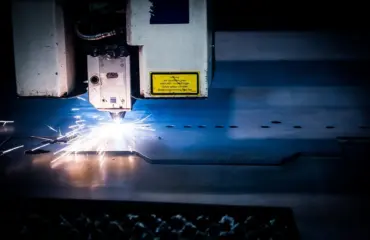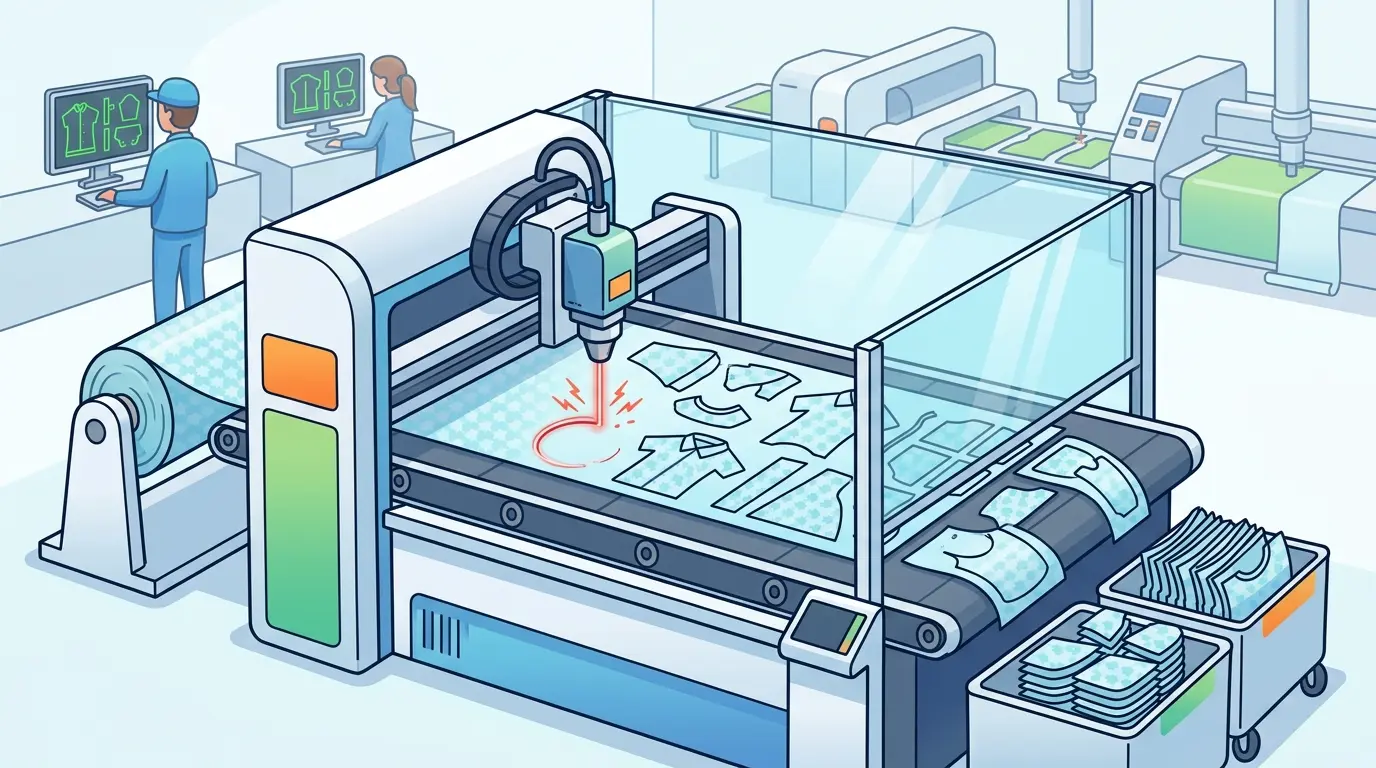
Textile manufacturers usually do not choose laser cutting because it sounds more advanced. They choose it when the production mix makes tooling delays, contour complexity, frayed edges, or frequent pattern changes more expensive than the cutting method itself.
That is the real decision point. A fabric laser cutting machine can improve repeatability, simplify digital changeovers, and handle detailed shapes that are awkward with mechanical cutting. It can also be the wrong fit when heat affects the material, when stacked cutting speed matters most, or when the same part runs long enough for another process to win on unit cost.
The Decision Is About Workflow Fit, Not Just Cutting Ability
Most industrial textile buyers already know laser can cut fabric. The harder question is whether laser improves the full workflow.
In practice, laser tends to make sense when a factory values:
- Fast design changes without new tooling
- Fine contours and small internal details
- Consistent part geometry from digital files
- Reduced fraying on suitable synthetic materials
- Less manual setup between short or mixed runs
It tends to make less sense when the operation depends on:
- Maximum throughput from tall material stacks
- Very low unit cost on long, repetitive runs
- Soft, unchanged cut edges on heat-sensitive fabrics
- Minimal thermal effect on appearance-critical surfaces
That is why textile cutting should be evaluated as a process-selection problem, not as a simple technology upgrade.
When Laser Usually Makes Sense in Textile Workflows
Laser cutting is often a strong option when production complexity is high and mechanical tooling flexibility is low.
Short-run and frequently changing orders are a common example. If patterns are updated often, laser can remove the need to produce or change dedicated tooling for every revision. That reduces setup friction and helps teams move faster from file approval to actual cutting.
Laser also earns its place when the part geometry is difficult. Decorative cutouts, narrow radii, small internal features, and contour-heavy parts are usually easier to repeat consistently when the cutting path is driven directly from digital data.
Another strong use case is synthetic fabric processing where sealed or more stable cut edges are useful. In some materials, controlled heat can reduce fraying and make downstream handling easier. That can matter for assembly, stitching preparation, layered components, and parts that move through several stations after cutting.
For buyers already reviewing broader non-metallic equipment options in the Pandaxis product catalog, this is usually where laser starts to stand apart: not because it replaces every other cutting method, but because it can reduce changeover cost and improve repeatability in the right textile mix.
When Laser Is Often the Wrong First Choice
Laser is not automatically the best answer for textiles, especially where heat or stack height drives the economics.
If a factory cuts large volumes of identical parts day after day, die-based methods or other dedicated cutting processes may offer a lower cost per piece once tooling is justified. The same applies when the operation depends on high-ply stacked cutting rather than single-ply or low-stack precision.
Material response is another major limit. Some fabrics are far less tolerant of thermal cutting than others. Edge darkening, hardening, odor, melt-back, or visible heat effect may be unacceptable for the final product, particularly when the edge remains visible to the customer or must stay soft for sewing and handling.
Laser can also create operational demands outside the cut itself. Smoke extraction, residue control, and material-specific test validation matter much more in textiles than many first-time buyers expect. If those requirements are treated as secondary, cut quality and shop-floor consistency usually suffer.
Material Behavior Matters More Than Machine Hype
Textiles do not respond as one category. Fabric composition often matters more than the headline machine choice.
Synthetic materials such as polyester, nylon, and many blends are commonly evaluated for laser cutting because they can respond in a way that helps stabilize the edge. That can be useful, but only if the resulting edge feel and appearance still match the product requirement.
Natural or heat-sensitive fabrics need more caution. Cotton-rich materials, linen, wool, and other thermally sensitive textiles may show discoloration, edge brittleness, or visible cut-line change that makes laser less attractive.
Coated fabrics, laminates, and technical textiles should be treated as validation-heavy materials. Even when the top layer cuts cleanly, backing layers, coatings, adhesives, or reinforcement structures may react differently. In those cases, sample testing is not optional. It is the basis of the purchase decision.
A Practical Decision Table for Textile Buyers
| Production Scenario | Laser Fit | Why |
|---|---|---|
| Short runs with frequent pattern changes | Strong | Digital changeovers reduce tooling dependency and setup time. |
| Complex contours or decorative cutouts | Strong | Laser handles intricate shapes with high repeatability. |
| Synthetic fabrics where edge fray is a problem | Strong to Conditional | Thermal cutting may help edge stability, but finish quality still needs testing. |
| High-volume identical parts with stable geometry | Conditional to Weak | Dedicated tooling or other cutting methods may deliver lower unit cost. |
| Thick lays or stack-cut production | Weak | Throughput may favor non-laser processes designed for stacked cutting. |
| Natural fabrics with strict appearance requirements | Weak to Conditional | Heat effect can create discoloration or edge changes that are not acceptable. |
| Laminated or coated technical textiles | Conditional | Performance depends on how each layer reacts during cutting. |
The Buying Questions That Actually Matter
Before a textile factory commits to laser, the most useful questions are usually operational rather than promotional.
Ask:
- What fabric types and blends dominate the real order mix?
- How often do part geometries change?
- Is the cut edge visible, sewn, bonded, or otherwise exposed in the finished product?
- Does the workflow benefit from sealed edges, or would a softer mechanical edge be better?
- Are you cutting single plies, low stacks, or tall lays?
- Will extraction, residue handling, and material testing be managed as part of the process, not as an afterthought?
- Is the business case driven more by flexibility and reduced changeover time, or by pure volume throughput?
These questions usually separate a useful laser investment from a machine that looks capable on paper but does not fit the production floor.
What Buyers Should Expect From a Good Evaluation Process
A strong textile laser buying process should focus on sample-driven evidence.
That means testing the actual fabrics, not only generic material categories. It means checking cut quality after handling, sewing, bonding, washing, or whatever downstream step matters in the application. It also means measuring whether the expected gain comes from better edge quality, lower labor, faster revision handling, cleaner nesting, or reduced tooling dependence.
If those benefits are vague, the buying case is usually weak. If they are measurable in the current workflow, laser often becomes much easier to justify.
Practical Summary
A fabric laser cutting machine makes the most sense when textile production values flexibility, contour accuracy, digital repeatability, and clean handling of suitable non-metallic materials more than maximum stacked throughput.
It is usually strongest in short runs, mixed-product environments, and detail-heavy work where tooling changes create delay or cost. It is usually weaker in very high-volume repetitive cutting, heat-sensitive fabrics, and workflows built around thick lays.
For textile buyers, the right question is not whether laser can cut fabric. It is whether laser improves the actual production path from file change to finished part without creating new problems in material behavior, edge quality, or shop-floor efficiency.