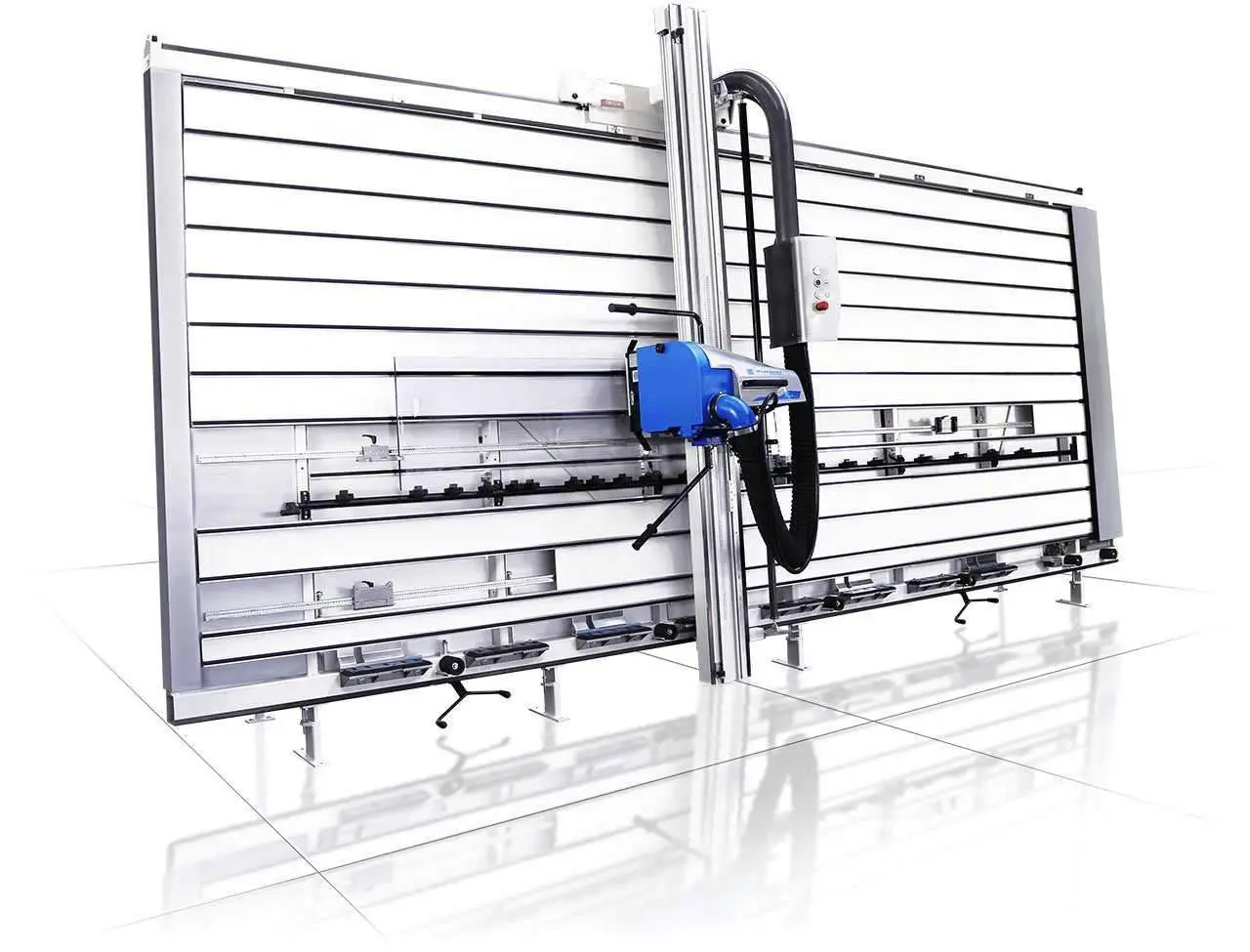
In small and mid-sized shops, the cutting problem often starts as a layout problem. The team may need accurate full-sheet breakdown for MDF, plywood, particleboard, melamine-faced board, and similar sheet materials, but the workshop may not have the floor space, labor structure, or daily volume for a larger dedicated horizontal cutting cell.
That is where a vertical panel saw usually enters the discussion. It is not the right answer for every panel workflow, and it is usually not the first choice for high-output factory lines. Its real value is that it helps smaller operations keep sheet cutting accurate, manageable, and space-efficient when flexibility still matters.
Why This Question Comes Up in Smaller Shops
Small and mid-sized shops rarely run like large, standardized panel factories. Many of them move between cabinet parts, interior fit-out components, shelving, display fixtures, and short-run furniture work in the same week. In some cases, the cutting station also sits close to assembly, edging, or finishing because the whole workshop has to stay compact.
In that environment, the best saw is not always the one built for maximum batch throughput. The better fit is often the saw that removes the biggest daily source of friction:
- Full Sheets Are Difficult To Handle In A Tight Layout
- The Shop Needs Straight, Accurate Panel Breakdown Without A Large Footprint
- Job Sizes Change Frequently
- One Cutting Area Has To Support Several Different Kinds Of Work
- The Business Needs Better Control Before Investing In A More Specialized Production Cell
That is why a vertical panel saw is commonly chosen for workflow fit rather than for pure output alone.
What a Vertical Panel Saw Usually Solves Best
A vertical panel saw is usually valued for keeping full-sheet processing practical in a more compact workspace. Instead of building the cutting area around a larger horizontal footprint, the shop uses an upright format that can make sheet breakdown easier to organize within a tighter floor plan.
In practical terms, that often helps with:
- Space Efficiency In Smaller Workshops
- Controlled Breakdown Of Large Panels Into Manageable Parts
- Straightforward Cutting For Repeated Sheet-Goods Work Without Rebuilding The Whole Shop Layout
- A More Contained Front-End Process In Shops That Still Depend On Operator Oversight
- Cleaner Separation Between Raw Sheet Handling And Downstream Part Preparation
This does not mean the machine replaces every other cutting method. It means the machine is often solving a specific operational problem: how to cut full sheets accurately when workshop space and production style do not justify a larger, more specialized cutting line.
Best Applications in Small and Mid-Sized Shops
The strongest applications for a vertical panel saw usually appear where the work is still sheet-driven, but the shop needs a compact and practical way to process those sheets.
| Application | Why a Vertical Panel Saw Often Fits | Main Watch-Out |
|---|---|---|
| Small Cabinet And Closet Shops | Helps break down sheet goods accurately without giving too much of the workshop to one machine layout | If daily output becomes heavily batch-based, throughput expectations may outgrow the format |
| Interior Fit-Out And Joinery Shops | Supports varied panel sizing for built-ins, wall units, partitions, and custom installation work | Less suited when the workload shifts toward highly standardized repetitive cutting |
| Mid-Sized Workshops With Tight Floor Plans | Preserves usable floor space for assembly, edging, storage, or finishing | Space savings should not distract from the need for consistent process discipline |
| Shops Running Frequent Short Batches | Works well when part sizes change often and the cut list is not identical every day | Operator-led flow can become a bottleneck if order repetition increases sharply |
| Pre-Sizing Full Sheets Before Secondary Operations | Useful when the immediate goal is to reduce large sheets into manageable panel sizes for later processing | If secondary operations demand more integrated machining, another workflow may deserve comparison |
The common thread is simple: the vertical panel saw makes the most sense when the shop needs practical, accurate sheet breakdown but still operates in a relatively compact, flexible, and operator-aware production model.
Where It Usually Adds the Most Workflow Value
In smaller operations, the machine tends to create the most value when it improves the overall movement of work rather than just the cut itself.
That often means:
- The Team Can Process Full Sheets Without Letting The Saw Area Overrun The Shop
- Raw Panels Become Easier To Break Down Before Parts Move To Edging, Drilling, Or Assembly
- Cutting Stays Practical In Shops That Cannot Support A Dedicated High-Volume Cutting Department
- The Shop Keeps More Flexibility Than A Fully Standardized Batch Cell Requires
- Growth Can Continue Without Immediately Rebuilding The Whole Front-End Layout
This is why vertical panel saws are often attractive in businesses that are growing, but not yet organized around a highly repetitive line-style production system.
Where It Fits Better Than Other Options
A vertical panel saw often becomes the better fit when the alternative is not a bigger machine, but an inefficient cutting routine. If the current method forces awkward sheet handling, consumes too much floor space, or makes full-sheet work harder than it should be, the vertical format can be a practical improvement.
It usually makes more sense than other options when:
- The Shop Needs Full-Sheet Cutting More Than Complex Multi-Process Integration.
- Floor Space Is Too Valuable To Commit To A Larger Horizontal Layout Too Early.
- The Job Mix Still Includes Enough Variation That A Compact, Flexible Setup Has More Value Than Maximum Throughput.
- The Cutting Area Needs To Coexist With Assembly, Storage, Or Other Workstations.
- The Main Goal Is Better Panel Breakdown Discipline, Not Yet A Fully Standardized Production Line.
These are not minor considerations. In many small and mid-sized shops, they are exactly what determines whether a machine improves production or simply adds another large asset without solving the real bottleneck.
When Another Saw May Fit Better
The tradeoffs should be stated clearly. A vertical panel saw is not automatically the best choice just because the shop is smaller.
If the workshop still needs one machine to move between panel sizing, angled work, and more varied component cutting, sliding table saws may remain the more flexible choice. They are commonly better suited to shops where operator-guided versatility matters more than compact full-sheet breakdown alone.
If the schedule is dominated by repeated rectangular parts and management wants faster, more repeatable front-end flow for downstream operations, more production-oriented panel saws usually deserve closer review. That becomes especially important when the business is moving toward a more structured cabinet or furniture production rhythm.
In other words, the right comparison is not vertical panel saw versus everything else. It is vertical panel saw versus the actual production constraint the shop needs to remove.
Buying Questions Before Choosing One
Before selecting a vertical panel saw, it helps to ask a few direct questions:
- Is The Main Problem Limited Space, Difficult Full-Sheet Handling, Or Pure Output Capacity?
- Does The Shop Mostly Run Short Batches And Mixed Jobs, Or Repeated Rectangular Part Sets?
- Will The Cutting Area Stay Part Of A Flexible Workshop, Or Is It Becoming A Dedicated Production Cell?
- Does The Business Need Better Sheet Breakdown Discipline, Or A Broader Upgrade In Front-End Automation?
- Is The Machine Being Chosen For The Current Workflow, Or For A Growth Stage The Shop Has Not Reached Yet?
These questions usually reveal the right direction faster than a feature list does. They force the decision back to workflow fit, which is where vertical panel saw selection is usually won or lost.
Practical Summary
The best applications for a vertical panel saw in small and mid-sized shops are the ones where accurate full-sheet cutting matters, but floor space, job variety, and workshop flexibility still shape the production model. It is often a strong fit for cabinet and closet work, interior fit-out, compact mid-sized workshops, short-batch panel processing, and pre-sizing operations that need a contained and practical cutting station.
Its biggest advantage is not that it outperforms every other saw. It is that it solves a specific shop-level problem well: keeping panel breakdown accurate and manageable without demanding the footprint or production structure of a larger dedicated line. When that is the real constraint, a vertical panel saw can be a very practical fit. When the real constraint is broader cut versatility or higher-volume batch throughput, another saw category may fit better.