In sanding and finishing workflows, quality drift usually appears before a machine stops running. A belt starts loading faster than usual, panels begin showing uneven scratch patterns, thickness removal becomes less predictable, or operators start slowing feed rates to avoid visible defects. By the time scrap or rework becomes obvious, the machine has often been giving warning signs for days or weeks.
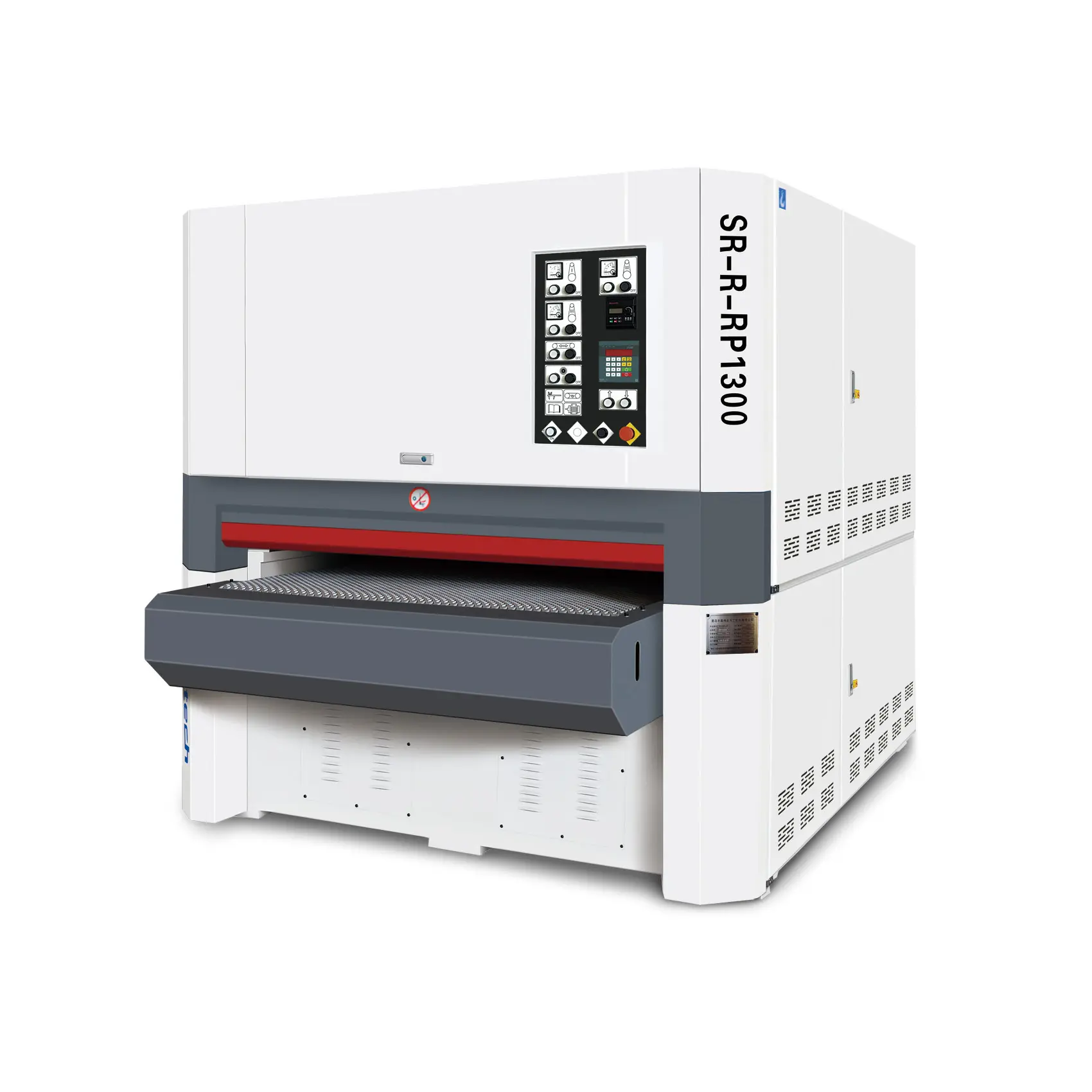
That is why a wide belt sander maintenance checklist should be treated as a surface-quality control routine, not only a repair routine. For factories that rely on wide belt sanders to calibrate panels, prepare solid wood components, or stabilize surfaces before coating, preventive maintenance helps protect finish consistency long before a breakdown forces attention.
Why Maintenance Shows Up in Surface Quality First
Wide belt sanding results depend on several machine conditions staying stable at the same time. When one area starts drifting, the problem does not always look mechanical at first. It often appears as a quality issue:
- Abrasive belts stop cutting cleanly and start rubbing, glazing, or loading.
- Feed performance becomes less stable, changing the way material passes under the sanding head.
- Dust extraction weakens, allowing heat, residue, and contamination to affect the sanding pattern.
- Contact surfaces no longer apply pressure as evenly as they should.
- Thickness settings or calibration checks are skipped until variation shows up in downstream finishing.
The result is rarely limited to the sanding station. Uneven surfaces can affect coating appearance, edge matching, assembly fit, veneer quality, and the amount of manual touch-up needed later in the process.
The Machine Conditions That Matter Most
Wide belt sander maintenance works best when the machine is treated as a group of result-critical systems instead of one single finishing unit.
| System Area | What to Watch | Why It Affects Surface Quality |
|---|---|---|
| Abrasive Belt Condition | Loading, glazing, tears, seam problems, uneven wear | Changes scratch pattern, heat generation, and cut consistency |
| Belt Tracking and Oscillation | Drift, unstable tracking, abnormal edge wear | Causes uneven belt wear and inconsistent sanding across the workpiece |
| Contact Drum, Platen, or Pressure System | Wear, contamination, uneven contact, setup drift | Affects calibration, smoothness, and repeatable surface finish |
| Conveyor and Feed Path | Dirt buildup, slipping, uneven movement, wear | Changes material feed stability and can create visible finish variation |
| Dust Extraction and Cleanliness | Reduced airflow, packed dust, fine residue near sanding zones | Increases heat, belt loading, contamination, and finish inconsistency |
| Verification Routine | No control panels, inconsistent checking method, delayed response to defects | Lets small drift spread into full batches before anyone reacts |
This matters because a wide belt sander can still look operational while already losing the conditions needed for stable daily results.
A Practical Maintenance Checklist by Frequency
| Frequency | Main Focus | Why It Matters |
|---|---|---|
| Daily | Cleaning, belt condition, startup checks, sample-panel verification | Prevents contamination and obvious quality drift from entering production |
| Weekly | Feed stability, tracking behavior, contact-surface inspection, extraction review | Helps catch wear and instability before finish defects spread |
| Monthly | Calibration checks, wear-point inspection, lubrication and service review | Protects long-term consistency in thickness and surface quality |
| Scheduled Service | Deeper alignment, drive-system review, consumable planning, component replacement | Reduces accumulated drift and protects repeatable sanding performance |
Daily Checks Before Production Starts
Daily maintenance should focus on the conditions most likely to affect that day’s sanding quality.
- Clean the conveyor surface, infeed and outfeed support areas, accessible dust zones, and operator-visible contact surfaces.
- Inspect the abrasive belt for loading, glazing, tears, seam damage, or uneven wear before normal production begins.
- Confirm that the belt is tracking normally during startup and early operation.
- Check that dust extraction is functioning effectively and not allowing dust to build around critical sanding zones.
- Verify that material feeds smoothly without hesitation, slipping, or visible instability.
- Run a control panel or sample workpiece to confirm acceptable scratch pattern, thickness removal, and overall surface quality.
These checks are simple, but they prevent one of the most expensive mistakes in a sanding line: using saleable production parts as the test batch for a machine that has not actually been verified.
Weekly Inspection Points That Protect Finish Stability
Weekly maintenance is the right time to look beyond surface cleaning and pay attention to how the machine is behaving over repeated use.
- Inspect accessible contact components, platen-related surfaces, pressure elements, and exposed wear areas for residue, wear, or uneven contact.
- Review conveyor condition for buildup, wear, grip issues, or movement problems that could affect feed consistency.
- Check belt tracking behavior and look for abnormal edge wear that suggests drift or instability.
- Inspect extraction hoses, access points, and dust-heavy zones for restricted flow or packed material.
- Review exposed sensors, guards, cables, and service-accessible components for dust accumulation, interference, or wear.
- Compare several test pieces instead of relying on one acceptable panel.
That last step matters because sanding inconsistency often shows up as variation over a run, not as a single obvious failure on the first part.
Monthly Checks for Calibration and Wear
If daily and weekly routines protect short-term output, monthly checks help protect long-term consistency.
- Verify thickness consistency using the same reference method each time.
- Compare sanding results across panel width and along the feed direction to catch uneven removal early.
- Review lubrication and service points according to the machine manufacturer’s instructions.
- Inspect accessible drive-related and motion-related wear points intended for routine service review.
- Check whether the machine is still delivering the expected balance between calibration and finish quality for the materials being processed.
- Compare maintenance observations with shop-floor symptoms such as more hand sanding, more coating correction, or more rejected panels.
This is also the stage where recurring quality complaints should be treated as maintenance evidence. If finish results are getting harder to control, the checklist should help identify which machine condition has changed.
Scheduled Service Tasks That Should Not Be Delayed
Some maintenance work should not wait until visible defects become routine.
- Replace abrasive belts and related consumables before they create repeated quality problems.
- Review tracking, tension, and calibration-related systems during planned service windows.
- Inspect drive components, bearings, and other service-critical areas according to the manufacturer’s maintenance schedule.
- Confirm that conveyor movement, contact consistency, and sanding-head behavior remain stable under normal production conditions.
- Reassess extraction performance if dust loading, heat buildup, or belt clogging has become harder to control.
The machine does not need to be fully down to already be costing money. In many plants, the real loss starts when sanding quality becomes unpredictable enough to create extra inspection, extra handwork, or extra finishing correction.
Warning Signs Operators Should Escalate Early
Operators often see the symptoms before maintenance records show a pattern. Those signals should be treated as maintenance inputs, not as isolated production complaints.
| Warning Sign | Likely First Check Area | Production Risk |
|---|---|---|
| Scratch pattern looks less consistent than usual | Belt condition, contact surfaces, feed stability | More manual sanding and lower finish consistency |
| Panels show uneven removal across the width | Tracking behavior, contact drum or platen condition, calibration drift | Thickness variation and visible surface mismatch |
| Belts load or glaze faster than expected | Dust extraction, belt condition, heat buildup, material contamination | Lower abrasive life and unstable sanding quality |
| Material hesitates or slips during feed | Conveyor condition, contact pressure, contamination on feed surfaces | Visible marks, uneven finish, and poor repeatability |
| Results change between the first and later parts in a run | Startup verification routine, heat buildup, belt loading, unstable settings | Hard-to-control process drift during production |
| More hand touch-up is needed before coating or assembly | Combined review of calibration, abrasive performance, and feed behavior | Hidden labor cost and slower downstream throughput |
When these signs appear, the goal is not just to save the current batch. It is to find the machine condition that changed before the problem becomes part of the normal workflow.
How to Turn the Checklist Into a Real Process-Control Routine
A maintenance checklist only improves results if it becomes part of production discipline.
- Assign clear ownership for daily, weekly, and scheduled tasks.
- Use the same test-panel method each time so quality drift can be compared over time.
- Record recurring defects such as chatter marks, uneven scratch patterns, loading, or thickness variation instead of treating them as random events.
- Separate machine cleaning from machine verification so a clean machine is not mistaken for a proven one.
- Link sanding-stage observations to downstream finishing, coating, and rework trends.
- Follow the machine manual for lockout, adjustment, lubrication, and service procedures before any work beyond routine external inspection and cleaning.
The most effective shops do not rely on memory or operator feel alone. They use a repeatable checklist and a repeatable verification method so sanding quality is measured before defects spread.
Practical Summary
A strong wide belt sander maintenance checklist is less about doing more tasks and more about protecting the process conditions that make sanding stable: clean feed surfaces, sound abrasive condition, reliable tracking, effective extraction, stable contact pressure, and regular verification of thickness and finish quality.
For consistent surface quality, the best approach is to treat maintenance as part of process control. Daily cleaning prevents contamination, weekly inspections catch developing instability, and scheduled service keeps calibration and wear from drifting too far. In sanding operations, that discipline helps protect finish quality, reduce rework, and keep downstream production more predictable.