In woodworking, surface quality problems rarely begin in the finishing room. A panel can be cut accurately, drilled correctly, and assembled to the right dimensions, yet still create trouble later if the face shows milling lines, thickness variation, uneven sanding marks, or an inconsistent scratch pattern. Those defects usually become more obvious, not less, once stain, primer, lacquer, or clear coat is applied.
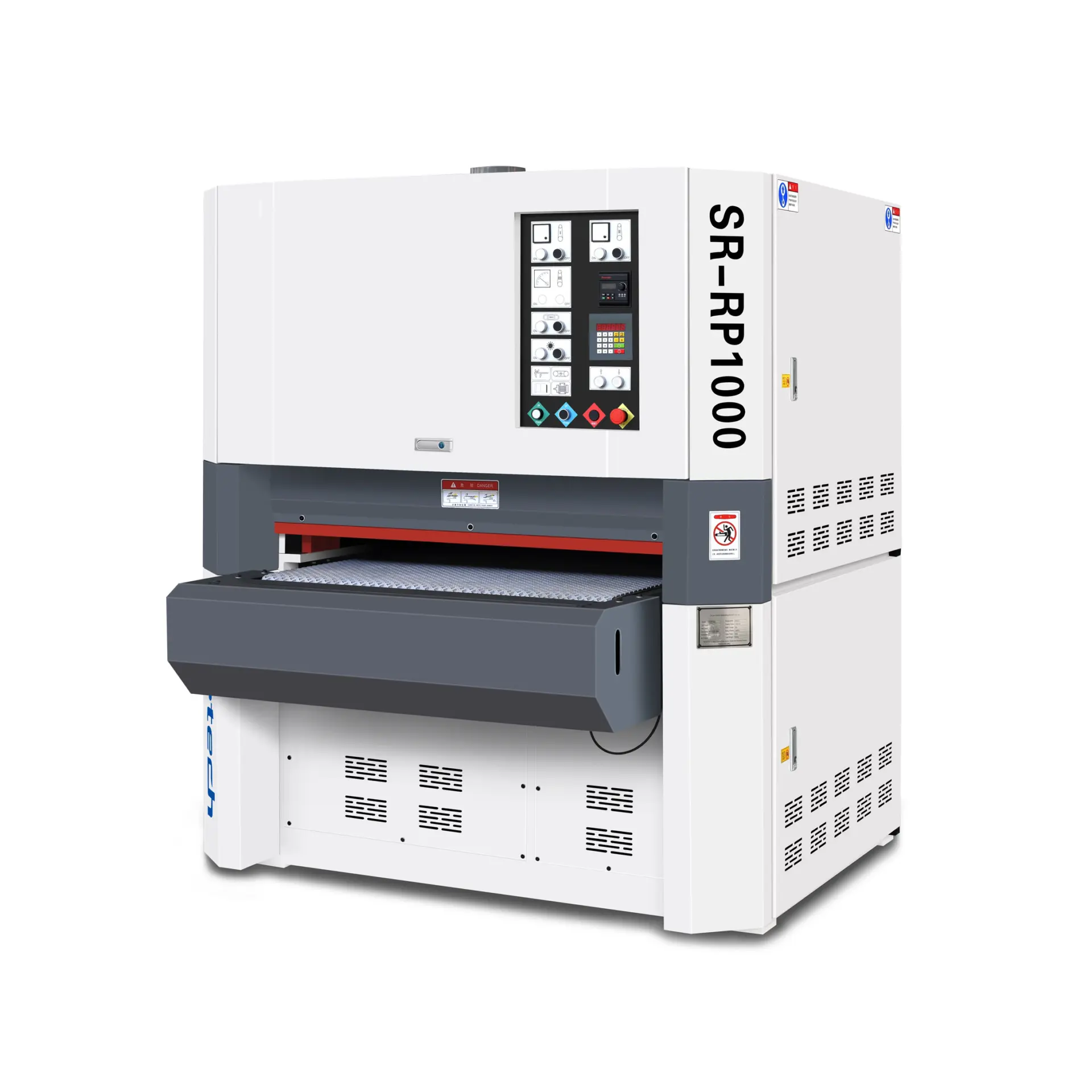
That is why many manufacturers treat sanding as a production control point rather than a last-minute cleanup step. In flat-panel and solid-wood workflows, dedicated wide belt sanders are commonly used to make calibration and surface preparation more repeatable across parts, batches, and shifts.
Why Surface Quality Matters Beyond Appearance
Surface quality does more than influence how a panel looks under showroom lighting. It also affects how reliably that panel moves through finishing, inspection, assembly, and final delivery.
In practical terms, better surface quality supports:
- More Even Coating Appearance
- More Consistent Panel Flatness And Feel
- Lower Hand Touch-Up Before Packing Or Assembly
- Fewer Cosmetic Rejects During Inspection
- Better Visual Matching Across Repeated Parts In The Same Order
When the surface varies from one part to the next, downstream teams spend time correcting defects instead of moving work forward. That is why sanding quality often turns into a throughput issue, not just a cosmetic one.
Where Wide Belt Sanders Improve Surface Quality
Wide belt sanding improves surface quality by making face preparation more repeatable than a process that depends primarily on hand pressure, operator pace, or ad hoc sanding correction.
| Surface-Quality Factor | How Wide Belt Sanding Helps | Workflow Outcome |
|---|---|---|
| Thickness Consistency | Helps calibrate panels to a more uniform face condition | Flatter parts and more predictable downstream handling |
| Scratch Pattern Control | Produces a more even sanding pattern across the workpiece face | Better readiness for stain, primer, or clear coat |
| Surface Flatness | Removes high spots and visible machining marks more evenly on flat workpieces | Cleaner final appearance and less local hand correction |
| Batch Repeatability | Applies the same sanding logic across repeated parts | More stable quality from one order to the next |
| Finishing Preparation | Reduces visible surface variation before coating | Lower rework pressure in the finishing area |
The key benefit is not that the machine guarantees a perfect surface on every part. The real benefit is that it reduces random variation, which is often what causes surface quality to drift in production.
Why Consistent Scratch Patterns Matter Before Coating
Many sanding defects only become obvious once finish is applied. A raw panel may look acceptable at first glance, then show swirl marks, cross-grain scratches, or uneven reflection as soon as stain or paint highlights every inconsistency.
Wide belt sanding helps by making the abrasive pattern more consistent across similar parts. In real production, that can support:
- More Even Color Uptake On Stained Solid Wood
- Cleaner Reflection On Clear-Coated Surfaces
- Better Primer And Topcoat Presentation On Paint-Grade Panels
- Less Visible Surface Variation Between Matching Components
This matters in cabinet, wardrobe, door, and furniture production because one panel with a rougher or deeper scratch pattern can stand out immediately beside the rest of the set.
Wide Belt Sanders Versus Manual Sanding
This is not a case where one method replaces the other in every shop. Manual sanding still matters for shaped edges, spot correction, profiles, and small-run work. Wide belt sanding is strongest when the process depends on flat parts moving through a repeatable surface-preparation step.
| Approach | Where It Fits Best | Main Limitation |
|---|---|---|
| Wide Belt Sanding | Repeated flat panels, solid-wood components, veneered work, and finishing preparation in batch production | Less suitable for contours, irregular profiles, or detailed local correction |
| Manual Sanding | Touch-up work, curved parts, contours, and lower-volume correction tasks | More variation from part to part and heavier dependence on labor consistency |
The practical question is not which method is universally better. It is which method gives the level of surface consistency the job actually requires.
Material Type Changes The Surface-Quality Strategy
Wide belt sanders improve surface quality most effectively when the sanding approach matches both the material and the finish target.
Common examples include:
- Solid Wood: Often benefits from controlled leveling and a consistent finish-sanding sequence so grain, texture, and machining marks do not show unevenly under stain or clear coat.
- Veneered Panels: Usually need stable, careful preparation because the goal is a cleaner surface without overly aggressive removal.
- Paint-Grade Components: Depend on a more uniform base so primer and topcoat do not reveal isolated scratches, shallow low spots, or uneven prep work.
- Panel Furniture Parts: Often benefit when face preparation is standardized before components move toward finishing and final assembly.
This is also where tradeoffs need to be handled honestly. A surface that feels smoother by hand is not automatically ready for every finish system. The sanding target has to match the finishing target.
What Wide Belt Sanders Do Not Fix By Themselves
It is important to stay realistic. Wide belt sanding can improve surface quality, but it does not remove every defect source in a woodworking plant.
A machine will not fully correct problems caused by:
- Poor Upstream Machining Quality
- Deep Tear-Out Or Severe Knife Marks
- Veneer Defects Or Core Irregularities
- Inconsistent Moisture Conditions In The Material
- Incorrect Abrasive Choice Or Poor Sanding Sequence
- Weak Inspection Between Processing Stages
If those issues remain uncontrolled, the machine may reduce some variation without eliminating the real cause. The strongest results usually come when sanding is coordinated with cutting, machining, calibration, and finishing rather than treated as an isolated department.
Where The Impact Is Most Visible In Real Production
Wide belt sanding usually makes the biggest difference in shops and factories that deal with:
- Repeated Flat Components
- Veneered Panels Requiring A Cleaner Visual Finish
- Paint-Grade Furniture Parts
- Solid-Wood Parts That Must Match More Closely Across A Batch
- Finishing Departments Burdened By Hand Rework
- Production Lines Trying To Raise Quality Without Relying On More Manual Correction
In those environments, surface quality becomes a system issue. When the sanding step is more repeatable, the finishing room spends less time rescuing inconsistent parts, and the final product looks more controlled from one piece to the next.
Practical Summary
Wide belt sanders improve surface quality in woodworking by making calibration and face preparation more repeatable, more uniform, and less dependent on manual variation. That matters because surface quality affects more than appearance. It influences coating performance, batch consistency, labor demand, and the amount of rework a shop must absorb before a part is ready to ship.
For flat panels, veneered work, paint-grade parts, and other workflows where the surface needs to stay consistent from part to part, wide belt sanding is commonly one of the clearest ways to stabilize finishing quality. It does not replace every sanding task, and it cannot correct poor upstream process control by itself. But when matched to the right workflow, it helps turn surface preparation from a variable cleanup step into a more reliable production operation.