In many workshops, the hardest part of panel cutting is not the cut itself. It is getting a full sheet into position without dragging it across the floor, lifting it awkwardly onto a large table, or forcing operators to work around unstable material in a tight area.
That is why vertical panel saws are often evaluated as handling tools as much as cutting machines. Their main advantage is not that they make every shop faster than every other cutting method. It is that the upright layout can make full-sheet processing more controlled, more space-efficient, and easier to manage safely in the right production environment.
Why Panel Handling Often Becomes the Real Safety Issue
Large sheets of MDF, plywood, particleboard, and melamine-faced board create risk before the blade even enters the material. A full panel is awkward to control, easy to tip or scrape, and difficult to reposition cleanly when the work area is crowded.
In practical terms, panel-handling problems usually show up as:
- Excessive Lifting Or Twisting While Positioning Full Sheets
- Dragging Panels Across Support Surfaces Or Floors
- Reaching Too Far To Steady Material During Setup
- Poor Visibility Of Panel Alignment During Loading
- Unstable Offcut Handling After The Cut
When those conditions become normal, safety and quality usually decline together. Operators work harder to keep the sheet stable, panel faces are more likely to get damaged, and the cutting process becomes more dependent on improvised handling rather than a repeatable routine.
How the Vertical Layout Changes the Handling Task
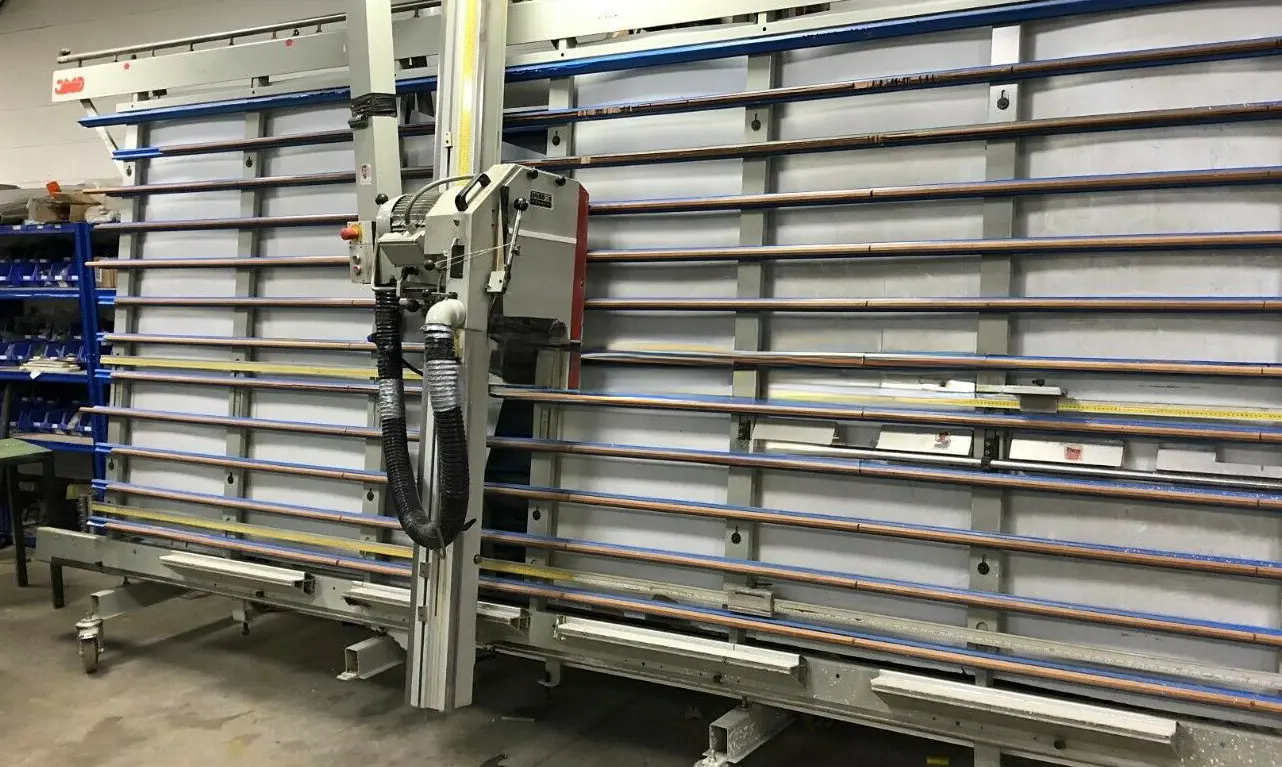
A vertical panel saw changes the geometry of the job. Instead of moving a large sheet across a broad horizontal cutting table, the panel is usually supported in an upright position against the machine structure.
That shift matters because it can reduce how much sweeping movement the operator needs to control. Rather than lifting and sliding a full sheet across a long flat surface, the operator is more often guiding the panel into position against a supported vertical plane.
This commonly helps in several ways:
- The Sheet Stays Supported While It Is Being Referenced
- The Work Area Can Stay More Compact Around The Machine
- Operators Often Need Less Broad Material Repositioning Before The Cut
- Panel Alignment Can Be Easier To Check In A Smaller Working Envelope
- One-Sheet Handling Can Feel More Controlled In Short-Run Work
That does not mean a vertical panel saw removes handling risk on its own. Large panels still need disciplined loading procedures and proper operator technique. But the machine layout often makes the handling task simpler and more predictable.
Where the Safety Gains Usually Come From
The safety benefit of a vertical panel saw usually comes from reducing uncontrolled panel movement rather than from one single feature. When the material is better supported and the operator does not need to manage as much awkward sheet travel, the overall process can become safer.
| Handling Or Safety Factor | How a Vertical Panel Saw Helps | Practical Outcome |
|---|---|---|
| Full-Sheet Positioning | Keeps the panel against an upright support structure during setup | Less uncontrolled shifting while aligning material |
| Operator Movement | Uses a tighter working zone around the machine | Fewer wide body movements around a large sheet |
| Floor-Space Pressure | Fits more easily into compact workshops than a large horizontal cutting cell | Lower chance of crowded handling paths around the saw |
| Material Control | Supports one-sheet-at-a-time processing in a clear reference position | Easier to manage short runs and mixed daily jobs |
| Offcut Management | Makes the cut sequence easier to plan in a contained machine area | Reduced confusion when separating usable parts from scrap |
These gains are especially relevant in shops where panel cutting happens close to storage racks, assembly benches, or other shared work areas. In that environment, saving floor space is not only a layout issue. It can directly affect how safely operators move material in and out of the cutting station.
Why Better Handling Also Helps Cut Consistency
Safer panel handling is not only about avoiding incidents. It also affects cut quality and downstream workflow.
When a sheet is easier to position and support, the operator is less likely to rush the setup or compensate manually for poor material control. That usually helps with:
- More Reliable Referencing Before The Cut
- Less Surface Damage During Loading And Repositioning
- Cleaner Part Flow After Cutting
- Lower Need For Re-Cuts Caused By Setup Mistakes
- More Predictable Handoffs To Edge Processing Or Assembly
In other words, improved handling can support repeatability. If a shop is fighting chipped decorative faces, scuffed panels, or inconsistent positioning caused by awkward movement around full sheets, the vertical layout may help by stabilizing the handling routine before the cutting cycle begins.
When a Vertical Panel Saw Is Usually a Strong Fit
A vertical panel saw is commonly a strong fit when the shop needs accurate sheet cutting but does not want the cutting department to consume too much floor space or require a larger horizontal machine layout.
It is often well suited to:
- Small And Mid-Sized Cabinet Shops With Limited Floor Space.
- Custom Furniture Workshops Running Frequent Job Changes.
- Interior Fit-Out Operations Cutting Full Panels In Varied Quantities.
- Shops Where Full-Sheet Handling Is More Difficult Than Blade Capacity.
- Teams That Need A Compact, Controlled Cutting Station Rather Than A High-Throughput Cutting Cell.
In these environments, the handling benefit can matter as much as the cutting benefit. The machine helps keep large sheets manageable without forcing the shop into a larger production footprint than the workflow really needs.
Where a Vertical Panel Saw Is Not the Best Answer
This is where the tradeoff needs to stay honest. A vertical panel saw is not automatically the best choice just because panel handling feels difficult today.
If the shop is moving into repeated high-volume panel sizing, a more structured horizontal cutting process may fit better. Factories comparing compact handling advantages with larger-scale batch efficiency often end up looking at dedicated panel saws when throughput and repeated rectangular output become the main priority.
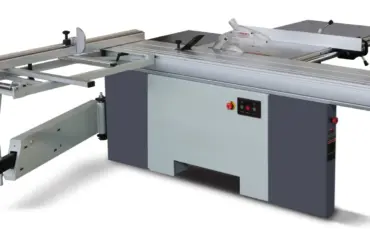
Likewise, if the work depends heavily on flexible operator-guided cutting across mixed materials and changing dimensions, some shops may still prefer the familiar workflow of sliding table saws rather than changing to a vertical format.
The point is not that one machine is safer in every case. It is that each machine solves a different workflow problem:
| If the Main Need Is… | The Better Direction Is Often… |
|---|---|
| Compact full-sheet handling and safer use of limited floor space | Vertical panel saw |
| Flexible manual-guided cutting across varied daily jobs | Sliding table saw |
| Higher-throughput repeated panel sizing for batch production | Horizontal panel saw or beam saw |
That is why the better buying question is not simply, “Which saw is safer?” It is, “Which cutting layout reduces the biggest handling and workflow risk in this shop?”
The Machine Alone Does Not Create a Safe Process
Even when a vertical panel saw is the right fit, safety still depends on discipline around the machine. A better layout helps, but it does not replace sound operating practice.
The handling and safety benefits are strongest when the shop also controls:
- Clear Infeed And Outfeed Paths
- Stable Sheet Staging Before Loading
- Clean Support Surfaces And Reference Areas
- Safe Offcut Removal Procedures
- Blade Condition And Routine Maintenance
- Operator Training And Defined Loading Responsibility
If those basics are weak, the shop can still create unsafe situations around a vertical saw. For example, cramped staging, poor material sorting, or rushed sheet loading can undermine the advantage of the vertical layout very quickly.
That is why a vertical panel saw should be viewed as part of a safer handling system, not as a standalone fix.
A Practical Way To Evaluate the Decision
If you are deciding whether a vertical panel saw makes sense, start with the movement of the sheet, not the specification list.
Ask these questions first:
- Are Operators Struggling More With Positioning Full Sheets Than With The Cutting Cycle Itself?
- Is Floor Space Making Horizontal Panel Handling Harder Than It Needs To Be?
- Are Panel Faces Or Edges Being Damaged During Loading And Repositioning?
- Does The Shop Need Compact Full-Sheet Processing More Than Maximum Batch Throughput?
- Would A More Controlled Upright Layout Reduce Reaching, Dragging, And Manual Correction?
If the answer to most of those questions is yes, a vertical panel saw may be a strong handling and safety improvement. If the real issue is repeated high-volume production speed, then another panel-cutting solution may be the better investment.
Practical Summary
A vertical panel saw helps improve panel handling and safety by making full-sheet positioning more controlled, reducing the amount of awkward sheet movement around the cutting station, and using workshop space more efficiently. In the right shop, that can lower manual strain, reduce handling mistakes, and make the cutting process easier to manage day after day.
Its value is usually strongest in space-constrained workshops, custom production environments, and operations where full-sheet handling creates more risk than pure cutting capacity. But the machine is not universally better than every other cutting format. The right choice depends on whether the shop needs compact control, flexible manual cutting, or higher-throughput batch sizing.
When the main production problem is difficult full-sheet handling in a limited space, a vertical panel saw is often one of the most practical ways to improve both safety and workflow stability.