In furniture production, edge quality is one of those variables that looks cosmetic until it starts creating operational damage. A weak glue line, chipped panel edge, or inconsistent finish turns into rework, sorting delays, rejected parts, and a product that looks lower value than it should.
That is why an edge banding machine should be bought as a workflow tool, not as a standalone finishing upgrade. The right machine helps stabilize appearance, reduce hand correction, and keep cut panels moving cleanly into drilling, assembly, and packing. The wrong machine simply shifts the bottleneck from one station to another.
What Problem Should The Machine Solve?
An edge banding machine is commonly used to apply edging material to exposed panel edges in cabinet, wardrobe, office, and modular furniture production. But the buying decision should start with the problem you need to solve, not with the longest feature list.
For most furniture manufacturers, the real issues are usually things like:
- Visible Glue Lines On Finished Panels
- Inconsistent Edge Appearance From One Batch To The Next
- Too Much Manual Scraping, Trimming, Or Touch-Up
- Slow Flow Between Cutting And Final Assembly
- Edge Finishing Quality That Does Not Match The Rest Of The Product
If those are daily production problems, then the edgebander becomes a line-stability decision rather than a cosmetic add-on.
Start With The Production Model, Not The Machine Brochure
Two factories can make similar furniture products and still need very different edge banding solutions. The reason is not the headline machine category. It is the production model behind it.
A furniture manufacturer running repeated cabinet modules needs steady output and repeatable finish quality. A shop handling more custom kitchen and wardrobe work may care just as much about changeovers, short-batch efficiency, and how well the machine handles variation in panel preparation. A business selling higher-visual-standard products may value cleaner edge preparation and corner finishing more than raw throughput alone.
That means the first questions should be operational:
- How Repetitive Is The Product Mix?
- How Consistent Are Panels Before They Arrive At Edge Banding?
- How Much Hand Correction Happens After The Edge Station Today?
- Is The Goal More Speed, Better Finish Quality, Or Both?
- Will The Machine Sit In A Single-Product Line Or A Mixed-Production Environment?
The right answer often becomes obvious once those constraints are clear.
The Main Machine Configurations And Where They Fit
Not every furniture factory needs the same edge banding setup. The configuration should match the finish standard, the stability of upstream panel preparation, and the amount of manual rework the plant can tolerate.
| Configuration | Best Fit | What It Adds To The Workflow | Tradeoff |
|---|---|---|---|
| Automatic edgebanders | Furniture plants that need stable, repeatable edge application across daily production | Improves consistency, reduces dependence on hand finishing, and keeps panels moving more predictably | If the rest of the line is unstable, automation alone will not eliminate defects |
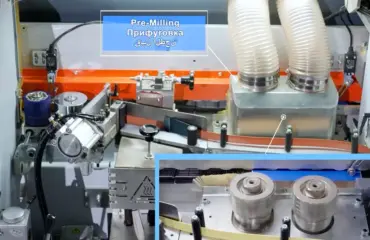
| Pre-Milling Edgebanders | Factories where panel edges arrive with saw marks, minor variation, or inconsistent preparation | Creates a cleaner base before band application, which helps improve glue-line appearance and finish consistency | The upgrade is harder to justify if upstream cutting already produces consistently clean edges |
| Corner-Rounding Edgebanders | Manufacturers producing furniture where finished appearance and edge feel strongly influence product value | Reduces manual finishing at the panel ends and helps deliver a more complete finished look | Added capability matters most when the product and market actually demand that finish level |
The important point is that these are not universal upgrades in every case. Pre-milling is valuable when panel-edge preparation varies. Corner rounding is valuable when finish quality at the ends matters enough to justify the added process capability. A basic automatic configuration may be the more rational choice if the line already produces clean, stable input and the product does not require a premium edge finish.
Why Upstream And Downstream Flow Matter
An edgebander does not work in isolation. Its results depend heavily on what happens before and after the edge station.
If panel sizing is inconsistent, the edge banding process becomes harder to stabilize. If parts arrive poorly organized, the edge station loses time to handling and sorting. If downstream drilling or assembly requires clean, repeatable panel quality, any variation from the edge process shows up later as fit, appearance, or rework problems.
That is why many buying errors come from evaluating the machine as a separate finishing cell instead of as part of the full furniture line. In practice, the edge banding station works best when it is aligned with upstream cutting quality and downstream assembly expectations. If you are evaluating the broader line rather than one isolated station, reviewing the Pandaxis machinery catalog alongside the edge process can help keep the decision tied to total workflow rather than one feature comparison.
Buying Criteria That Actually Matter
A good buying process usually comes down to a small number of practical criteria.
| Buying Criterion | Why It Matters | What To Clarify Before Buying |
|---|---|---|
| Finish Standard | Determines how much visual edge quality really matters to the end product | Is the goal acceptable edge application or visibly higher finish quality? |
| Panel Preparation Quality | Affects whether advanced edge preparation functions will create real value | Are cut edges already clean and consistent before banding starts? |
| Production Volume | Changes the value of automation, repeatability, and labor savings | Is edge banding an occasional process or a daily bottleneck? |
| Product Mix | Determines whether the machine must handle steady repeat work or frequent short runs | Are you producing standardized modules, mixed custom work, or both? |
| Rework Tolerance | Shows whether the current process is silently consuming labor | How much manual scraping, trimming, or correction happens after edge application today? |
| Labor Model | Helps define how dependent the process can remain on operator technique | Do you need a process that is easier to stabilize across shifts and operators? |
| Line Balance | Prevents one station from becoming faster than the rest of the plant can support | Will upstream cutting and downstream assembly keep pace with the new edge process? |
| Future Product Direction | Keeps the purchase aligned with where the factory is headed, not just where it is today | Are you moving toward higher throughput, better appearance, or broader product complexity? |
These questions usually produce a better buying decision than comparing isolated machine labels.
When Pre-Milling Is Worth Paying For
Pre-milling is one of the most useful upgrades when panel condition is not perfectly stable before edge application. If the cutting stage leaves small inconsistencies, surface damage, or slight edge variation, the banding process may still work, but the finish quality often becomes harder to keep consistent.
In those cases, pre-milling helps by cleaning the edge before the band is applied. The result is not simply a nicer process description. It can translate into:
- Better Glue-Line Appearance
- More Consistent Edge Finish Across Batches
- Less Manual Touch-Up After Banding
- Better Visual Alignment Between Edge And Panel Face
But the tradeoff should be acknowledged honestly. If the factory already produces clean, repeatable panel edges and the finish standard is moderate rather than premium, pre-milling may add less value than buyers expect.
When Corner Rounding Justifies The Upgrade
Corner rounding is typically easier to justify when the product category places visible value on the finished edge, not just on panel protection. It can help when furniture needs a more complete, refined appearance and when manual end finishing is consuming labor or creating variation.
This is often more relevant in factories where appearance consistency directly affects customer perception. It can also make sense when the goal is to reduce manual finishing steps that slow the line or create operator-dependent results.
But it is not automatically necessary. If the product is more utility-driven, or if the market does not reward the added finish level, a simpler configuration may still be the better commercial decision.
Common Buying Mistakes
Furniture manufacturers usually regret an edgebander purchase for one of a few predictable reasons:
- Buying For Maximum Features Instead Of The Actual Production Bottleneck
- Expecting The Edgebander To Correct Poor Upstream Panel Preparation
- Underestimating How Much Handling And Sorting Affect Line Efficiency
- Overpaying For Finish Upgrades That The Product Line Does Not Truly Need
- Focusing On Isolated Machine Capability Instead Of Repeatable Daily Output
Another common mistake is treating all edge banding machines as interchangeable. They are not. The right choice depends on whether the plant needs basic repeatability, cleaner edge preparation, a higher finish standard, or a better balance between all three.
Practical Summary
For furniture manufacturers, an edge banding machine should be selected according to workflow fit, not brochure complexity. The right machine helps deliver more stable edge quality, less manual correction, and smoother movement from panel processing into assembly. The wrong machine either adds cost without changing the outcome or exposes upstream and downstream weaknesses the factory has not addressed.
If the main need is reliable daily edge application, an automatic edgebander is often the logical base. If panel preparation varies and finish consistency matters more, pre-milling deserves closer attention. If the product must present a more complete finished edge with less manual end work, corner rounding may be worth the upgrade.
The best buying guide is simple: choose the configuration that solves the actual production problem, supports the finish standard you sell, and fits the way your factory really runs.