In panel furniture production, edge banding problems usually show up before the machine fully stops. Glue lines start looking less even, end trimming needs more correction, feed marks appear more often, or corners need extra touch-up near the end of the shift. That is not just a maintenance nuisance. It is a sign that the edge banding station is losing the consistency needed to protect finish quality and keep production moving.
That is why maintenance should be treated as a process-control routine, not just a repair routine. For factories that rely on edgebanders to finish cabinet parts, shelves, doors, and partitions in volume, stable performance depends on keeping the feed system clean, the glue system predictable, the finishing stations sharp, and routine checks disciplined over time.
Why Maintenance Matters Beyond Simple Uptime
An edge banding machine can remain operational while already creating hidden production loss. The line may still be running, but quality and workflow stability may already be slipping.
- Glue lines become less consistent from panel to panel.
- Edge material seats less cleanly under pressure.
- Trimming and scraping quality becomes more variable.
- Operators spend more time adjusting, cleaning, or touching up finished parts.
- Assembly, inspection, or packing slows down because parts are no longer leaving the machine in a stable condition.
This is why edge banding maintenance should be judged by more than whether the machine starts and cycles. The more practical question is whether it can still produce the same finish quality at the end of the shift that it produced at the start.
The Systems That Most Often Decide Daily Performance
Not every edge banding machine has the same configuration. Some include pre-milling, corner rounding, scraping, or buffing units, while others use a simpler layout. But regardless of configuration, daily performance usually depends on a few core systems working together.
| System Area | What To Watch | Why It Affects Production Stability |
|---|---|---|
| Feed And Reference System | Chain pads, guides, pressure contact areas, surface contamination | Affects stable panel movement and consistent edge positioning |
| Glue Application System | Cleanliness, adhesive flow, working condition stability, residue buildup | Directly influences bond consistency, squeeze-out control, and finish appearance |
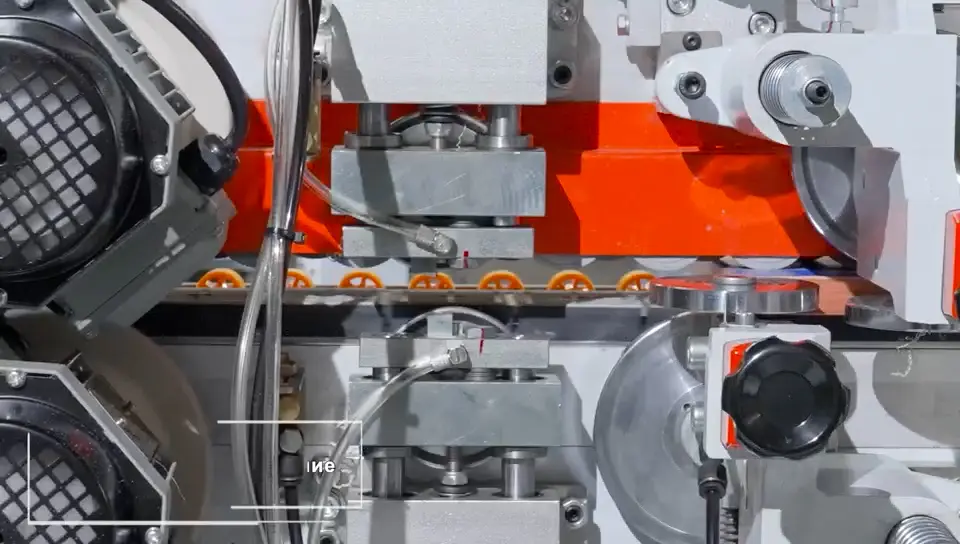
| Pressure And Finishing Stations | Roller condition, tool wear, adhesive buildup, uneven contact | Affects edge seating, trimming quality, and the amount of manual touch-up needed |
| Extraction And Cleanliness | Fine chips, dust, adhesive residue, blocked removal paths | Reduces contamination that interferes with station response and finish quality |
| Pneumatic And Control Response | Air stability, sensor contamination, delayed actuation, inconsistent timing | Affects repeatable station engagement and process consistency |
Looking at the machine this way helps maintenance teams avoid a common mistake: changing consumables while ignoring the mechanical or cleanliness issue that is actually causing finish drift.
Daily Checks That Prevent Most Quality Drift
Daily maintenance should focus on preventing contamination and visible wear from entering production. The goal is not deep service. The goal is to keep small issues from turning into a full shift of rework.
- Clean accessible glue residue, chips, and fine dust before buildup hardens or reaches moving parts.
- Inspect feed chain pads, pressure contact surfaces, and panel-guiding areas for wear, residue, or adhesive transfer.
- Confirm the glue system has reached stable working condition before full production starts.
- Check trimming, scraping, or buffing tools for buildup, damage, or dull cutting edges.
- Verify that extraction is removing waste instead of letting chips collect around sensors and finishing stations.
- Run a short sample panel at startup and review bond line appearance, end trimming, corner finish, and surface cleanliness.
That startup sample matters because edge banding quality often drifts gradually. A quick reference check catches the trend before a batch of parts needs hand correction.
Weekly Maintenance for Feed Stability and Finish Quality
Weekly maintenance is the right time to focus on how the machine behaves over repeated use, not just how clean it looks from the outside.
- Inspect chain travel, pressure beam movement, and accessible guide areas for roughness, residue, or uneven wear.
- Check pressure rollers for free rotation, contamination, or damaged contact surfaces.
- Review air lines, fittings, and actuators for leaks, delayed response, or inconsistent movement.
- Inspect trimming units and other finishing stations for alignment drift, adhesive buildup, or unstable engagement.
- Clean hidden accumulation points where fine chips and adhesive dust collect beyond the daily wipe-down routine.
- Compare several sample panels across the shift instead of relying on the first acceptable part.
That last point is important. A machine used for batch production must hold the same result over repetition, not just after a quick adjustment at the beginning of the day.
Monthly Maintenance for Longer-Term Reliability
Monthly work should focus on the areas that affect long-run consistency rather than only visible surface quality.
- Review lubrication and scheduled service points according to manufacturer guidance.
- Inspect serviceable glue-related areas for residue buildup that can interfere with stable application over time.
- Check wear-prone contact components such as pressure surfaces, chain pads, trimming tools, and, where fitted, scraper edges.
- Verify station-to-station consistency with the same internal test method each month.
- Compare maintenance observations with production symptoms such as more hand finishing, more edge repairs, or longer recovery after changeovers.
- Revisit extraction performance if glue dust and fine waste are accumulating faster than before.
Monthly maintenance becomes much more valuable when maintenance notes are reviewed alongside real production symptoms. If the shop is seeing more edge repairs or more finish complaints, the machine should be evaluated as a likely process source rather than treated as unrelated.
Early Warning Signs Operators Should Report Immediately
Operators usually notice instability before maintenance records show a clear pattern. The fastest way to protect finish quality is to treat those early signs as useful maintenance input.
| Warning Sign | Likely First Check Area | Risk If Ignored |
|---|---|---|
| Glue line opens or edge material begins lifting | Glue system stability, pressure consistency, residue buildup | Repeat bond failure and more rework |
| More glue squeeze-out or contamination on finished parts | Glue cleanliness, application control, working condition drift | Lower finish quality and more cleanup labor |
| Panel feed feels less stable or leaves marks | Feed pads, guide condition, pressure contact surfaces | Misalignment, marking, and less reliable edge seating |
| Trimming or finishing quality becomes rougher | Tool wear, buildup, station response | Extra hand finishing and slower output |
| Units engage late or inconsistently | Air supply, sensors, actuators, contamination around moving parts | Stop-start production and unpredictable quality |
The key is early response. Most expensive edge banding problems start as small repeatability issues that were noticed, normalized, and allowed to continue.
Maintenance Habits That Reduce Unplanned Downtime
Even solid technical routines lose value if the shop treats maintenance as an informal habit instead of a controlled process.
- Use One Standard Sample Part Or Panel Set For Routine Checks.
- Record Defects By Station Instead Of Labeling Everything As General Edge Quality Problems.
- Separate Material-Related Problems From Machine-Related Problems Before Adjusting Multiple Settings.
- Clean At Consistent Shutdown Intervals So Residue Does Not Turn Into A Weekly Repair Issue.
- Schedule Deeper Inspection Before Visible Finish Complaints Become Part Of Normal Production.
This kind of discipline is especially important in cabinet and furniture factories where the edge banding machine is expected to behave like a stable finishing system, not a station that is constantly being corrected by operators.
When Preventive Maintenance Should Turn Into Deeper Service
Not every problem can be solved through routine cleaning and normal consumable checks. If the machine continues showing bond inconsistency, unstable feed, recurring trim defects, or repeated station adjustments after preventive maintenance has been completed, the shop should move into deeper service, calibration review, or vendor-supported inspection.
That step is usually necessary when the machine can still run, but no longer holds a stable result over time. At that point, the priority is not simple upkeep. It is restoring the machine’s ability to produce repeatable finish quality through full production runs instead of only passing a short sample check.
Practical Summary
Edge banding machine maintenance is really about protecting four things: stable panel movement, predictable adhesive application, clean finishing, and repeatable station response. Those conditions matter more than simple uptime because they determine whether finished parts move forward cleanly or return for correction.
The best maintenance routines do not wait for a breakdown. They catch drift early, connect operator feedback to real station checks, and protect the machine’s ability to deliver the same reliable result at the end of the shift that it delivered at startup.