In cabinet production, edge quality is where upstream accuracy becomes visible. A factory can cut, sort, and drill panels efficiently, but if edge-banded parts leave the line with unstable glue lines, chipped corners, or visible finishing marks, the cost shows up later in touch-up, resorting, and assembly delays.
That is why edgebanding should be treated as a process-control decision rather than a cosmetic afterthought. For factories evaluating edgebanders for cabinet work, the questions that usually matter most involve panel condition, edge material, line stability, and how cleanly the station fits the rest of the workflow.
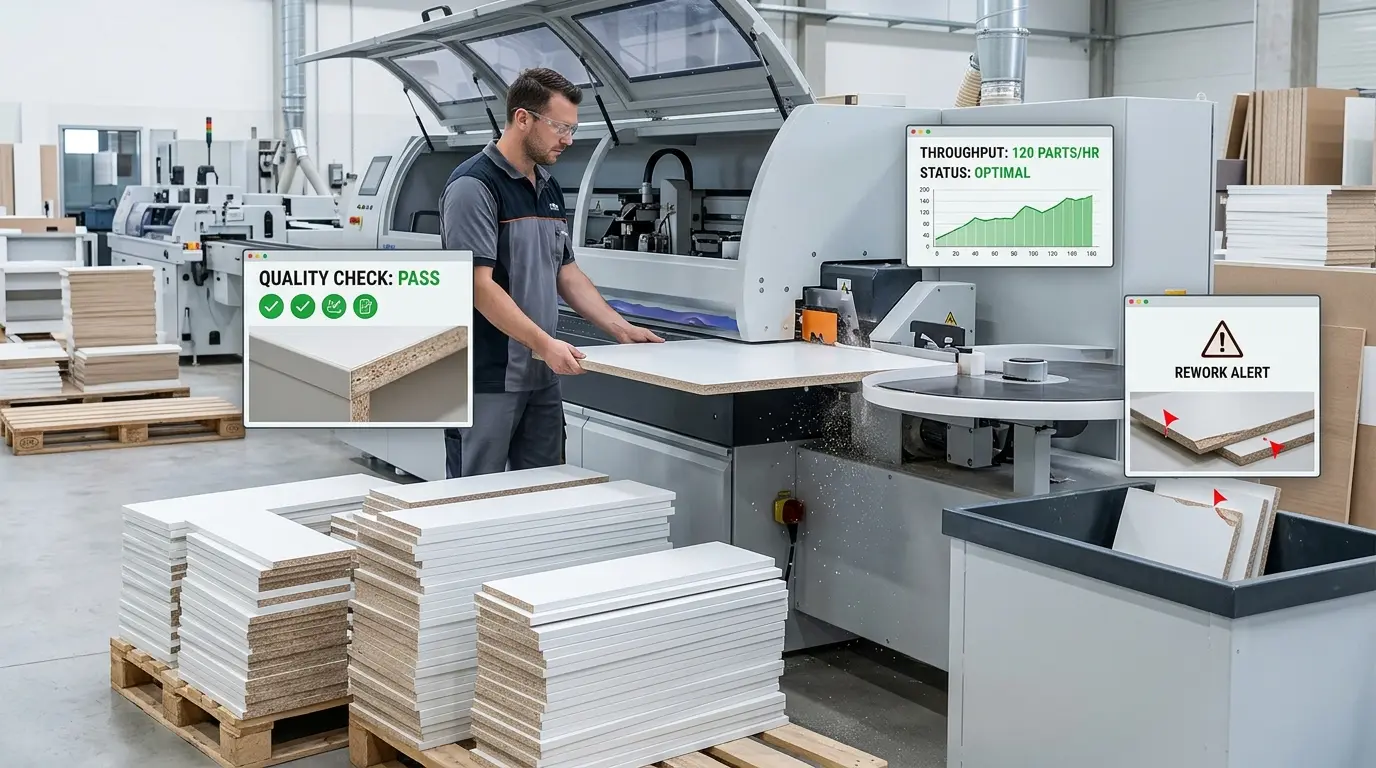
The Edge Station Controls Perceived Product Quality
In cabinet manufacturing, many of the most visible defects appear at the edge. A slightly inconsistent seam, a rough corner, or an edge that does not match the panel finish can make an otherwise acceptable part look lower grade.
That matters because edgebanding does more than cover the panel core. It affects:
- The Visual Consistency Of Exposed Cabinet Components
- The Tactile Quality Of Shelves, Doors, And End Panels
- The Amount Of Manual Touch-Up Required Before Assembly
- The Risk Of Rework When Parts Reach Final Inspection
- The Stability Of Downstream Assembly When Parts Need To Be Re-sorted Or Corrected
If management judges the edge station only by whether it can apply tape, it can miss the real production question: whether the process releases cabinet parts with the finish standard the market expects.
Panel Preparation Sets The Baseline
Edgebanding quality usually starts before the panel reaches the machine. If the edge is chipped, dusty, slightly irregular, or inconsistent from part to part, the edgebanding station is forced to compensate for a problem it did not create.
For cabinet production, the baseline should be a panel edge that is clean, reasonably stable, and repeatable enough for the next operation. When that baseline is weak, common problems follow:
- Glue-Line Variation Because The Surface Is Not Uniform
- Uneven Trimming Because The Part Does Not Present Consistently
- More Manual Correction At Corners Or End Trims
- Lower Confidence In Batch Consistency Across Repeated Cabinet Parts
This is why cutting accuracy and material handling discipline matter to edgebanding, even if the edge station itself is functioning normally. A clean handoff into the line usually produces a cleaner result coming out of it.
Banding Material And Adhesive Need To Match The Product Standard
Not every cabinet line needs the same edge solution. The right combination depends on the cabinet type, the visibility of the part, the finish expectation, and the working conditions the finished product must tolerate.
Common edge-banding decisions often involve tradeoffs between appearance, durability, changeover complexity, and finishing effort. Thin edging may suit some cabinet components where speed and economy matter most. Thicker or more premium-looking edges may be better suited to highly visible parts, but they can also place more demand on trimming accuracy and corner finishing.
The same logic applies to adhesive behavior. The goal is not simply to apply enough glue to hold the tape in place. The process also needs to support a clean seam, stable bonding, and predictable finishing. Too little control can lead to weak bonds or visible gaps. Too much can create squeeze-out, cleanup work, and an untidy finished edge.
The strongest process is usually the one that matches edge material, adhesive behavior, and cabinet finish expectations without making daily operation harder than it needs to be.
The Main Process Variables Usually Matter More Than One Headline Feature
When buyers compare edgebanding lines, one isolated machine feature can attract too much attention. In practice, edge quality and usable throughput usually depend on several variables staying under control at the same time.
| Process Variable | Why It Matters In Cabinet Production | What Usually Happens When It Is Off |
|---|---|---|
| Panel Edge Condition | Sets the surface that the tape and adhesive must follow | Gaps, inconsistent bonding, and more finishing correction |
| Edge Material And Thickness | Affects durability, visual match, and trimming behavior | Corner issues, visible mismatch, or unstable finishing quality |
| Adhesive Control | Influences seam appearance and bond reliability | Weak adhesion, squeeze-out, or a dirty glue line |
| Feed Stability And Pressure | Keeps the banding in consistent contact across the part | Intermittent seam variation and uneven appearance |
| Pre-Milling And Surface Correction | Helps remove small irregularities before banding | More visible glue lines and reduced finish consistency |
| Finishing Stations | Determines whether the part leaves ready for assembly | Scrape marks, rough edges, and added hand touch-up |
| Part Identification And Flow | Keeps the right parts moving in the right order | Wrong edge specs, bottlenecks, and avoidable rework |
Factories that manage these variables well often get better real-world results than factories that focus too heavily on a single brochure point.
Pre-Milling, Feed Stability, And Pressure Control Drive Glue-Line Consistency
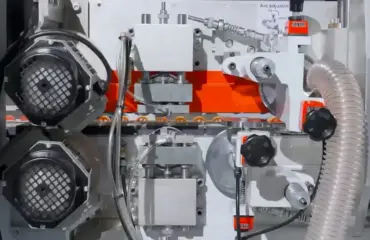
Pre-milling is one of the clearest examples of a feature that should be judged by outcome, not by label. In many cabinet workflows, it helps because it corrects small surface irregularities before the edge is applied. That can materially improve glue-line appearance and reduce the amount of finishing correction needed later.
But pre-milling alone does not guarantee a good result. Glue-line consistency also depends on how steadily the line runs. If feed conditions drift, if pressure is unstable, or if the process is repeatedly interrupted by mixed batches and short-stop corrections, the visible quality of the edge can still vary from part to part.
For cabinet factories, the practical question is not whether a line includes these functions. It is whether they help produce a more repeatable edge across normal daily production, not just during ideal demonstrations.
Finishing Stations Determine Whether Rework Shows Up At The End Of The Line
In cabinet production, the job is not finished when the tape is attached. The part still needs to leave the line with a clean enough edge to move forward without extra labor.
That is where trimming, scraping, buffing, and, in some workflows, corner treatment become important. These stages influence whether the edge looks production-ready or merely acceptable from a distance.
This is also where factories should be honest about finish expectations. Not every cabinet component requires the same edge standard. Internal carcass parts may tolerate a different finish threshold than highly visible end panels, doors, or premium cabinetry. The stronger buying decision is the one that aligns finishing capability with the actual product mix instead of overbuilding or underbuilding the line.
Corner rounding is a good example. It is not automatically necessary for every cabinet program, but it can become more valuable when the factory runs thicker edges, more visible parts, or a finish standard where sharp transitions and manual correction are difficult to accept.
Line Balance Matters As Much As Machine Capability
Many edgebanding bottlenecks are not caused by the edge station alone. They come from mixed part flow, frequent spec changes, poor labeling, or unstable release order from upstream operations.
In cabinet factories, the edge line often performs best when:
- Parts Arrive In A Predictable Sequence
- Edge Specifications Are Clear Before The Part Reaches The Machine
- Color, Thickness, And Finish Changes Are Managed Deliberately
- Operators Spend More Time Releasing Parts Than Diagnosing Exceptions
- Downstream Teams Receive Components In The Order Needed For Assembly
If the factory is planning several process upgrades at once, it often helps to view edgebanding inside a broader Pandaxis machinery lineup rather than as a stand-alone purchase. In real cabinet production, throughput depends on how well cutting, drilling, edge processing, and assembly support one another.
When A Higher-Spec Edgebanding Configuration Usually Makes Sense
More capability is justified when it solves a clear production problem. In cabinet production, that often means a more advanced edgebanding setup becomes easier to defend when one or more of these conditions apply:
- The Factory Sells Highly Visible Cabinetry Where Glue-Line Appearance Is Closely Scrutinized
- Upstream Panel Variation Makes Surface Correction Important Before Banding
- Manual Touch-Up Is Already Consuming Too Much Labor After The Line
- Product Mix Includes More Exposed Components That Need Better Corner Or Edge Finishing
- Throughput Losses Come From Rework And Interrupted Flow More Than From Raw Machine Speed
By contrast, a simpler configuration can still be a sensible fit when cabinet output is more standardized, finish expectations are moderate, and the plant is disciplined enough to keep upstream panel quality stable.
Practical Summary
Edgebanding for cabinet production is really a question of process stability. The edge station has to do more than attach material to a panel. It has to support consistent finish quality, controlled throughput, and a workflow that does not create hidden labor costs later.
In practice, the biggest considerations are usually straightforward: panel preparation, material and adhesive fit, the stability of pre-milling and pressure conditions, the quality of finishing stages, and the discipline of part flow through the line. When those factors are aligned, edgebanding helps improve both appearance and factory control. When they are not, the same station can become a steady source of rework and delay.
The best buying decision is usually the one that matches the cabinet line’s actual finish standard, product mix, and workflow constraints rather than the one with the most impressive isolated feature list.