A readable part mark usually becomes important only after production loses control of it. Mixed batches, unreadable serial numbers, slow inspection, and unclear warranty history all turn a small identification step into a much larger operational problem. That is where a laser marking machine starts to make sense.
In practical terms, laser marking belongs in production when the goal is clear identification, traceability, branding, or code readability with controlled surface change. It is usually selected when a factory needs a consistent mark without treating the job like full cutting or deep decorative engraving.
What A Laser Marking Machine Actually Does
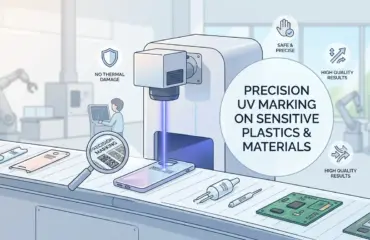
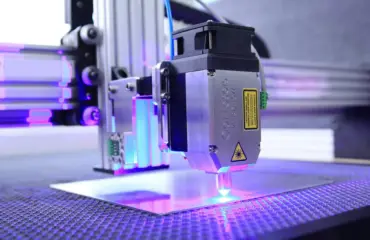
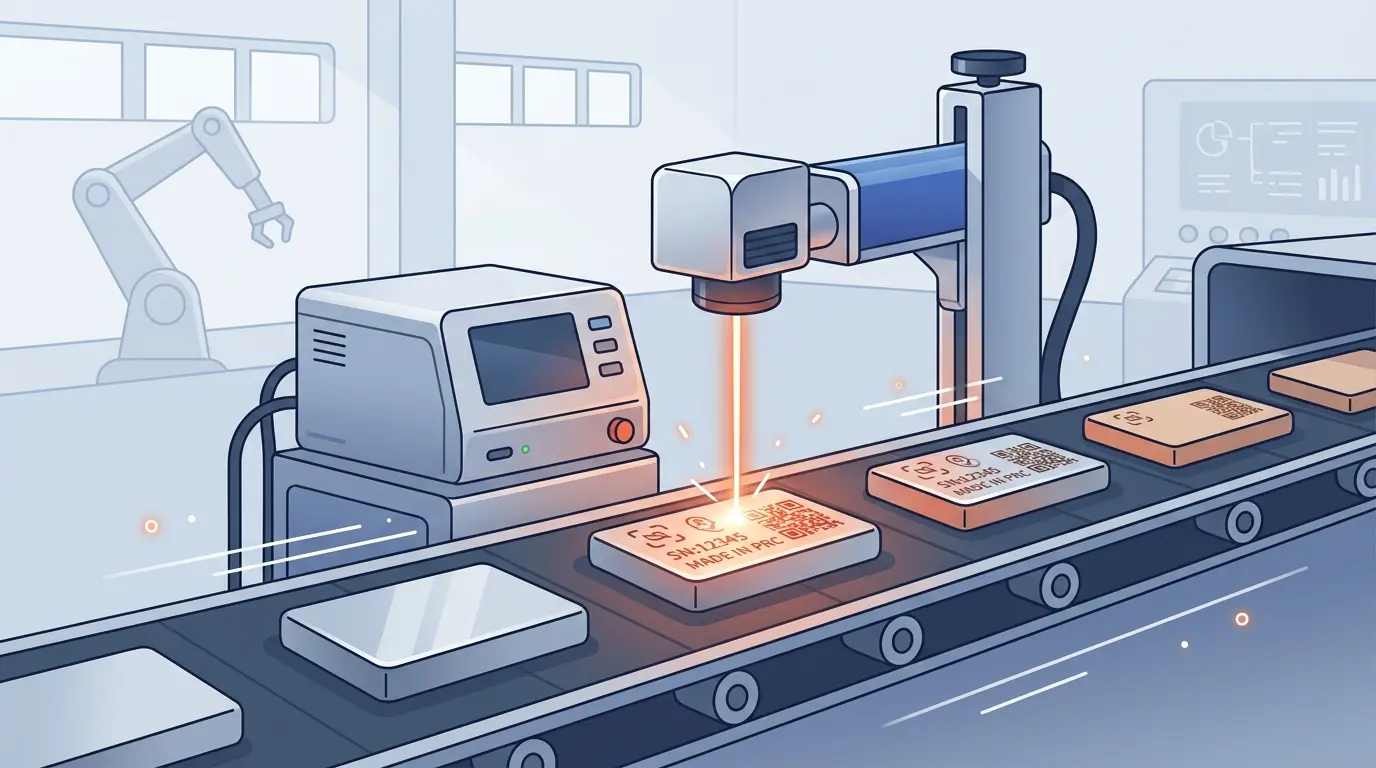
A laser marking machine uses a focused beam to create a visible mark on a part surface. In production, that mark is commonly used for serial numbers, lot codes, date codes, logos, internal routing information, and machine-readable codes such as Data Matrix or QR-style identifiers.
What matters most is not the label of the machine, but the production outcome. Laser marking is generally chosen when a shop wants:
- Clear And Repeatable Part Identification
- Limited Physical Contact With The Workpiece
- Good Readability On Finished Or Semi-Finished Parts
- Faster Identification Work Than A Deeper Removal Process Would Typically Allow
The exact mark quality still depends on the material, surface finish, coating condition, required contrast, and how permanent the mark needs to be after downstream handling.
Where It Usually Fits In A Production Workflow
Laser marking is not tied to one fixed point in the line. Its best position depends on whether the mark is mainly for internal traceability, final customer-visible identification, or downstream service control.
| Workflow Position | Why Marking Fits There | What To Confirm |
|---|---|---|
| After Machining Or Fabrication | Parts are already close to final geometry, so identification can follow the actual produced component rather than a planning batch | The mark still remains readable after any later washing, coating, or handling |
| Before Assembly | Subcomponents can be tracked before they enter mixed assemblies or kit-based production | Mark placement does not get hidden, damaged, or covered during joining |
| After Finishing Or Final Inspection | Final serial numbers, compliance information, or customer-facing branding can be applied to a finished part state | The finished surface produces consistent contrast and meets appearance expectations |
| Maintenance Or Asset-Control Workstation | Tools, fixtures, and factory assets can be identified without building a dedicated inline cell | Throughput is usually secondary to flexibility and access |
This placement decision matters because the same machine can be useful at different stages for very different reasons. A mark applied for internal production control does not need the same finish logic as a mark that must stay visible throughout shipment, installation, or field service.
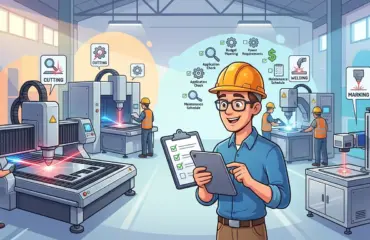
Laser Marking Vs Laser Engraving Vs Laser Cutting
Industrial buyers often group these processes together because they may involve related laser technology. In production, though, they solve different problems.
| Requirement | Laser Marking | Laser Engraving | Laser Cutting |
|---|---|---|---|
| Primary Goal | Readable Identification, Traceability, Logos, And Codes | Stronger Visual Depth Or Tactile Surface Effect | Separating, Shaping, Or Profiling Material |
| Material Impact | Usually Limited Surface Change | More Intentional Material Removal | Full Cut Through The Material |
| Best Production Fit | Fast Identification Steps | Decorative Detail Or Greater Depth Requirements | Part Creation Rather Than Part Identification |
| Common Risk If Misapplied | Mark May Be Too Light For A Harsh End Use | Cycle Time May Be Too Slow For Simple Coding Tasks | The Process Is Solving The Wrong Problem |
That distinction keeps equipment selection honest. If the real requirement is decorative detail or cut geometry on wood, acrylic, or similar non-metal materials rather than traceability, laser cutters and engravers are the more relevant category to evaluate.
Where Laser Marking Usually Delivers The Most Value
Laser marking tends to fit best where production needs clear information on the part without turning identification into a heavy secondary process.
Common good-fit situations include:
- Repeated Part Identification Across Stable Product Families
- Variable Data Work Such As Serial Numbers, Batch Codes, Or Traceability IDs
- Machine-Readable Coding That Must Stay Consistent Across Runs
- Finished Or Near-Finished Components Where Low Surface Disturbance Matters
- Branding Or Surface Labeling Where Readability Is More Important Than Depth
It is especially useful when the cost of poor identification is already showing up elsewhere in the operation. That could mean delayed inspection, misrouted parts, rework from mixed batches, or weak service traceability after shipment.
Where It Is Usually Not The Best First Choice
Laser marking is not automatically the right answer just because a shop needs a permanent-looking mark. In some workflows, another process deserves the stronger first review.
Laser marking is often a weaker first fit when:
- The Mark Must Stay Readable After Heavy Abrasion, Blasting, Or Coating That May Overwhelm A Lighter Surface Result
- The Surface Is Highly Irregular, Rough, Or Difficult To Present Consistently
- The Real Need Is Decorative Depth Rather Than Readable Identification
- The Job Is Actually A Cutting Or Profiling Task, Not A Marking Task
- The Production Cell Cannot Hold Part Position, Focus, Or Verification Consistently
This is where many buying mistakes begin. A factory may search for a laser marking machine because the term is broad and familiar, when the real need is deeper engraving, impact-style marking on rough industrial parts, or a different process entirely.
The Variables Buyers Should Check Before They Spec A Machine
The most reliable equipment decision starts with the part and the workflow, not the marketing category.
Five questions usually clarify whether laser marking really fits:
- What Material And Surface State Will Be Marked Most Often?
- Does The Mark Need Contrast, Depth, Or Both?
- Will The Part Be Painted, Coated, Cleaned, Or Abraded After Marking?
- Is The Main Output Human-Readable Text, Scanner-Readable Codes, Or A Visible Brand Mark?
- How Stable Is Part Presentation At The Marking Station?
Those questions often matter more than headline claims about flexibility. A strong demo on a clean sample does not prove the same result on oily, curved, coated, or mixed-finish production parts. In real manufacturing, fixturing, part orientation, and downstream inspection discipline often decide whether the marking step stays reliable.
How To Keep The Marking Step Connected To The Rest Of The Line
Part marking works better when it is planned as part of the production system rather than treated as an isolated add-on. That means checking how the mark supports routing, inspection, assembly, packaging, and service records instead of evaluating it as a standalone visual feature.
If the marking decision also affects broader equipment planning across cutting, engraving, panel processing, or mixed-material workflows, reviewing the wider Pandaxis product catalog can help keep the laser step aligned with the rest of the factory layout.
That broader view matters because a good marking station is not only about creating a readable code. It is about placing that code at the right stage, on the right surface, with the right permanence level, so the rest of the workflow benefits from it.
Practical Summary
A laser marking machine fits production best when the factory needs clear, repeatable identification without turning the job into a deeper engraving or cutting process. It is commonly a strong fit for serial numbers, lot codes, logos, and traceability marks where speed, readability, and controlled surface change matter more than heavy material removal.
Its real value depends on workflow context. The best results usually come when the material, surface condition, mark purpose, and line position are all defined before the machine is chosen. When those factors are not clear, buyers often end up comparing the wrong processes instead of solving the identification problem that actually affects production.