Many buyers use the phrase “laser engraving machine” as if it refers to one equipment category with minor variations. In practice, the gap between one system and another can be substantial. The laser source, motion architecture, material response, and production target all change what the machine does well, where it slows down, and how much process control the shop needs to maintain stable output.
That is why the right starting point is not the catalog headline. It is the workflow question behind the purchase. Are you engraving wood display panels, adding traceability marks to metal parts, decorating acrylic signage, marking plastics with low heat input, or trying to combine cutting and engraving in one job? The answer determines which machine type belongs on the shortlist and which one will create avoidable rework.
Not All Laser Engraving Machines Solve the Same Problem
In real production, laser engraving decisions usually come down to four variables:
- Laser Source And Wavelength
- Motion System And Marking Method
- Material Family And Surface Response
- Production Goal: Decoration, Identification, Depth, Or Combined Processing
Two machines may both be described as “laser engravers” and still be built for completely different jobs. One may be better suited to wood and acrylic graphics. Another may be optimized for fast metal marking. A third may be chosen mainly because it reduces heat effect on sensitive plastics and electronic components.
The more mixed the production queue becomes, the more expensive it is to ignore those differences.
The Main Types of Laser Engraving Machines
Across the broader industrial market, laser engraving machines are commonly grouped by laser source. That matters because the source strongly influences material compatibility, marking behavior, and application fit.
| Machine Type | Common Material Fit | Where It Usually Fits Best | Main Limitation To Watch |
|---|---|---|---|
| CO2 Laser Engraving Machine | Wood, acrylic, leather, paper, rubber, glass surface marking, and many other non-metallic materials | Signage, decorative panels, packaging samples, display parts, branded non-metal products, and combined cut-and-engrave work | Not the first choice for direct engraving on most bare metals |
| Fiber Laser Engraving Machine | Many metals, coated metals, anodized aluminum, and selected engineering plastics | Part marking, serial numbers, QR codes, nameplates, tool identification, and industrial traceability | Less suitable for the broader non-metal decorative work that CO2 systems commonly handle |
| UV Laser Engraving Machine | Heat-sensitive plastics, films, medical or electronic components, fine cosmetic surfaces, and some specialized marking tasks | Fine marking with limited heat effect, small detailed graphics, and sensitive material applications | Often chosen for precision and material sensitivity rather than general-purpose throughput |
| Diode Laser System | Light-duty wood, leather, coated surfaces, prototyping, and lower-volume work depending on the setup | Sampling, light production, entry-level work, or limited product ranges | Usually not the best fit when industrial throughput, broader material control, or long-shift duty are the main requirement |
For many industrial buyers, the real first split is simple: if the work is centered on wood, acrylic, and similar non-metallic production, CO2 systems usually deserve the most attention. If the work is centered on direct marking of metal parts, fiber systems usually move to the front of the discussion. UV becomes more relevant when the job punishes heat, and diode systems usually make more sense in lighter-duty scenarios than in heavier production environments.
Machine Architecture Changes Throughput More Than Many Buyers Expect
The laser source is only part of the story. Buyers also need to think about how the beam moves across the work.
| Architecture | Typical Strength | Best Fit | Tradeoff |
|---|---|---|---|
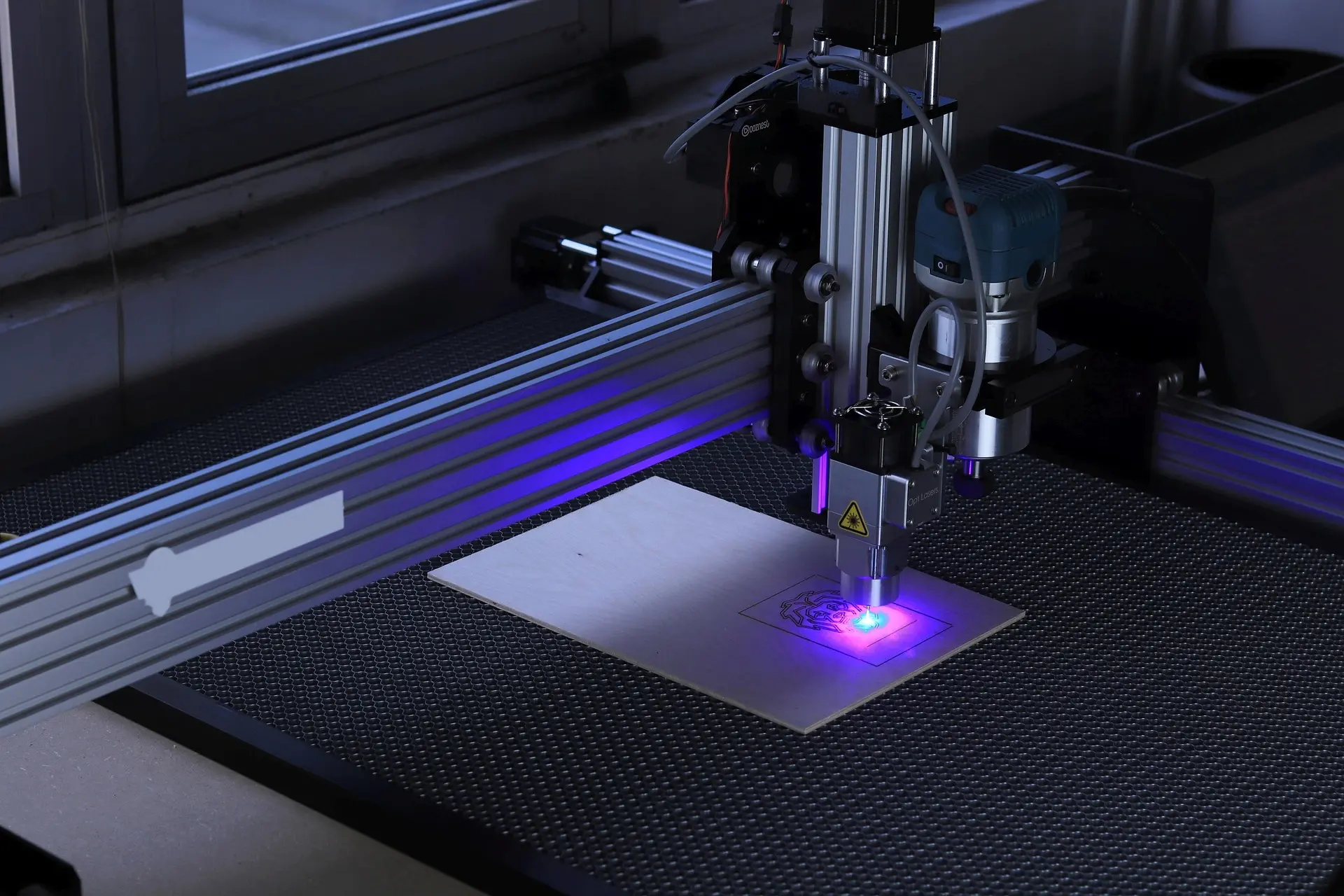
| Gantry System | Larger working areas and stronger fit for sheet-style jobs | Wood panels, acrylic sheets, signage, mixed cutting and engraving, and larger-format decorative work | Usually less focused on ultra-fast small-area marking than galvo-style systems |
| Galvo System | Very fast marking over a more limited field, especially for repeated small marks | Metal traceability, labels, part identification, compact graphics, and repeat marking on batches of parts | Less natural for large-sheet cutting or wide-area panel engraving workflows |
This distinction matters because some buying mistakes have nothing to do with the wrong laser source. The shop may choose a source that matches the material, but pair it with an architecture that does not match the job size or part flow.
If the workload is mostly small repeated identifiers on metal parts, a galvo-style system may support the workflow better than a larger-format platform. If the workload is wood décor, acrylic signs, or products that need both contour cutting and surface graphics, a gantry-style workflow is often easier to standardize.
Material Match Should Drive the Shortlist
Material choice is where many projects either become efficient or start accumulating reject risk. A machine that looks versatile in a demo can become difficult to manage if the material queue is not aligned with the machine’s real strengths.
| Material | Usually Stronger Fit | Common Application Direction | What Buyers Should Check |
|---|---|---|---|
| Wood | CO2 | Decorative engraving, branded panels, signs, packaging inserts, templates, and furniture décor details | Contrast consistency, smoke control, and whether the job also needs contour cutting |
| Acrylic | CO2 | Display parts, signage, illuminated panels, branded tags, and decorative non-metal components | Surface finish, edge cleanliness if cutting is added, and recipe stability by acrylic type |
| Bare Metal | Fiber | Permanent part marking, industrial identification, logos, and serial information | Mark quality, contrast target, cycle time, and whether the task is marking or deeper engraving |
| Coated Or Anodized Metal | Fiber Or UV Depending on the Finish Goal | Nameplates, control panels, branded surfaces, and product identification | Surface response, readability, and cosmetic consistency |
| Engineering Plastics | Fiber Or UV Depending on the Polymer and Heat Sensitivity | Keypads, housings, labels, and industrial component marking | Exact polymer compatibility, melt behavior, and fume handling |
| Heat-Sensitive Plastics and Films | UV | Fine low-heat marking and detail-sensitive parts | Edge quality, discoloration risk, and mark consistency on small features |
| Glass | CO2 For Surface Frosting In Suitable Workflows | Decorative frosting, branding, and presentation marking | Breakage risk, support method, and appearance consistency |
| Leather, Paper, and Similar Organic Materials | CO2 | Packaging, branding, decorative products, and pattern work | Surface cleanliness, smell and exhaust control, and batch consistency |
For shops that mainly produce wood signs, acrylic display parts, branded non-metal panels, and similar applications, the current Pandaxis laser cutters and engravers category aligns most naturally with that non-metallic workflow family.
The broader lesson is that “laser compatible” is not enough. Buyers should shortlist machines based on the dominant material family, then ask whether secondary materials are a real production need or just an occasional request.
Common Applications by Production Environment
Laser engraving becomes more useful when the application is defined in workflow terms rather than generic marketing terms.
Decorative and Visual Surface Applications
These applications usually prioritize appearance, repeatability, and design flexibility:
- Wood Sign Panels
- Acrylic Display Components
- Decorative Inserts and Branded Packaging Pieces
- Product Personalization on Non-Metal Substrates
- Furniture Décor Elements and Surface Graphics
In these workflows, finish quality usually matters more than headline speed alone. Residue control, recipe stability, and alignment between graphics and part geometry often determine whether the machine actually improves throughput.
Industrial Identification and Traceability Applications
These applications usually prioritize readability, permanence, and repeat cycle performance:
- Serial Number Marking
- QR Codes and Data Matrix Codes
- Tool and Fixture Identification
- Nameplates and Rating Plates
- Control Panel and Component Labels
Here, the question is often not whether the part can be marked. It is whether the mark remains readable, repeatable, and production-efficient across batch quantities.
Mixed Cut-And-Engrave Applications
Some shops need one workflow that both shapes the part and adds surface detail. Common examples include:
- Acrylic Sign Blanks With Engraved Branding
- Wooden Decorative Parts With Text and Contour Shapes
- Packaging Inserts With Cut Profiles and Product Marking
- Display Components That Need Both Geometry and Surface Graphics
These jobs often push buyers toward CO2-based sheet-processing workflows because the value comes from running both processes in one controlled setup rather than creating extra handling steps between separate machines.
When Laser Engraving Is Not the Best First Choice
An honest selection process should also identify the jobs that belong somewhere else.
Laser engraving is often a weaker first choice when:
- The Real Need Is Deep Structural Material Removal
- The Main Process Is Panel Routing, Drilling, Or Joinery Preparation
- The Material Is Thick Stone That Needs Profiling, Carving, Or Heavy Machining
- The Output Is Better Served by High-Volume Printing Rather Than Beam-Based Marking
- The Production Goal Is General Fabrication Rather Than Engraving, Marking, Or Detail Cutting
This matters because some buyers try to stretch one laser platform into roles better handled by CNC routing, stone processing, or other specialized equipment. That usually produces a compromise workflow instead of a stronger one.
How to Choose the Right Laser Engraving Machine for Your Workflow
The best buying questions are usually operational, not promotional.
- Start With the Dominant Material. The machine should first make sense for the material family that will consume most of the machine hours.
- Separate Marking From Cutting Needs. Some buyers need pure marking speed. Others need engraving plus contour cutting. Those are not the same purchase.
- Match the Architecture to the Part Format. Small repeated part codes and large decorative panels push the workflow in different directions.
- Define the Visual Standard Early. Cosmetic decorative work, traceability, and surface frosting each judge quality differently.
- Check Heat Sensitivity and Surface Damage Risk. This is especially important for plastics, coated parts, glass, and fine-finish products.
- Evaluate Recipe Control, Not Just Beam Performance. If the queue changes often, saved setups and repeatability matter as much as raw capability.
- Judge Throughput Across the Full Process. Loading, alignment, cleanup, exhaust, and downstream handling all affect usable productivity.
The strongest shortlist usually comes from narrowing the application first, then comparing machine features only in terms of the workflow outcome they improve.
Practical Summary
Laser engraving machines are not interchangeable tools with slightly different specs. The source type changes the material fit. The architecture changes the part flow. The application changes what quality means. That is why buyers get better results when they stop asking for a “general laser engraver” and start defining the actual production goal.
CO2 systems are commonly stronger for wood, acrylic, and many non-metal decorative or mixed cut-and-engrave workflows. Fiber systems are commonly stronger for metal marking and industrial identification. UV systems become more relevant when low heat input and fine detail matter more than broad material range. Diode systems can make sense in lighter-duty situations, but they should not automatically be treated as substitutes for industrial production equipment.
The practical decision is to match the machine to the dominant material, the part size, the required finish, and the real production rhythm. When those four points line up, the machine usually supports throughput, consistency, and lower rework. When they do not, even a capable laser system can become the wrong workflow investment.