Many buyers start with the wrong question. They ask which engraving machine is best before they define what the machine must actually do in production. In industrial use, engraving can mean decorative surface work on acrylic, branding on wood panels, permanent identification on metal parts, deep material removal, or carved detailing on hard materials. Those are not the same jobs, and they should not be treated as if one machine category will automatically handle all of them well.
For teams reviewing the broader Pandaxis product catalog alongside other engraving options, the real buying decision is process fit. The right machine is the one that matches your material mix, finish standard, mark depth, and production rhythm with the least rework and the least scheduling friction.
Start With the Output, Not the Machine Label
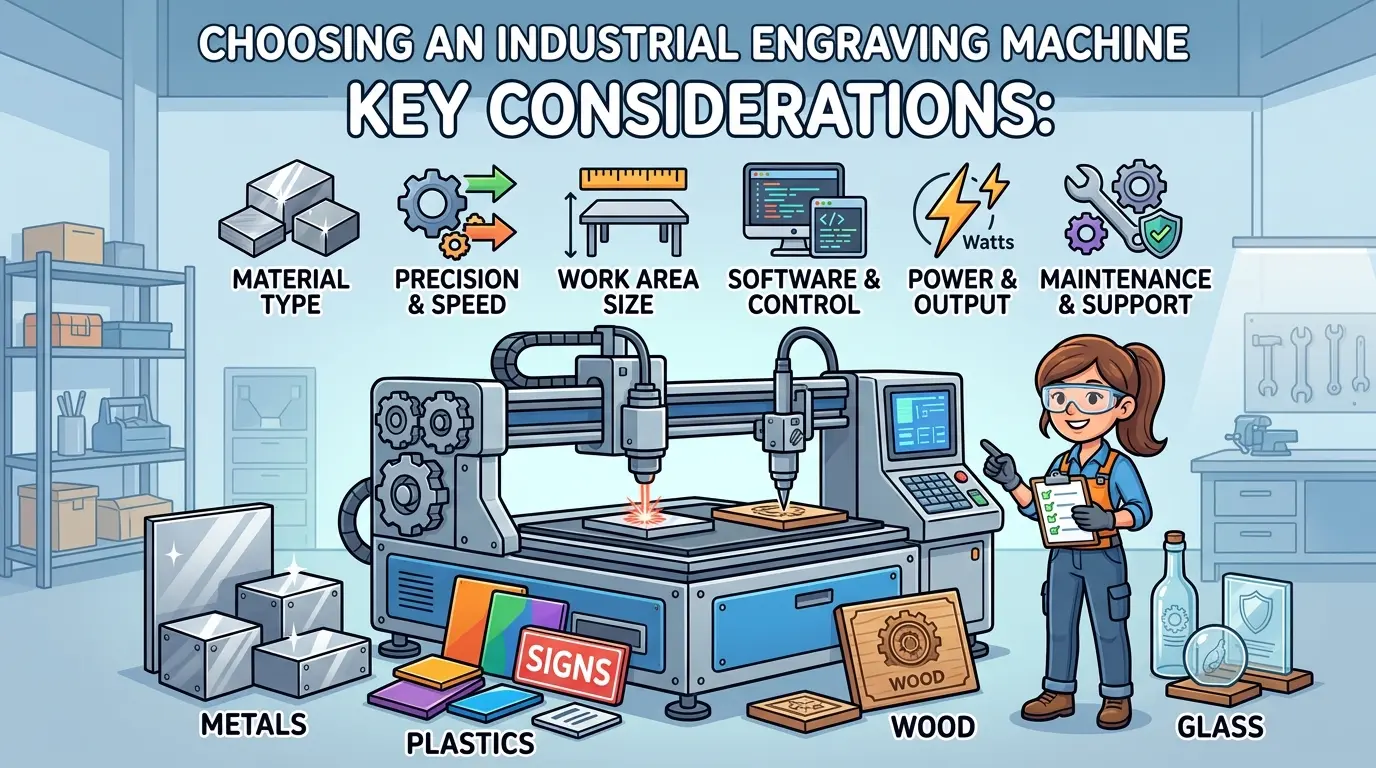
The term engraving machine is too broad to guide a serious purchasing decision. Before comparing brands, buyers should define the actual output requirement.
Start with questions like these:
- Which Materials Will Consume Most of the Machine Hours?
- Is The Goal Surface Contrast, Decorative Detail, Deep Engraving, Or Permanent Part Identification?
- Does The Same Part Need Cutting And Engraving In One Cell?
- Is Appearance The Main Acceptance Standard, Or Is Traceability More Important Than Cosmetics?
- Will The Machine Run Repeated Batches Or High-Mix Custom Orders?
- How Much Output Is Lost Today To Setup Delay, Cleanup, Positioning Errors, Or Rejects?
This step matters because an acrylic signage workflow, a cabinet-panel branding workflow, and a metal traceability workflow may all use the word engraving while requiring very different machine behavior.
The Main Engraving Machine Types Used in Industry
Industrial engraving usually falls into a small number of process families. The buying mistake is assuming they are interchangeable.
| Machine Type | Commonly Used For | Main Strength | Main Tradeoff |
|---|---|---|---|
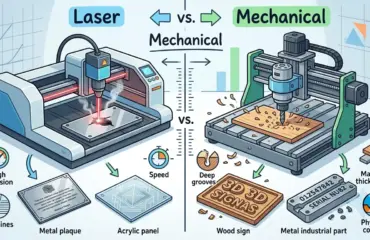
| Non-Metallic Laser Engraving System | Wood, acrylic, leather, plastics, decorative panels, signs, branded parts | Non-contact processing, fine detail, clean graphic work, and easy integration with cut-and-engrave jobs | Heat response, residue control, and cosmetic consistency become critical as materials change |
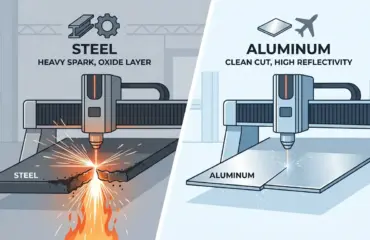
| Metal Marking Or Metal Engraving System | Serial numbers, industrial identification, permanent logos, metal nameplates, part traceability | Strong fit for permanent identification and metal-focused production requirements | Should be assessed as a separate process track rather than assumed to be covered by a wood-and-acrylic engraving setup |
| Mechanical Or CNC Engraving Machine | Deep engraving, routed lettering, relief patterns, molds, thicker substrates, rigid fixtures | Better fit when physical material removal and controlled depth matter more than surface marking alone | Tool wear, chip removal, fixturing, and maintenance become more important |
| Stone Machining Or Stone Engraving Cell | Granite, marble, quartz, countertop detailing, carved hard-material work | Better fit for hard materials and fabrication workflows where standard engraving machines are not practical | Different tooling, handling, and production logic from lightweight decorative engraving |
For buyers focused on wood, acrylic, and similar non-metallic applications, laser cutters and engravers are commonly the most relevant starting point. For hard-material decorative carving, a stone CNC machine workflow is usually more realistic than trying to stretch a general engraving purchase into a job it was not meant to handle.
Match the Process to the Application
The fastest way to narrow the buying decision is to map the application before comparing machines.
| Application | Best-Fit Process Direction | Why |
|---|---|---|
| Acrylic Signs, Display Parts, And Decorative Panels | Non-Metallic Laser Engraving | Fine graphics, clean edge potential, and strong fit for visually inspected work |
| Wood Branding, Furniture Decor, And Panel Surface Graphics | Non-Metallic Laser Or CNC Engraving, Depending On Desired Depth | Laser fits surface detail and branding; CNC fits deeper routed effects and carved geometry |
| Metal Part Identification And Traceability | Dedicated Metal Marking Or Metal Engraving Track | Permanent identification requirements should be evaluated around metal process needs, not around non-metal decorative capability |
| Deep Plates, Dies, Tooling, And Heavier Material Removal | Mechanical Or CNC Engraving | Controlled depth and physical removal matter more than non-contact surface treatment |
| Granite, Marble, Quartz, And Similar Hard Materials | Stone Machining Or Stone Engraving Cell | Hard-material processing needs a different machine class and handling logic |
| Mixed-Material Short Runs | Separate The Queue By Material Family First | Flexibility matters, but too many unrelated materials in one cell often create setup drift and quality inconsistency |
This is where many expensive mistakes happen. A buyer sees one good sample and assumes the same machine will carry every future job. In practice, the right process depends on whether the factory needs fine surface detail, controlled depth, hard-material carving, or durable industrial identification.
The Buying Criteria That Matter More Than Demo Samples
Showroom samples are useful, but they do not reveal whether a machine stays productive over a full shift. Industrial buyers should compare the things that affect acceptable output, not just the first attractive result.
| Evaluation Area | What Buyers Should Check | Why It Matters |
|---|---|---|
| Material Fit | Run the real substrates, coatings, finishes, and part sizes used in production | A machine that performs well on one sample may become unstable on the actual weekly material mix |
| Mark Quality Or Engraving Depth | Inspect clarity, edge definition, contrast, consistency, and acceptable depth | The buying decision should be driven by shipping quality, not by whether one sample looks impressive |
| Repeatability | Compare results across multiple runs and multiple positions on the work area | Good first-part quality is not enough if later parts drift |
| Job Recall And Software Practicality | Test recipe storage, file handling, positioning routines, and operator usability | High-mix work fails when stable jobs cannot be recalled quickly |
| Fixturing And Part Handling | Review how materials are referenced, held, and unloaded | Positioning errors and handling delays often cost more than raw processing time |
| Extraction, Dust, Smoke, Or Chip Control | Evaluate the cleanup burden during longer runs | Cosmetic quality and maintenance stability often depend on how waste is managed, not only on how the head moves |
| Maintenance Access | Check daily cleaning points, tool changes, and inspection access | Machines that are harder to maintain usually drift sooner in real production |
| Net Throughput | Measure the whole cycle, including loading, setup, processing, cleanup, and inspection | A slightly slower but more stable machine often delivers more usable parts per shift |
The more industrial the workflow becomes, the more buyers should care about process stability instead of headline speed. Net throughput is shaped by the whole cell, not by one line in a brochure.
When One Machine Is Enough and When It Becomes a Bottleneck
One-machine buying logic is attractive because it looks efficient on paper. In some cases, it is the right move. If the factory mainly engraves and cuts non-metallic parts in one queue, a single laser system can be a practical and efficient choice.
The problem starts when buyers combine unrelated process demands in the same purchase. A machine that works well for decorative wood panels may not be the right answer for permanent metal identification. A cell chosen for acrylic surface appearance may not be the right tool for deep engraved plates. A general engraving purchase may also be the wrong place to solve hard-material carving.
In those cases, one machine often becomes a bottleneck because it is carrying several different jobs with different acceptance standards:
- Decorative Work That Is Judged By Surface Appearance
- Identification Work That Is Judged By Permanence And Readability
- Deep Engraving Work That Is Judged By Material Removal
- Hard-Material Work That Is Judged By Tooling Fit And Handling Stability
When those requirements diverge, buyers should separate the purchase decision by process rather than forcing one machine class to cover every application.
Common Buying Mistakes in Industrial Engraving Projects
- Buying From A Generic Product Label Instead Of A Defined Process Requirement
- Treating Metal, Wood, Acrylic, And Stone Work As If They Belong In The Same Evaluation Track
- Judging Performance By A Single Demo Sample Instead Of Repeated Production Trials
- Overvaluing Headline Speed While Ignoring Loading, Cleanup, And Inspection Time
- Assuming A Decorative Engraving Setup Will Also Solve Traceability Or Deep-Engraving Jobs
- Ignoring Maintenance Burden Until After Installation
- Trying To Solve Hard-Material Engraving With A Machine Class Better Suited To Lighter Decorative Work
These are usually workflow mistakes, not just machine mistakes. The equipment may work, but the factory still loses output if the process match is wrong.
Practical Summary
An engraving machine should be chosen by application, material behavior, finish expectations, and production flow, not by the broad label alone. For wood, acrylic, and similar non-metallic decorative work, laser engraving is commonly a strong fit. For metal identification or metal-focused engraving, buyers should evaluate that requirement as a separate industrial process. For deeper routed work or controlled material removal, mechanical or CNC engraving is often the better direction. For stone and other hard materials, a dedicated stone-machining workflow is usually the practical answer.
The safest buying logic is simple: define the output, match the process, test with real parts, and measure usable output across the full cycle. That approach leads to a better machine decision than any generic claim about the best engraving machine for every industrial application.