When a panel-processing line runs PVC, ABS, and melamine-related jobs through the same edge banding station, the machine is no longer just adding a finished edge. It is deciding whether panels move forward with a clean glue line, acceptable surface appearance, and stable dimensions, or whether labor gets pushed into scraping, touch-up, sorting, and rework.
That is why edge banding equipment should not be chosen by automation level alone. The better question is more practical: can the machine deliver the edge quality your material mix actually requires, without turning every board change or finish upgrade into a production problem?
Why Material Mix Changes the Equipment Decision
PVC, ABS, and melamine applications may all pass through an edgebander, but they do not create the same production demands.
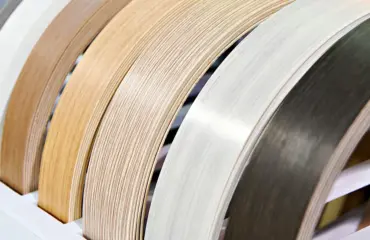
- PVC Edge Banding Is Commonly Chosen For General-Purpose Volume Work Where Cost Control, dependable adhesion, and acceptable visual finish need to stay balanced.
- ABS Edge Banding Is Often Used When Visible furniture parts need a cleaner-looking edge, a more refined finish standard, or better resistance to daily wear.
- Melamine-Related Edge Work Usually Leaves Less Room To Hide Upstream Defects, especially when panel edges arrive with saw marks, minor breakout, or inconsistent squareness.
In practice, the machine decision is not defined by tape material alone. It is shaped by the combination of edge material, substrate condition, part visibility, and how much manual cleanup the factory is willing to absorb after edging.
What PVC, ABS, and Melamine Jobs Usually Demand
| Material or Application | What The Line Is Trying To Protect | Equipment Priority | Why It Matters Downstream |
|---|---|---|---|
| PVC On Standard Cabinet Or Commercial Panel Work | Stable adhesion and repeatable trimming | Dependable glue application, clean trimming, and polishing | Reduces hand cleanup before assembly |
| ABS On Visible Furniture Components | Cleaner appearance and a more controlled finish | Better edge preparation, accurate trimming, and stronger finishing consistency | Improves visual quality on exposed parts |
| Melamine-Faced Panels Or Melamine Edge Applications | Edge straightness, clean appearance, and lower defect visibility | Stable panel prep, accurate feed, and controlled gluing and trimming | Helps prevent visible flaws from carrying into final assembly |
This is where many buying decisions improve. Instead of asking which machine is the most advanced, the factory can ask which machine is better aligned with the finish level, edge condition, and labor tolerance of the actual work leaving the line.
When a Standard Automatic Edgebander Is the Right Starting Point
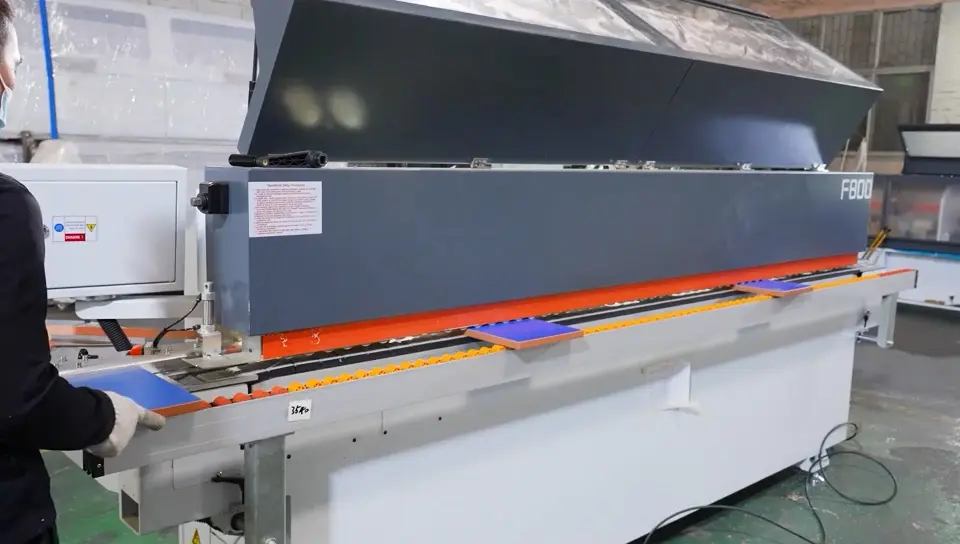
For many cabinetry and panel-furniture lines, automatic edgebanders are the practical baseline because they turn straight-line edging into a more repeatable workflow. The real gain is not only speed. It is consistency.
A standard automatic edgebander is often enough when:
- Most Parts Are Straight Rectangular Panels.
- PVC Covers A Large Share Of Daily Output.
- The Required Finish Standard Is Commercially Solid Rather Than Premium.
- Panel Edges Already Arrive In Reasonably Good Condition From Cutting.
- The Factory Wants To Reduce Manual Glue Cleanup More Than It Wants To Upgrade Visual Finish Level.
In that environment, the machine does its job best by stabilizing routine work. It helps the line produce acceptable edges repeatedly without asking operators to rescue every part by hand.
When Pre-Milling Matters More Than Many Buyers Expect
Pre-milling is often the feature that separates acceptable edging from consistently convincing edging.
The reason is straightforward: the glue station can only bond to the edge it receives. If the panel arrives with small saw marks, slight edge tear-out, or minor inconsistency from upstream cutting, the edging process may still run, but the finished result can look less stable than expected.
Pre-milling is commonly worth stronger attention when:
- ABS Is Used On Visible Exterior Parts.
- Melamine-Faced Panels Show Small Edge Imperfections Too Easily.
- Upstream Cutting Quality Varies Across Materials Or Shifts.
- The Factory Wants A Tighter-Looking Glue Line And Less Manual Touch-Up.
- Edge Finish Quality Is Part Of The Product’s Sales Value, Not Just A Functional Requirement.
For PVC work, pre-milling may still matter when panel quality is inconsistent. For ABS and melamine-sensitive jobs, it often matters more because those applications tend to expose edge-preparation problems faster.
When Corner Rounding Actually Pays Off
Corner rounding should be treated as a finish-level decision, not as a default upgrade.
It is commonly most useful when thicker PVC or ABS edges are part of visible furniture, retail fixtures, office interiors, or other components that customers see and touch at close range. In those cases, corner treatment can help the finished part look more complete and reduce the need for manual rework around exposed edges.
It is usually less critical when:
- Parts Are Utility-Oriented Rather Than Design-Led.
- Edges Will Be Hidden After Assembly.
- Thin Decorative Edge Materials Dominate The Work Mix.
- The Main Bottleneck Is Basic Edge Consistency Rather Than Final Edge Softening.
If the order mix rarely benefits from rounded corners, paying for that extra process may add cost without removing the real production constraint.
Choose Equipment by Workflow, Not by Tape Material Alone
The strongest buying decisions usually come from looking at the whole line, not the edge banding station in isolation.
| Production Condition | What Usually Matters Most | Equipment Direction That Commonly Fits Better |
|---|---|---|
| Mostly PVC On Repeated Cabinet Parts | Stable throughput and lower manual cleanup | Standard automatic edging with dependable trimming and finishing |
| Mixed PVC And ABS On Visible Furniture Parts | Better panel-edge preparation and stronger finish consistency | Automatic edging with pre-milling given more weight |
| ABS-Heavy Work With Higher Finish Expectations | Cleaner appearance on exposed edges | Pre-milling and finishing quality matter more than headline automation alone |
| Melamine-Faced Panels With Variable Upstream Edge Quality | Reducing defect visibility before edging is complete | Stronger panel preparation and process stability should be prioritized |
| Lower-Volume Mixed Orders With Frequent Changeovers | Workflow flexibility and setup discipline | Simpler, well-matched equipment often outperforms overbuilt complexity |
That last point is important. An edgebander should not be chosen as if every factory has the same production model. Some lines need higher finish control. Others need dependable throughput. Others simply need to stop losing labor to repeated cleanup.
Questions That Matter More Than Headline Features
Before comparing machine lists, it helps to pressure-test the workflow with a few practical questions:
- Which Material Creates The Most Rework Today: PVC, ABS, Or Melamine-Related Work?
- Are Edge Defects Usually Caused By The Edgebander, Or By Upstream Panel Preparation?
- Is The Business Selling Utility Panels Or Highly Visible Finished Components?
- How Much Of Current Edge Quality Still Depends On Operator Cleanup?
- Does The Line Need Higher Finish Quality, Higher Throughput, Or Easier Daily Stability?
These questions usually reveal the better equipment direction faster than a feature list read without production context.
Common Buying Mistakes
- Buying For Headline Output While Ignoring Panel-Edge Preparation Quality.
- Treating PVC And ABS As If They Always Demand The Same Finish Standard.
- Assuming More Process Stations Automatically Mean Better Results For A Low-Complexity Workflow.
- Underestimating How Quickly Melamine-Related Jobs Expose Weak Upstream Cutting Discipline.
- Paying For Premium Finishing Features Before Solving Basic Adhesion, Trimming, And Repeatability Problems.
The wrong edgebander does not always fail obviously. Often, it still produces parts, but only by moving the real cost into labor, slower inspection, and downstream correction.
Practical Summary
The right edge banding equipment for PVC, ABS, and melamine applications depends less on broad automation claims and more on the finish standard the line must hold every day. PVC-dominant work often benefits most from dependable automatic edging and repeatable cleanup reduction. ABS work usually puts more pressure on edge preparation and finish quality. Melamine-related applications often make upstream panel condition more important because the finished edge has less room to hide defects.
If the factory wants fewer visible glue-line problems, less hand correction, and better consistency across different panel types, the machine should be chosen as part of the full workflow, not as a standalone purchase. In most cases, the better investment is the one that removes the actual cause of edge-quality instability rather than the one with the longest feature list.