Choosing a laser machine sounds straightforward until the material list gets longer than one ideal sample. A system that performs well on acrylic display parts may not be the right fit for sheet metal cutting, low-heat plastic marking, or mixed jobs that shift between engraving and contour work across the same week.
That is why the right buying question is not simply “Which laser machine is best?” The more useful question is “Which laser source and machine configuration match the materials, finish expectations, and process goals that define our production workflow?”
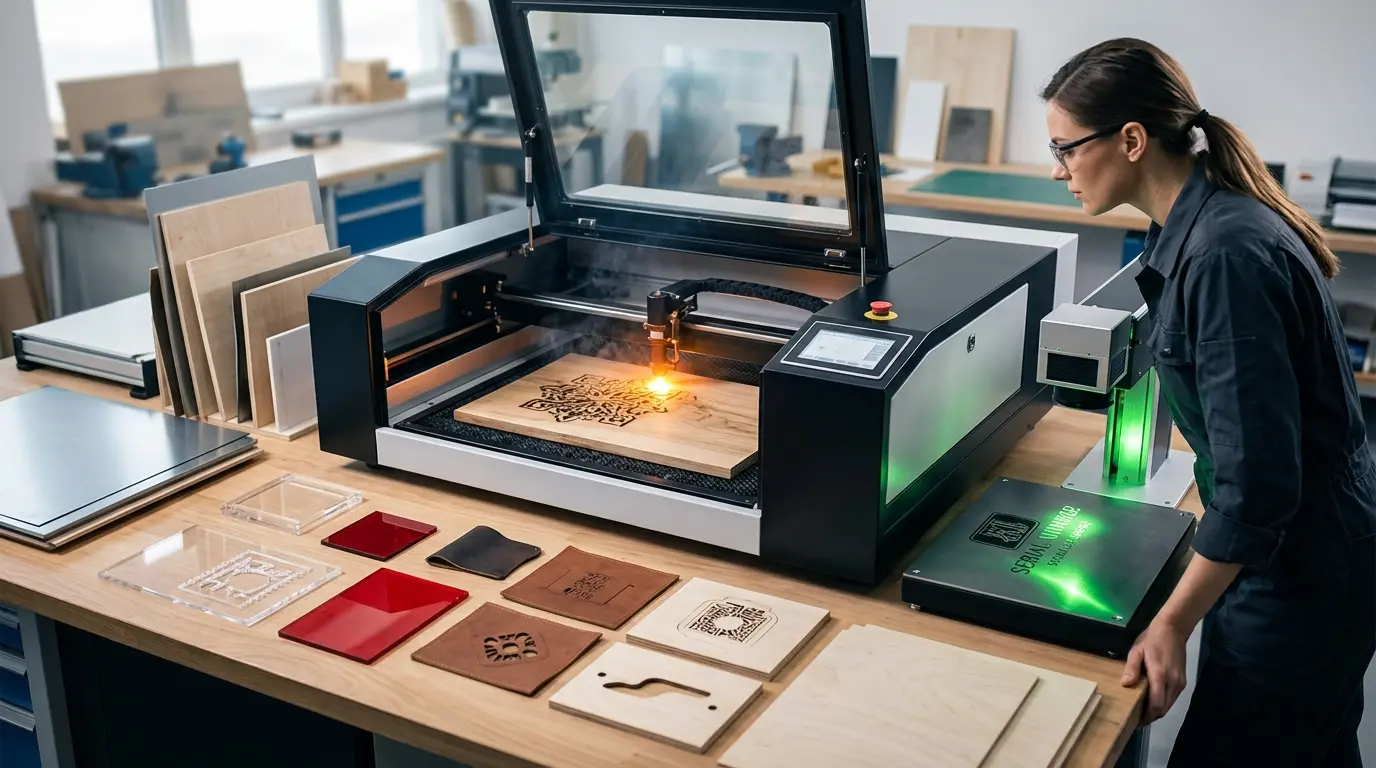
For buyers focused on wood, acrylic, and similar non-metal processing, Pandaxis laser cutters and engravers align most naturally with that workflow. But if your material mix extends beyond that range, the selection process should stay grounded in application fit rather than in generic machine labels.
Start With Material Behavior, Not Machine Names
Many buying mistakes happen because teams start with machine categories before they define what the material actually demands. In practice, the same shop may need one of three very different outcomes:
- Clean contour cutting
- Fine surface marking
- Deeper engraving or visible material removal
Those goals do not place the same demands on the machine, even when the part size looks similar. A buyer processing stainless steel tags, acrylic sign panels, plywood decorative inserts, and coated plastic housings is not choosing one universal “laser machine.” They are choosing among different laser behaviors.
The first filter should therefore be the material family, followed immediately by the production objective:
- Is the job mainly cutting or mainly marking?
- Is edge finish customer-facing or function-only?
- Does the material react badly to heat buildup?
- Will the machine run one material all day or change frequently?
- Is throughput more important than fine visual detail?
If those questions are still unclear, any quote comparison will be less useful than it looks.
Match the Material and Process Goal First
The table below is a practical starting point for narrowing the machine type.
| Material and Goal | Common Laser Fit | Why It Often Fits | What Buyers Should Watch |
|---|---|---|---|
| Acrylic, wood, plywood, MDF, and similar non-metal sheets for cutting or engraving | CO2 laser systems are commonly used | They are well suited to non-metal processing that values shape flexibility and detail | Edge appearance, smoke control, residue, and repeatability across material batches |
| Carbon steel, stainless steel, aluminum, and other production metals for cutting | Fiber laser systems are commonly used | They are typically chosen where metal cutting speed, precision, and workflow efficiency matter | Material thickness range, cut quality targets, assist-gas strategy, and part mix |
| Metal parts that need permanent identification, branding, or traceability marks | Fiber laser marking systems are commonly used | They help produce durable marks without turning the workflow into a cutting application | Mark contrast, cycle time, part handling, and whether depth is actually required |
| Heat-sensitive plastics, coated parts, electronics-related surfaces, or fine low-damage marking work | UV laser systems are often evaluated | They are commonly selected when lower thermal impact matters more than raw cutting power | Material response, mark clarity, and whether the job is marking-only rather than cutting |
| Mixed decorative non-metal work that combines contour cutting and engraving | CO2 laser systems are commonly used | One workflow can handle both shape creation and surface detail | Changeover time, fixture discipline, and how often settings shift between materials |
This table does not replace testing, but it does help eliminate the biggest early error: comparing machines designed for different process outcomes as though they compete on the same job.
The Same Material Can Still Need Different Machines
Material alone does not fully decide the purchase. The same substrate can require different machine logic depending on what the finished part must do.
For example:
- Metal cutting and metal marking are not the same investment decision.
- Acrylic contour cutting and acrylic surface engraving may prioritize different levels of speed and cosmetic finish.
- Wood signage, wood inlays, and wood production components can all run on laser equipment, but they do not place the same pressure on throughput, edge quality, or extraction stability.
That is why a useful buying review should separate the material question into three layers:
- What is the material?
- What exactly needs to happen to it?
- How often does that operation define the weekly workload?
If a metal buyer mainly needs serial numbers and QR codes, a cutting-focused machine may be unnecessary. If a non-metal buyer mainly needs visual contour work with occasional engraving, a flexible CO2 workflow may be more practical than a specialized marking-only setup. The machine should match the recurring job, not the rare exception.
Compare Laser Sources by Workflow Fit, Not by Hype
Industrial buyers usually get better results when they compare source types by process fit rather than by abstract performance claims.
| Laser Type | Best Fit in Real Production | Less Suitable When | Main Selection Priority |
|---|---|---|---|
| CO2 | Non-metal cutting and engraving on wood, acrylic, and similar materials | The plant’s main need is metal cutting or metal part marking | Material compatibility, visual finish, extraction, and mixed-job flexibility |
| Fiber | Metal cutting or permanent metal marking workflows | The work is mainly acrylic, wood, or other non-metal sheet processing | Throughput, precision, metal mix, and how the machine fits upstream and downstream handling |
| UV | Fine, lower-heat marking on more sensitive surfaces | The main job is high-throughput sheet cutting | Mark quality, substrate sensitivity, and consistency on delicate or coated materials |
This kind of comparison keeps the decision honest. No laser source is universally better. Each is stronger when the material response and process goal align with the beam characteristics and the rest of the production line.
Material Mix Usually Decides Whether One Machine Is Enough
A buyer with one stable material family can optimize more aggressively. A buyer running multiple materials has a different problem: keeping setup time, process drift, and operator confusion under control.
In a mixed-material environment, the machine choice should account for:
- How Often Jobs Change
- Whether Operators Need Saved Recipes for Repeated Materials
- How Sensitive the Materials Are to Heat or Smoke
- Whether Quality Failure Shows Up at the Edge, the surface mark, or both
- How Much Time Is Lost Between Jobs Rather Than During the laser cycle itself
This is where some purchases go wrong. A machine may look productive on a single-material demonstration but become inefficient when real production includes acrylic one shift, plywood the next, and marking work on a different substrate after that. In those environments, stability and repeatability matter as much as headline speed.
Do Not Ignore Handling, Extraction, and Post-Process Requirements
Buyers often focus on the beam and underweight the surrounding workflow. But material fit is not only about whether the laser can interact with the surface. It is also about what happens before, during, and after the cut or mark.
For material-driven evaluation, buyers should check:
- How the material is loaded and positioned
- Whether smoke or dust control will affect visual quality
- How parts are removed without damage or contamination
- Whether the process needs secondary cleaning or deburring
- How repeatable the setup remains across operators and batches
These factors matter because some materials are far more forgiving than others. Acrylic buyers may care immediately about edge appearance. Wood buyers may care about smoke effects and residue. Metal buyers may care about cut readiness for downstream assembly. Sensitive marking applications may care more about thermal control than raw power.
In other words, the “right machine for the material” is never only about the source. It is also about how the full workflow protects the result that customers actually see.
When the Material Suggests Laser May Not Be the Best Process
A disciplined buying decision should also allow for the possibility that laser is not the best answer for the job in question.
If the production need is dominated by panel breakdown, routing, drilling, edge processing, or heavy mechanical shaping, laser may only solve part of the problem. Likewise, if the job requires a surface condition or downstream machining result that depends more on mechanical processing than on non-contact beam work, a different machine category may fit better.
That does not weaken the case for laser. It improves the quality of the selection process. The best capital purchase is not the one that seems most versatile in theory. It is the one that fits the recurring workflow with the least friction, rework, and process mismatch.
Questions To Resolve Before You Compare Quotes
Before asking suppliers for final configurations, buyers should answer a few practical questions clearly:
- Which Material Family Will Consume the Most Machine Hours?
- Is the Main Goal Cutting, Marking, Engraving, Or a Combination?
- Does the Workflow Prioritize Visual Finish, Throughput, Or Traceability?
- How Often Will the Machine Switch Between Materials?
- Which Jobs Create the Highest Scrap Risk Today?
- Does the Plant Need One Flexible System Or a More Dedicated Setup?
- What Downstream Process Has To Happen After the laser step?
These questions usually reveal more than a generic specification comparison ever will. They expose whether the buyer needs broad flexibility, material-specific optimization, or a more specialized machine matched to a narrow but critical process.
Practical Summary
Choosing the right laser machine starts with material, but it should not end there. The best decision comes from matching material behavior, process goal, finish expectations, and workload pattern to the laser source that fits them most naturally.
CO2 systems are commonly well suited to wood, acrylic, and similar non-metal applications. Fiber systems are commonly chosen for metal cutting and durable metal marking. UV systems are often evaluated when low-heat fine marking matters more than raw cutting output. None of those options is automatically better outside its use case.
The practical way forward is to identify which materials and operations consume the most machine hours, which quality risk matters most, and how much process variation the shop has to manage every week. Once those answers are clear, the machine choice becomes far more defensible and far less dependent on marketing language or one-off demo results.