Melamine-faced panels make surface finishing look straightforward, but they are unforgiving at the edge. A cabinet side can be cut accurately, drilled correctly, and still look low-grade if the tape sits proud, the glue line shows, or the corners start lifting after routine handling.
That is why cleaner, longer-lasting melamine edge banding usually comes down to process discipline rather than edge tape alone. In most furniture and cabinet workflows, the result is decided by edge preparation, adhesive stability, pressure control, finishing quality, and what happens to the panel after it leaves the bander.
Why Melamine Exposes Edge Banding Problems So Quickly
Melamine surfaces tend to reveal edge defects faster than many buyers expect because the decorative face is visually clean and dimensionally consistent. Any weakness at the perimeter stands out against that uniform surface.
In practical production terms, melamine edge banding problems are usually more visible because:
- The Surface Finish Creates Strong Contrast At The Seam
- Chip-Out Or Core Damage At The Cut Edge Is Hard To Hide
- Thin Or Inconsistent Glue Lines Become Easy To Notice
- Exposed Cabinet And Wardrobe Panels Are Touched Frequently In Use
- Small Corner Defects Can Make The Whole Part Look Poorly Finished
This matters most on wardrobes, office furniture, kitchen cabinetry, and retail fixtures where exposed edges affect both first impression and long-term durability. A panel can be structurally usable and still become a cosmetic reject if the edge looks unstable.
Start With A Better Edge Before Banding Begins
Many edge banding issues are created before the panel reaches the edge bander. If the substrate edge already has tear-out, waviness, contamination, or slight dimensional inconsistency, the banding process is being asked to hide a cutting problem rather than complete a controlled finishing step.
For melamine-faced particleboard or MDF, cleaner edge banding usually starts with:
- Sharp, Well-Matched Cutting Tools For Laminated Panels
- Stable Panel Sizing With Square, Consistent Cuts
- Clean Edges Free Of Dust, Loose Particles, And Surface Smear
- Good Panel Handling So The Decorative Face And Corners Are Not Damaged Before Banding
- Consistent Incoming Part Quality From One Batch To The Next
If the cut edge varies visibly across the batch, the banding result usually varies with it. That is one reason higher-finish workflows often look closely at edge preparation rather than treating banding as a purely downstream fix.
Where incoming panel edges are inconsistent enough to affect finish quality, pre-milling can help create a more uniform bonding surface. But it is not automatically necessary in every shop. If upstream cutting quality is already stable, adding more process stages may increase complexity without solving a real problem.
Match Melamine Edge Banding To The Real Use Case
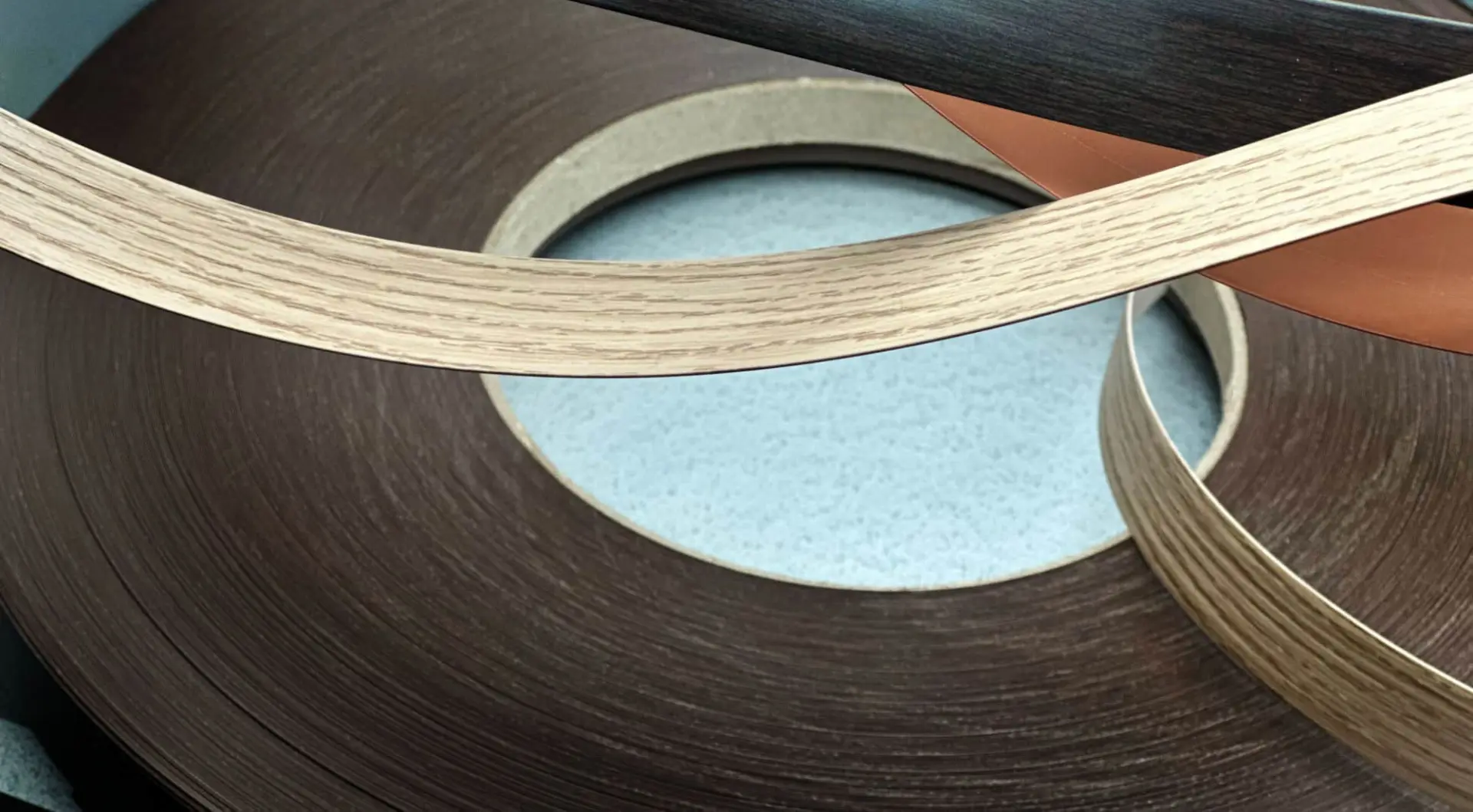
Melamine edge banding is often chosen because it supports good color matching and economical panel finishing. That makes sense in many panel furniture workflows. But it is not the right answer for every product or durability target.
The better question is not whether melamine edge banding is good in general. It is whether it fits the product’s expected wear, finish standard, and price position.
| Situation | Melamine Edge Banding Is Often A Strong Fit | A Thicker PVC Or ABS Edge May Be Worth Considering |
|---|---|---|
| Cost-Sensitive Cabinet Interiors And Standard Panel Furniture | Yes, especially when color match and visual consistency matter more than heavy impact resistance | Less urgent unless handling conditions are rough |
| Exposed Consumer-Facing Panels With Moderate Daily Use | Often suitable if process control is stable and edge quality is visually clean | Worth considering when corners and impact zones see more wear |
| High-Traffic Commercial Or Rough-Handling Environments | Possible, but durability expectations need to be realistic | Often the safer choice when edge abuse is likely |
| Projects Focused On A Thin, Clean Decorative Finish | Commonly well suited | May add cost or visual bulk without proportional benefit |
This tradeoff matters because cleaner results and more durable results are related, but they are not identical. Melamine edge banding can look very clean when the process is controlled well. But if the application involves frequent edge impacts, transport abuse, or hard commercial use, the edge material choice itself may need to change.
Control The Variables That Actually Decide Finish Quality
Factories sometimes blame the tape when the larger issue is process instability. In melamine edge banding, visual cleanliness and bonding durability usually depend on a small group of variables staying within a repeatable working range.
The most important ones are:
- Edge Preparation: The substrate edge needs to be straight, clean, and consistent enough to support full bonding.
- Adhesive Stability: If the adhesive application drifts, glue-line appearance and bond quality usually drift with it.
- Pressure And Contact: Incomplete or uneven pressure can leave weak sections even when the edge looks acceptable at first glance.
- Feed Consistency: Sudden changes in flow, panel control, or handling can show up at corners and end cuts.
- Trimming And Finishing: A strong bond can still look poor if trimming, scraping, or buffing leave lips, undercut, or surface damage.
In other words, the best melamine edge banding results come from a balanced process. A cleaner glue line without stable edge prep is not enough. Better pressure without good finishing is not enough. The workflow only becomes reliable when each stage supports the next one.
Common Melamine Edge Banding Defects And What Usually Causes Them
When defects keep repeating, the fastest way forward is to identify whether the problem starts with panel quality, process settings, or downstream handling.
| Defect | What It Usually Indicates | Practical Direction To Check First |
|---|---|---|
| Visible Or Uneven Glue Line | Adhesive instability, inconsistent substrate edge, or finish variation at trimming | Check edge preparation, adhesive behavior, and finishing consistency |
| Edge Lift After Handling | Incomplete bonding, unstable process conditions, or panels being stressed too early | Check bond consistency, pressure stability, and post-banding handling |
| Chipped Front Or Back Corners | Weak corner support, rough handling, or unstable end trimming | Check corner quality, panel control, and how parts are moved after banding |
| Uneven Flushness Between Face And Edge | Variation in trimming or inconsistent panel presentation through the process | Check trimming accuracy and repeatability across the batch |
| Panels That Need Frequent Touch-Up | The line is producing acceptable parts only with manual correction | Check whether the bottleneck is edge prep, process stability, or machine capability |
The main mistake is treating each defect as an isolated event. In production, recurring edge problems usually point to one unstable part of the system, not five unrelated problems.
When Equipment Capability Becomes The Real Constraint
At low volumes, some factories can still get acceptable results through close operator control and selective touch-up. But once output rises or finish expectations become stricter, that approach often stops scaling. The hidden cost shows up as sorting, correction work, slowed throughput, and inconsistent quality between shifts.
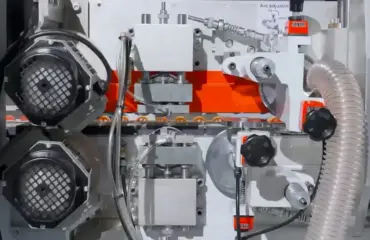
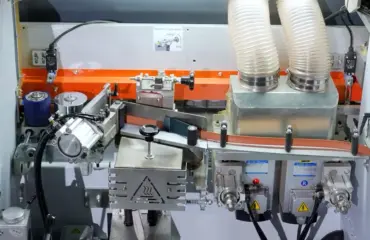
That is where dedicated edgebanders start to matter more as process-control equipment than as simple speed equipment. The real value is not just moving panels faster. It is helping the line produce cleaner parts with less variation and less rework.
In melamine workflows, equipment capability becomes more important when the factory needs:
- More Stable Glue-Line Appearance Across Long Runs
- Better Repeatability From One Operator Or Shift To The Next
- Less Manual Edge Cleanup Before Packing Or Assembly
- Cleaner Corner And End Finishing On Exposed Parts
- More Reliable Results On Batches With Tight Visual Standards
This does not mean every shop needs the most advanced configuration available. If the workload is straightforward and finish expectations are moderate, a simpler automatic setup may be the better investment. If incoming edge quality varies, visible finish defects are costly, or manual correction keeps slowing the line, additional process capability becomes easier to justify.
Build Durability Into The Whole Workflow, Not Just The Bond
Even a well-bonded edge can fail early if the rest of the production flow works against it. In many factories, melamine edge durability is weakened after banding rather than during it.
That usually happens when:
- Panels Are Stacked Or Moved Roughly Before The Edge Has Settled Properly
- Corners Are Left Unprotected During Internal Transport
- Downstream Operations Create Avoidable Edge Impact
- Packing Methods Let Finished Panels Rub Or Knock Against Each Other
- Inspection Happens Too Late To Catch Drift Early In The Shift
More durable results usually come from treating edge banding as part of a larger panel-processing system. The handoff into drilling, assembly, inspection, and packing should protect the work that was just finished, not test it unnecessarily.
For many manufacturers, the practical gains show up as fewer cosmetic rejects, less corner damage before shipment, and more consistent appearance when parts reach final assembly.
Practical Summary
Melamine edge banding produces cleaner, more durable results when the process is controlled from cutting through final handling. A clean-looking edge starts with a clean substrate. A durable edge depends on stable bonding, controlled finishing, and a production flow that does not damage the part after banding.
For many cabinet and furniture applications, melamine edge banding remains a practical choice because it supports neat visual matching and cost-effective finishing. But it performs best when the use case is realistic and the process is repeatable. Factories that reduce chip-out at cutting, stabilize the banding step, and choose equipment based on finish consistency rather than headline speed usually see the biggest improvement in both appearance and rework reduction.