A vertical panel saw can stay accurate for years, but only if the machine remains clean, square, and mechanically stable. In most workshops, accuracy loss does not begin with a complete breakdown. It starts with smaller signals: a sheet that no longer sits consistently on the support frame, a carriage that feels less smooth than before, or repeated cut checks on jobs that used to run routinely.
That is why vertical panel saw maintenance should be treated as an accuracy-control routine, not only a repair routine. For shops that depend on compact full-sheet processing, regular maintenance helps protect straight cuts, cleaner edges, and better part fit long before visible drift turns into daily rework.
Why Vertical Panel Saw Accuracy Drifts Over Time
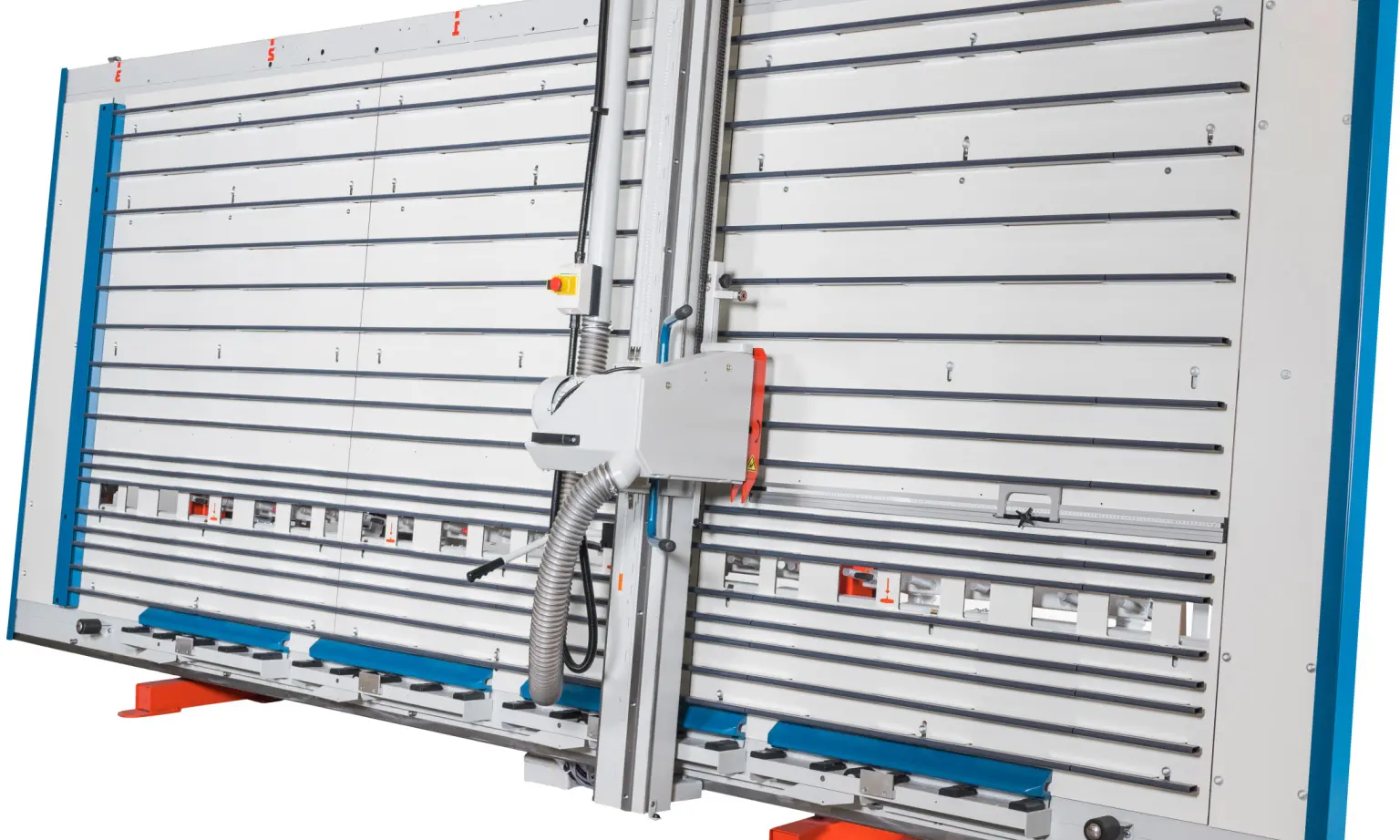
Vertical panel saws solve a specific production problem: they make full-sheet cutting practical in shops where floor space matters. But that upright layout also means accuracy depends heavily on stable support, clean contact points, and smooth carriage movement.
Over time, cut quality and repeatability usually decline for a few practical reasons:
- Dust And Chips Build Up On Support Surfaces, Rollers, Or Frame Contact Points.
- Blade Wear Increases Tear-out, Heat, And Cut Instability.
- Carriage Guides, Rollers, Or Bearings Develop Play Or Roughness.
- The Machine Frame Or Reference System Loses Squareness Gradually.
- Measuring Stops, Scales, Or Position References Drift Out Of Reliable Alignment.
- Operator Technique Starts Compensating For Machine Changes Instead Of Revealing Them.
Because a vertical panel saw often handles large sheets directly against the machine frame, even minor contamination or looseness can affect how the panel sits before the cut starts. That is one reason maintenance discipline matters so much on this type of machine.
A Practical Maintenance Schedule by Frequency
| Frequency | Main Focus | Why It Matters for Accuracy |
|---|---|---|
| Daily | Cleaning, blade condition, carriage feel, visible support problems | Prevents obvious contamination and cut-quality drift from entering production |
| Weekly | Guide movement, looseness, support condition, extraction performance | Helps catch wear before repeatability starts falling off |
| Monthly | Squareness checks, reference verification, wear-point inspection | Protects long-term straightness and dimensional consistency |
| Scheduled Service | Calibration, deeper inspection, planned consumable replacement | Reduces accumulated drift and avoids quality loss becoming routine |
The exact interval depends on workload, material mix, and machine design, but the principle stays the same: accuracy should be checked on a schedule, not only after defects appear.
Daily Tasks That Prevent Small Errors From Entering Production
Daily maintenance should focus on the areas most likely to affect the next batch of parts.
- Clean Dust, Chips, And Fine Debris From The Lower Supports, Frame Contact Areas, Rollers, And Any Surface That Locates The Sheet.
- Remove Buildup Around The Saw Path, Blade Area, And Operator-Accessible Moving Parts.
- Check That The Blade Is Clean, Properly Mounted, And Not Showing Obvious Wear Or Damage.
- Move The Saw Carriage Through Its Normal Travel And Confirm That Motion Feels Smooth And Consistent.
- Look For Any Support Strip, Roller, Or Backing Surface That Is Worn, Loose, Or Uneven.
- Verify That Measuring References, Stops, Or Scale Indicators Are Clean And Easy To Read.
- Run A Simple Control Cut On A Known Reference Sheet Or Offcut To Confirm Straightness And Size Consistency.
Daily cleaning is especially important on vertical machines because debris does not only affect the blade area. It can also change how the sheet rests against the frame, which directly affects cut accuracy.
Weekly Checks for Smooth Travel and Stable Support
Weekly inspection should go beyond surface cleaning and focus on the machine’s mechanical feel.
- Inspect Guide Rails, Carriage Rollers, Bearings, Or Other Travel Components That Are Intended For Routine Access.
- Check For Side Play, Rough Spots, Or Uneven Resistance In Carriage Movement.
- Inspect Handles, Locks, Stops, And Adjustment Points For Looseness Or Inconsistent Engagement.
- Check Panel Support Components For Wear That Could Let The Sheet Sit Slightly Out Of Position.
- Review Dust Extraction Performance If Fine Dust Is Collecting Faster Than Usual Around Support Or Cutting Areas.
- Inspect Exposed Cables, Hoses, Guards, And Covers To Make Sure They Are Not Interfering With Smooth Travel.
If the machine supports both vertical and horizontal cutting operations, both directions should be checked. A saw that feels acceptable in one motion path can still be unstable in the other.
Monthly Checks That Protect Long-Term Repeatability
Monthly maintenance is where the shop should confirm not just that the saw runs, but that it still cuts to the same standard.
- Verify Vertical And Horizontal Cut Squareness Using A Consistent Reference Method.
- Compare Measured Part Sizes Against A Known Standard Rather Than Relying Only On Operator Impression.
- Inspect The Frame, Mounting, And Structural Support Points For Any Sign Of Movement Or Instability.
- Check Support Slats, Rollers, Or Contact Points For Uneven Wear That Could Change Sheet Positioning.
- Review Lubrication Points According To The Machine Manufacturer’s Instructions.
- Confirm That Stops, Guides, Or Reference Systems Still Return To The Same Position Repeatedly.
- Inspect Blade Mounting Surfaces And Related Components For Residue, Wear, Or Installation Issues.
This is also the right time to compare maintenance findings with what downstream teams are seeing. If cabinet parts need more fitting, edge quality has become less reliable, or repeated measuring has increased at the saw, those are often maintenance clues, not isolated operator issues.
Warning Signs That Need Immediate Attention
Operators usually notice loss of accuracy before the maintenance record fully explains it. The key is to treat those symptoms as real warning signs.
| Symptom | Likely Area to Check First | Production Risk |
|---|---|---|
| The Panel No Longer Sits Consistently Against The Machine | Support Surfaces, Rollers, Lower Frame Contact Points | Dimensional Variation From The Same Sheet |
| The Carriage Feels Rough, Tight, Or Uneven In Travel | Guides, Rollers, Bearings, Contamination | Wandering Cuts And Harder Operator Control |
| Repeated Cuts Start Requiring More Measuring Or Correction | Stops, Reference Scales, Squareness, Support Stability | Slower Throughput And More Sorting Errors |
| Cut Edges Show More Tear-out Or Burning Than Usual | Blade Condition, Mounting, Material Support, Feed Consistency | Lower Finish Quality And More Rework |
| Parts Match Less Reliably In Assembly | Overall Alignment, Size Repeatability, Hidden Support Drift | Downstream Fitting Problems And Lost Time |
The worst response is to let operators compensate manually without documenting the change. That can keep production moving for a short time while hiding the real mechanical cause.
Operator Habits That Make Maintenance More Effective
A maintenance checklist works best when operators and maintenance staff are watching for the same indicators.
- Use The Same Reference Check Method Each Time So Results Are Comparable.
- Record Recurring Symptoms Such As Rough Travel, Size Drift, Or Edge Defects.
- Replace Or Clean A Problem Blade Before Increasing Pressure Or Recutting Parts Repeatedly.
- Keep The Area Around The Base Of The Machine Clear So Dust And Offcuts Do Not Affect Sheet Positioning.
- Train Operators To Report Changes In Machine Feel, Not Only Visible Defects In Finished Parts.
- Follow The Manufacturer’s Lockout, Cleaning, Lubrication, And Adjustment Procedures Before Any Service Beyond Routine Inspection.
The goal is not to create a complicated routine. It is to make sure the same small checks happen consistently enough to catch drift early.
When Maintenance Is No Longer the Main Issue
Good maintenance protects accuracy, but it does not change the basic role of the machine. If a shop has moved from flexible, space-saving sheet breakdown into repeated batch panel sizing, maintenance alone may not remove the real bottleneck.
In that situation, it can make sense to compare the existing setup with more production-oriented panel saws rather than expecting a compact vertical machine to behave like a dedicated high-throughput cutting cell.
That is not a criticism of the vertical panel saw. It is simply a reminder that maintenance preserves machine performance within its intended workflow. It does not replace a workflow decision.
Practical Summary
The most effective vertical panel saw maintenance routines focus on the conditions that matter most for long-term accuracy: clean support surfaces, smooth carriage travel, reliable frame squareness, clear reference systems, and timely blade care.
Shops usually lose accuracy gradually, not suddenly. That is why daily cleaning, weekly mechanical checks, and regular squareness verification matter more than waiting for a visible failure. When those habits are consistent, a vertical panel saw is more likely to keep delivering straight cuts, stable sizing, and cleaner downstream fit over the long run.