In furniture and cabinet production, edge banding problems are often blamed on glue, settings, or operator technique. Just as often, the real issue is a mismatch between the edge-banding machine and the panel material moving through it. A line that runs acceptably on uniform melamine-faced board may struggle on raw MDF, brittle particleboard, or plywood with less predictable edge behavior.
That is why buying edge banding equipment should not start with a generic question about speed or automation. It should start with a more practical one: which panel material creates the most pressure on edge quality, rework, and downstream assembly, and what machine configuration helps control that pressure?
Why Panel Material Changes The Edge Banding Decision
Not all panel edges behave the same way once they reach the machine.
- Raw MDF can leave a dusty, fiber-heavy edge that puts more pressure on edge preparation and glue-line consistency.
- Particleboard is often less forgiving at corners and weaker at the edge, which increases the risk of crumble, chipping, or rework.
- Plywood can bring veneer breakout and core variation that make edge preparation less predictable.
- Melamine-faced board raises the appearance standard because trimming defects, edge mismatch, or face damage become visible quickly.
- Veneered or other decorative panels make surface protection and finish quality more important than simple throughput alone.
In other words, the right machine is not simply the one that can apply edge material. It is the one that helps the factory control the specific edge condition, surface sensitivity, and finish standard created by the panels it runs every day.
What To Evaluate Before Comparing Machines
For factories comparing edgebanders, the most useful question is not whether a machine can band an edge in general. It is whether its configuration matches the materials that dominate daily production.
The buying decision usually becomes clearer when buyers focus on these points first:
- How clean the panel edge is before banding begins
- How much the panel core varies from one board type to another
- How visible the finished edge will be in the final product
- How much manual touch-up the line can tolerate
- How often the factory switches between raw and decorative panel materials
- How sensitive downstream drilling, fitting, and assembly are to edge-quality variation
Different materials expose different weaknesses. MDF highlights edge preparation. Particleboard exposes weak corners and unstable edges. Melamine highlights appearance defects. Decorative panels make finishing quality much more visible.
A Practical Material-Matching Table
| Panel Material | Typical Edge-Banding Risk | Equipment Priority | Workflow Benefit |
|---|---|---|---|
| Raw MDF | Fuzzy or porous edges and inconsistent glue-line appearance | Strong edge preparation, often with pre-milling when incoming edges vary | Cleaner starting edges, less touch-up, and more stable banding quality |
| Particleboard | Edge crumble, chipped corners, and weaker edge stability | Better edge preparation and controlled trimming quality | Fewer damaged corners and less rework before assembly |
| Plywood | Veneer breakout, uneven edge condition, and variable core behavior | Clean preparation and stable trimming on mixed board quality | More predictable finish quality on exposed and semi-exposed parts |
| Melamine-Faced Board | Visible face chipping, noticeable trimming defects, and higher reject sensitivity | Repeatable process control and cleaner finishing quality | Better appearance on cabinet parts and fewer visible defects |
| Veneered Or High-Gloss Panels | Surface sensitivity and stricter cosmetic expectations | Gentler handling, cleaner finishing, and corner-rounding capability when required | Less manual polishing and better presentation on premium visible parts |
This table matters because it shifts the conversation away from abstract machine comparisons. Instead of asking which machine is best overall, the factory can ask which configuration is better aligned with its real panel mix and finish standard.
When Pre-Milling Matters More Than Buyers Expect
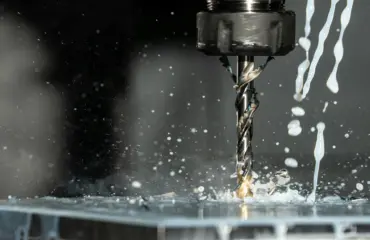
Pre-milling is often most valuable when the incoming panel edge is not consistently ready for banding. That usually becomes more important on raw MDF, particleboard, and some plywood workflows, where saw marks, fiber lift, or minor chip-out can make glue-line quality harder to stabilize.
In those cases, pre-milling helps create a cleaner and more uniform edge before the panel moves into glue application, pressing, and finishing. The practical result is usually not just a nicer-looking edge. It is less variation from panel to panel and less manual correction later.
That does not mean every factory needs it to the same degree. If the line already receives clean, consistent panel edges and the finish standard is moderate, pre-milling may be less decisive. But when rework is being driven by incoming edge inconsistency, better preparation often matters more than headline speed.
When Corner Rounding And Finish Stations Matter
Not every product needs the same edge finish standard. Hidden cabinet carcass parts and internal shelves are judged differently from doors, visible end panels, retail fixtures, or decorative furniture parts.
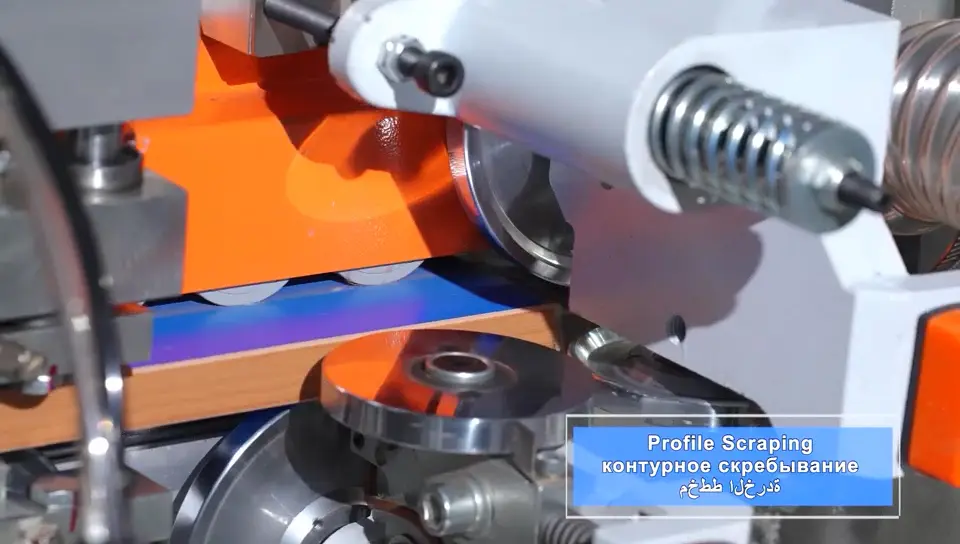
That is where corner-rounding and richer finishing capability become more relevant. A corner-rounding edgebander or a finish-focused configuration is commonly a stronger fit when:
- The product includes visible external panels
- The factory is selling a more premium finish standard
- Manual polishing or edge touch-up is consuming too much labor
- The material surface makes cosmetic defects easy to see
If most output is functional interior cabinet work, that level of finishing may be less critical. But if appearance quality is part of the value proposition, finish stations and corner rounding can translate into cleaner delivery quality and less labor after the machine.
Do Not Ask The Edgebander To Fix Upstream Problems
In many factories, the wrong edge banding decision is really an upstream cutting decision in disguise. If panel saws release parts with chipped decorative faces, unstable squareness, or inconsistent edge condition, the edge bander has to compensate for problems created earlier.
That usually leads to:
- More manual checking before banding
- Less predictable trimming results
- More visible variation in finished edges
- More reject risk before drilling, fitting, and assembly
Matching edge banding equipment to panel material works best when the cut edge arriving at the machine is already reasonably controlled. A well-chosen edgebander improves finish quality and repeatability, but it should not be expected to solve every defect generated upstream.
Questions That Clarify The Right Match
Before comparing machine lists, buyers usually get to a better decision by asking these workflow questions first.
- Which panel material represents the largest share of daily output?
- Which material creates the most edge-related rework today?
- Are most parts hidden structural parts or visible finished components?
- How consistent are incoming cut edges before they reach the banding station?
- How often does the line switch between raw board and decorative-faced panels?
- Is the main problem edge appearance, manual touch-up, or overall flow through the line?
- Would better edge preparation create more value than simply increasing banding speed?
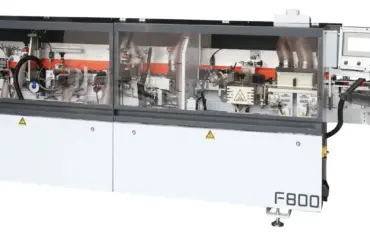
These questions keep the decision grounded in production reality. They also make it easier to judge whether the factory needs a more basic automatic edgebander, a stronger pre-milling configuration, or a finish-oriented setup with corner rounding.
Practical Summary
Matching edge banding equipment to panel material is really about matching the machine to the kind of edge the factory has to control every day. Raw MDF and particleboard usually place more weight on edge preparation and stable trimming. Plywood adds variability that can make consistency harder to protect. Melamine and other decorative-faced panels place more weight on appearance quality and repeatable finishing. Premium visible parts often justify stronger finishing capability, including corner rounding where the product standard requires it.
No edgebander is automatically the best fit for every panel mix. The right choice depends on whether the production line needs cleaner edge preparation, more reliable cosmetic quality, less manual rework, or a higher finish standard on visible parts. When buyers frame the decision around those workflow outcomes rather than generic machine claims, the equipment match usually becomes much clearer.