When an industrial laser cutter proposal reaches a buyer’s desk, the first number usually gets too much attention. A bare machine quote can look competitive until extraction, cooling, electrical work, commissioning, operator training, spare parts, and preventive maintenance are added back into the picture.
For buyers comparing laser cutters and engravers for wood, acrylic, and similar non-metal materials, the real cost decision is not just what the machine costs to buy. It is what the full system costs to install, stabilize, and keep productive over time.
Why Sticker Price Rarely Matches Real Project Cost
Two laser cutters can appear similar on paper and still represent very different investments. One quote may cover only the machine frame and controller. Another may bundle extraction, cooling, software, commissioning, and startup support. A third may include enough process support to reach production quickly, while a cheaper option leaves the buyer coordinating several outside purchases after the order is placed.
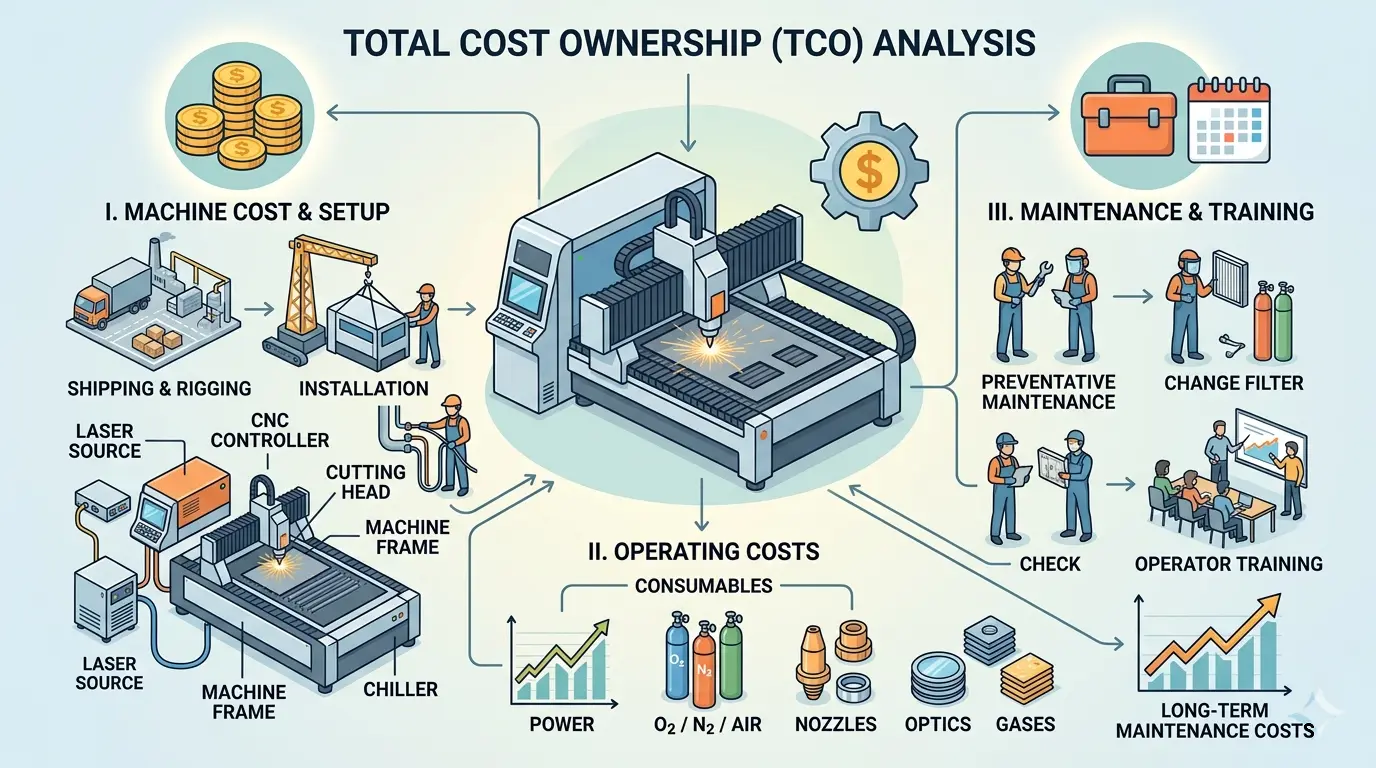
That is why cost breakdown matters. In practice, buyers should separate the budget into three buckets before comparing suppliers:
| Cost Bucket | What It Usually Includes | Why It Gets Missed |
|---|---|---|
| Machine Package | Laser source, motion system, worktable, controller, basic software, and standard machine hardware | Quotes are often compared before buyers confirm what is actually included |
| Installation and Startup | Freight, unloading, positioning, power setup, extraction, cooling, commissioning, testing, and training | These costs are frequently split between equipment, facilities, and operations teams |
| Maintenance and Uptime | Wear parts, optics care, filters, cooling-system service, spare parts, preventive checks, and downtime response | Buyers often think about this only after the machine is already running |
A disciplined comparison starts when these three buckets are broken out clearly. Until then, buyers are usually comparing quote structure rather than real total cost.
What Usually Drives Machine Cost
The machine price itself moves according to how much production responsibility the system is expected to carry.
The biggest cost drivers usually include:
- Work Area And Machine Footprint
Larger working areas often increase frame size, handling expectations, and the overall scope of the system. That matters for plants cutting larger sheets, batching multiple smaller parts in one job, or trying to reduce frequent repositioning. - Laser Source Type And Power Class
Different laser configurations change the system design, material fit, cutting behavior, and supporting hardware around the process. Buyers should evaluate source type and power as workflow decisions, not just specification lines. - Motion Stability And Positioning Control
Better control over acceleration, alignment, and repeat positioning usually improves consistency, especially when part appearance matters or repeated jobs must hold the same standard shift after shift. - Combined Cutting And Engraving Capability
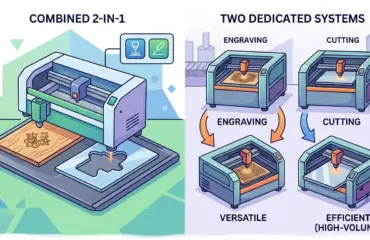
A system expected to handle both detailed engraving and production cutting usually carries a different cost structure than a simpler setup intended for one narrower task. - Software, Job Recall, And Workflow Control
Better nesting, alignment, recipe recall, and repeat-job management reduce setup variation. That often matters more in production than a seemingly lower upfront quote. - Included Supporting Hardware
Extraction, cooling, cameras, fixtures, and material-support hardware can either be bundled into the machine package or pushed outside it. That one difference can distort price comparisons quickly.
In other words, machine cost rises when buyers ask the laser system to reduce handling, shorten setup time, hold cleaner tolerances, or run more consistently across a varied job mix. Those costs may be justified when the workflow would otherwise consume more labor, create more rework, or slow downstream assembly.
Installation Cost Is Usually a Site-Preparation Question
Many buyers underestimate installation because they think of it as delivery plus a short startup visit. In reality, installation cost often depends as much on the plant as on the machine.
Common installation budget items include:
- Freight, Unloading, And Placement
- Electrical Preparation
- Extraction And Ventilation
- Cooling And Environmental Support
- Compressed Air Or Process Gas Support Where Required
- Software Setup And Commissioning
- Operator And Maintenance Training
Each item affects how quickly the machine becomes productive. Moving an industrial laser cutter into place can involve rigging, forklift time, access planning, and floor-space preparation. Facilities teams may need to upgrade power connections or coordinate the machine around existing production cells. Extraction paths, cooling support, and utility planning also need to be ready before commissioning starts.
Startup is not just about powering the machine on. It includes process testing, calibration, early job verification, and making sure operators can run routine work without unnecessary trial and error. Plants that underbudget installation often do not save money. They simply shift cost into a slower ramp-up, more startup scrap, and more disruption during the first weeks of use.
Maintenance Cost Is Really About Keeping Output Stable
Maintenance is often misunderstood as a small parts budget. In industrial use, it is better viewed as the cost of protecting uptime, part quality, and process consistency.
| Maintenance Area | What Buyers Usually Pay For | What It Protects |
|---|---|---|
| Optics And Beam Path Care | Cleaning, inspection, and eventual replacement of wear-sensitive optical components | Cut quality, engraving consistency, and reduced thermal damage |
| Extraction And Filtration | Filter changes, duct inspection, and airflow consistency | Cleaner edges, lower residue, and a more stable process environment |
| Cooling-System Service | Chiller upkeep, fluid management, and temperature stability checks | Consistent output and reduced risk of heat-related process drift |
| Motion Components | Belts, rails, bearings, and alignment checks | Repeatability, positioning accuracy, and smoother daily operation |
| Preventive Service And Spares | Planned service visits, stocked wear parts, and replacement components | Shorter downtime and faster recovery when issues appear |
What drives maintenance cost upward is usually not the price of a single replacement part. It is the production effect of poor upkeep. When preventive maintenance slips, the first symptoms often show up as rougher edges, lower engraving consistency, more operator intervention, or repeated restarts during busy periods.
For production managers, that means maintenance budget should be tied to expected machine hours, material mix, and finish expectations. A laser cutter running lightly on occasional jobs will not consume maintenance resources the same way as a system handling daily production with frequent job changes.
The Lowest Quote Often Shifts Cost Somewhere Else
A cheaper machine quote does not always mean lower total cost. It can simply mean that the buyer is being asked to absorb more responsibility after purchase.
That cost shift usually shows up in four ways:
- Supporting Equipment Is Excluded
- Site Work Is Treated As Somebody Else’s Problem
- Training And Commissioning Are Minimal
- Maintenance Planning Starts Too Late
This is why buyers should normalize every quote before approval. A useful comparison asks not only what the machine price is, but also what is included in the delivered system, what facility work must be completed before startup, what wear items should be stocked from day one, and what support is available during early production.
Once those questions are answered, price comparison becomes much clearer. The decision stops being about the lowest headline number and starts becoming about the lowest practical cost of producing acceptable parts with manageable risk.
How Buyers Should Build a More Realistic Budget
A practical laser budget is usually built in phases rather than as one lump sum.
During purchase approval, buyers should budget for the machine package and any supporting hardware required to make the system operational. During the installation phase, buyers should add freight, facility preparation, commissioning, testing, and training. During the first year of operation, buyers should separately budget for wear parts, filter changes, cooling-system upkeep, preventive service, and a reasonable spare-parts buffer.
This phased approach matters because it helps purchasing teams, facilities teams, and production teams see their part of the cost clearly. It also reduces the risk of approving the machine while underfunding the conditions required to run it well.
Practical Summary
Industrial laser cutter cost is not one number. It is a stack of decisions around machine scope, site readiness, and how much stability the buyer expects once production starts.
The strongest buying approach is to separate machine cost from installation cost, separate installation cost from maintenance cost, and then judge all three against the real workflow: material type, job size, finish standard, operator skill, and expected machine hours. That gives buyers a more accurate picture of total ownership cost and makes it much easier to choose a laser system that stays productive after the quote is signed.