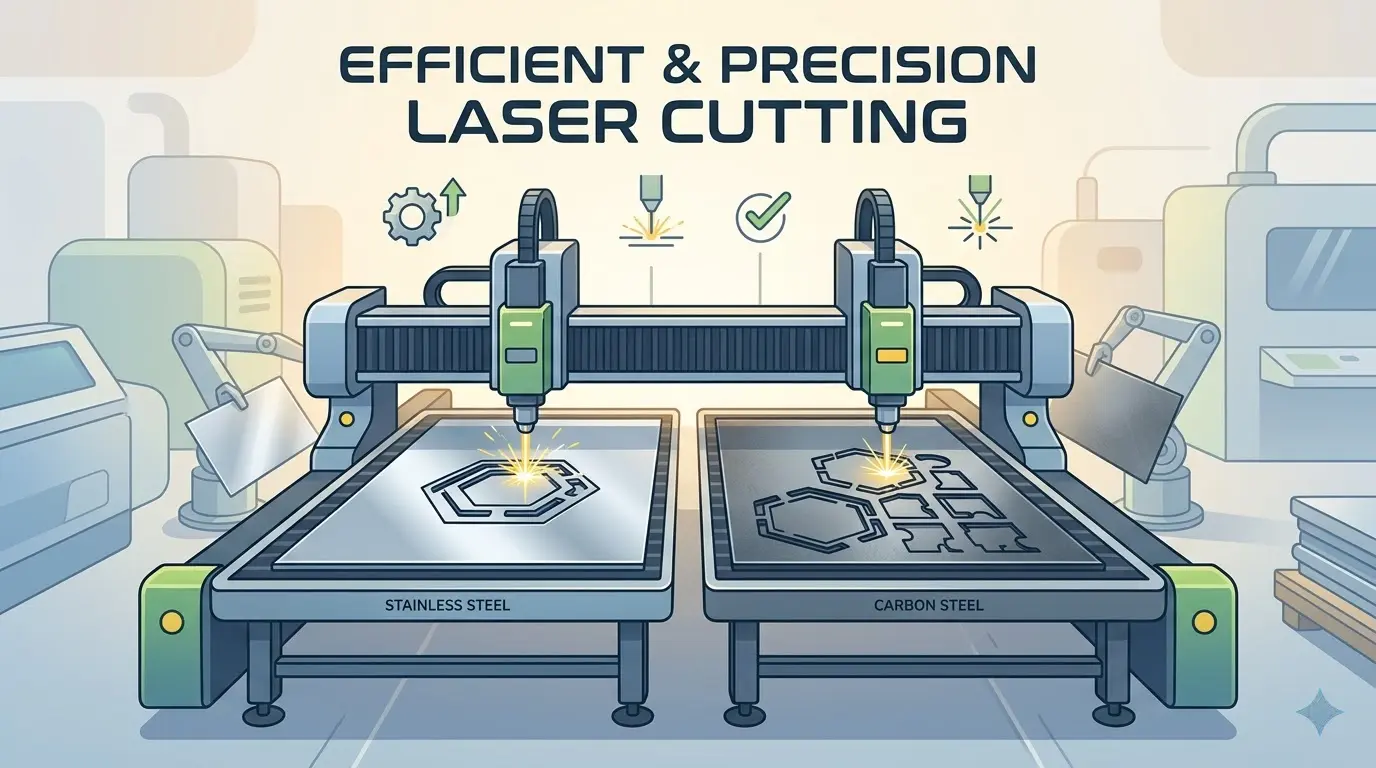
Choosing one laser cutting setup for both stainless steel and carbon steel sounds efficient on paper, but the real decision is not simply whether one machine can cut both materials. The real question is whether the machine, gas strategy, automation level, and process control can deliver the edge quality, throughput, and downstream consistency your production line actually needs.
For many fabrication shops, the challenge is not cutting either material in isolation. It is balancing cosmetic stainless work, structural carbon steel parts, changing part geometry, and daily production pressure without creating excessive rework, gas cost, or scheduling bottlenecks. That is where machine selection becomes a workflow decision, not just an equipment purchase.
Why Stainless Steel and Carbon Steel Create Different Demands
Stainless steel and carbon steel may both sit under the broad label of metal sheet processing, but they usually push the cutting process in different directions.
Stainless steel jobs often place more emphasis on edge appearance, low oxidation, dimensional consistency, and clean downstream finishing. Buyers producing kitchen equipment, enclosures, decorative panels, or visible fabricated parts usually care about how the cut edge looks before bending, welding, brushing, or final assembly.
Carbon steel jobs more often shift the conversation toward throughput, thickness range, operating cost, and how well the cut edge fits the next production step. In many shops, carbon steel parts are destined for welding, painting, machining, or structural assembly, so the acceptable cut condition may differ from what stainless work requires.
That means a machine that performs well for stainless parts is not automatically the best fit for a carbon-steel-heavy workload, and the reverse is also true.
What Buyers Should Evaluate First
Before comparing brands, power ranges, or automation packages, buyers should define the production profile clearly.
Start with these questions:
- What percentage of your work is stainless steel versus carbon steel?
- What thickness range appears most often in real orders?
- Are parts cosmetic, structural, or mixed-use?
- How important are bright edges, low burr, and minimal post-processing?
- Is the main constraint cutting speed, labor efficiency, or part quality?
- Will the machine run as a standalone cell or as part of a larger material-handling workflow?
Without those answers, it is easy to buy a machine optimized for a sales demonstration rather than for daily production.
The Key Process Differences That Affect Machine Choice
Several process variables have an outsized impact when one laser cutter is expected to handle both materials well.
| Decision Factor | Stainless Steel Priority | Carbon Steel Priority | Why It Matters |
|---|---|---|---|
| Edge Condition | Clean, low-oxidation edge | Stable cut with acceptable downstream finish | The cut edge affects welding, polishing, painting, and visible part quality |
| Assist Gas Strategy | Often evaluated around cleaner edge requirements | Often evaluated around cost and section performance | Gas choice changes operating cost and cut outcome |
| Heat Control | More sensitive on appearance-critical parts | More tolerant in some structural applications | Heat input influences discoloration, dross, and rework |
| Typical Part Mix | Precision sheet-metal components | Production parts, brackets, frames, and structural pieces | Part mix changes speed, nesting, and handling priorities |
| Thickness Distribution | Often thin to medium gauge, but not always | Can vary widely by application | The real thickness mix matters more than the maximum headline claim |
| Downstream Process | Bending, visible fabrication, surface finishing | Welding, coating, assembly, machining | The next process determines what cut quality is truly acceptable |
This is why experienced buyers do not evaluate an industrial laser cutter only on whether it can cut stainless steel and carbon steel. They evaluate how consistently it can cut both materials within the tolerance and finish requirements of the actual production workflow.
Why Fiber Laser Systems Usually Lead This Discussion
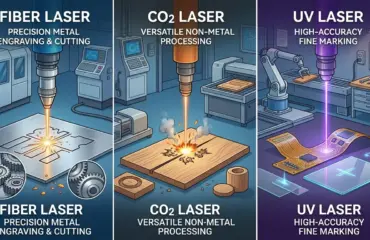
In modern metal fabrication, fiber-based laser systems are commonly the reference point when shops compare laser cutting options for stainless steel and carbon steel. That is because they are widely used for sheet-metal work where precision, speed, and repeatability matter.
But even within that category, the important differences are not just source type or headline power. Buyers should look closely at:
- Beam delivery stability across long production runs
- Cutting-head control and height consistency
- Gas delivery quality and nozzle condition management
- Nesting software and material utilization
- Table loading and unloading efficiency
- Service response, consumables support, and operator training
If those supporting systems are weak, a technically capable laser source still may not deliver reliable production output.
When One Machine Can Cover Both Materials Well
One industrial laser cutter can often cover both stainless steel and carbon steel effectively when the shop has a reasonably aligned workload.
That usually means:
- Stainless and carbon steel jobs fall within a similar operating range
- The majority of parts are sheet-based rather than heavy structural plate
- Quality expectations are well defined by part family
- The team can manage different gas strategies without creating daily instability
- Material handling, nesting, and job scheduling are already organized
In that situation, a single laser cell can simplify floor layout, training, maintenance planning, and part flow. It can also reduce the need to split work artificially between separate machines just because the material changes.
When Mixed Material Work Starts Creating Tradeoffs
The decision becomes harder when the shop is trying to serve very different production goals with one machine.
For example, cosmetic stainless work usually rewards a process tuned for edge appearance and minimal finishing. Heavy carbon steel work may push the buyer toward different priorities such as thicker material capability, operating cost balance, and rugged throughput. When both demands are extreme, the shop may end up compromising on one side of the workload.
This is where buyers need to think in terms of production tiers rather than simple machine ownership. A shop that runs high-mix stainless enclosures and occasional carbon steel brackets has a different requirement from a plant producing decorative stainless parts one day and heavier structural carbon steel parts the next.
The broader the workload spread, the more important it becomes to review real production samples, job history, changeover behavior, and gas consumption assumptions instead of relying on generic marketing comparisons.
What Actually Drives Long-Term ROI
Buyers often focus first on machine price, but long-term return is usually shaped more by production behavior than by initial quotation alone.
The most important ROI drivers are often:
- Reduction in manual grinding or edge cleanup
- Better nesting and lower scrap rates
- Less operator intervention during long runs
- More predictable part quality across both materials
- Faster changeovers between job types
- Fewer bottlenecks in loading, unloading, and sorting
- Lower disruption from unplanned downtime or weak service support
An industrial laser cutter that looks attractive on paper but struggles with stability, maintenance discipline, or daily material changeovers can become expensive very quickly.
Questions To Ask Before You Request a Quote
Before requesting final proposals, buyers should prepare a short evaluation brief. This usually leads to better vendor discussions and more realistic recommendations.
Use questions like these:
- What is our real material mix by order volume, not by assumption?
- Which parts require appearance-grade stainless edges?
- Which carbon steel jobs are most sensitive to throughput and operating cost?
- What thickness ranges dominate our weekly production?
- How much labor is currently spent on deburring, edge cleanup, and part handling?
- Do we need automation around loading and unloading, or only around cutting?
- How will this machine fit bending, welding, coating, and assembly downstream?
- What level of local service, training, and consumables support is acceptable for our risk tolerance?
These questions shift the buying conversation away from generic machine comparison and toward practical production fit.
Common Buying Mistakes
Several mistakes show up repeatedly when shops buy a laser cutter for both stainless steel and carbon steel.
The first is buying by maximum capability instead of typical workload. If most orders sit in a narrow and repeatable range, a machine should be judged on how well it handles that range every day.
The second is treating sample cuts as proof of production performance. A clean sample on a controlled test piece is useful, but it does not automatically reveal how the machine behaves over long shifts, nested part layouts, frequent changeovers, or mixed operator skill levels.
The third is ignoring process cost outside the machine itself. Gas use, nozzle wear, maintenance routines, unloading labor, scrap handling, and service delays all affect actual operating economics.
The fourth is separating the laser decision from the rest of the factory. The cutter may be the centerpiece, but total throughput still depends on handling, scheduling, downstream fabrication, and how consistently parts flow after cutting.
How To Make the Final Decision
The best industrial laser cutter for stainless steel and carbon steel is usually the one that matches the real production mix, not the one with the most aggressive headline specification.
If your shop mainly cuts thin-to-medium stainless and carbon steel parts with similar quality expectations, one well-selected laser platform can often cover both materials efficiently. If your production swings between appearance-critical stainless work and far more demanding carbon steel throughput or section requirements, the decision should be made around process tradeoffs, not convenience alone.
A strong buying process focuses on part quality, material mix, gas strategy, job flow, and service reliability together. That is what turns a laser cutter from an impressive machine into a stable production asset.
For teams comparing laser processing with other factory equipment categories as part of a broader capital-planning discussion, the Pandaxis product catalog provides a broader view of industrial machinery categories.