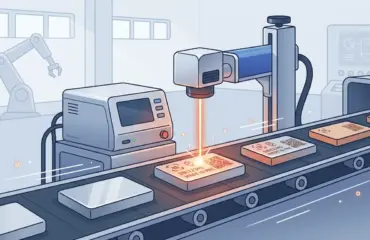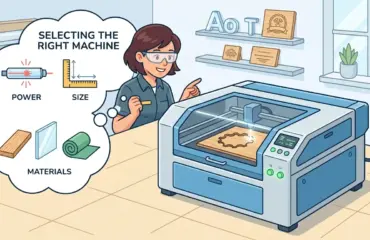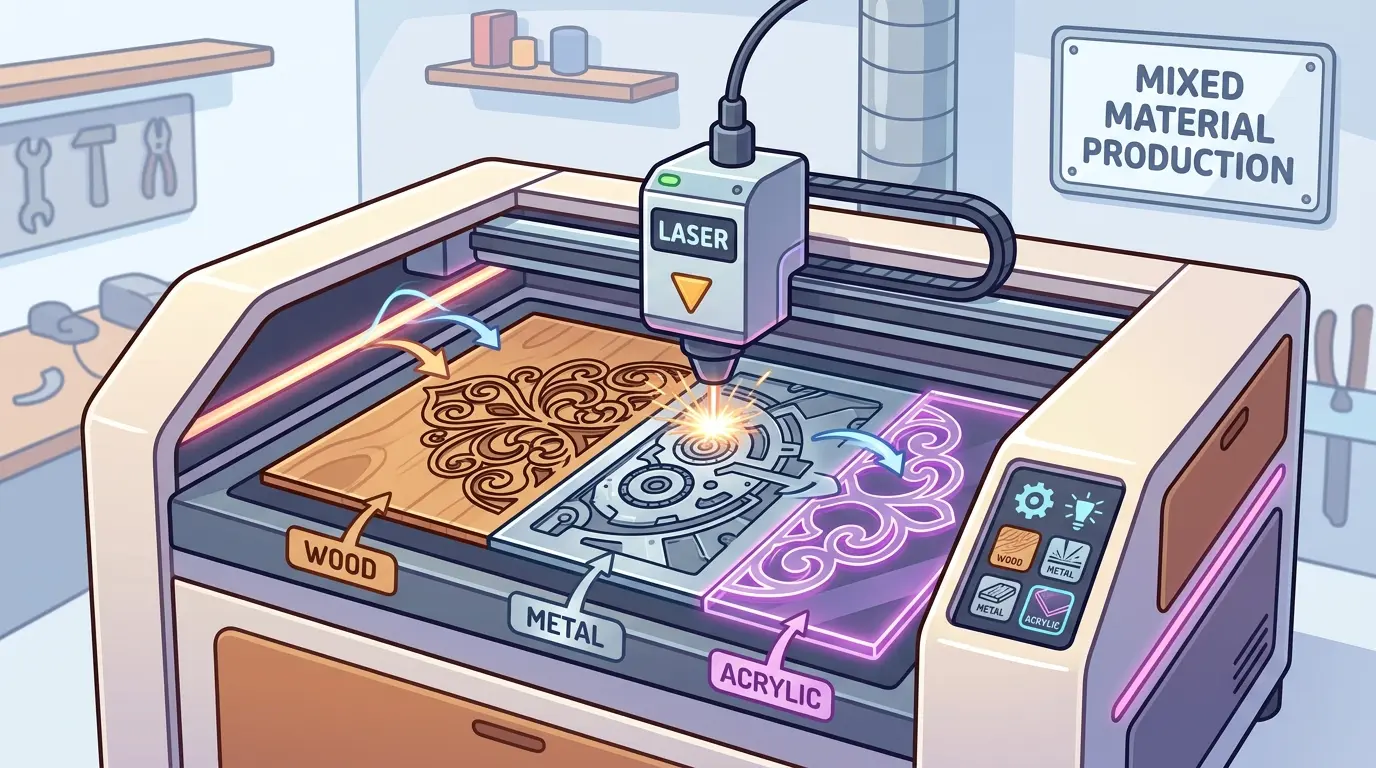
Mixed-material jobs often look efficient on paper because one machine appears to cover several product lines at once. The production reality is less forgiving. A shop may cut acrylic display parts in the morning, engrave plywood brand panels after lunch, and switch to laminated wood accessories or leather inserts before the shift ends. Once that happens, the real buying question is no longer whether a machine can process more than one substrate. The real question is which machine option keeps changeovers, edge quality, engraving clarity, and queue flow under control across the full job mix.
For factories evaluating laser cutters and engravers for acrylic, wood, MDF, leather, and similar non-metallic work, the best setup usually depends less on headline speed and more on how cutting and engraving are divided inside the workflow. Some shops need one flexible machine that can cut and engrave the same part in one cycle. Others lose too much time when every decorative job competes with contour cutting on the same queue.
Why Mixed-Material Work Changes the Buying Decision
Mixed-material production is harder to stabilize than single-material production because each substrate changes the process window in a different way.
Acrylic jobs usually push buyers to focus on edge appearance, visual cleanliness, and dimensional consistency. Plywood and similar wood-based sheets shift attention toward reliable cut-through, acceptable edge darkening, and stable extraction. MDF and other engineered boards often increase smoke, residue, and maintenance burden. Decorative surfaces introduce another variable because a part can be dimensionally correct and still be rejected if the face finish or engraving quality does not meet the customer standard.
That changes what matters during machine selection:
- Changeover Stability Matters More Than Peak Demonstration Speed
- Good Recipe Control Matters More Than Manual Trial-and-Error Adjustments
- Extraction and Air Management Matter More As Material Variety Increases
- Queue Balance Matters More When Cutting And Engraving Compete For The Same Machine Time
- Finished Good Output Matters More Than Travel Speed Alone
In other words, mixed-material work exposes weak workflow fit very quickly. A machine that looks productive on one sample sheet may become much less efficient when operators switch between clear acrylic parts, engraved wood panels, coated decorative pieces, and short-run custom jobs inside the same shift.
The Main Machine Options for Mixed-Material Production
The right choice depends on whether cutting and engraving are occasional add-ons to each other or whether both operations are core parts of the plant’s daily output.
| Machine Option | Best Fit | Main Strength | Main Tradeoff |
|---|---|---|---|
| Combination Laser Cutting And Engraving System | Shops that regularly cut and engrave the same acrylic, wood, or similar non-metallic parts | Keeps both operations in one workflow, reduces handling, supports flexible short runs | One queue must carry both cutting and engraving demand |
| Cutting-Focused Laser System With Light Engraving Capability | Factories where most machine hours go to contour cutting and engraving is secondary | Better suited to sheet flow, nested parts, and production cutting tasks | Decorative or engraving-heavy work can slow the line |
| Engraving-Focused Laser Setup | Shops centered on branding, decorative graphics, detailed surface work, or short-run customization | Better fit for detail-driven output and frequent artwork changes | Less attractive when thicker or larger-volume cutting dominates |
| Separate Cutting And Engraving Stations | Plants with steady demand for both operations and a need to protect throughput | Each station can be organized around its own workload and quality target | Higher investment, more handling discipline, and more floor-planning complexity |
The combination system is often the first option buyers consider because it seems efficient and versatile. It can be a strong fit when the same part needs both contour cutting and engraving, especially in medium-volume production where fewer handoffs help preserve accuracy and reduce operator time.
The problem appears when the queue becomes uneven. If one shift is dominated by large cut jobs while another is dominated by graphic engraving, a single machine may become a bottleneck even if the beam quality is fully acceptable. That is where cutting-first, engraving-first, or split-station strategies begin to make more sense.
How the Material Mix Usually Points to the Right Setup
The most practical way to compare machine options is to look at the real product mix rather than the broad phrase mixed materials.
| Material Mix Or Job Pattern | Usually Points Toward | Why |
|---|---|---|
| Acrylic display parts with logos, cutouts, and polished-looking edges | Combination Laser Cutting And Engraving System | Cutting and surface graphics often belong in the same part workflow |
| Plywood, MDF, or similar sheet parts with limited decorative marking | Cutting-Focused Laser System | Most machine time is spent on separation and shape creation rather than detailed artwork |
| Branded wood panels, decorative acrylic items, leather inserts, and short-run custom pieces | Engraving-Focused Laser Setup | Surface detail, design variation, and repeatable artwork control matter more than raw sheet throughput |
| Steady output in both contour cutting and decorative engraving across multiple SKUs | Separate Cutting And Engraving Stations | Queue conflicts become more expensive than the added handling |
| Structural wood-based panels that still require routing, drilling, or furniture-ready machining after cutting | Laser Plus Another Primary Process | Laser can support detail work, but it should not carry tasks better handled elsewhere |
This table matters because mixed-material work is often described too broadly. A plant producing acrylic signs, engraved wood labels, and decorative inserts has a very different buying logic from a factory mostly cutting wood-based sheets with only occasional serialized marking. Both are mixed-material environments, but they do not deserve the same machine strategy.
When One Machine Is Enough And When Two Machines Pay Off
One machine is usually enough when the production logic stays tightly connected. That often means:
- The Same Part Needs Cutting And Engraving In The Same Cycle
- Batch Sizes Are Moderate Rather Than Constantly Pushing Maximum Throughput
- Operators Can Move Between Materials Without Rebuilding The Entire Setup Routine
- The Queue Does Not Regularly Separate Into Cutting-Heavy And Engraving-Heavy Peaks
Two machines start to make more operational sense when the workflow keeps splitting apart. Common signs include a growing backlog of engraved jobs during cutting peaks, repeated schedule interruptions because one urgent decorative order stops a larger production run, or quality drift because the same machine is always being pushed between very different job types.
The key is not whether one machine can technically do both tasks. The key is whether one machine can do both tasks without turning the schedule into a daily compromise between throughput and finish quality.
The Features That Matter Most in Daily Mixed-Material Production
In mixed-material work, the most valuable machine features are the ones that protect repeatability after the first good sample.
- Reliable Recipe Storage And Fast Job Recall: Operators need to return to stable settings quickly when the queue rotates between acrylic, plywood, MDF, and decorative surfaces.
- Stable Motion And Repeatable Positioning: Better positioning control helps both contour accuracy and engraving alignment, especially when short runs and frequent restarts are common.
- Effective Extraction And Air Management: Smoke control directly affects edge cleanliness, surface quality, and day-long process stability across wood-based and plastic-based materials.
- Consistent Bed Referencing And Material Holding: Material placement errors can erase any benefit from good beam performance when parts require accurate cut-and-engrave registration.
- Practical Maintenance Access: Mixed-material work usually creates more contamination and more cleanup pressure, so maintenance routines must be realistic enough to happen on schedule.
- Workflow Fit Around Loading, Unloading, And Inspection: A machine can be technically capable and still underperform if surrounding handling steps keep delaying the next job.
These points may sound less dramatic than beam power discussions, but in real factories they often decide whether the machine delivers stable output over a full shift or only during carefully prepared demonstrations.
Where Laser Fits Well And Where Another Process Should Stay In The Line
Laser processing is commonly well suited to shaped contours, fine internal features, branding, decorative surface work, and jobs that benefit from non-contact cutting or engraving. It is especially useful when a part combines geometry and appearance in the same operation.
It becomes less convincing as the primary answer when the plant is really trying to solve structural panel throughput, furniture-part machining, or drilling-intensive sheet processing. If thick wood-based panels still need routing, slots, hardware holes, or cabinet-ready machining, the better answer is often to keep laser on the decorative or detail side of the workflow and let CNC nesting machines handle the structural sheet-processing work.
That is an important discipline point for mixed-material buyers. Laser should earn its place where detail, flexibility, and finish-sensitive processing create real value. It does not need to replace every other cutting method in the plant to be strategically useful.
Common Selection Mistakes in Mixed-Material Projects
Factories often make the same avoidable errors when buying for mixed-material work:
- Evaluating the machine on one ideal sample instead of the weekly job mix
- Treating every substrate as if it shares the same edge and engraving standard
- Choosing only for cutting speed when engraving time dominates finished-order value
- Ignoring extraction, cleanup, and maintenance load on wood-based materials
- Assuming one combination machine is always cheaper than separating two conflicting workflows
- Using laser to solve structural panel tasks that are really driven by routing, drilling, or furniture-line efficiency
Most of these mistakes are not technical failures. They are workflow-matching failures. The machine may be able to process the material, but the wrong machine option can still produce poor scheduling efficiency, more rework, and weaker delivered margins.
Practical Summary
The best laser cutting and engraving machine option for mixed-material work depends on where the real production pressure sits. If the same parts regularly need both contour cutting and surface graphics, a combination system can be a practical and efficient choice. If the workload is mostly sheet cutting with only limited marking, a cutting-first setup is usually easier to justify. If decorative detail, branding, and artwork variation dominate the order mix, an engraving-focused setup often makes more sense. And if both cutting and engraving are steady production bottlenecks, separate stations may protect throughput better than forcing everything through one machine.
Mixed-material success comes from matching the machine to the workflow, not from buying the broadest possible claim of material compatibility. The factories that choose well are usually the ones that map their actual queue, identify where finishing standards differ by material, and decide early whether one flexible machine is enough or whether cutting and engraving need to be organized as two separate production jobs.