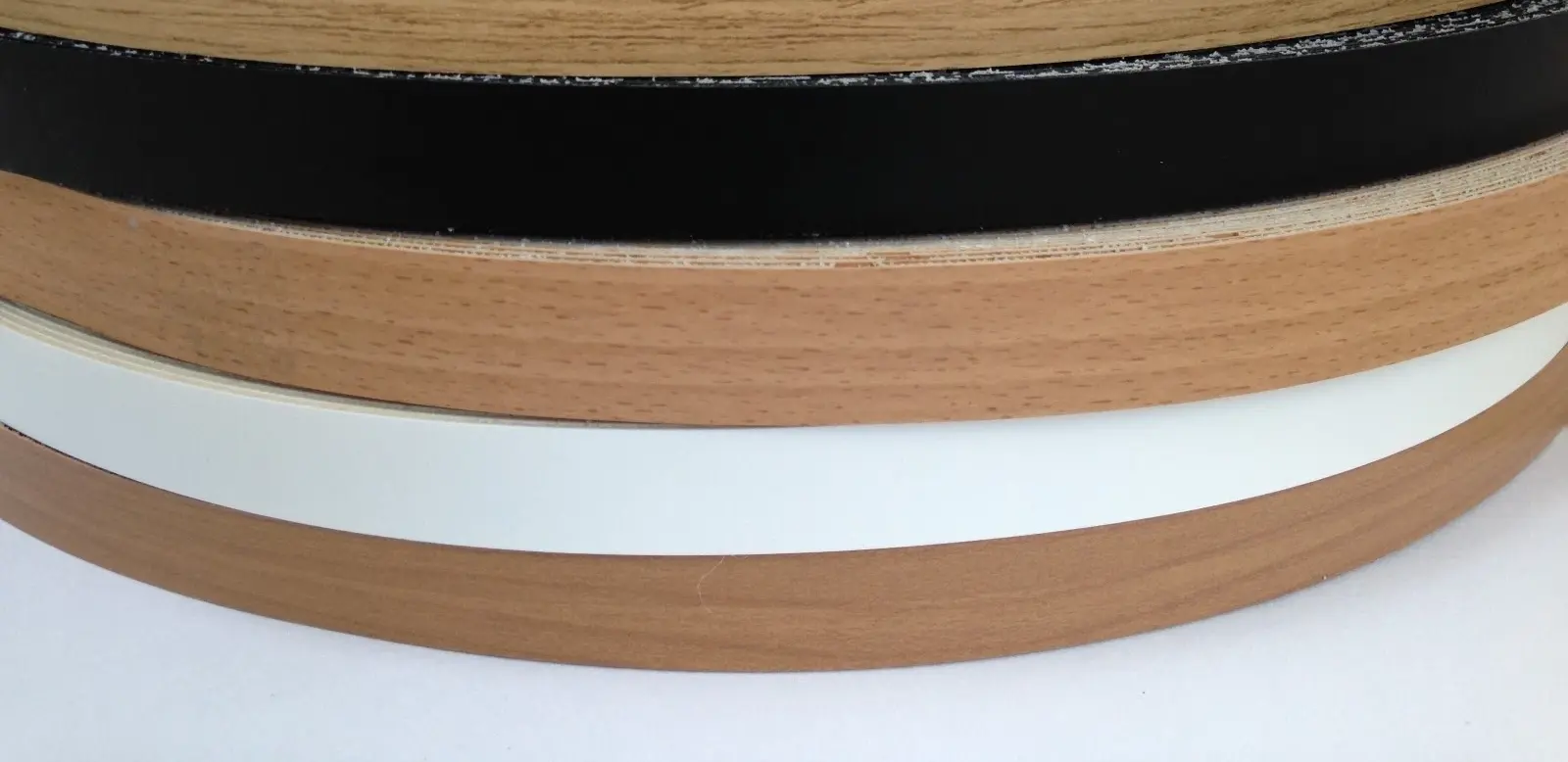
In panel furniture production, melamine edge banding is often treated as a finishing detail. In practice, it is one of the fastest places for upstream variation to become visible. A slightly chipped cut edge, unstable panel thickness, uneven glue balance, or overly aggressive trimming routine can turn into visible glue lines, edge lifting, corner defects, or parts that need to be reworked before assembly.
That is why melamine edge banding should be managed as a process-control step rather than a simple cosmetic operation. The goal is not only to make the board edge look covered. The goal is to create a stable, repeatable edge-finishing routine that matches the part’s visibility level, wear expectations, and production speed.
Why Melamine Edge Banding Is Less Forgiving Than It Looks
Melamine edge banding is commonly chosen because it can be economical, color-matched, and suitable for large volumes of square-edged panel furniture parts. But it also gives the process less room to hide mistakes.
Compared with thicker edge materials, thin melamine edging usually masks less of the underlying edge condition. If the substrate edge is rough, chipped, dusty, slightly swollen, or not fully square, the finished result tends to show it quickly. In panel furniture lines, that matters because visible defects rarely stay isolated at the edge banding station. They show up later in inspection, packing, installation, or customer use.
This is why a factory can appear to have an edge banding problem when the real issue starts earlier in cutting, part handling, or edge preparation.
Where Melamine Edge Banding Usually Fits Best
Melamine edge banding is not universally right or wrong. It fits some panel furniture applications well and is a weaker fit in others.
| Application Situation | Why Melamine Edge Banding Often Fits | What Buyers Should Watch Closely |
|---|---|---|
| Cabinet Carcass Parts And Internal Panels | Helps achieve a clean, color-matched finish at controlled cost | Wear exposure, corner quality, and consistency across repeated batches |
| Shelves, Dividers, And Other Square-Edged Components | Works well when the line is stable and the parts are not heavily impacted in use | Visible glue lines, trimming marks, and edge lifting on exposed front edges |
| Cost-Sensitive Residential Or Office Panel Furniture | Supports efficient processing where appearance expectations are practical rather than premium-heavy | Whether the finish standard still meets the brand’s quality target |
| High-Wear Exposed Edges, Premium Display Surfaces, Or Impact-Prone Commercial Furniture | May be less suitable than thicker alternatives | Long-term durability, edge feel, and damage tolerance |
The key point is use-case fit. Melamine edge banding is often a practical choice when the furniture design, use environment, and quality target all support a thinner edge solution. It becomes a weaker choice when the product needs more impact resistance, a heavier edge feel, or more forgiveness on exposed outer edges.
Start With The Panel Edge, Not The Banding Roll
Many edge quality problems are rooted in what arrives at the machine, not in the banding material itself. Whether parts come from manual cutting or dedicated panel saws, melamine edge banding results improve when the incoming edge is clean, square, and consistent from part to part.
In practical terms, that means checking:
- Cut-edge chipping before parts reach edge banding
- Dust, loose fibers, or contamination on the raw edge
- Part squareness and dimensional consistency
- Storage conditions that may let board edges absorb moisture or pick up damage
- Part labeling and batch discipline so the right settings stay with the right job
If the incoming edge varies too much, the edge banding station starts compensating for problems it was never meant to solve. Inconsistent cut quality can force adhesive settings, pressure, trimming, and operator checks to do too much at once. The result is usually slower output and less predictable finish quality.
For factories that need more uniform bonding conditions, a pre-milling stage is commonly used to create a more even substrate edge before banding. That does not make every defect disappear, but it can reduce the effect of minor saw marks, roughness, and surface inconsistency that would otherwise show through a thin edge treatment.
Process Tips That Usually Reduce Rework
Factories rarely improve melamine edge banding quality by changing only one variable. Better results usually come from stabilizing the whole sequence.
- Keep Part Quality Stable Before Edge Banding
If part size, squareness, and cut condition vary too much, edge finishing becomes reactive instead of repeatable. Stable incoming parts make downstream adjustment easier and reduce surprise defects.
- Treat Heat, Adhesive, And Pressure As One System
Visible glue lines and weak bonding often come from imbalance, not from a single wrong setting. Too much focus on one variable without checking the others usually creates a different defect somewhere else.
- Avoid Feeding Thin Melamine Edges Into A Dirty Or Damaged Process
Thin edge materials tend to reveal dust, contamination, rough edges, and handling damage quickly. Good housekeeping around the infeed and edge-prep stages is more valuable than many operators expect.
- Let Cooling And Settling Happen Before Aggressive Finishing
If trimming, scraping, or polishing is too aggressive before the edge is properly stabilized, the line can create lifted ends, fragile corners, or finish marks that look like material defects.
- Separate High-Visibility Parts From Lower-Visibility Parts
Not every panel furniture component needs the same finish standard. If the same settings and inspection logic are applied to every part category, either quality drifts too low on visible parts or throughput slows unnecessarily on less critical ones.
- Use The Machine To Standardize The Process, Not To Chase Defects
For factories evaluating dedicated edgebanders, the real value is not just automated feeding. It is the ability to hold edge preparation, bonding, trimming, and finish quality more consistently across daily production.
Common Pitfalls And What They Usually Mean
The most useful way to troubleshoot melamine edge banding is to read visible symptoms as process signals.
| Symptom | What It Usually Points To | Practical Response | Why It Matters In Production |
|---|---|---|---|
| Visible Glue Line | Rough incoming edge, glue imbalance, or poor contact consistency | Recheck edge preparation, bonding balance, and pressure stability | Defects become obvious on decorative parts and increase inspection time |
| Edge Lifting At Ends Or Corners | Weak bond formation, contamination, premature aggressive trimming, or unstable part condition | Inspect end quality, cleanliness, and the sequence from bonding to finishing | Parts may fail later in packing, transport, or installation |
| Chipped Face Near The Edge | Upstream cut damage, poor handling, or trimming settings that are too aggressive for the finish standard | Separate cutting damage from edge banding damage before changing settings blindly | Rework spreads back into cutting, sorting, and quality control |
| Over-Trimmed Or Scuffed Edge | Finishing tools or settings are too harsh for the material and part condition | Rebalance finishing stages instead of only slowing the line | Surface quality drops even when bonding itself is acceptable |
| Uneven Appearance Across A Batch | Mixed part quality, unstable settings, inconsistent consumables, or weak job discipline | Tighten batch control and confirm that all parts entering the run match the planned setup | Operators spend more time sorting exceptions than producing parts |
| Good Bond On Some Parts But Not Others | The process is too dependent on incoming variation | Look upstream at cutting, storage, and edge condition before blaming the edge material alone | The line becomes difficult to scale because quality depends on luck more than control |
A common mistake is to treat these issues as isolated machine problems. In reality, melamine edge banding defects are often system problems. They reflect how well cutting, part handling, edge preparation, bonding, and finishing are working together.
When Melamine Edge Banding Is Probably The Wrong Choice
There are cases where the process can be well controlled and melamine edge banding still may not be the best fit.
That usually happens when the furniture product has one or more of these characteristics:
- The edge is highly exposed and expected to resist frequent impact
- The product is positioned as a more premium furniture finish
- The design includes situations where a thicker, more substantial edge is preferred
- The use environment puts more stress on edge durability than a thin decorative edge is meant to handle
In those cases, the right decision may not be better machine tuning alone. It may be a different edge material strategy for the affected parts. That does not make melamine edge banding a poor solution overall. It means the edge specification should follow the product’s real use case, not just the lowest short-term processing cost.
Practical Summary
Melamine edge banding works best in panel furniture production when the process is stable, the incoming panel edge is well prepared, and the finish standard matches what a thin edge solution is realistically expected to deliver. Most recurring defects come from treating edge banding as a stand-alone operation when it is actually tied to cutting quality, edge preparation, bonding balance, trimming control, and part handling.
For factories trying to reduce rework, the practical question is not simply whether melamine edge banding is good or bad. It is whether the entire workflow is stable enough for melamine edging to look clean and stay reliable on the parts where it makes sense. When that match is correct, melamine edge banding can support efficient, repeatable panel furniture production. When that match is wrong, the line usually pays for it in defects, checking time, and avoidable rework.