When a factory needs permanent identification, decorative detail, or branded marks on metal parts, the wrong process does more than affect appearance. It can slow changeovers, add handling steps, create inconsistent contrast, or make downstream traceability harder. That is why a metal etching machine and a laser marking machine should not be treated as interchangeable choices, even when both can produce visible marks on metal.
The real decision is not which machine sounds more advanced. It is which process fits your part flow, mark type, production volume, and inspection requirements with less friction.
Why This Comparison Often Creates Confusion
In many buying discussions, “etching” describes a visual result rather than one specific technology. A laser marking machine can create an etched-looking mark on some metal surfaces, while a dedicated metal etching setup usually relies on chemical, electrochemical, or resist-based surface removal.
That distinction matters because the workflow behind the mark changes completely. One process is usually batch-oriented and consumable-driven. The other is usually digital, non-contact, and far easier to switch between jobs.
How A Metal Etching Machine Fits The Workflow
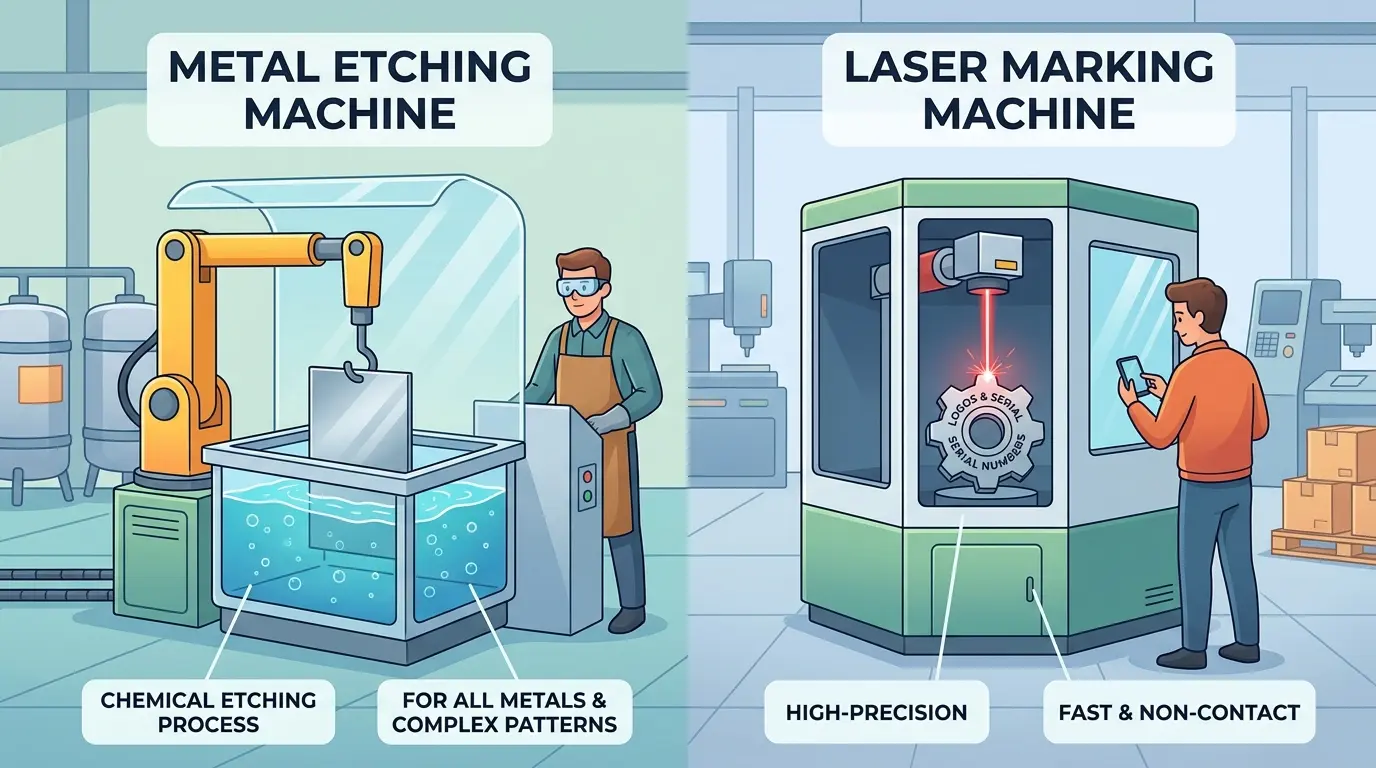
In industrial use, a metal etching machine is commonly selected when the process depends on controlled surface removal through chemical or electrochemical means. The exact setup varies by application, but the workflow typically includes surface preparation, pattern transfer or masking, the etching stage itself, and cleaning or finishing after the mark is created.
This process is often well suited to:
- Nameplates And Identification Plates
- Decorative Metal Panels
- Repeated Graphic Layouts
- Batch Production Of Similar Parts
- Applications Where Surface Contrast Or Texture Matters More Than Variable Data
The main strength of etching is not speed in every situation. It is process fit when the same layout repeats across many parts, or when the required appearance depends on actual surface removal rather than a fast digital mark.
How A Laser Marking Machine Fits The Workflow
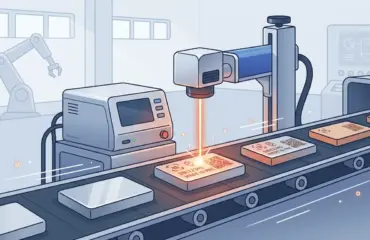
A laser marking machine uses focused beam energy to create a mark without physical contact with the part. In production terms, that usually means digital file control, quick program changes, lower handling between jobs, and stronger compatibility with serial numbers, QR codes, logos, and part-specific identification.
Laser marking is commonly chosen when the production environment values:
- Fast Changeovers Between Part Types
- Traceability And Serialized Marking
- Repeatable Mark Placement
- Cleaner Integration With Inline Or Semi-Automated Cells
- Lower Dependence On Wet-Process Steps
This does not make laser marking automatically better. It makes it better aligned with high-mix production, digital job control, and traceability-heavy workflows.
Side-By-Side Comparison
| Decision Factor | Metal Etching Machine | Laser Marking Machine |
|---|---|---|
| Process Principle | Surface removal through chemical, electrochemical, or resist-based workflow | Non-contact beam-based marking controlled digitally |
| Best-Fit Output | Repeated plates, panels, decorative patterns, surface-character marks | Serial numbers, QR codes, logos, traceability marks, mixed-part identification |
| Changeover Speed | Usually slower when artwork, masks, or process setup changes | Usually faster because job data can be changed digitally |
| Variable Data Capability | Limited compared with digital marking workflows | Strong fit for changing data from part to part |
| Consumables And Process Housekeeping | Higher process dependence on consumables, cleaning, and handling discipline | Lower wet-process burden, but still requires optics care, fume extraction, and laser safety control |
| Production Flow | Commonly stronger in batch-oriented plate or panel work | Commonly stronger in high-mix, short-changeover, or inline marking cells |
| Mark Character | Can create visible surface texture and contrast through actual etching | Can create clean, precise marks with strong repeatability |
| Operational Tradeoff | More post-process management and environmental handling | More dependent on correct programming, fixturing, and material-specific process settings |
When A Metal Etching Machine Makes More Sense
A metal etching machine is often the better fit when the production route is stable and the same artwork repeats across many parts. It can also make sense when the desired result depends on the visual or tactile character of an etched surface rather than the speed of digital part-to-part variation.
It is commonly the stronger choice when:
- The Mark Layout Changes Infrequently
- Parts Are Processed In Repeated Batches
- Plates, Tags, Or Decorative Panels Are A Major Share Of Output
- Surface Character Matters As Much As Legibility
- The Factory Already Has The Process Discipline To Manage Prep, Etching, And Cleanup Reliably
In other words, etching tends to win when the workflow is pattern-driven rather than data-driven.
When A Laser Marking Machine Makes More Sense
Laser marking usually becomes the stronger investment when the operation needs flexibility. If production changes frequently, if every part needs a different code, or if the marking station sits close to final inspection or automated traceability capture, laser marking usually removes more friction from the line.
It is commonly the stronger choice when:
- Every Part Needs A Unique Identifier
- Traceability Is A Core Requirement
- Product Mix Changes Frequently
- Manual Handling Needs To Be Reduced
- The Marking Step Must Fit Into A Faster, More Digital Production Route
Laser marking is also attractive when managers want fewer wet-process dependencies and easier switching between customer orders, part families, or branding requirements.
The Workflow Questions Buyers Should Ask First
Before comparing sample marks, buyers should answer a few production questions:
- Are You Marking Identical Plates In Batches, Or Individual Parts With Changing Data?
- Is The Priority Surface Character, Or Is It Fast Digital Identification?
- Does The Marking Step Sit Offline, Or Does It Need To Fit An Inline Cell?
- How Much Manual Handling Can The Current Workflow Absorb?
- What Process Controls Can The Plant Support Consistently: Wet-Process Management, Or Digital Marking With Extraction And Safety Controls?
These questions usually settle the decision faster than a generic feature list because they connect the machine choice to the real production route.
A Practical Summary
A metal etching machine is usually the better choice when the job is batch-oriented, the layout is stable, and the value comes from consistent surface character across repeated parts. A laser marking machine is usually the better choice when the job is traceability-driven, high-mix, and dependent on fast digital changes with minimal handling.
Neither process is universally better. One is stronger when the workflow is pattern-led. The other is stronger when the workflow is data-led.
If this comparison is part of a wider equipment-planning project, reviewing adjacent production technologies across the Pandaxis product catalog can help keep marking decisions aligned with upstream and downstream process choices.