When buyers search for a panel saw for sale, the first instinct is often to compare machine listings, not production realities. That is usually where expensive mistakes begin. A panel saw that looks strong on paper can still become the wrong purchase if it does not match your material mix, your batch structure, your floor layout, or the way cut parts move into the next process.
The better buying approach is to treat a panel saw as a workflow decision first and a machine purchase second. Before you commit, check whether the saw actually fits the way your factory cuts, sorts, moves, and finishes panels every day.
Start With The Problem You Need To Solve
Before checking any machine details, define the production problem clearly. A panel saw is usually considered when the front end of panel processing is creating delays, inconsistent sizing, or too much operator-dependent variation.
In practical terms, buyers are often trying to fix one or more of these issues:
- Slow Sheet Breakdown At The Start Of Production
- Re-Cuts Caused By Inconsistent Part Sizing
- Bottlenecks Before Edge Banding, Drilling, Or Assembly
- Too Much Dependence On Individual Operator Technique
- Difficulty Keeping Batch Orders Organized At The Cut Cell
If those are the real problems, a dedicated panel-cutting solution may be worth serious evaluation. If they are not, the saw may only shift investment into the wrong part of the workflow.
Check Whether A Panel Saw Fits Your Product Mix
Not every woodworking shop benefits equally from a panel saw. The machine is usually strongest where the work is dominated by repeated rectangular parts made from sheet goods such as MDF, particleboard, melamine-faced board, and plywood.
If your production already revolves around repeated panel sizing, reviewing available panel saws makes sense because the category is built around structured sheet processing. If your workload is dominated by irregular shapes, frequent one-off jobs, or process steps beyond straight panel sizing, another machine type may fit better.
| What You Produce Most Often | What It Usually Means For Buying | Why It Matters |
|---|---|---|
| Repeated Cabinet Panels And Carcass Parts | A Panel Saw Often Deserves Priority | The cut cell benefits from repeatability and higher front-end stability |
| Mixed Custom Furniture Jobs | Fit Must Be Checked More Carefully | Flexibility may matter more than pure sizing throughput |
| Irregular Or Nested Parts | A Panel Saw May Not Be The First Choice | The main workflow may require a different cutting logic |
| Low Daily Sheet Volume | The Investment Needs Extra Scrutiny | A dedicated panel saw delivers the most value when panel processing is central to output |
This step is basic, but it filters out many poor purchases. Buyers should not ask only whether a panel saw is good. They should ask whether a panel saw is good for their mix of jobs.
Inspect Cut Quality Under Real Material Conditions
A panel saw purchase should be judged by production results, not by generic claims. What matters is whether the machine can support stable cutting performance on the materials your shop actually runs.
That means checking things such as:
- Edge Cleanliness On The Board Types You Process Most
- Dimensional Consistency Across Repeated Parts
- Squareness And Repeatability From Batch To Batch
- How Much Manual Re-Checking Operators Still Need To Do
- Whether Part Quality Supports Smooth Downstream Processing
This is especially important in panel furniture manufacturing because cutting errors do not stay inside the cutting department. If parts arrive downstream with avoidable size variation, the problem spreads quickly. Edgebanders perform more predictably when the cut stage is stable, and assembly teams spend less time compensating for poor front-end consistency.
The key point is simple: do not evaluate the saw only by whether it can cut. Evaluate it by whether it can cut in a way that reduces correction work later.
Measure Throughput As A System, Not As An Isolated Machine
One of the most common buying mistakes is focusing on cutting speed alone. Real throughput depends on the entire cutting cell, not just the moment the blade enters the panel.
Before buying, check how the saw fits into the full operating sequence:
- How Sheets Are Staged Before Cutting
- How Jobs Or Cut Lists Reach The Machine
- How Parts Are Sorted After Cutting
- How Operators Handle Repeated Batches During Busy Production Periods
- How Quickly The Cut Cell Feeds The Next Department Without Confusion
A saw can look productive in isolation and still create hidden delays if material loading is clumsy, part sorting is weak, or job preparation remains inconsistent. Buyers should look for steady flow, not just an impressive cutting headline.
Check Operator Dependence And Daily Setup Discipline
In many shops, the real value of a panel saw is not only output. It is process control. Buyers should check whether the machine helps the cutting stage become more repeatable from operator to operator and from shift to shift.
Questions worth asking include:
- How dependent is final part quality on individual operator habits?
- How easy is it to keep repeated jobs consistent during long production runs?
- Does the workflow help reduce repeated measuring, manual compensation, or guesswork?
- Can the machine support a cleaner routine for setup, job change, and batch handling?
This matters because a purchase that still relies heavily on individual technique may not solve the consistency problem you were trying to fix in the first place.
Review Floor Layout, Sheet Handling, And Part Flow
A panel saw should improve the rhythm of production, not create a new traffic problem. That is why buyers need to check the machine against the physical realities of the shop floor before they buy.
Look at the saw in relation to:
- Infeed And Outfeed Space
- How Full Sheets Reach The Cut Cell
- How Finished Parts Leave The Machine
- Whether Operators Can Keep Batches Organized Without Blocking Aisles
- How Close The Saw Sits To The Next Critical Operation
Weak layout planning can reduce the value of a capable machine very quickly. Even a well-matched saw can underperform if operators spend too much time repositioning panels, clearing space, or searching for the right parts after cutting.
Compare The Saw Against The Alternatives Before You Commit
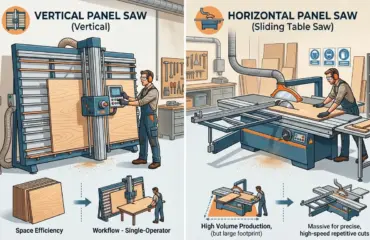
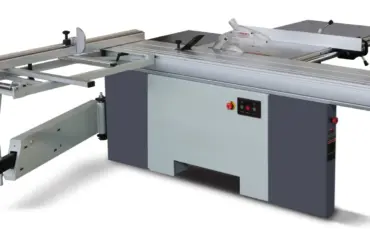
A panel saw is not automatically the best answer just because you are buying a cutting machine. In many factories, the real choice is between a panel saw, a sliding table saw, and a CNC nesting machine.
| Machine Type | Best Fit | Main Advantage | Main Tradeoff |
|---|---|---|---|
| Panel Saw | Repeated Rectangular Parts In Structured Batch Production | Strong front-end throughput and repeatable sizing | Less flexible for irregular or heavily customized part geometry |
| Sliding table saws | Mixed jobs, smaller runs, and operator-led flexibility | Practical control for varied cutting work | Usually more operator-dependent and less efficient for sustained batch output |
| CNC nesting machines | Custom furniture, shaped parts, and workflows combining cutting with routing or drilling | Better fit for integrated and shape-driven production | May be a less direct answer if the real need is only fast rectangular panel sizing |
This comparison is essential because the wrong saw is often purchased when a shop mistakes flexibility problems for throughput problems, or throughput problems for customization problems.
Check Buying Risk Beyond The Machine Itself
A strong buying review should also cover the operational risk around the purchase. Even when the machine category is correct, buyers still need to check whether the investment is timed and scoped properly.
Use this shortlist before you move forward:
| What To Check | Why It Deserves Attention Before Buying |
|---|---|
| Current Production Bottleneck | Confirms whether cutting is truly the limiting step |
| Daily Panel Volume | Shows whether the saw will be central to output or underused |
| Product Standardization Level | Helps determine whether repeatability will produce real gains |
| Downstream Stability Needs | Connects the saw to edge quality, drilling accuracy, and assembly fit |
| Labor Dependence | Clarifies whether the purchase helps reduce skill-related variation |
| Layout Readiness | Prevents handling problems from eroding machine value |
| Future Growth Direction | Keeps the decision aligned with the production model you are building, not only the one you have today |
When buyers skip these checks, they often end up with a machine that is technically capable but operationally mismatched.
Questions To Ask Before You Sign
Before committing to any panel saw for sale, pressure-test the decision with a final set of practical questions:
- Is panel sizing the real bottleneck, or only the most visible one?
- Are most of our parts rectangular and repetitive enough to justify a dedicated panel-cutting workflow?
- Will the saw reduce downstream rework, or only move the same problems forward faster?
- Can our team keep sheets, cut lists, and finished parts organized around the machine?
- Does our floor layout support efficient material movement before and after cutting?
- Would a more flexible cutting solution fit our current work better?
- Are we buying for short-term relief, or for the production model we expect over the next few years?
Good buying decisions usually become clearer after these questions, because they force the discussion away from generic sales language and back toward production logic.
Practical Summary
A panel saw is usually worth serious consideration when your operation depends on repeated, accurate sizing of sheet goods and the cut stage needs to feed the rest of the line more predictably. The right buying decision comes from checking workflow fit, material fit, repeatability, layout fit, and downstream impact before you check headlines or appearances.
If your factory runs structured panel production, a panel saw can help stabilize throughput, reduce operator-dependent variation, and make later processes easier to manage. If your work is more customized, more shape-driven, or less panel-heavy, another cutting approach may be the better match. The safest purchase is the one that solves the real production problem, not just the one that looks most convincing in the listing.